1
וְזֶה הַדָּבָר אֲשֶׁר-תַּעֲשֶׂה לָהֶם, לְקַדֵּשׁ אֹתָם--לְכַהֵן לִי: לְקַח פַּר אֶחָד בֶּן-בָּקָר, וְאֵילִם שְׁנַיִם--תְּמִימִם.
And this is the thing that you shall do for them, to sanctify them, that they may serve as priests to me: take one young bull, and two rams — without blemish,
noteY esto es lo que harás por ellos, para santificarlos, para que me sirvan como sacerdotes: toma un becerro, y dos carneros — sin defecto,
2
וְלֶחֶם מַצּוֹת, וְחַלֹּת מַצֹּת בְּלוּלֹת בַּשֶּׁמֶן, וּרְקִיקֵי מַצּוֹת, מְשֻׁחִים בַּשָּׁמֶן; סֹלֶת חִטִּים, תַּעֲשֶׂה אֹתָם.
and unleavened bread, and cakes of unleavened bread mixed with oil, and unleavened wafers spread with oil — you shall make them of fine wheat flour.
notey pan sin levadura, y tortas sin levadura amasadas con aceite, y hojaldres sin levadura untados con aceite — los harás de flor de harina de trigo.
3
וְנָתַתָּ אוֹתָם עַל-סַל אֶחָד, וְהִקְרַבְתָּ אֹתָם בַּסָּל; וְאֶת-הַפָּר--וְאֵת, שְׁנֵי הָאֵילִם.
And you shall put them in one basket, and bring them near in the basket, along with the bull and the two rams.
noteY los pondrás en un canastillo, y los llevarás en el canastillo, junto con el becerro y los dos carneros.
4
וְאֶת-אַהֲרֹן וְאֶת-בָּנָיו תַּקְרִיב, אֶל-פֶּתַח אֹהֶל מוֹעֵד; וְרָחַצְתָּ אֹתָם, בַּמָּיִם.
And you shall bring Aaron and his sons near, to the entrance of the tent of meeting, and wash them with water.
noteY llevarás a Aarón y a sus hijos a la entrada de la tienda de reunión, y los lavarás con agua.
5
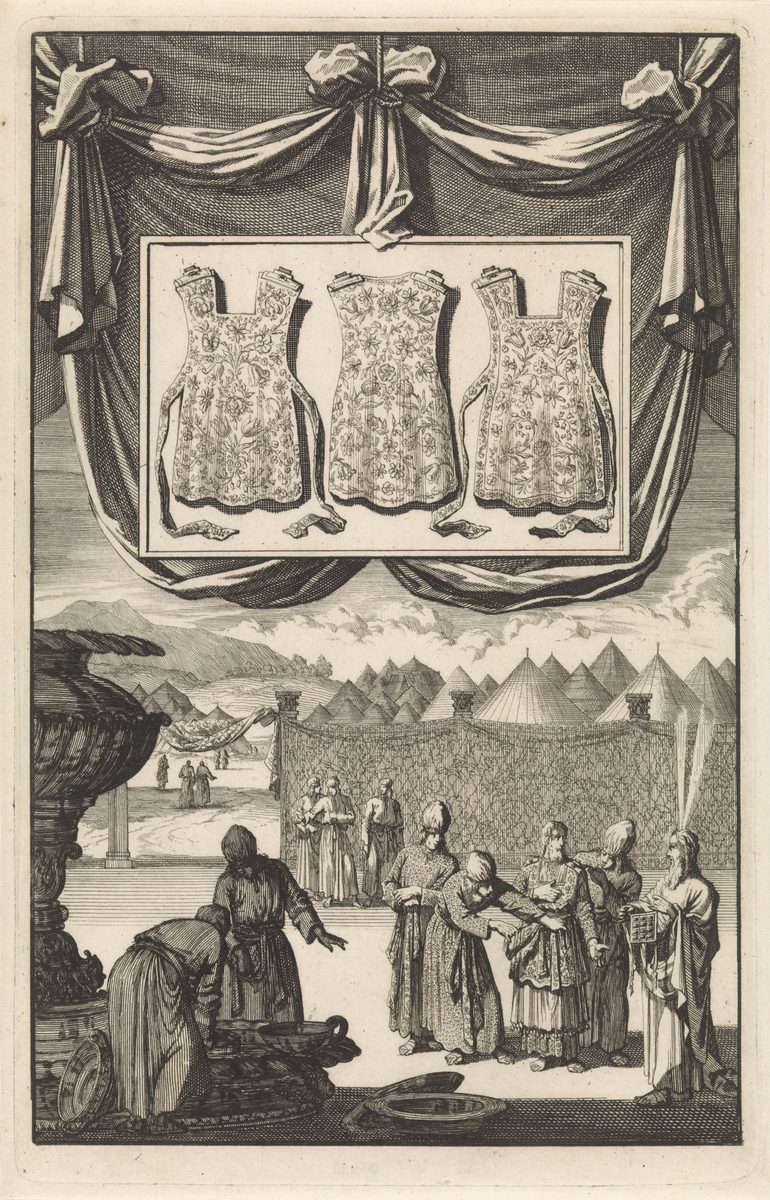
וְלָקַחְתָּ אֶת-הַבְּגָדִים, וְהִלְבַּשְׁתָּ אֶת-אַהֲרֹן אֶת-הַכֻּתֹּנֶת, וְאֵת מְעִיל הָאֵפֹד, וְאֶת-הָאֵפֹד וְאֶת-הַחֹשֶׁן; וְאָפַדְתָּ לוֹ, בְּחֵשֶׁב הָאֵפֹד.
And you shall take the garments, and clothe Aaron with the tunic, and the robe of the ephod, and the ephod, and the breastplate, and gird him with the woven band of the ephod.
noteY tomarás las vestiduras, y vestirás a Aarón con la túnica, y el manto del efod, y el efod, y el pectoral, y le ceñirás con la banda tejida del efod.
6
וְשַׂמְתָּ הַמִּצְנֶפֶת, עַל-רֹאשׁוֹ; וְנָתַתָּ אֶת-נֵזֶר הַקֹּדֶשׁ, עַל-הַמִּצְנָפֶת.
And you shall set the turban on his head, and put the holy diadem on the turban.
noteY pondrás el turbante sobre su cabeza, y pondrás la diadema santa sobre el turbante.
7
וְלָקַחְתָּ אֶת-שֶׁמֶן הַמִּשְׁחָה, וְיָצַקְתָּ עַל-רֹאשׁוֹ; וּמָשַׁחְתָּ, אֹתוֹ.
Then you shall take the oil of anointing, and pour it on his head, and anoint him.
noteLuego tomarás el aceite de la unción, y lo derramarás sobre su cabeza, y lo ungirás.
8
וְאֶת-בָּנָיו, תַּקְרִיב; וְהִלְבַּשְׁתָּם, כֻּתֳּנֹת.
And you shall bring his sons near, and clothe them with tunics.
noteY harás que se acerquen sus hijos, y los vestirás con túnicas.
9
וְחָגַרְתָּ אֹתָם אַבְנֵט אַהֲרֹן וּבָנָיו, וְחָבַשְׁתָּ לָהֶם מִגְבָּעֹת, וְהָיְתָה לָהֶם כְּהֻנָּה, לְחֻקַּת עוֹלָם; וּמִלֵּאתָ יַד-אַהֲרֹן, וְיַד-בָּנָיו.
And you shall gird them with a sash — Aaron and his sons — and bind headgear on them, and the priesthood shall be theirs as an everlasting statute; and you shall
fill the hand of Aaron, and the hand of his sons.
noteY los ceñirás con un cinto — a Aarón y a sus hijos — y les atarás tocados, y el sacerdocio será de ellos como estatuto perpetuo; y les
llenarás la mano — a Aarón, y a sus hijos.
10
וְהִקְרַבְתָּ, אֶת-הַפָּר, לִפְנֵי, אֹהֶל מוֹעֵד; וְסָמַךְ אַהֲרֹן וּבָנָיו אֶת-יְדֵיהֶם, עַל-רֹאשׁ הַפָּר.
And you shall bring the bull near, before the tent of meeting; and Aaron and his sons shall
lay their hands on the head of the bull.
noteY llevarás el becerro delante de la tienda de reunión; y Aarón y sus hijos pondrán sus manos sobre la cabeza del becerro.
11
וְשָׁחַטְתָּ אֶת-הַפָּר, לִפְנֵי יְהוָה, פֶּתַח, אֹהֶל מוֹעֵד.
Y degollarás el becerro delante de Jehová, a la entrada de la tienda de reunión.
12
וְלָקַחְתָּ מִדַּם הַפָּר, וְנָתַתָּה עַל-קַרְנֹת הַמִּזְבֵּחַ בְּאֶצְבָּעֶךָ; וְאֶת-כָּל-הַדָּם תִּשְׁפֹּךְ, אֶל-יְסוֹד הַמִּזְבֵּחַ.
And you shall take some of the blood of the bull, and put it on the horns of the altar with your finger; and pour out all the rest of the blood at the base of the altar.
noteY tomarás de la sangre del becerro, y la pondrás sobre los cuernos del altar con tu dedo; y derramarás toda la sangre restante al pie del altar.
13
וְלָקַחְתָּ, אֶת-כָּל-הַחֵלֶב הַמְכַסֶּה אֶת-הַקֶּרֶב, וְאֵת הַיֹּתֶרֶת עַל-הַכָּבֵד, וְאֵת שְׁתֵּי הַכְּלָיֹת וְאֶת-הַחֵלֶב אֲשֶׁר עֲלֵיהֶן; וְהִקְטַרְתָּ, הַמִּזְבֵּחָה.
And you shall take all the fat that covers the entrails, and the lobe above the liver, and the two kidneys and the fat that is on them, and burn them into smoke on the altar.
noteY tomarás toda la grosura que cubre las entrañas, y el lóbulo que está sobre el hígado, y los dos riñones y la grosura que está sobre ellos, y los quemarás sobre el altar.
14
וְאֶת-בְּשַׂר הַפָּר, וְאֶת-עֹרוֹ וְאֶת-פִּרְשׁוֹ, תִּשְׂרֹף בָּאֵשׁ, מִחוּץ לַמַּחֲנֶה: חַטָּאת, הוּא.
But the flesh of the bull, and its hide, and its dung, you shall burn with fire outside the camp; it is a sin offering.
notePero la carne del becerro, y su piel, y su estiércol, los quemarás con fuego fuera del campamento; es ofrenda por el pecado.
15
וְאֶת-הָאַיִל הָאֶחָד, תִּקָּח; וְסָמְכוּ אַהֲרֹן וּבָנָיו, אֶת-יְדֵיהֶם--עַל-רֹאשׁ הָאָיִל.
And you shall take the one ram; and Aaron and his sons shall lay their hands on the head of the ram.
noteY tomarás el un carnero; y Aarón y sus hijos pondrán sus manos sobre la cabeza del carnero.
16
וְשָׁחַטְתָּ, אֶת-הָאָיִל; וְלָקַחְתָּ, אֶת-דָּמוֹ, וְזָרַקְתָּ עַל-הַמִּזְבֵּחַ, סָבִיב.
And you shall slaughter the ram; and take its blood, and dash it against the altar all around.
noteY degollarás el carnero; y tomarás su sangre, y la rociarás sobre el altar, alrededor.
17
וְאֶת-הָאַיִל--תְּנַתֵּחַ, לִנְתָחָיו; וְרָחַצְתָּ קִרְבּוֹ וּכְרָעָיו, וְנָתַתָּ עַל-נְתָחָיו וְעַל-רֹאשׁוֹ.
And you shall cut the ram into its pieces; and wash its entrails and its legs, and put them with its pieces and with its head.
noteY cortarás el carnero en sus piezas; y lavarás sus entrañas y sus piernas, y las pondrás con sus piezas y con su cabeza.
18
וְהִקְטַרְתָּ אֶת-כָּל-הָאַיִל הַמִּזְבֵּחָה, עֹלָה הוּא לַיהוָה; רֵיחַ נִיחוֹחַ, אִשֶּׁה לַיהוָה הוּא.
And you shall burn the whole ram into smoke on the altar; it is a burnt offering to Jehovah, a
soothing aroma, an offering made by fire to Jehovah.
noteY quemarás todo el carnero sobre el altar; es holocausto para Jehová, olor grato, ofrenda encendida para Jehová.
19
וְלָקַחְתָּ, אֵת הָאַיִל הַשֵּׁנִי; וְסָמַךְ אַהֲרֹן וּבָנָיו אֶת-יְדֵיהֶם, עַל-רֹאשׁ הָאָיִל.
And you shall take the second ram; and Aaron and his sons shall lay their hands on the head of the ram.
noteY tomarás el segundo carnero; y Aarón y sus hijos pondrán sus manos sobre la cabeza del carnero.
20
וְשָׁחַטְתָּ אֶת-הָאַיִל, וְלָקַחְתָּ מִדָּמוֹ וְנָתַתָּה עַל-תְּנוּךְ אֹזֶן אַהֲרֹן וְעַל-תְּנוּךְ אֹזֶן בָּנָיו הַיְמָנִית, וְעַל-בֹּהֶן יָדָם הַיְמָנִית, וְעַל-בֹּהֶן רַגְלָם הַיְמָנִית; וְזָרַקְתָּ אֶת-הַדָּם עַל-הַמִּזְבֵּחַ, סָבִיב.
And you shall slaughter the ram, and take some of its blood and put it on the tip of Aaron’s right ear, and on the tip of his sons’ right ear, and on the thumb of their right hand, and on the big toe of their right foot; and dash the blood against the altar all around.
noteY degollarás el carnero, y tomarás de su sangre y la pondrás sobre la punta de la oreja derecha de Aarón, y sobre la punta de la oreja derecha de sus hijos, y sobre el pulgar de su mano derecha, y sobre el dedo gordo de su pie derecho; y rociarás la sangre sobre el altar, alrededor.
21
וְלָקַחְתָּ מִן-הַדָּם אֲשֶׁר עַל-הַמִּזְבֵּחַ, וּמִשֶּׁמֶן הַמִּשְׁחָה, וְהִזֵּיתָ עַל-אַהֲרֹן וְעַל-בְּגָדָיו, וְעַל-בָּנָיו וְעַל-בִּגְדֵי בָנָיו אִתּוֹ; וְקָדַשׁ הוּא וּבְגָדָיו, וּבָנָיו וּבִגְדֵי בָנָיו אִתּוֹ.
And you shall take some of the blood that is on the altar, and some of the oil of anointing, and sprinkle it on Aaron and on his garments, and on his sons and on his sons’ garments with him; and he shall be holy, and his garments, and his sons and his sons’ garments with him.
noteY tomarás de la sangre que está sobre el altar, y del aceite de la unción, y lo rociarás sobre Aarón y sobre sus vestiduras, y sobre sus hijos y sobre las vestiduras de sus hijos con él; y él será santo, y sus vestiduras, y sus hijos y las vestiduras de sus hijos con él.
22
וְלָקַחְתָּ מִן-הָאַיִל הַחֵלֶב וְהָאַלְיָה וְאֶת-הַחֵלֶב הַמְכַסֶּה אֶת-הַקֶּרֶב, וְאֵת יֹתֶרֶת הַכָּבֵד וְאֵת שְׁתֵּי הַכְּלָיֹת וְאֶת-הַחֵלֶב אֲשֶׁר עֲלֵיהֶן, וְאֵת, שׁוֹק הַיָּמִין: כִּי אֵיל מִלֻּאִים, הוּא.
And you shall take from the ram the fat, and the fat tail, and the fat that covers the entrails, and the lobe of the liver, and the two kidneys and the fat that is on them, and the right thigh — for it is a
ram of filling.
noteY tomarás del carnero la grosura, y la cola gruesa, y la grosura que cubre las entrañas, y el lóbulo del hígado, y los dos riñones y la grosura que está sobre ellos, y el muslo derecho — porque es
carnero de llenado.
23
וְכִכַּר לֶחֶם אַחַת, וְחַלַּת לֶחֶם שֶׁמֶן אַחַת--וְרָקִיק אֶחָד: מִסַּל, הַמַּצּוֹת, אֲשֶׁר, לִפְנֵי יְהוָה.
And one loaf of bread, and one cake of oiled bread, and one wafer, from the basket of unleavened bread that is before Jehovah.
noteY una hogaza de pan, y una torta de pan con aceite, y un hojaldre, del canastillo de pan sin levadura que está delante de Jehová.
24
וְשַׂמְתָּ הַכֹּל--עַל כַּפֵּי אַהֲרֹן, וְעַל כַּפֵּי בָנָיו; וְהֵנַפְתָּ אֹתָם תְּנוּפָה, לִפְנֵי יְהוָה.
And you shall put it all on the palms of Aaron and on the palms of his sons, and wave them as a wave offering before Jehovah.
noteY pondrás todo esto sobre las palmas de Aarón y sobre las palmas de sus hijos, y lo mecerás como ofrenda mecida delante de Jehová.
25
וְלָקַחְתָּ אֹתָם מִיָּדָם, וְהִקְטַרְתָּ הַמִּזְבֵּחָה עַל-הָעֹלָה; לְרֵיחַ נִיחוֹחַ לִפְנֵי יְהוָה, אִשֶּׁה הוּא לַיהוָה.
And you shall take them from their hand, and burn them into smoke on the altar, on top of the burnt offering, as a soothing aroma before Jehovah; it is an offering made by fire to Jehovah.
noteY lo tomarás de su mano, y lo quemarás sobre el altar, sobre el holocausto, como olor grato delante de Jehová; es ofrenda encendida para Jehová.
26
וְלָקַחְתָּ אֶת-הֶחָזֶה, מֵאֵיל הַמִּלֻּאִים אֲשֶׁר לְאַהֲרֹן, וְהֵנַפְתָּ אֹתוֹ תְּנוּפָה, לִפְנֵי יְהוָה; וְהָיָה לְךָ, לְמָנָה.
And you shall take the breast from Aaron’s ram of filling, and wave it as a wave offering before Jehovah; and it shall be your portion.
noteY tomarás el pecho del carnero de llenado de Aarón, y lo mecerás como ofrenda mecida delante de Jehová; y será tu porción.
27
וְקִדַּשְׁתָּ אֵת חֲזֵה הַתְּנוּפָה, וְאֵת שׁוֹק הַתְּרוּמָה, אֲשֶׁר הוּנַף, וַאֲשֶׁר הוּרָם: מֵאֵיל, הַמִּלֻּאִים--מֵאֲשֶׁר לְאַהֲרֹן, וּמֵאֲשֶׁר לְבָנָיו.
And you shall sanctify the breast of the wave offering, and the thigh of the contribution, which was waved and which was lifted up, from the ram of filling — from what is Aaron’s, and from what is his sons’.
noteY santificarás el pecho de la ofrenda mecida, y el muslo de la ofrenda elevada, lo que fue mecido y lo que fue elevado, del carnero de llenado — de lo que es de Aarón, y de lo que es de sus hijos.
28
וְהָיָה לְאַהֲרֹן וּלְבָנָיו לְחָק-עוֹלָם, מֵאֵת בְּנֵי יִשְׂרָאֵל, כִּי תְרוּמָה, הוּא; וּתְרוּמָה יִהְיֶה מֵאֵת בְּנֵי-יִשְׂרָאֵל, מִזִּבְחֵי שַׁלְמֵיהֶם--תְּרוּמָתָם, לַיהוָה.
And it shall belong to Aaron and to his sons as a perpetual due from the children of Israel, for it is a contribution; and it shall be a contribution from the children of Israel, from their peace offerings — their contribution to Jehovah.
noteY será para Aarón y para sus hijos, como derecho perpetuo de parte de los hijos de Israel, porque es ofrenda elevada; y será una ofrenda elevada de los hijos de Israel, de sus sacrificios de paz — su ofrenda elevada para Jehová.
29
וּבִגְדֵי הַקֹּדֶשׁ אֲשֶׁר לְאַהֲרֹן, יִהְיוּ לְבָנָיו אַחֲרָיו, לְמָשְׁחָה בָהֶם, וּלְמַלֵּא-בָם אֶת-יָדָם.
And the holy garments that are Aaron’s shall belong to his sons after him, to be anointed in them, and to fill their hand in them.
noteY las vestiduras santas que son de Aarón serán de sus hijos después de él, para ser ungidos en ellas, y para llenarles la mano en ellas.
30
שִׁבְעַת יָמִים, יִלְבָּשָׁם הַכֹּהֵן תַּחְתָּיו--מִבָּנָיו: אֲשֶׁר יָבֹא אֶל-אֹהֶל מוֹעֵד, לְשָׁרֵת בַּקֹּדֶשׁ.
Seven days shall the priest who succeeds him from among his sons wear them, whoever comes into the tent of meeting to serve in the holy place.
noteSiete días las vestirá el sacerdote que le suceda de entre sus hijos, el que entre en la tienda de reunión para servir en el lugar santo.
31
וְאֵת אֵיל הַמִּלֻּאִים, תִּקָּח; וּבִשַּׁלְתָּ אֶת-בְּשָׂרוֹ, בְּמָקֹם קָדֹשׁ.
And you shall take the ram of filling, and boil its flesh in a holy place.
noteY tomarás el carnero de llenado, y cocerás su carne en un lugar santo.
32
וְאָכַל אַהֲרֹן וּבָנָיו אֶת-בְּשַׂר הָאַיִל, וְאֶת-הַלֶּחֶם אֲשֶׁר בַּסָּל, פֶּתַח, אֹהֶל מוֹעֵד.
And Aaron and his sons shall eat the flesh of the ram, and the bread that is in the basket, at the entrance of the tent of meeting.
noteY Aarón y sus hijos comerán la carne del carnero, y el pan que está en el canastillo, a la entrada de la tienda de reunión.
33
וְאָכְלוּ אֹתָם אֲשֶׁר כֻּפַּר בָּהֶם, לְמַלֵּא אֶת-יָדָם לְקַדֵּשׁ אֹתָם; וְזָר לֹא-יֹאכַל, כִּי-קֹדֶשׁ הֵם.
And they shall eat those things by which
atonement was made for them, to fill their hand, to sanctify them; but an outsider shall not eat of them, for they are holy.
noteY comerán aquellas cosas con las que se hizo
expiación por ellos, para llenarles la mano, para santificarlos; pero un extraño no comerá de ellas, porque son santas.
34
וְאִם-יִוָּתֵר מִבְּשַׂר הַמִּלֻּאִים, וּמִן-הַלֶּחֶם--עַד-הַבֹּקֶר: וְשָׂרַפְתָּ אֶת-הַנּוֹתָר בָּאֵשׁ, לֹא יֵאָכֵל כִּי-קֹדֶשׁ הוּא.
And if any of the flesh of the filling, or of the bread, is left over until morning, you shall burn the remainder with fire; it shall not be eaten, for it is holy.
noteY si sobra algo de la carne del llenado, o del pan, hasta la mañana, quemarás lo que sobre con fuego; no se comerá, porque es santo.
35
וְעָשִׂיתָ לְאַהֲרֹן וּלְבָנָיו, כָּכָה, כְּכֹל אֲשֶׁר-צִוִּיתִי, אֹתָכָה; שִׁבְעַת יָמִים, תְּמַלֵּא יָדָם.
And you shall do for Aaron and for his sons thus, according to all that I have commanded you; seven days you shall fill their hand.
noteY harás por Aarón y por sus hijos así, conforme a todo lo que te he mandado; siete días les llenarás la mano.
36
וּפַר חַטָּאת תַּעֲשֶׂה לַיּוֹם, עַל-הַכִּפֻּרִים, וְחִטֵּאתָ עַל-הַמִּזְבֵּחַ, בְּכַפֶּרְךָ עָלָיו; וּמָשַׁחְתָּ אֹתוֹ, לְקַדְּשׁוֹ.
And a bull for a sin offering you shall offer each day, for atonement; and you shall purify the altar when you make atonement upon it, and anoint it, to sanctify it.
noteY ofrecerás cada día un becerro como ofrenda por el pecado, para expiación; y purificarás el altar cuando hagas expiación sobre él, y lo ungirás, para santificarlo.
37
שִׁבְעַת יָמִים, תְּכַפֵּר עַל-הַמִּזְבֵּחַ, וְקִדַּשְׁתָּ, אֹתוֹ; וְהָיָה הַמִּזְבֵּחַ קֹדֶשׁ קָדָשִׁים, כָּל-הַנֹּגֵעַ בַּמִּזְבֵּחַ יִקְדָּשׁ. {ס}
Seven days you shall make atonement for the altar, and sanctify it, and the altar shall become most holy; whatever touches the altar shall become holy.
{ס}noteSiete días harás expiación por el altar, y lo santificarás, y el altar será santísimo; todo lo que toque el altar será santo. {ס}
38
וְזֶה, אֲשֶׁר תַּעֲשֶׂה עַל-הַמִּזְבֵּחַ: כְּבָשִׂים בְּנֵי-שָׁנָה שְׁנַיִם לַיּוֹם, תָּמִיד.
And this is what you shall offer on the altar: two lambs a year old, every day, continually.
noteY esto es lo que ofrecerás sobre el altar: dos corderos de un año, cada día, continuamente.
39
אֶת-הַכֶּבֶשׂ הָאֶחָד, תַּעֲשֶׂה בַבֹּקֶר; וְאֵת הַכֶּבֶשׂ הַשֵּׁנִי, תַּעֲשֶׂה בֵּין הָעַרְבָּיִם.
The one lamb you shall offer in the morning, and the other lamb you shall offer between the two evenings.
noteEl un cordero lo ofrecerás por la mañana, y el otro cordero lo ofrecerás entre las dos tardes.
40
וְעִשָּׂרֹן סֹלֶת בָּלוּל בְּשֶׁמֶן כָּתִית, רֶבַע הַהִין, וְנֵסֶךְ, רְבִיעִת הַהִין יָיִן--לַכֶּבֶשׂ, הָאֶחָד.
And a tenth of an ephah of fine flour mixed with a quarter of a hin of beaten oil, and a drink offering of a quarter of a hin of wine, for the one lamb.
noteY una décima parte de un efa de flor de harina mezclada con la cuarta parte de un hin de aceite batido, y una libación de la cuarta parte de un hin de vino, por el un cordero.
41
וְאֵת הַכֶּבֶשׂ הַשֵּׁנִי, תַּעֲשֶׂה בֵּין הָעַרְבָּיִם: כְּמִנְחַת הַבֹּקֶר וּכְנִסְכָּהּ, תַּעֲשֶׂה-לָּהּ, לְרֵיחַ נִיחֹחַ, אִשֶּׁה לַיהוָה.
And the other lamb you shall offer between the two evenings; as with the grain offering of the morning, and as with its drink offering, so you shall offer it, as a soothing aroma, an offering made by fire to Jehovah.
noteY el otro cordero lo ofrecerás entre las dos tardes; como con la ofrenda de grano de la mañana, y como con su libación, así lo ofrecerás, como olor grato, ofrenda encendida para Jehová.
42
עֹלַת תָּמִיד לְדֹרֹתֵיכֶם, פֶּתַח אֹהֶל-מוֹעֵד לִפְנֵי יְהוָה, אֲשֶׁר אִוָּעֵד לָכֶם שָׁמָּה, לְדַבֵּר אֵלֶיךָ שָׁם.
A continual burnt offering, throughout your generations, at the entrance of the tent of meeting before Jehovah, where I will meet with you, to speak with you there.
noteHolocausto continuo, por vuestras generaciones, a la entrada de la tienda de reunión delante de Jehová, donde me reuniré con vosotros, para hablarte allí.
43
וְנֹעַדְתִּי שָׁמָּה, לִבְנֵי יִשְׂרָאֵל; וְנִקְדַּשׁ, בִּכְבֹדִי.
And there I will meet with the children of Israel, and it shall be sanctified by my
glory.
noteY allí me reuniré con los hijos de Israel, y será santificado por mi
gloria.
44
וְקִדַּשְׁתִּי אֶת-אֹהֶל מוֹעֵד, וְאֶת-הַמִּזְבֵּחַ; וְאֶת-אַהֲרֹן וְאֶת-בָּנָיו אֲקַדֵּשׁ, לְכַהֵן לִי.
And I will sanctify the tent of meeting, and the altar; and Aaron and his sons I will sanctify, to serve as priests to me.
noteY santificaré la tienda de reunión, y el altar; y a Aarón y a sus hijos santificaré, para que me sirvan como sacerdotes.
45
וְשָׁכַנְתִּי, בְּתוֹךְ בְּנֵי יִשְׂרָאֵל; וְהָיִיתִי לָהֶם, לֵאלֹהִים.
And I will
dwell among the children of Israel, and I will be their God.
noteY
habitaré entre los hijos de Israel, y seré su Dios.
46
וְיָדְעוּ, כִּי אֲנִי יְהוָה אֱלֹהֵיהֶם, אֲשֶׁר הוֹצֵאתִי אֹתָם מֵאֶרֶץ מִצְרַיִם, לְשָׁכְנִי בְתוֹכָם: אֲנִי, יְהוָה אֱלֹהֵיהֶם. {פ}
And they shall know that I am Jehovah their God, who brought them out of the land of
Egypt, that I might dwell among them; I am Jehovah their God.
{פ}noteY sabrán que yo soy Jehová su Dios, que los saqué de la tierra de Egipto, para habitar entre ellos; yo soy Jehová su Dios. {פ}
‘Fill the hand’ arrives, and the word Exodus 28 promised was coming
Exodus 28’s own closing note (already on these pages) promised that this chapter would use ‘fill their hand’ ‘repeatedly, at the ordination itself’ — and it does, nine times, in two related forms. The VERB (mille et-yad, ‘fill the hand’) fires here at v9 and returns at vv29, 33, and 35; the NOUN it produces, eil ha-millu’im — literally ‘the ram OF FILLING’ — becomes the chapter’s own standing name for the ordination sacrifice itself, at vv22, 26, 27, 31, and 34. This translation keeps the root visible everywhere it occurs, so the dictionary entry now tracks both the idiom and the noun it generates.
⚠ Checked against the shelf at this exact verse (v9): the split is identical to Exodus 28:41’s. KJV and ASV both read ‘and thou shalt consecrate Aaron and his sons’; NIV and NASB both read ‘you shall ordain Aaron and his sons.’ Neither noun keeps a hand being filled with anything — and by v22 the text itself makes clear what fills it: the ram’s own fat, breast, and thigh, pressed into the new priest’s own palms (v24) before it is ever burned. The idiom names a literal, physical handful.
The garments now go ON, in almost exactly the order Exodus 28 listed them (vv5-6): tunic, robe, ephod, breastplate, turban. ⚠ One new name appears for an object already fully described: the gold plate Exodus 28:36 called the tzitz, ‘plate,’ is here (v6) the nezer ha-kodesh, the ‘holy diadem.’ The two names are not two objects — a later verse in the same account (Exodus 39:30, already on these pages) explicitly combines them, ‘tzitz nezer-ha-kodesh,’ ‘the PLATE that is the holy DIADEM,’ one gold band on the forehead named twice, once for what it is and once for how it is worn.
Hands laid, blood on the horns Exodus 27 built, and a rite for the whole body
Three times in this section (vv10, 15, 19) Aaron and his sons lay their hands on an animal’s head before it is slaughtered — the ordinary gesture of substitution the dictionary already tracks from Leviticus, here performed on the men being ordained rather than by them for someone else. The chapter is thick with hand-language even before its own idiom fires: hands LAID (v10), palms loaded (v24, kapei), taken FROM their hand (v25) — a literal backdrop the ‘fill the hand’ idiom draws its whole force from.
⚠ The bull’s blood goes ‘on the horns of the altar’ (v12) — the first time this altar’s horns are actually USED, one chapter after Exodus 27 built them ‘of one piece’ and closed its own note by naming what those same horns will one day mean: a place fleeing men grasp for asylum, and that a coming prophet’s judgment will one day cut off. Here, at the very start of that object’s working life, its first contact is not a fugitive’s grip but a priest’s own ordination blood.
The second ram’s blood (v20) goes to the tip of Aaron’s right ear, the thumb of his right hand, and the big toe of his right foot — the body’s three extremities for hearing, doing, and walking, each touched once. Nothing in the text explains the choice; the anatomy explains itself.
The ram OF FILLING, and two cognate pairs in one verse
‘For it is a ram of filling’ (v22) is the chapter naming its own centerpiece — checked directly against the shelf, KJV/ASV read ‘a ram of consecration,’ NIV/ESV/NASB read ‘a ram of ordination,’ and every version checked reaches past the literal image the Hebrew keeps in view. This translation keeps ‘filling’ visible on every occurrence rather than only some, so the noun and the idiom read as one word doing one job throughout the chapter.
⚠ Verse 27 carries two cognate pairs in a single sentence, a construction this translation tries to keep audible rather than smoothed into plain nouns: ‘the breast of the WAVING, which was WAVED’ (tenufah…hunaf) and ‘the thigh of the LIFTING, which was LIFTED UP’ (terumah…huram) — two ceremonial gestures, each named by a noun built directly from the verb that performs it, the same figure the Hebrew already used for ‘filling the hand’ with the noun ‘filling.’
The idiom’s third and fourth uses, and a cognate cluster on ATONEMENT
‘Fill their hand’ returns twice more here (vv29, 33) before its climactic fourth use closes the seven-day instruction outright: ‘seven days you shall fill their hand’ (v35) — the idiom that opened the ordination at v9 now names the whole seven-day process by itself, no other verb needed. The holy garments themselves (v29) are what get handed down, generation to generation, for exactly this purpose: to anoint IN them, and to fill the hand IN them.
⚠ Verse 36 packs the root kaphar, ‘to atone,’ into a single clause three times over — ‘a sin offering… FOR ATONEMENT… when you make ATONEMENT upon it’ (chattat…al-hakippurim…bekhaperkha) — the same dense repetition this translation has already flagged elsewhere as a deliberate emphasis, not padding. By v37 the altar itself has crossed a threshold no other object in the tabernacle account is given in quite these words: ‘whatever touches the altar shall become holy’ — holiness here is not merely assigned, it is CONTAGIOUS.
Between the two evenings again, and the chapter’s real climax: ‘I WILL DWELL’
The two daily lambs are offered ‘in the morning’ and ‘between the two evenings’ (vv39, 41) — the identical phrase, bein ha-arbayim, already fixed at Exodus 12:6 for the timing of the Passover lamb’s own slaughter. The nation’s ONE-TIME rescue meal and the priesthood’s EVERY-DAY offering now share a clock, twice a day, forever (v42, ‘throughout your generations’).
Verse 42 also plays on its own architecture: ‘the tent of MEETING… where I will MEET with you’ — ohel mo’ed…iva’ed, the building’s own name and the verb describing what happens inside it, sharing one root.
⚠ But the chapter’s real destination is v45: ‘And I will DWELL among the children of Israel’ — ve-shakhanti, the exact root behind mishkan, ‘tabernacle,’ the word this whole five-chapter building project has been named for since Exodus 25:9 (already on these pages). Fifteen chapters of gold, curtains, boards, and now garments and blood were never really about the furniture. God says, in the one verb that names the building itself, what all of it was for — and repeats it once more in the chapter’s very last line (v46, ‘that I might DWELL among them’), the closing word of the whole instruction.
⚠ One more contrast, quieter than the rest: Exodus 28:2’s note already flagged kavod, ‘glory,’ applied to Aaron’s CLOTHING. Here (v43) the same weighty word is applied to God’s OWN presence, sanctifying the tent ‘by my glory.’ The garments were made for a borrowed glory; the space itself is sanctified by the real thing.
Notes on this translation
Decisions. ‘Fill the hand’ kept literal throughout (vv9, 29, 33, 35), and its noun form eil ha-millu’im rendered ‘ram of filling’ (vv22, 26, 27, 31, 34) rather than the whole shelf’s ‘consecration’/‘ordination,’ so the single Hebrew root reads as one root in English too — see the note at v1 and the extended dictionary entry. ‘Holy diadem’ for nezer ha-kodesh (v6), the same object Exodus 28:36 named tzitz, ‘plate’ — both names for one object, per the note there. Verse numbering follows the Hebrew exactly; Hebrew and English Exodus 29 both run 1–46.
A note on order: Exodus stands on these pages at chapters 1–40 — the ordination is complete, the priesthood installed, and the tent’s stated purpose finally spoken aloud: ‘that I might dwell among them.’ Exodus 30, the incense altar and the half-shekel census, and Exodus 31, the naming of Bezalel and Oholiab and the sabbath command that closes the whole instruction, and Exodus 32, the golden calf and Moses’ intercession, and Exodus 33, Moses’ plea to see Jehovah’s glory and his glimpse of God’s back from the cleft of the rock, and Exodus 34, the covenant remade and Moses’ own face left shining, and Exodus 35, the people’s own gifts for the tabernacle at last brought forward, and Exodus 36, the craftsmen at work and the people’s giving finally restrained, and Exodus 37, the ark and the table and the lampstand actually built, and Exodus 38, the bronze altar and the courtyard built at last, and Exodus 39, the priestly garments finally sewn, are now on these pages too. Exodus 40 — the tabernacle raised and the glory of Jehovah filling it, the book’s own last chapter — is now on these pages too. Exodus stands complete here, all forty chapters; the story continues in Leviticus, already begun on these pages.
_aangedaan,_RP-P-OB-44.900.jpg)