1
וַיֹּאמֶר יְהוָה אֶל-מֹשֶׁה, פְּסָל-לְךָ שְׁנֵי-לֻחֹת אֲבָנִים כָּרִאשֹׁנִים; וְכָתַבְתִּי, עַל-הַלֻּחֹת, אֶת-הַדְּבָרִים, אֲשֶׁר הָיוּ עַל-הַלֻּחֹת הָרִאשֹׁנִים אֲשֶׁר שִׁבַּרְתָּ.
And
Jehovah said to
Moses: Cut for yourself two tablets of stone like the first, and I will write on the tablets the words that were on the first tablets, which you broke.
noteY Jehová dijo a Moisés: Tállate dos tablas de piedra como las primeras, y escribiré sobre las tablas las palabras que estaban en las tablas primeras, que quebraste.
2
וֶהְיֵה נָכוֹן, לַבֹּקֶר; וְעָלִיתָ בַבֹּקֶר אֶל-הַר סִינַי, וְנִצַּבְתָּ לִי שָׁם עַל-רֹאשׁ הָהָר.
And be ready by morning, and come up in the morning to
Mount Sinai, and present yourself there to me on the top of the mountain.
noteY está listo para la mañana, y sube por la mañana al monte Sinaí, y preséntate allí ante mí en la cumbre del monte.
3
וְאִישׁ לֹא-יַעֲלֶה עִמָּךְ, וְגַם-אִישׁ אַל-יֵרָא בְּכָל-הָהָר; גַּם-הַצֹּאן וְהַבָּקָר אַל-יִרְעוּ, אֶל-מוּל הָהָר הַהוּא.
And no man shall come up with you, and let no man even be seen anywhere on the mountain. Let neither flocks nor herds graze before that mountain.
noteY ningún hombre subirá contigo, y que ningún hombre sea siquiera visto en todo el monte. Que ni ovejas ni bueyes pazcan delante de aquel monte.
4
וַיִּפְסֹל שְׁנֵי-לֻחֹת אֲבָנִים כָּרִאשֹׁנִים, וַיַּשְׁכֵּם מֹשֶׁה בַבֹּקֶר וַיַּעַל אֶל-הַר סִינַי, כַּאֲשֶׁר צִוָּה יְהוָה, אֹתוֹ; וַיִּקַּח בְּיָדוֹ, שְׁנֵי לֻחֹת אֲבָנִים.
And he cut two tablets of stone like the first, and Moses rose up early in the morning and went up to Mount Sinai, as Jehovah had commanded him, and took in his hand two tablets of stone.
noteY tálló dos tablas de piedra como las primeras, y Moisés se levantó temprano por la mañana y subió al monte Sinaí, como Jehová le había mandado, y tomó en su mano dos tablas de piedra.
5
וַיֵּרֶד יְהוָה בֶּעָנָן, וַיִּתְיַצֵּב עִמּוֹ שָׁם; וַיִּקְרָא בְשֵׁם, יְהוָה.
And Jehovah descended in the cloud, and stood with him there, and proclaimed the name Jehovah.
noteY Jehová descendió en la nube, y estuvo allí con él, y proclamó el nombre Jehová.
6
וַיַּעֲבֹר יְהוָה עַל-פָּנָיו, וַיִּקְרָא, יְהוָה יְהוָה, אֵל רַחוּם וְחַנּוּן--אֶרֶךְ אַפַּיִם, וְרַב-חֶסֶד וֶאֱמֶת.
And Jehovah passed before him and proclaimed: Jehovah, Jehovah, a God merciful and gracious, slow to anger, and abundant in
steadfast love and truth,
noteY Jehová pasó delante de él y proclamó: Jehová, Jehová, Dios misericordioso y clemente, tardo para la ira, y abundante en
amor leal y verdad,
7
נֹצֵר חֶסֶד לָאֲלָפִים, נֹשֵׂא עָוֺן וָפֶשַׁע וְחַטָּאָה; וְנַקֵּה, לֹא יְנַקֶּה--פֹּקֵד עֲוֺן אָבוֹת עַל-בָּנִים וְעַל-בְּנֵי בָנִים, עַל-שִׁלֵּשִׁים וְעַל-רִבֵּעִים.
keeping steadfast love to the thousandth generation, forgiving iniquity and transgression and sin — yet he will by no means clear the guilty, visiting the iniquity of the fathers upon the children and upon the children’s children, to the third and to the fourth generation.
noteque guarda amor leal hasta la milésima generación, que perdona la iniquidad, la transgresión y el pecado —pero de ningún modo tendrá por inocente al culpable, que visita la iniquidad de los padres sobre los hijos y sobre los hijos de los hijos, hasta la tercera y hasta la cuarta generación.
8
וַיְמַהֵר, מֹשֶׁה; וַיִּקֹּד אַרְצָה, וַיִּשְׁתָּחוּ.
And Moses quickly bowed his head to the ground and worshiped.
noteY Moisés se apresuró, e inclinó su cabeza hasta la tierra, y adoró.
9
וַיֹּאמֶר אִם-נָא מָצָאתִי חֵן בְּעֵינֶיךָ, אֲדֹנָי, יֵלֶךְ-נָא אֲדֹנָי, בְּקִרְבֵּנוּ: כִּי עַם-קְשֵׁה-עֹרֶף הוּא, וְסָלַחְתָּ לַעֲוֺנֵנוּ וּלְחַטָּאתֵנוּ וּנְחַלְתָּנוּ.
And he said: If now I have found favor in your sight, O Lord, let the Lord, I pray, go in our midst, for it is a
stiffnecked people; and pardon our iniquity and our sin, and take us for your inheritance.
noteY dijo: Si ahora he hallado favor ante tus ojos, oh Señor, vaya ahora el Señor, te ruego, en medio de nosotros, porque es un pueblo
de dura cerviz; y perdona nuestra iniquidad y nuestro pecado, y tómanos por tu heredad.
10
וַיֹּאמֶר, הִנֵּה אָנֹכִי כֹּרֵת בְּרִית, נֶגֶד כָּל-עַמְּךָ אֶעֱשֶׂה נִפְלָאֹת, אֲשֶׁר לֹא-נִבְרְאוּ בְכָל-הָאָרֶץ וּבְכָל-הַגּוֹיִם; וְרָאָה כָל-הָעָם אֲשֶׁר-אַתָּה בְקִרְבּוֹ אֶת-מַעֲשֵׂה יְהוָה, כִּי-נוֹרָא הוּא, אֲשֶׁר אֲנִי, עֹשֶׂה עִמָּךְ.
And he said: Behold, I make a covenant. Before all your people I will do marvels such as have not been done in all the earth, nor in any nation, and all the people among whom you live shall see the work of Jehovah, for it is a fearsome thing that I am about to do with you.
noteY dijo: He aquí, hago un pacto. Delante de todo tu pueblo haré maravillas cuales no han sido hechas en toda la tierra, ni en nación alguna, y todo el pueblo entre el cual vives verá la obra de Jehová, porque es cosa temible lo que voy a hacer contigo.
11
שְׁמָר-לְךָ--אֵת אֲשֶׁר אָנֹכִי, מְצַוְּךָ הַיּוֹם; הִנְנִי גֹרֵשׁ מִפָּנֶיךָ, אֶת-הָאֱמֹרִי וְהַכְּנַעֲנִי, וְהַחִתִּי וְהַפְּרִזִּי, וְהַחִוִּי וְהַיְבוּסִי.
Observe what I command you this day. Behold, I am driving out before you the Amorite, and the Canaanite, and the Hittite, and the Perizzite, and the Hivite, and the Jebusite.
noteObserva lo que yo te mando hoy. He aquí, yo expulso delante de ti al amorreo, y al cananeo, y al heteo, y al ferezeo, y al heveo, y al jebuseo.
12
הִשָּׁמֶר לְךָ, פֶּן-תִּכְרֹת בְּרִית לְיוֹשֵׁב הָאָרֶץ, אֲשֶׁר אַתָּה, בָּא עָלֶיהָ: פֶּן-יִהְיֶה לְמוֹקֵשׁ, בְּקִרְבֶּךָ.
Take heed to yourself, lest you make a covenant with the inhabitants of the land where you are going, lest it become a snare in your midst.
noteGuárdate de hacer pacto con los habitantes de la tierra adonde vas, no sea que se vuelva lazo en medio de ti.
13
כִּי אֶת-מִזְבְּחֹתָם תִּתֹּצוּן, וְאֶת-מַצֵּבֹתָם תְּשַׁבֵּרוּן; וְאֶת-אֲשֵׁרָיו, תִּכְרֹתוּן.
But you shall tear down their altars, and smash their sacred pillars, and cut down their Asherah poles —
noteSino que derribarás sus altares, y quebrarás sus columnas sagradas, y cortarás sus aíderas —
14
כִּי לֹא תִשְׁתַּחֲוֶה, לְאֵל אַחֵר: כִּי יְהוָה קַנָּא שְׁמוֹ, אֵל קַנָּא הוּא.
for you shall bow down to no other god, for Jehovah, whose name is Jealous, is a jealous God —
noteporque no te inclinarás a ningún otro dios, porque Jehová, cuyo nombre es Celoso, es un Dios celoso —
15
פֶּן-תִּכְרֹת בְּרִית, לְיוֹשֵׁב הָאָרֶץ; וְזָנוּ אַחֲרֵי אֱלֹהֵיהֶם, וְזָבְחוּ לֵאלֹהֵיהֶם, וְקָרָא לְךָ, וְאָכַלְתָּ מִזִּבְחוֹ.
lest you make a covenant with the inhabitants of the land, and they whore after their gods and sacrifice to their gods, and one of them invites you and you eat of his sacrifice,
noteno sea que hagas pacto con los habitantes de la tierra, y se prostituyan tras sus dioses y sacrifiquen a sus dioses, y alguno de ellos te invite y comas de su sacrificio,
16
וְלָקַחְתָּ מִבְּנֹתָיו, לְבָנֶיךָ; וְזָנוּ בְנֹתָיו, אַחֲרֵי אֱלֹהֵיהֶן, וְהִזְנוּ אֶת-בָּנֶיךָ, אַחֲרֵי אֱלֹהֵיהֶן.
and you take his daughters for your sons, and his daughters whore after their gods and make your sons whore after their gods.
notey tomes de sus hijas para tus hijos, y sus hijas se prostituyan tras sus dioses y hagan que tus hijos se prostituyan tras sus dioses.
17
אֱלֹהֵי מַסֵּכָה, לֹא תַעֲשֶׂה-לָּךְ.
18
אֶת-חַג הַמַּצּוֹת, תִּשְׁמֹר--שִׁבְעַת יָמִים תֹּאכַל מַצּוֹת אֲשֶׁר צִוִּיתִךָ, לְמוֹעֵד חֹדֶשׁ הָאָבִיב: כִּי בְּחֹדֶשׁ הָאָבִיב, יָצָאתָ מִמִּצְרָיִם.
You shall keep the feast of unleavened bread. Seven days you shall eat unleavened bread, as I commanded you, at the appointed time in the month of Abib, for in the month of Abib you came out from
Egypt.
noteGuardarás la fiesta de los panes sin levadura. Siete días comerás panes sin levadura, como te mandé, en el tiempo señalado en el mes de Abib, porque en el mes de Abib saliste de Egipto.
19
כָּל-פֶּטֶר רֶחֶם, לִי; וְכָל-מִקְנְךָ תִּזָּכָר, פֶּטֶר שׁוֹר וָשֶׂה.
All that opens the womb is mine, and all your livestock that is male, the firstborn of ox and sheep.
noteTodo lo que abre matriz es mío, y de todo tu ganado, los machos, las crías primerizas de buey y de oveja.
20
וּפֶטֶר חֲמוֹר תִּפְדֶּה בְשֶׂה, וְאִם-לֹא תִפְדֶּה וַעֲרַפְתּוֹ; כֹּל בְּכוֹר בָּנֶיךָ תִּפְדֶּה, וְלֹא-יֵרָאוּ פָנַי רֵיקָם.
And the firstborn of a donkey you shall redeem with a lamb, and if you will not redeem it, you shall break its neck. Every firstborn of your sons you shall redeem. And none shall appear before me empty-handed.
noteY la cría primeriza de un asno la redimirás con un cordero, y si no la redimes, le quebrarás la nuca. A todo primogénito de tus hijos redimirás. Y ninguno se presentará ante mí con las manos vacías.
21
שֵׁשֶׁת יָמִים תַּעֲבֹד, וּבַיּוֹם הַשְּׁבִיעִי תִּשְׁבֹּת; בֶּחָרִישׁ וּבַקָּצִיר, תִּשְׁבֹּת.
Six days you shall work, but on the seventh day you shall rest; in plowing time and in harvest you shall rest.
noteSeis días trabajarás, mas el séptimo día descansarás; en la siembra y en la siega descansarás.
22
וְחַג שָׁבֻעֹת תַּעֲשֶׂה לְךָ, בִּכּוּרֵי קְצִיר חִטִּים; וְחַג, הָאָסִיף--תְּקוּפַת, הַשָּׁנָה.
And you shall keep the feast of weeks, the firstfruits of the wheat harvest, and the feast of ingathering at the turn of the year.
noteY guardarás la fiesta de las semanas, de las primicias de la siega del trigo, y la fiesta de la cosecha al fin del año.
23
שָׁלֹשׁ פְּעָמִים, בַּשָּׁנָה--יֵרָאֶה, כָּל-זְכוּרְךָ, אֶת-פְּנֵי הָאָדֹן יְהוָה, אֱלֹהֵי יִשְׂרָאֵל.
Three times in the year all your males shall appear before the Lord, Jehovah, the God of Israel.
noteTres veces en el año se presentará todo varón tuyo ante el Señor, Jehová, el Dios de Israel.
24
כִּי-אוֹרִישׁ גּוֹיִם מִפָּנֶיךָ, וְהִרְחַבְתִּי אֶת-גְּבֻלֶךָ; וְלֹא-יַחְמֹד אִישׁ, אֶת-אַרְצְךָ, בַּעֲלֹתְךָ לֵרָאוֹת אֶת-פְּנֵי יְהוָה אֱלֹהֶיךָ, שָׁלֹשׁ פְּעָמִים בַּשָּׁנָה.
For I will cast out nations before you and enlarge your borders, and no man shall covet your land when you go up to appear before Jehovah your God three times in the year.
notePorque yo expulsaré naciones delante de ti y ensancharé tus fronteras, y ningún hombre codiciará tu tierra cuando subas a presentarte ante Jehová tu Dios tres veces en el año.
25
לֹא-תִשְׁחַט עַל-חָמֵץ, דַּם-זִבְחִי; וְלֹא-יָלִין לַבֹּקֶר, זֶבַח חַג הַפָּסַח.
You shall not offer the blood of my sacrifice with leavened bread, and the sacrifice of the feast of the Passover shall not remain until morning.
noteNo ofrecerás la sangre de mi sacrificio con pan leudado, y el sacrificio de la fiesta de la pascua no quedará hasta la mañana.
26
רֵאשִׁית, בִּכּוּרֵי אַדְמָתְךָ, תָּבִיא, בֵּית יְהוָה אֱלֹהֶיךָ; לֹא-תְבַשֵּׁל גְּדִי, בַּחֲלֵב אִמּוֹ. {פ}
The best of the firstfruits of your land you shall bring to the house of Jehovah your God. You shall not boil a young goat in its mother’s milk.
{פ}noteLo mejor de las primicias de tu tierra traerás a la casa de Jehová tu Dios. No cocerás un cabrito en la leche de su madre. {פ}
27
וַיֹּאמֶר יְהוָה אֶל-מֹשֶׁה, כְּתָב-לְךָ אֶת-הַדְּבָרִים הָאֵלֶּה: כִּי עַל-פִּי הַדְּבָרִים הָאֵלֶּה, כָּרַתִּי אִתְּךָ בְּרִית--וְאֶת-יִשְׂרָאֵל.
And Jehovah said to Moses: Write these words for yourself, for in accordance with these words I have made a covenant with you and with Israel.
noteY Jehová dijo a Moisés: Escribe estas palabras para ti, porque conforme a estas palabras he hecho un pacto contigo y con Israel.
28
וַיְהִי-שָׁם עִם-יְהוָה, אַרְבָּעִים יוֹם וְאַרְבָּעִים לַיְלָה--לֶחֶם לֹא אָכַל, וּמַיִם לֹא שָׁתָה; וַיִּכְתֹּב עַל-הַלֻּחֹת, אֵת דִּבְרֵי הַבְּרִית--עֲשֶׂרֶת, הַדְּבָרִים.
And he was there with Jehovah forty days and forty nights. He ate no bread and drank no water. And he wrote on the tablets the words of the covenant, the ten words.
noteY estuvo allí con Jehová cuarenta días y cuarenta noches. No comió pan ni bebió agua. Y escribió en las tablas las palabras del pacto, las diez palabras.
29
וַיְהִי, בְּרֶדֶת מֹשֶׁה מֵהַר סִינַי, וּשְׁנֵי לֻחֹת הָעֵדֻת בְּיַד-מֹשֶׁה, בְּרִדְתּוֹ מִן-הָהָר; וּמֹשֶׁה לֹא-יָדַע, כִּי קָרַן עוֹר פָּנָיו--בְּדַבְּרוֹ אִתּוֹ.
And when Moses came down from Mount Sinai, with the two tablets of the testimony in Moses’ hand as he came down from the mountain, Moses did not know that the skin of his face
shone because he had been talking with him.
noteY cuando Moisés descendió del monte Sinaí, con las dos tablas del testimonio en la mano de Moisés al descender del monte, Moisés no sabía que la piel de su rostro
resplandecía por haber hablado con él.
30
וַיַּרְא אַהֲרֹן וְכָל-בְּנֵי יִשְׂרָאֵל, אֶת-מֹשֶׁה, וְהִנֵּה קָרַן, עוֹר פָּנָיו; וַיִּירְאוּ, מִגֶּשֶׁת אֵלָיו.
And Aaron and all the children of Israel saw Moses, and behold, the skin of his face shone, and they were afraid to come near him.
noteY Aarón y todos los hijos de Israel vieron a Moisés, y he aquí, la piel de su rostro resplandecía, y tuvieron miedo de acercarse a él.
31
וַיִּקְרָא אֲלֵהֶם מֹשֶׁה, וַיָּשֻׁבוּ אֵלָיו אַהֲרֹן וְכָל-הַנְּשִׂאִים בָּעֵדָה; וַיְדַבֵּר מֹשֶׁה, אֲלֵהֶם.
And Moses called to them, and Aaron and all the leaders of the congregation returned to him, and Moses spoke to them.
noteY Moisés los llamó, y Aarón y todos los jefes de la congregación volvieron a él, y Moisés les habló.
32
וְאַחֲרֵי-כֵן נִגְּשׁוּ, כָּל-בְּנֵי יִשְׂרָאֵל; וַיְצַוֵּם--אֵת כָּל-אֲשֶׁר דִּבֶּר יְהוָה אִתּוֹ, בְּהַר סִינָי.
And afterward all the children of Israel came near, and he commanded them everything that Jehovah had spoken to him on Mount Sinai.
noteY después se acercaron todos los hijos de Israel, y les mandó todo lo que Jehová le había hablado en el monte Sinaí.
33
וַיְכַל מֹשֶׁה, מִדַּבֵּר אִתָּם; וַיִּתֵּן עַל-פָּנָיו, מַסְוֶה.
And when Moses finished speaking with them, he put a veil over his face.
noteY cuando Moisés terminó de hablar con ellos, se puso un velo sobre el rostro.
34
וּבְבֹא מֹשֶׁה לִפְנֵי יְהוָה, לְדַבֵּר אִתּוֹ, יָסִיר אֶת-הַמַּסְוֶה, עַד-צֵאתוֹ; וְיָצָא, וְדִבֶּר אֶל-בְּנֵי יִשְׂרָאֵל, אֵת, אֲשֶׁר יְצֻוֶּה.
But whenever Moses went in before Jehovah to speak with him, he would take the veil off until he came out. And when he came out, he would speak to the children of Israel what he had been commanded.
notePero cuando Moisés entraba delante de Jehová para hablar con él, se quitaba el velo hasta salir. Y cuando salía, hablaba a los hijos de Israel lo que se le había mandado.
35
וְרָאוּ בְנֵי-יִשְׂרָאֵל, אֶת-פְּנֵי מֹשֶׁה, כִּי קָרַן, עוֹר פְּנֵי מֹשֶׁה; וְהֵשִׁיב מֹשֶׁה אֶת-הַמַּסְוֶה עַל-פָּנָיו, עַד-בֹּאוֹ לְדַבֵּר אִתּוֹ. {ס}
And the children of Israel would see the face of Moses, that the skin of Moses’ face shone, and Moses would put the veil back over his face until he went in to speak with him.
{ס}noteY los hijos de Israel veían el rostro de Moisés, que la piel del rostro de Moisés resplandecía, y Moisés volvía a ponerse el velo sobre el rostro hasta que entraba a hablar con él. {ס}
The promise from the last chapter, kept within nine verses
‘I will proclaim the name Jehovah before you,’ God said at the end of the last chapter (Exodus 33:19, already on these pages) — and here, with almost no delay, he does exactly that. Moses climbs the mountain a second time, tablets in hand, and Jehovah descends in the cloud and proclaims his own name aloud. Few promises in the Torah are kept this quickly, or this literally.
‘Jehovah, Jehovah, a God merciful and gracious, slow to anger, and abundant in steadfast love and truth’ (vv6–7) is the single most quoted self-description of God in the entire Hebrew Bible. Later writers reach for it constantly, sometimes leaning on its mercy and sometimes on its final clause — ‘he will by no means clear the guilty’ — depending on which half of the formula their own moment needs. Nahum 1:3, already on these pages, quotes the justice half almost verbatim against Nineveh; the same formula also shapes David’s prayers, Jonah’s complaint, and Nehemiah’s national confession, all still ahead of this project. No verse in the Torah does more theological work in fewer words. ⚠ Chesed itself splits the shelf three ways: KJV reads the plain ‘goodness’; ASV and NASB both keep the older ‘lovingkindness’; NIV and ESV modernize to ‘love’ paired with ‘faithfulness.’ This translation follows ESV’s covenantal ‘steadfast love,’ the reading that keeps both the warmth and the loyalty the Hebrew word carries together.
⚠ Moses’ response repeats his own plea from the previous chapter almost word for word: ‘if I have found favor in your sight’ and ‘it is a stiffnecked people’ (v9) are the identical words, and the identical admission, that opened and drove the whole argument of Exodus 33, already on these pages. This is the fourth and final use of ‘stiffnecked’ in three chapters — twice from God (32:9; 33:3, 5) and now once from Moses himself, turning God’s own diagnosis into the very grounds of his appeal for pardon.
A covenant remade, and a warning aimed at exactly what just happened
Every stipulation in this section reads like a direct answer to the golden calf, three chapters back. Tear down foreign altars, smash sacred pillars, cut down Asherah poles (v13); make no covenant with the nations whose gods will become a snare (vv12, 15–16); and above all, ‘you shall make yourself no molten gods’ (v17) — the identical two-word Hebrew phrase, egel massekhah’s own root, that named Aaron’s calf at Exodus 32:4, already on these pages. The renewed covenant does not simply repeat old law; it names the specific failure that broke the first covenant and forbids it again, in the same words.
⚠ ‘Jehovah, whose name is Jealous, is a jealous God’ (v14) makes explicit what the Second Commandment implied but never said outright — that qanna, ‘jealous,’ is not merely an attribute God has but something close to a name he claims. The same root already described Jehovah at Exodus 20:5, already on these pages; here, for the first time, the word is not describing God’s reaction but naming who he is.
A calendar repeated almost verbatim, and the verse that built a kitchen out of six words
Nearly this entire section — the three pilgrimage feasts, the firstborn law, the sabbath rest, the ban on leavened bread with the sacrifice — already stood in the book’s first law code, at Exodus 23:14–19, already on these pages. Covenants broken and remade in the ancient Near East were often reissued with their full terms restated, not merely cross-referenced; this chapter follows that convention almost to the letter, repeating the earlier stipulations nearly word for word as part of formally renewing what the golden calf had broken.
⚠ ‘You shall not boil a young goat in its mother’s milk’ (v26) is the same six-word command, essentially unchanged, that closed the very passage this section repeats (Exodus 23:19, already on these pages) — and it will be given a third time still, at Deuteronomy 14:21, not yet on these pages. A command stated three times across the Torah is rare enough to signal its own importance, whatever its original scope; centuries of later interpretation built an entire kosher kitchen on these same six words.
A second forty days, and a face that carries what no one may look at directly
Moses spends forty days and nights on the mountain a second time (v28), fasting exactly as he did the first time the covenant was given (Exodus 24:18, already on these pages). The number repeats because the whole ascent repeats — new tablets for the ones he broke, a second forty-day audience with God, a covenant re-cut in the same shape as the one that failed.
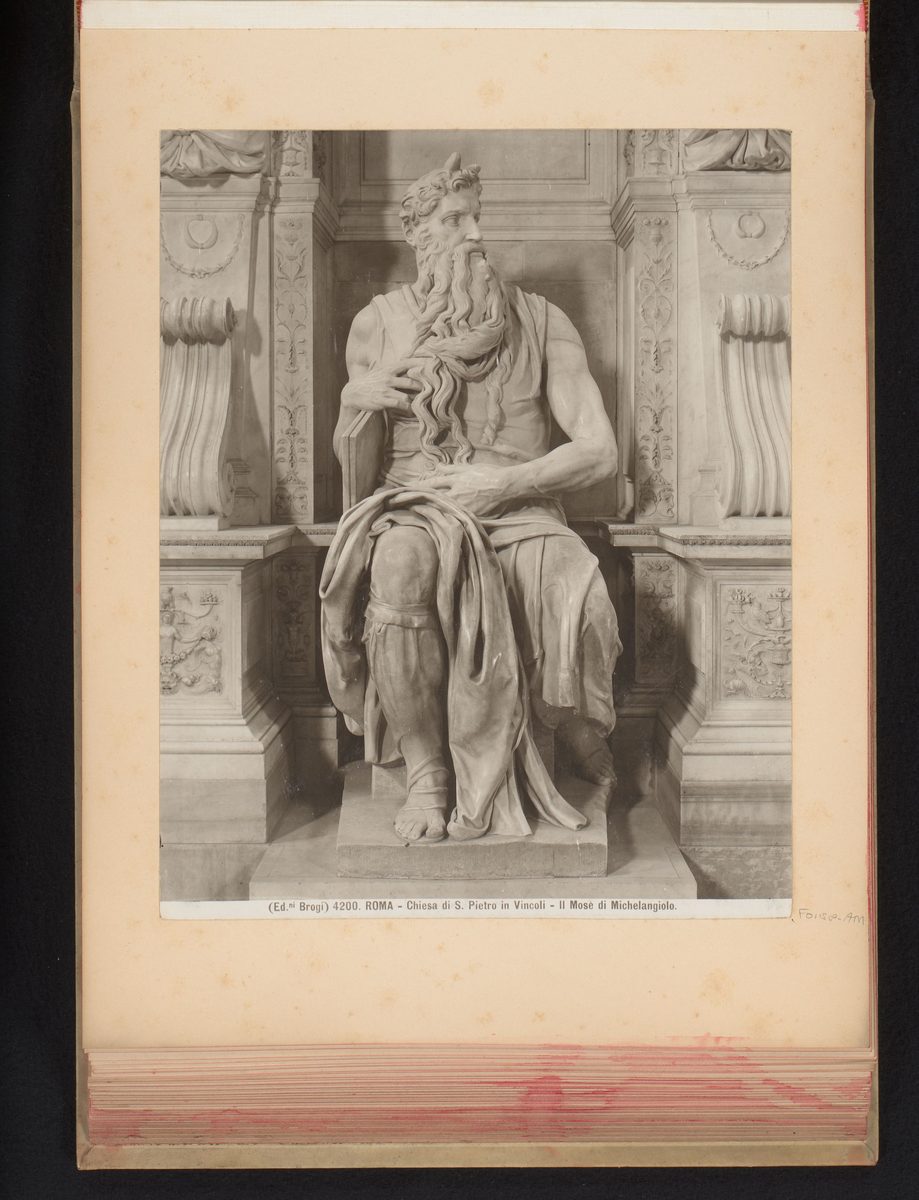
⚠ ‘The skin of his face shone’ (v29, qaran) is the same root behind the Hebrew word for ‘horn,’ keren — a coincidence of roots that produced one of the most famous mistranslations in art history. Every major English version reads ‘shone’ or ‘radiant’ — KJV, ASV, NIV, and NASB all agree — but the Douay-Rheims, translating Jerome’s Vulgate, still reads ‘his face was HORNED.’ See the new dictionary entry for the full story of how Jerome’s Latin gave Moses horns for over a thousand years, and how Michelangelo carved the mistake in marble.
This is the answer, in the same book, to the very thing Exodus 33:20, already on these pages, said was impossible: no one can see Jehovah’s face and live. Moses does not see God’s face here either — but he stands close enough, long enough, that his OWN face begins to carry a version of what he witnessed, bright enough that Aaron and all Israel are afraid to come near him (v30). The glory Moses is refused a direct look at (33:20, 23) turns out to be catching, at one remove.
Moses veils his face only when speaking with the people, and unveils it again to speak with Jehovah (vv33–35) — the opposite of what modesty would suggest. The veil is not for God’s protection or Moses’ own; it exists entirely for the congregation, who cannot bear to look at what Moses can apparently bear to carry.
Notes on this translation
Decisions. ‘Steadfast love’ chosen for chesed (v6) over KJV’s ‘goodness’ or ASV/NASB’s ‘lovingkindness’ — see the note above for the three-way split. ‘Stiffnecked’ kept as one word for qesheh-oref (v9), the fourth and final use of the term across three chapters, matching this translation’s own earlier choices. ‘Molten gods’ kept literal for the massekhah root (v17), matching Exodus 32’s own choice for the golden calf. ‘Shone’ kept for qaran (v29) rather than the Douay-Rheims’ literal Vulgate-derived ‘horned’ — see the note above and the new dictionary entry for the mistranslation’s long afterlife in art. The chapter’s own paragraph break ({פ} at v26) marks the seam between the covenant’s terms and its writing down; v35 closes with the Torah’s own {ס}. Verse numbering follows the Hebrew exactly; Hebrew and English Exodus 34 both run 1–35.
A note on order: Exodus stands on these pages at chapters 1–40 — the covenant broken at the golden calf is now fully remade: new tablets cut, the divine name proclaimed, the law repeated, and Moses himself marked, visibly, by the encounter. Exodus 35, the people’s own gifts for the tabernacle at last brought forward, and Exodus 36, the craftsmen at work and the people’s giving finally restrained, and Exodus 37, the ark and the table and the lampstand actually built, and Exodus 38, the bronze altar and the courtyard built at last, and Exodus 39, the priestly garments finally sewn, are now on these pages too. Exodus 40 — the tabernacle raised and the glory of Jehovah filling it, the book’s own last chapter — is now on these pages too. Exodus stands complete here, all forty chapters; the story continues in Leviticus, already begun on these pages.