1
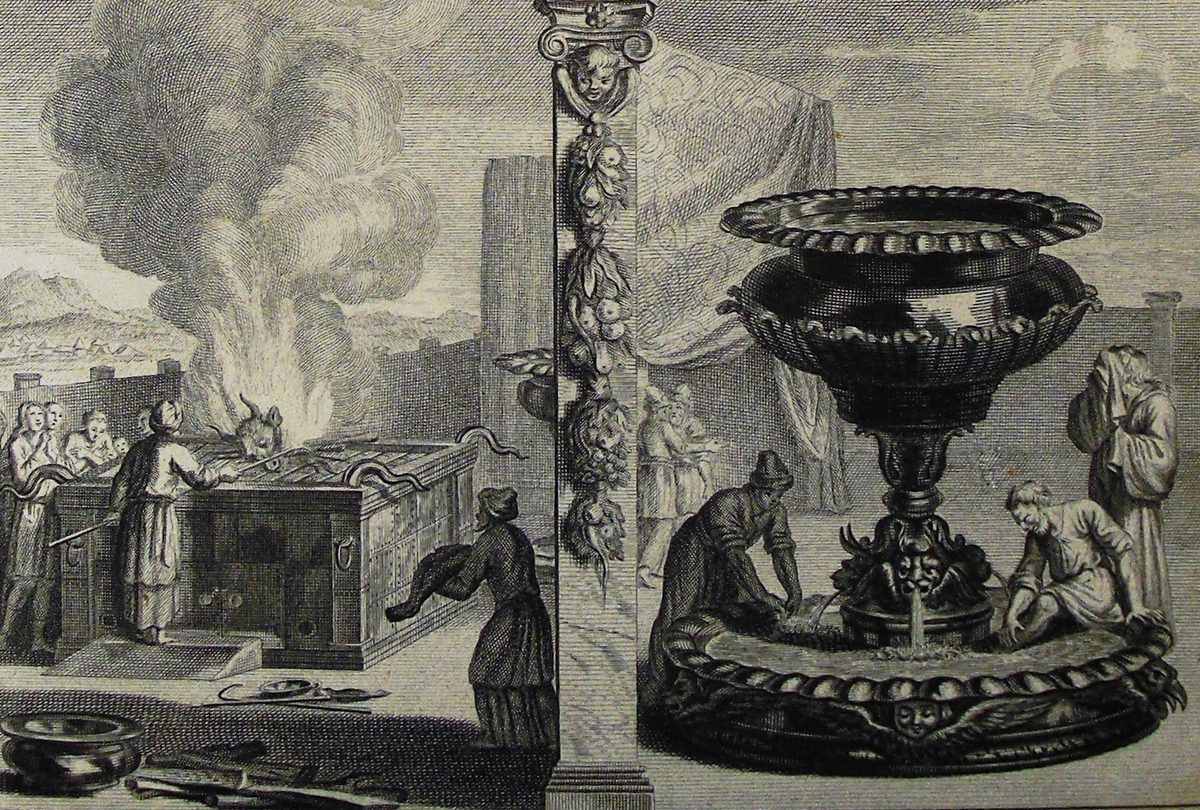
וַיַּעַשׂ אֶת-מִזְבַּח הָעֹלָה, עֲצֵי שִׁטִּים: חָמֵשׁ אַמּוֹת אָרְכּוֹ וְחָמֵשׁ-אַמּוֹת רָחְבּוֹ, רָבוּעַ, וְשָׁלֹשׁ אַמּוֹת, קֹמָתוֹ.
And he made the
altar of burnt offering of acacia wood: five cubits its length, and five cubits its breadth, square, and three cubits its height.
noteY hizo el
altar del holocausto de madera de acacia: cinco codos su longitud, y cinco codos su anchura, cuadrado, y tres codos su altura.
2
וַיַּעַשׂ קַרְנֹתָיו, עַל אַרְבַּע פִּנֹּתָיו--מִמֶּנּוּ, הָיוּ קַרְנֹתָיו; וַיְצַף אֹתוֹ, נְחֹשֶׁת.
And he made its horns on its four corners; its horns were of one piece with it, and he overlaid it with bronze.
noteY le hizo sus cuernos en sus cuatro esquinas; sus cuernos eran de una sola pieza con él, y lo cubrió de bronce.
3
וַיַּעַשׂ אֶת-כָּל-כְּלֵי הַמִּזְבֵּחַ, אֶת-הַסִּירֹת וְאֶת-הַיָּעִים וְאֶת-הַמִּזְרָקֹת, אֶת-הַמִּזְלָגֹת, וְאֶת-הַמַּחְתֹּת; כָּל-כֵּלָיו, עָשָׂה נְחֹשֶׁת.
And he made all the vessels of the altar — the pots, and the shovels, and the basins, the meat-hooks, and the fire-pans — all its vessels he made of bronze.
noteY hizo todos los utensilios del altar —las ollas, y las palas, y los tazónes, los garfios, y los braseros— todos sus utensilios los hizo de bronce.
4
וַיַּעַשׂ לַמִּזְבֵּחַ מִכְבָּר, מַעֲשֵׂה רֶשֶׁת נְחֹשֶׁת, תַּחַת כַּרְכֻּבּוֹ מִלְּמַטָּה, עַד-חֶצְיוֹ.
And he made for the altar a grating of network of bronze, under its ledge, beneath, reaching halfway up.
noteY le hizo al altar una rejilla de red de bronce, bajo su reborde, por debajo, llegando hasta la mitad.
5
וַיִּצֹק אַרְבַּע טַבָּעֹת, בְּאַרְבַּע הַקְּצָוֺת--לְמִכְבַּר הַנְּחֹשֶׁת: בָּתִּים, לַבַּדִּים.
And he cast four rings for the four ends of the bronze grating, as holders for the staves.
noteY fundió cuatro anillos para los cuatro extremos de la rejilla de bronce, como sujetadores para las varas.
6
וַיַּעַשׂ אֶת-הַבַּדִּים, עֲצֵי שִׁטִּים; וַיְצַף אֹתָם, נְחֹשֶׁת.
And he made the staves of acacia wood, and overlaid them with bronze.
noteY hizo las varas de madera de acacia, y las cubrió de bronce.
7
וַיָּבֵא אֶת-הַבַּדִּים בַּטַּבָּעֹת, עַל צַלְעֹת הַמִּזְבֵּחַ, לָשֵׂאת אֹתוֹ, בָּהֶם; נְבוּב לֻחֹת, עָשָׂה אֹתוֹ. {ס}
And he put the staves into the rings on the sides of the altar, to carry it with. He made it hollow, with boards.
{ס}noteY metió las varas por los anillos a los lados del altar, para llevarlo con ellas. Lo hizo hueco, de tablas. {ס}
8
וַיַּעַשׂ, אֵת הַכִּיּוֹר נְחֹשֶׁת, וְאֵת, כַּנּוֹ נְחֹשֶׁת--בְּמַרְאֹת, הַצֹּבְאֹת, אֲשֶׁר צָבְאוּ, פֶּתַח אֹהֶל מוֹעֵד. {ס}
And he made the
laver of bronze, and its base of bronze, from the mirrors of the
serving women who served at the door of the tent of meeting.
{ס}noteY hizo la
fuente de bronce, y su base de bronce, de los espejos de las
mujeres que servían a la puerta de la tienda de reunión.
{ס}
9
וַיַּעַשׂ, אֶת-הֶחָצֵר: לִפְאַת נֶגֶב תֵּימָנָה, קַלְעֵי הֶחָצֵר שֵׁשׁ מָשְׁזָר, מֵאָה, בָּאַמָּה.
And he made the courtyard: for the south side, southward, the hangings of the courtyard were of fine twined linen, a hundred cubits.
noteY hizo el atrio: para el lado sur, hacia el sur, las cortinas del atrio eran de lino fino torcido, cien codos.
10
עַמּוּדֵיהֶם עֶשְׂרִים, וְאַדְנֵיהֶם עֶשְׂרִים נְחֹשֶׁת; וָוֵי הָעַמּוּדִים וַחֲשֻׁקֵיהֶם, כָּסֶף.
Their pillars were twenty, and their sockets twenty, of bronze; the hooks of the pillars and their bands were of silver.
noteSus columnas eran veinte, y sus basas veinte, de bronce; los ganchos de las columnas y sus molduras eran de plata.
11
וְלִפְאַת צָפוֹן, מֵאָה בָאַמָּה--עַמּוּדֵיהֶם עֶשְׂרִים, וְאַדְנֵיהֶם עֶשְׂרִים נְחֹשֶׁת; וָוֵי הָעַמּוּדִים וַחֲשֻׁקֵיהֶם, כָּסֶף.
And for the north side, a hundred cubits, their pillars twenty, and their sockets twenty, of bronze; the hooks of the pillars and their bands of silver.
noteY para el lado norte, cien codos, sus columnas veinte, y sus basas veinte, de bronce; los ganchos de las columnas y sus molduras de plata.
12
וְלִפְאַת-יָם, קְלָעִים חֲמִשִּׁים בָּאַמָּה--עַמּוּדֵיהֶם עֲשָׂרָה, וְאַדְנֵיהֶם עֲשָׂרָה; וָוֵי הָעַמֻּדִים וַחֲשׁוּקֵיהֶם, כָּסֶף.
And for the west side, hangings of fifty cubits, their pillars ten, and their sockets ten; the hooks of the pillars and their bands of silver.
noteY para el lado occidental, cortinas de cincuenta codos, sus columnas diez, y sus basas diez; los ganchos de las columnas y sus molduras de plata.
13
וְלִפְאַת קֵדְמָה מִזְרָחָה, חֲמִשִּׁים אַמָּה.
And for the east side, eastward, fifty cubits.
noteY para el lado oriental, hacia el oriente, cincuenta codos.
14
קְלָעִים חֲמֵשׁ-עֶשְׂרֵה אַמָּה, אֶל-הַכָּתֵף; עַמּוּדֵיהֶם שְׁלֹשָׁה, וְאַדְנֵיהֶם שְׁלֹשָׁה.
The hangings for the one side of the gate were fifteen cubits; their pillars three, and their sockets three.
noteLas cortinas para un lado de la puerta eran de quince codos; sus columnas tres, y sus basas tres.
15
וְלַכָּתֵף הַשֵּׁנִית, מִזֶּה וּמִזֶּה לְשַׁעַר הֶחָצֵר, קְלָעִים, חֲמֵשׁ עֶשְׂרֵה אַמָּה; עַמֻּדֵיהֶם שְׁלֹשָׁה, וְאַדְנֵיהֶם שְׁלֹשָׁה.
And likewise for the other side; on this side and that side of the gate of the courtyard were hangings of fifteen cubits; their pillars three, and their sockets three.
noteY de igual manera para el otro lado; a un lado y al otro de la puerta del atrio había cortinas de quince codos; sus columnas tres, y sus basas tres.
16
כָּל-קַלְעֵי הֶחָצֵר סָבִיב, שֵׁשׁ מָשְׁזָר.
All the hangings of the courtyard all around were of fine twined linen.
noteTodas las cortinas del atrio alrededor eran de lino fino torcido.
17
וְהָאֲדָנִים לָעַמֻּדִים, נְחֹשֶׁת, וָוֵי הָעַמּוּדִים וַחֲשׁוּקֵיהֶם כֶּסֶף, וְצִפּוּי רָאשֵׁיהֶם כָּסֶף; וְהֵם מְחֻשָּׁקִים כֶּסֶף, כֹּל עַמֻּדֵי הֶחָצֵר.
And the sockets for the pillars were of bronze; the hooks of the pillars and their bands of silver, and the overlaying of their tops of silver; and all the pillars of the courtyard had bands of silver.
noteY las basas para las columnas eran de bronce; los ganchos de las columnas y sus molduras de plata, y el recubrimiento de sus capiteles de plata; y todas las columnas del atrio tenían molduras de plata.
18
וּמָסַךְ שַׁעַר הֶחָצֵר, מַעֲשֵׂה רֹקֵם--תְּכֵלֶת וְאַרְגָּמָן וְתוֹלַעַת שָׁנִי, וְשֵׁשׁ מָשְׁזָר; וְעֶשְׂרִים אַמָּה, אֹרֶךְ, וְקוֹמָה בְרֹחַב חָמֵשׁ אַמּוֹת, לְעֻמַּת קַלְעֵי הֶחָצֵר.
And the screen for the gate of the courtyard was the work of an embroiderer, of blue, and purple, and scarlet yarn, and fine twined linen. Twenty cubits was the length, and the height, matching the breadth, was five cubits, corresponding to the hangings of the courtyard.
noteY la cortina para la puerta del atrio era obra de un bordador, de azul, y púrpura, y grana, y lino fino torcido. Veinte codos era la longitud, y la altura, correspondiente a la anchura, era de cinco codos, correspondiendo a las cortinas del atrio.
19
וְעַמֻּדֵיהֶם, אַרְבָּעָה, וְאַדְנֵיהֶם אַרְבָּעָה, נְחֹשֶׁת; וָוֵיהֶם כֶּסֶף, וְצִפּוּי רָאשֵׁיהֶם וַחֲשֻׁקֵיהֶם כָּסֶף.
And their pillars were four, and their sockets four, of bronze; their hooks of silver, and the overlaying of their tops and their bands of silver.
noteY sus columnas eran cuatro, y sus basas cuatro, de bronce; sus ganchos de plata, y el recubrimiento de sus capiteles y sus molduras de plata.
20
וְכָל-הַיְתֵדֹת לַמִּשְׁכָּן וְלֶחָצֵר, סָבִיב--נְחֹשֶׁת. {ס}
And all the pegs of the tabernacle, and of the courtyard all around, were of bronze.
{ס}noteY todas las estacas del tabernáculo, y del atrio alrededor, eran de bronce. {ס}
21
אֵלֶּה פְקוּדֵי הַמִּשְׁכָּן מִשְׁכַּן הָעֵדֻת, אֲשֶׁר פֻּקַּד עַל-פִּי מֹשֶׁה: עֲבֹדַת, הַלְוִיִּם, בְּיַד אִיתָמָר, בֶּן-אַהֲרֹן הַכֹּהֵן.
These are the accounts of the tabernacle, the tabernacle of the testimony, as they were reckoned at the command of
Moses, by the service of the Levites, by the hand of Ithamar, the son of Aaron the priest.
noteEstas son las cuentas del tabernáculo, el tabernáculo del testimonio, según fueron calculadas por orden de Moisés, por el servicio de los levitas, por mano de Itamar, hijo de Aarón el sacerdote.
22
וּבְצַלְאֵל בֶּן-אוּרִי בֶן-חוּר, לְמַטֵּה יְהוּדָה, עָשָׂה, אֵת כָּל-אֲשֶׁר-צִוָּה יְהוָה אֶת-מֹשֶׁה.
And Bezalel the son of Uri, the son of Hur, of the tribe of Judah, made everything that
Jehovah commanded Moses.
noteY Bezalel hijo de Uri, hijo de Hur, de la tribu de Judá, hizo todo lo que Jehová mandó a Moisés.
23
וְאִתּוֹ, אָהֳלִיאָב בֶּן-אֲחִיסָמָךְ לְמַטֵּה-דָן--חָרָשׁ וְחֹשֵׁב; וְרֹקֵם, בַּתְּכֵלֶת וּבָאַרְגָּמָן, וּבְתוֹלַעַת הַשָּׁנִי, וּבַשֵּׁשׁ. {ס}
And with him was Oholiab the son of Ahisamach, of the tribe of Dan, a craftsman, and a skillful workman, and an embroiderer in blue, and in purple, and in scarlet yarn, and fine linen.
{ס}noteY con él estaba Aholiab hijo de Ahisamac, de la tribu de Dan, artesano, y obrero hábil, y bordador en azul, y en púrpura, y en grana, y lino fino. {ס}
24
כָּל-הַזָּהָב, הֶעָשׂוּי לַמְּלָאכָה, בְּכֹל, מְלֶאכֶת הַקֹּדֶשׁ--וַיְהִי זְהַב הַתְּנוּפָה, תֵּשַׁע וְעֶשְׂרִים כִּכָּר, וּשְׁבַע מֵאוֹת וּשְׁלֹשִׁים שֶׁקֶל, בְּשֶׁקֶל הַקֹּדֶשׁ.
All the gold that was used for the work, in all the work of the sanctuary — the gold of the contribution — was twenty-nine talents, and seven hundred and thirty shekels, by the shekel of the sanctuary.
noteTodo el oro que se empleó para la obra, en toda la obra del santuario —el oro de la contribución— fue de veintinueve talentos, y setecientos treinta siclos, según el siclo del santuario.
25
וְכֶסֶף פְּקוּדֵי הָעֵדָה, מְאַת כִּכָּר; וְאֶלֶף וּשְׁבַע מֵאוֹת וַחֲמִשָּׁה וְשִׁבְעִים, שֶׁקֶל--בְּשֶׁקֶל הַקֹּדֶשׁ.
And the silver from those of the congregation who were numbered was a hundred talents, and a thousand seven hundred and seventy-five shekels, by the shekel of the sanctuary:
noteY la plata de los contados de la congregación fue de cien talentos, y mil setecientos setenta y cinco siclos, según el siclo del santuario:
26
בֶּקַע, לַגֻּלְגֹּלֶת, מַחֲצִית הַשֶּׁקֶל, בְּשֶׁקֶל הַקֹּדֶשׁ--לְכֹל הָעֹבֵר עַל-הַפְּקֻדִים, מִבֶּן עֶשְׂרִים שָׁנָה וָמַעְלָה, לְשֵׁשׁ-מֵאוֹת אֶלֶף וּשְׁלֹשֶׁת אֲלָפִים, וַחֲמֵשׁ מֵאוֹת וַחֲמִשִּׁים.
a beka a head — that is, half a shekel, by the shekel of the sanctuary — for everyone who passed over to those who were numbered, from twenty years old and upward, for six hundred and three thousand, five hundred and fifty men.
noteun beka por cabeza —es decir, medio siclo, según el siclo del santuario— por todo el que pasaba entre los contados, de veinte años para arriba, por seiscientos tres mil quinientos cincuenta hombres.
27
וַיְהִי, מְאַת כִּכַּר הַכֶּסֶף, לָצֶקֶת אֵת אַדְנֵי הַקֹּדֶשׁ, וְאֵת אַדְנֵי הַפָּרֹכֶת: מְאַת אֲדָנִים לִמְאַת הַכִּכָּר, כִּכָּר לָאָדֶן.
And the hundred talents of silver were for casting the sockets of the sanctuary and the sockets of the veil: a hundred sockets for the hundred talents, a talent for a socket.
noteY los cien talentos de plata fueron para fundir las basas del santuario y las basas del velo: cien basas por los cien talentos, un talento por basa.
28
וְאֶת-הָאֶלֶף וּשְׁבַע הַמֵּאוֹת, וַחֲמִשָּׁה וְשִׁבְעִים, עָשָׂה וָוִים, לָעַמּוּדִים; וְצִפָּה רָאשֵׁיהֶם, וְחִשַּׁק אֹתָם.
And of the thousand seven hundred seventy-five shekels he made hooks for the pillars, and overlaid their tops, and made bands for them.
noteY de los mil setecientos setenta y cinco siclos hizo ganchos para las columnas, y cubrió sus capiteles, y les hizo molduras.
29
וּנְחֹשֶׁת הַתְּנוּפָה, שִׁבְעִים כִּכָּר, וְאַלְפַּיִם וְאַרְבַּע-מֵאוֹת, שָׁקֶל.
And the bronze of the contribution was seventy talents, and two thousand four hundred shekels.
noteY el bronce de la contribución fue de setenta talentos, y dos mil cuatrocientos siclos.
30
וַיַּעַשׂ בָּהּ, אֶת-אַדְנֵי פֶּתַח אֹהֶל מוֹעֵד, וְאֵת מִזְבַּח הַנְּחֹשֶׁת, וְאֶת-מִכְבַּר הַנְּחֹשֶׁת אֲשֶׁר-לוֹ; וְאֵת, כָּל-כְּלֵי הַמִּזְבֵּחַ.
And with it he made the sockets for the door of the tent of meeting, and the bronze altar, and the bronze grating for it, and all the vessels of the altar,
noteY con él hizo las basas de la puerta de la tienda de reunión, y el altar de bronce, y la rejilla de bronce para él, y todos los utensilios del altar,
31
וְאֶת-אַדְנֵי הֶחָצֵר סָבִיב, וְאֶת-אַדְנֵי שַׁעַר הֶחָצֵר; וְאֵת כָּל-יִתְדֹת הַמִּשְׁכָּן וְאֶת-כָּל-יִתְדֹת הֶחָצֵר, סָבִיב.
and the sockets of the courtyard all around, and the sockets of the gate of the courtyard, and all the pegs of the tabernacle, and all the pegs of the courtyard all around.
notey las basas del atrio alrededor, y las basas de la puerta del atrio, y todas las estacas del tabernáculo, y todas las estacas del atrio alrededor.
The other altar, finally built
The bronze altar of burnt offering repeats Exodus 27:1–8, already on these pages, measurement for measurement — the same hollow construction, the same network grating reaching halfway up, the same horns ‘of one piece with it’ already discussed at length in the dictionary entry for this word. Bronze outside for blood, gold inside for incense (Exodus 37:25–26, already on these pages): the courtyard altar and the inner altar are, at last, both standing.
A basin made from mirrors, a detail the instructions never gave
‘He made the laver of bronze… from the mirrors of the serving women who served at the door of the tent of meeting’ (v8) is entirely new information — the original command for this object (Exodus 30:17–18, already on these pages) says only ‘a laver of bronze,’ with no source given at all. Of every object in the tabernacle, this is the only one whose raw material the text bothers to name, and it names something startling: personal mirrors, handed over by women whose own role at the tent’s entrance the Torah never fully explains. ⚠ The shelf splits on exactly that ambiguity: KJV reads the root’s military sense almost literally, ‘the women ASSEMBLING, which assembled’; ASV softens to ‘the ministering women that ministered’; NIV and NASB both flatten it further to the generic ‘served.’ No version fully carries over what the Hebrew root usually means elsewhere — an army mustered for duty.
⚠ Later rabbinic tradition, most famously Rashi, filled the silence with a story: that these mirrors had once been used by Israelite women in Egypt to draw their exhausted husbands back to them under slavery, and were therefore, in God’s own words to a reluctant Moses, ‘more precious to Me than anything else’ — the very instrument of desire that kept a slave people reproducing now melted into the object that will wash the hands of its priests. Nothing in the Hebrew text of Exodus itself tells this story; it survives as interpretation, not as narration — but it is the oldest and most persistent answer to a question the plain text raises and never closes: why single out, of all the freewill gifts in two chapters of gold and silver, exactly these.
A perimeter of linen, measured and closed
Every hanging, pillar, and socket here repeats Exodus 27:9–19, already on these pages: a hundred cubits north and south, fifty east and west, the gate’s own screen twenty cubits wide and five high, ‘corresponding to the hangings of the courtyard’ (v18) so that the fence and its one opening read as a single continuous wall. Bronze below the ground line, silver at eye level, on every pillar without exception — the same two-metal rule already fixed for the tabernacle’s own boards, now extended to the fence around it.
The gold accounted for, to the shekel
The chapter closes with something the tabernacle account has not done before: a formal audit, ‘the accounts of the tabernacle… by the hand of Ithamar, the son of Aaron the priest’ (v21) — the first time this particular son of Aaron is given any active responsibility on these pages, after being named twice already (Exodus 6:23 and 28:1, both already on these pages). Every talent and shekel of gold, silver, and bronze that passed through the camp is itemized and its destination named — the sockets, the hooks, the altar, the pegs — a level of financial transparency this book has not offered for any other project, sacred or otherwise.
⚠ The arithmetic actually works: a hundred talents and 1,775 shekels of silver, collected at a flat half-shekel per head (v26), divides out to exactly 603,550 men — the very total the verse itself states. The tax total and the census total check each other, in the text’s own numbers, without either one needing to say so directly.
Read against three chapters back, the whole account reads like a quiet correction. The golden calf was gold taken from the people and turned, in secret, into an idol no one could account for. This is gold taken from the people and turned, in public, into a building whose every ounce is written down and signed for.
Notes on this translation
Decisions. ‘Serving women’ kept for the rare root tzava (v8) rather than ‘ministering’ or a flattened ‘served’ — see the note above for the word’s usual military sense and the real fork in the shelf. ‘Laver’ kept for kiyor, matching this translation’s own earlier choice at Exodus 30:18. ‘Bronze’ kept throughout rather than ‘brass,’ matching this translation’s own established convention. The chapter’s four paragraph breaks ({ס} at v7, {ס} at v8, {ס} at v20, {ס} at v23) mark the seam after each finished object and after the credits before the accounting begins. Verse numbering follows the Hebrew exactly; Hebrew and English Exodus 38 both run 1–31.
A note on order: Exodus stands on these pages at chapters 1–40 — the bronze altar and courtyard built at last, the laver made from women’s own mirrors, and the whole project audited to the shekel, under Ithamar’s hand. Exodus 39, the priestly garments finally sewn, is now on these pages too. Exodus 40 — the tabernacle raised and the glory of Jehovah filling it, the book’s own last chapter — is now on these pages too. Exodus stands complete here, all forty chapters; the story continues in Leviticus, already begun on these pages.