1
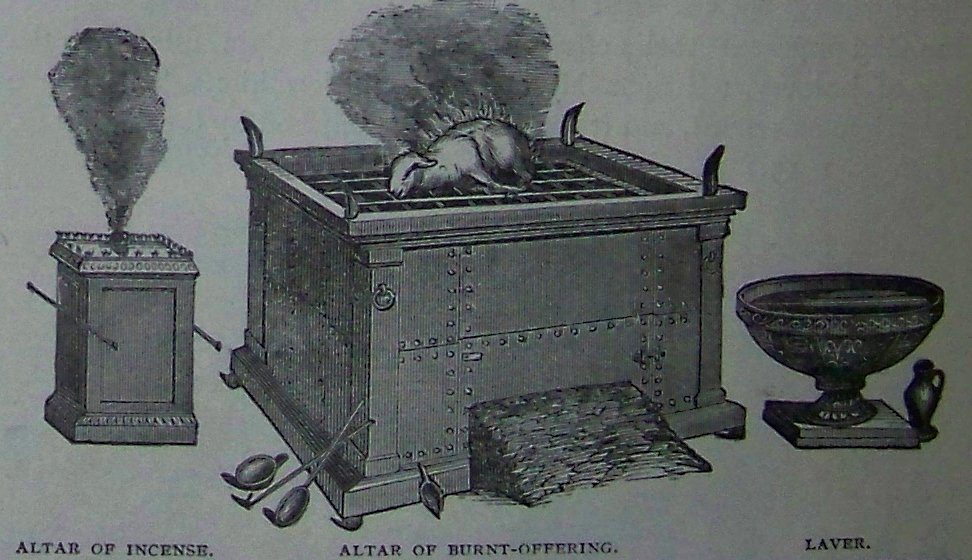
וְעָשִׂיתָ מִזְבֵּחַ, מִקְטַר קְטֹרֶת; עֲצֵי שִׁטִּים, תַּעֲשֶׂה אֹתוֹ.
And you shall make an altar for the burning of incense; of acacia wood you shall make it.
noteY harás un altar para quemar incienso; de madera de acacia lo harás.
2
אַמָּה אָרְכּוֹ וְאַמָּה רָחְבּוֹ, רָבוּעַ יִהְיֶה, וְאַמָּתַיִם, קֹמָתוֹ; מִמֶּנּוּ, קַרְנֹתָיו.
A cubit its length, and a cubit its width — square shall it be — and two cubits its height; of one piece with it shall its horns be.
noteUn codo su longitud, y un codo su anchura —cuadrado será— y dos codos su altura; sus cuernos serán de una sola pieza con él.
3
וְצִפִּיתָ אֹתוֹ זָהָב טָהוֹר, אֶת-גַּגּוֹ וְאֶת-קִירֹתָיו סָבִיב--וְאֶת-קַרְנֹתָיו; וְעָשִׂיתָ לּוֹ זֵר זָהָב, סָבִיב.
And you shall overlay it with pure gold — its top, and its sides all around, and its horns — and you shall make for it a molding of gold all around.
noteY lo cubrirás de oro puro —su parte superior, y sus paredes alrededor, y sus cuernos— y le harás una moldura de oro alrededor.
4
וּשְׁתֵּי טַבְּעֹת זָהָב תַּעֲשֶׂה-לּוֹ מִתַּחַת לְזֵרוֹ, עַל שְׁתֵּי צַלְעֹתָיו--תַּעֲשֶׂה, עַל-שְׁנֵי צִדָּיו; וְהָיָה לְבָתִּים לְבַדִּים, לָשֵׂאת אֹתוֹ בָּהֵמָּה.
And two rings of gold you shall make for it, under its molding, on its two sides — on its two ribs you shall make them — and they shall be holders for poles, to carry it by.
noteY le harás dos anillos de oro debajo de su moldura, en sus dos costados —los harás en sus dos lados— y serán para meter las varas con que se llevará.
5
וְעָשִׂיתָ אֶת-הַבַּדִּים, עֲצֵי שִׁטִּים; וְצִפִּיתָ אֹתָם, זָהָב.
And you shall make the poles of acacia wood, and overlay them with gold.
noteY harás las varas de madera de acacia, y las cubrirás de oro.
6
וְנָתַתָּה אֹתוֹ לִפְנֵי הַפָּרֹכֶת, אֲשֶׁר עַל-אֲרֹן הָעֵדֻת--לִפְנֵי הַכַּפֹּרֶת, אֲשֶׁר עַל-הָעֵדֻת, אֲשֶׁר אִוָּעֵד לְךָ, שָׁמָּה.
Y lo pondrás delante del velo que está junto al arca del testimonio, delante de la cubierta que está sobre el testimonio, donde me reuniré contigo.
7
וְהִקְטִיר עָלָיו אַהֲרֹן, קְטֹרֶת סַמִּים; בַּבֹּקֶר בַּבֹּקֶר, בְּהֵיטִיבוֹ אֶת-הַנֵּרֹת--יַקְטִירֶנָּה.
And Aaron shall burn on it incense of spices; morning by morning, when he tends the lamps, he shall burn it.
noteY Aarón quemará sobre él incienso de especias; mañana tras mañana, cuando arregle las lámparas, lo quemará.
8
וּבְהַעֲלֹת אַהֲרֹן אֶת-הַנֵּרֹת בֵּין הָעַרְבַּיִם, יַקְטִירֶנָּה--קְטֹרֶת תָּמִיד לִפְנֵי יְהוָה, לְדֹרֹתֵיכֶם.
And when Aaron lights the lamps between the two evenings, he shall burn it — a continual incense before
Jehovah, throughout your generations.
noteY cuando Aarón encienda las lámparas entre las dos tardes, lo quemará —incienso continuo delante de Jehová, por vuestras generaciones.
9
לֹא-תַעֲלוּ עָלָיו קְטֹרֶת זָרָה, וְעֹלָה וּמִנְחָה; וְנֵסֶךְ, לֹא תִסְּכוּ עָלָיו.
You shall offer no
strange incense on it, nor burnt offering, nor grain offering; and you shall pour no drink offering on it.
noteNo ofreceréis sobre él incienso
extraño, ni holocausto, ni ofrenda de grano; ni derramaréis sobre él libación.
10
וְכִפֶּר אַהֲרֹן עַל-קַרְנֹתָיו, אַחַת בַּשָּׁנָה: מִדַּם חַטַּאת הַכִּפֻּרִים, אַחַת בַּשָּׁנָה יְכַפֵּר עָלָיו לְדֹרֹתֵיכֶם--קֹדֶשׁ-קָדָשִׁים הוּא, לַיהוָה. {פ}
And Aaron shall make
atonement on its horns once in the year; with the blood of the sin offering of atonement he shall make atonement for it once in the year, throughout your generations — it is most holy to Jehovah.
{פ}noteY Aarón hará expiación sobre sus cuernos una vez al año; con la sangre de la ofrenda por el pecado de expiación hará expiación por él una vez al año, por vuestras generaciones —santísimo es, para Jehová. {פ}
11
וַיְדַבֵּר יְהוָה, אֶל-מֹשֶׁה לֵּאמֹר.
Y habló Jehová a Moisés, diciendo:
12
כִּי תִשָּׂא אֶת-רֹאשׁ בְּנֵי-יִשְׂרָאֵל, לִפְקֻדֵיהֶם, וְנָתְנוּ אִישׁ כֹּפֶר נַפְשׁוֹ לַיהוָה, בִּפְקֹד אֹתָם; וְלֹא-יִהְיֶה בָהֶם נֶגֶף, בִּפְקֹד אֹתָם.
When you
lift up the head of the children of Israel, to number them, then each man shall give a ransom for his soul to Jehovah, when you number them; that there be no plague among them, when you number them.
noteCuando levantes la cabeza de los hijos de Israel para contarlos, cada uno dará a Jehová rescate por su alma cuando los cuentes; y no habrá entre ellos plaga cuando los cuentes.
13
זֶה יִתְּנוּ, כָּל-הָעֹבֵר עַל-הַפְּקֻדִים--מַחֲצִית הַשֶּׁקֶל, בְּשֶׁקֶל הַקֹּדֶשׁ: עֶשְׂרִים גֵּרָה, הַשֶּׁקֶל--מַחֲצִית הַשֶּׁקֶל, תְּרוּמָה לַיהוָה.
This they shall give, everyone who crosses over to those who are numbered: half a shekel, by the shekel of the sanctuary — the shekel is twenty gerahs — half a shekel as a contribution to Jehovah.
noteEsto darán todos los que pasen entre los contados: medio siclo, según el siclo del santuario —el siclo es de veinte géras— medio siclo como contribución a Jehová.
14
כֹּל, הָעֹבֵר עַל-הַפְּקֻדִים, מִבֶּן עֶשְׂרִים שָׁנָה, וָמָעְלָה--יִתֵּן, תְּרוּמַת יְהוָה.
Everyone who crosses over to those who are numbered, from twenty years old and up, shall give the contribution to Jehovah.
noteTodo el que pase entre los contados, de veinte años arriba, dará la contribución a Jehová.
15
הֶעָשִׁיר לֹא-יַרְבֶּה, וְהַדַּל לֹא יַמְעִיט, מִמַּחֲצִית, הַשָּׁקֶל--לָתֵת אֶת-תְּרוּמַת יְהוָה, לְכַפֵּר עַל-נַפְשֹׁתֵיכֶם.
The rich shall not give more, and the poor shall not give less, than the half shekel, when giving the contribution to Jehovah, to make
atonement for your souls.
noteEl rico no dará más, ni el pobre dará menos, del medio siclo, al dar la contribución a Jehová, para hacer expiación por vuestras almas.
16
וְלָקַחְתָּ אֶת-כֶּסֶף הַכִּפֻּרִים, מֵאֵת בְּנֵי יִשְׂרָאֵל, וְנָתַתָּ אֹתוֹ, עַל-עֲבֹדַת אֹהֶל מוֹעֵד; וְהָיָה לִבְנֵי יִשְׂרָאֵל לְזִכָּרוֹן לִפְנֵי יְהוָה, לְכַפֵּר עַל-נַפְשֹׁתֵיכֶם. {פ}
And you shall take the atonement money from the children of Israel, and give it for the service of the tent of meeting; and it shall be a memorial for the children of Israel before Jehovah, to make atonement for your souls.
{פ}noteY tomarás el dinero de las expiaciones de los hijos de Israel, y lo darás para el servicio de la tienda de reunión; y será para los hijos de Israel una memoria delante de Jehová, para hacer expiación por vuestras almas. {פ}
17
וַיְדַבֵּר יְהוָה, אֶל-מֹשֶׁה לֵּאמֹר.
And Jehovah spoke to Moses, saying:
noteY habló Jehová a Moisés, diciendo:
18
וְעָשִׂיתָ כִּיּוֹר נְחֹשֶׁת, וְכַנּוֹ נְחֹשֶׁת--לְרָחְצָה; וְנָתַתָּ אֹתוֹ, בֵּין-אֹהֶל מוֹעֵד וּבֵין הַמִּזְבֵּחַ, וְנָתַתָּ שָׁמָּה, מָיִם.
You shall also make a laver of bronze, and its base of bronze, for washing; and you shall put it between the tent of meeting and the altar, and put water in it.
noteHarás también una fuente de bronce, con su base de bronce, para lavar; y la pondrás entre la tienda de reunión y el altar, y pondrás agua en ella.
19
וְרָחֲצוּ אַהֲרֹן וּבָנָיו, מִמֶּנּוּ, אֶת-יְדֵיהֶם, וְאֶת-רַגְלֵיהֶם.
And Aaron and his sons shall wash their hands and their feet from it.
noteY Aarón y sus hijos lavarán en ella sus manos y sus pies.
20
בְּבֹאָם אֶל-אֹהֶל מוֹעֵד, יִרְחֲצוּ-מַיִם--וְלֹא יָמֻתוּ; אוֹ בְגִשְׁתָּם אֶל-הַמִּזְבֵּחַ לְשָׁרֵת, לְהַקְטִיר אִשֶּׁה לַיהוָה.
When they go into the tent of meeting, they shall wash with water, that they die not; or when they come near the altar to minister, to make an offering by fire smoke to Jehovah,
noteCuando entren en la tienda de reunión, se lavarán con agua, para que no mueran; o cuando se acerquen al altar para ministrar, para hacer arder una ofrenda encendida a Jehová,
21
וְרָחֲצוּ יְדֵיהֶם וְרַגְלֵיהֶם, וְלֹא יָמֻתוּ; וְהָיְתָה לָהֶם חָק-עוֹלָם לוֹ וּלְזַרְעוֹ, לְדֹרֹתָם. {פ}
they shall wash their hands and their feet, that they die not; and it shall be a statute forever for them — for him and for his seed — throughout their generations.
{פ}notese lavarán las manos y los pies, para que no mueran; y será para ellos estatuto perpetuo —para él y para su descendencia— por sus generaciones. {פ}
22
וַיְדַבֵּר יְהוָה, אֶל-מֹשֶׁה לֵּאמֹר.
And Jehovah spoke to Moses, saying:
noteY habló Jehová a Moisés, diciendo:
23
וְאַתָּה קַח-לְךָ, בְּשָׂמִים רֹאשׁ, מָר-דְּרוֹר חֲמֵשׁ מֵאוֹת, וְקִנְּמָן-בֶּשֶׂם מַחֲצִיתוֹ חֲמִשִּׁים וּמָאתָיִם; וּקְנֵה-בֹשֶׂם, חֲמִשִּׁים וּמָאתָיִם.
Take also for yourself the finest spices: of flowing myrrh five hundred shekels, and of fragrant cinnamon half as much, two hundred and fifty, and of fragrant cane two hundred and fifty,
noteToma también para ti las mejores especias: de mirra líquida quinientos siclos, y de canela aromática la mitad, doscientos cincuenta, y de caña aromática doscientos cincuenta,
24
וְקִדָּה, חֲמֵשׁ מֵאוֹת בְּשֶׁקֶל הַקֹּדֶשׁ; וְשֶׁמֶן זַיִת, הִין.
and of cassia five hundred, by the shekel of the sanctuary, and of olive oil a hin.
notey de casia quinientos, según el siclo del santuario, y de aceite de oliva un hin.
25
וְעָשִׂיתָ אֹתוֹ, שֶׁמֶן מִשְׁחַת-קֹדֶשׁ--רֹקַח מִרְקַחַת, מַעֲשֵׂה רֹקֵחַ; שֶׁמֶן מִשְׁחַת-קֹדֶשׁ, יִהְיֶה.
And you shall make of it a holy anointing oil, a blended
perfume, the work of a perfumer; it shall be a holy anointing oil.
noteY harás de ello aceite de la santa unción,
perfume compuesto según el arte del perfumista; aceite de la santa unción será.
26
וּמָשַׁחְתָּ בוֹ, אֶת-אֹהֶל מוֹעֵד, וְאֵת, אֲרוֹן הָעֵדֻת.
And you shall anoint with it the tent of meeting, and the ark of the testimony,
noteY ungirás con él la tienda de reunión, y el arca del testimonio,
27
וְאֶת-הַשֻּׁלְחָן, וְאֶת-כָּל-כֵּלָיו, וְאֶת-הַמְּנֹרָה, וְאֶת-כֵּלֶיהָ; וְאֵת, מִזְבַּח הַקְּטֹרֶת.
and the table and all its vessels, and the lampstand and its vessels, and the altar of incense,
notey la mesa y todos sus utensilios, y el candelero y sus utensilios, y el altar del incienso,
28
וְאֶת-מִזְבַּח הָעֹלָה, וְאֶת-כָּל-כֵּלָיו; וְאֶת-הַכִּיֹּר, וְאֶת-כַּנּוֹ.
and the altar of burnt offering with all its vessels, and the laver and its base.
notey el altar del holocausto con todos sus utensilios, y la fuente y su base.
29
וְקִדַּשְׁתָּ אֹתָם, וְהָיוּ קֹדֶשׁ קָדָשִׁים; כָּל-הַנֹּגֵעַ בָּהֶם, יִקְדָּשׁ.
And you shall
sanctify them, that they may be most holy; whatever touches them shall become holy.
noteY los
santificarás, para que sean santísimos; todo lo que los toque será santo.
30
וְאֶת-אַהֲרֹן וְאֶת-בָּנָיו, תִּמְשָׁח; וְקִדַּשְׁתָּ אֹתָם, לְכַהֵן לִי.
And you shall anoint Aaron and his sons, and sanctify them, that they may serve as priests to me.
noteY ungirás a Aarón y a sus hijos, y los santificarás, para que me sirvan como sacerdotes.
31
וְאֶל-בְּנֵי יִשְׂרָאֵל, תְּדַבֵּר לֵאמֹר: שֶׁמֶן מִשְׁחַת-קֹדֶשׁ יִהְיֶה זֶה, לִי--לְדֹרֹתֵיכֶם.
And you shall speak to the children of Israel, saying: This shall be a holy anointing oil to me, throughout your generations.
noteY hablarás a los hijos de Israel, diciendo: Este será para mí aceite de la santa unción, por vuestras generaciones.
32
עַל-בְּשַׂר אָדָם, לֹא יִיסָךְ, וּבְמַתְכֻּנְתּוֹ, לֹא תַעֲשׂוּ כָּמֹהוּ; קֹדֶשׁ הוּא, קֹדֶשׁ יִהְיֶה לָכֶם.
It shall not be poured on the flesh of an ordinary man, and you shall not make anything like it, by its composition; it is holy, it shall be holy to you.
noteNo se derramará sobre carne de hombre ordinario, ni haréis otro semejante, según su composición; santo es, santo será para vosotros.
33
אִישׁ אֲשֶׁר יִרְקַח כָּמֹהוּ, וַאֲשֶׁר יִתֵּן מִמֶּנּוּ עַל-זָר--וְנִכְרַת, מֵעַמָּיו. {ס}
Whoever
compounds any like it, or whoever puts any of it on an outsider, shall be
cut off from his people.
{ס}noteCualquiera que
componga otro semejante, o que ponga de él sobre un extraño, será
cortado de su pueblo.
{ס}
34
וַיֹּאמֶר יְהוָה אֶל-מֹשֶׁה קַח-לְךָ סַמִּים, נָטָף וּשְׁחֵלֶת וְחֶלְבְּנָה, סַמִּים, וּלְבֹנָה זַכָּה: בַּד בְּבַד, יִהְיֶה.
And Jehovah said to Moses: Take for yourself spices — stacte, and onycha, and galbanum — spices, with pure frankincense; there shall be an equal part of each.
noteY dijo Jehová a Moisés: Toma para ti especias —estacte, y uña aromática, y gálbano— especias, con incienso puro; en igual peso cada una.
35
וְעָשִׂיתָ אֹתָהּ קְטֹרֶת, רֹקַח מַעֲשֵׂה רוֹקֵחַ, מְמֻלָּח, טָהוֹר קֹדֶשׁ.
And you shall make of it incense, a blended
perfume, the work of a perfumer, seasoned with salt, pure, holy.
noteY harás de ello incienso,
perfume según el arte del perfumista, sazonado con sal, puro, santo.
36
וְשָׁחַקְתָּ מִמֶּנָּה, הָדֵק, וְנָתַתָּה מִמֶּנָּה לִפְנֵי הָעֵדֻת בְּאֹהֶל מוֹעֵד, אֲשֶׁר אִוָּעֵד לְךָ שָׁמָּה; קֹדֶשׁ קָדָשִׁים, תִּהְיֶה לָכֶם.
And you shall beat some of it very fine, and put some of it before the testimony in the tent of meeting, where I will meet with you; it shall be most holy to you.
noteY molerás una parte de él muy fino, y pondrás de él delante del testimonio en la tienda de reunión, donde me reuniré contigo; santísimo será para vosotros.
37
וְהַקְּטֹרֶת, אֲשֶׁר תַּעֲשֶׂה--בְּמַתְכֻּנְתָּהּ, לֹא תַעֲשׂוּ לָכֶם; קֹדֶשׁ תִּהְיֶה לְךָ, לַיהוָה.
And the incense that you make, by its composition you shall not make for yourselves; it shall be holy to you, for Jehovah.
noteY el incienso que hagas, según su composición no lo haréis para vosotros; santo será para ti, para Jehová.
38
אִישׁ אֲשֶׁר-יַעֲשֶׂה כָמוֹהָ, לְהָרִיחַ בָּהּ--וְנִכְרַת, מֵעַמָּיו. {ס}
Whoever makes any like it, to enjoy its fragrance, shall be
cut off from his people.
{ס}noteCualquiera que haga otro semejante, para disfrutar de su fragancia, será
cortado de su pueblo.
{ס}
An altar the building project seemed to forget, built from its own name twice over
This altar arrives late — after the ordination itself, one chapter past the point the tabernacle’s furniture list should already have closed. Every other object inside the tent (the ark, the table, the lampstand, the altar of burnt offering) was specified back in Exodus 25–27, before Aaron ever had garments to wear or hands to be filled. This one is tacked on here instead, and the text itself seems to notice: v1 names it only by what it DOES — mizbeach, miktar ketoret, ‘an altar, a BURNING of incense,’ the noun miktar built from the very same root (q-t-r) as the incense (ketoret) it burns, one root doing both jobs in the clause that introduces the object. ⚠ Only later, once it is finally put to use (v27, a few lines down in this same chapter), does the text give it a proper name: ‘the altar OF INCENSE’ — a function first, a name second, the identical two-stage move Exodus 29’s own note already flagged for the gold plate that becomes ‘the holy diadem.’ The horns are made ‘of one piece with it’ (v2) — the exact formula Exodus 27 used for the bronze altar’s own horns, so this is the SECOND altar built to that rule — and its gold molding (v3, zer) is the THIRD piece of furniture to wear one, after the ark’s (25:11) and the table’s (25:24, both already on these pages).
Aaron tends the lamps ‘morning by morning’ (baboker baboker, v7, the doubled noun this translation has already flagged elsewhere as Hebrew’s own way of saying ‘every’) and lights them ‘between the two evenings’ (v8) — bein ha-arbayim, the identical phrase already fixed for the Passover lamb’s slaughter (Exodus 12:6) and reused twice more for the priesthood’s own daily offering (Exodus 29:39, 41) — its THIRD chapter running the same clock. ⚠ No ‘strange’ incense may go on it (v9, ketoret zarah) — the same adjective that will name the single most famous transgression in the priesthood’s whole history, ‘strange fire’ (eish zarah, Leviticus 10:1, already on these pages), the offering that kills Aaron’s two eldest sons. Checked against the shelf at this exact verse: KJV, ASV, and NASB all keep ‘strange’ here; NIV smooths it to ‘any other incense,’ losing precisely the word that will indict Aaron’s sons three books later. And v10 packs the root kaphar, ‘to atone,’ into one clause three times over — ‘Aaron shall make ATONEMENT… with the blood of the sin offering of ATONEMENT… he shall make ATONEMENT’ — the same emphatic tripling Exodus 29:36 already used, now marking this altar’s own once-a-YEAR ritual: the first appearance, on these pages, of the rite that becomes Yom Kippur.
A census paid in coin, and the densest cluster of ‘atonement’ in the book so far
The command to number Israel is given as the very idiom this translation has already dictionary-linked: to LIFT UP THE HEAD of the children of Israel (v12) — the same court phrase that meant pardon for Pharaoh’s cupbearer and execution for his baker (Genesis 40:13, 19, already on these pages), now doing quiet civic duty as the standing Hebrew term for a headcount. ⚠ Five verses (12–16) use the root kaphar, ‘to atone,’ FOUR separate times — a ransom (kofer, v12) FOR his soul, TO make atonement (v15), atonement MONEY (kesef ha-kippurim, v16), and to make atonement (v16 again) — the densest cluster of the root anywhere in Exodus so far, denser even than the triple already flagged one chapter back. The ransom is a flat HALF SHEKEL — twenty gerahs to the shekel, a gerah roughly a twentieth of an ounce of silver — and v15 makes the leveling explicit: ‘the rich shall not give more, and the poor shall not give less.’ A man’s life, priced identically regardless of his means.
⚠ This exact half-shekel survives roughly thirteen centuries, unchanged, as the annual didrachma tax Jesus and Peter pay in Matthew 17:24–27 (already on these pages) — the tabernacle’s own ransom money, still funding ‘the service of the tent of meeting’ (v16) long after the tent itself has become a temple. The dictionary entries for lytron and didrachmon track the coin on the Greek side of that thirteen-century gap.
The third and fourth ‘that he die not,’ and a statute stitched from two earlier ones
‘That they die not’ (vv20, 21) is the THIRD and FOURTH time this exact warning has attached itself to a priestly duty — first over the bells on Aaron’s robe (Exodus 28:35, already on these pages: ‘so that he does not die’), then over the garments themselves (28:43: ‘so that they do not bear iniquity and die’), now twice over a basin of plain water. The danger was never the object; it is proximity to the holy without the prescribed preparation, whatever form that preparation takes. The laver itself (v18) splits the shelf down an old-vs-new line: KJV, ASV, and NASB all keep the archaic ‘laver’; NIV modernizes it to ‘basin’ — a case where this translation follows the older word, since ‘laver’ still names a purpose-built washing vessel and ‘basin’ could be almost anything. ⚠ Verse 21’s closing formula is itself a splice of two earlier ones: ‘an eternal statute FOR THEM’ — Aaron and his sons together — narrows mid-clause to ‘for HIM and for his seed’, the exact phrase 28:43 used, but this verse then closes it with ‘throughout their generations’ (ledorotam), the more familiar ending already fixed at 12:14 and 27:21. Two formulas the text has used separately elsewhere are stitched into one sentence here.
Two recipes, one shared cognate phrase, and the same ‘outsider’ twice
The anointing oil and the incense are each described, verbatim, as ‘a blended perfume, THE WORK OF A PERFUMER’ (rokach ma’aseh rokeach) — the identical four-word Hebrew phrase, at v25 for the oil and again at v35 for the incense. Recipe and craftsman share one root twice over, the same cognate-noun device this translation has already flagged for ‘the ram OF FILLING’ (Exodus 29, already on these pages). ⚠ Here the shelf itself has quietly modernized: KJV reads ‘the art of the APOTHECARY’ (v25), a word that has aged out of ordinary English entirely; ASV, NIV, and NASB all update it to ‘perfumer’ — one of the rare places the whole modern shelf agrees against the KJV. And the two recipes’ prohibitions are built the same way too: neither may be reproduced ‘by its composition’ (matkonet, vv32 and 37, one word for both). ⚠ Verse 33’s warning against giving the oil to ‘an outsider’ (zar) reuses the exact word already flagged at Exodus 29:33, ‘an outsider shall not eat of them’ — the same boundary, drawn twice, around two different sacred substances one chapter apart. And ‘whatever touches them shall become holy’ (v29) is the identical formula already used for the altar itself at Exodus 29:37, holiness here as contagious as it was there.
The recipe itself is exact and unglamorous: five hundred shekels of myrrh, two hundred fifty each of cinnamon and cane, five hundred of cassia, one hin of olive oil (vv23–24) — a formula this translation renders as given, without the later legend (not found in this text) that the batch was never remade.
‘Where I will meet with you,’ said twice, and the chapter closes the ring it opened
Verse 34 breaks its own chapter’s pattern before it even starts: where vv11, 17, and 22 each open ‘Jehovah SPOKE to Moses, saying’ (vayedaber…leimor), this one simply reads ‘Jehovah SAID to Moses’ (vayomer) — no formal heading, a smaller seam than the other three carry. ⚠ And v36 places the finished incense ‘before the testimony… where I will meet with you’ (asher iva’ed lecha shammah) — the identical clause v6 already used to place the altar itself, at the very start of this chapter. The chapter opens by building the object at the place of meeting and closes by grinding its incense fine for the very same place — one clause, spoken twice, holding the whole chapter together. The final warning (v38) repeats v33’s cut off from his people for a SECOND, lesser offense — not selling the formula, merely making it ‘to enjoy its fragrance’ — private enjoyment alone is karet-worthy, no transaction required.
Notes on this translation
Decisions. ‘Molding’ for zer (v3), matching the ark’s and the table’s own gold crowns rather than varying the English for the same recurring object. ‘Cover’ kept for kapporet (v6) and ‘veil’ for parochet, per the established entries. ‘Contribution’ kept for terumah (vv13–15), consistent with Exodus 25’s own decision. The five paragraph breaks the Masoretic text itself marks in this chapter ({פ} at vv10, 16, 21; {ס} at vv33, 38) line up exactly with this note’s own five sections — the altar, the census, the laver, the anointing oil, and the incense, each closed by the scroll’s own scribal hand before this translation ever grouped them. Verse numbering follows the Hebrew exactly; Hebrew and English Exodus 30 both run 1–38.
A note on order: Exodus stands on these pages at chapters 1–40 — every piece of the tabernacle is now built, anointed, and named, and the priesthood has its yearly ransom besides. Exodus 31, the naming of Bezalel and Oholiab and the sabbath command that closes the whole instruction, and Exodus 32, the golden calf and Moses’ intercession, and Exodus 33, Moses’ plea to see Jehovah’s glory and his glimpse of God’s back from the cleft of the rock, and Exodus 34, the covenant remade and Moses’ own face left shining, and Exodus 35, the people’s own gifts for the tabernacle at last brought forward, and Exodus 36, the craftsmen at work and the people’s giving finally restrained, and Exodus 37, the ark and the table and the lampstand actually built, and Exodus 38, the bronze altar and the courtyard built at last, and Exodus 39, the priestly garments finally sewn, are now on these pages too. Exodus 40 — the tabernacle raised and the glory of Jehovah filling it, the book’s own last chapter — is now on these pages too. Exodus stands complete here, all forty chapters; the story continues in Leviticus, already begun on these pages.