The MisterLibrarian Bible Project
Catalogued & compared, one chapter at a time
☰ Menu
🌐 Español🗺️ Atlas
CreationBefore the FloodThe FloodAfter the FloodThe PatriarchsEgypt and the ExodusThe KingdomThe ExileThe ReturnBetween the TestamentsThe GospelsThe Apostolic Age
🕰
Bezalel and Oholiab are named as the tabernacle's craftsmen, filled with 'the spirit of God.' The preceding instructions are recapped in miniature, the sabbath command is restated, and the chapter closes on the two stone tablets, written 'with the finger of God,' finally handed to Moses.
c. 1446 BC on the early-date chronology this project foregrounds — the close of Moses' first forty days on the mountain (chapter 24); the very next scene, the golden calf, occurs while he is still descending.
Full chronology →

Exodus 31 — The Mister Translation
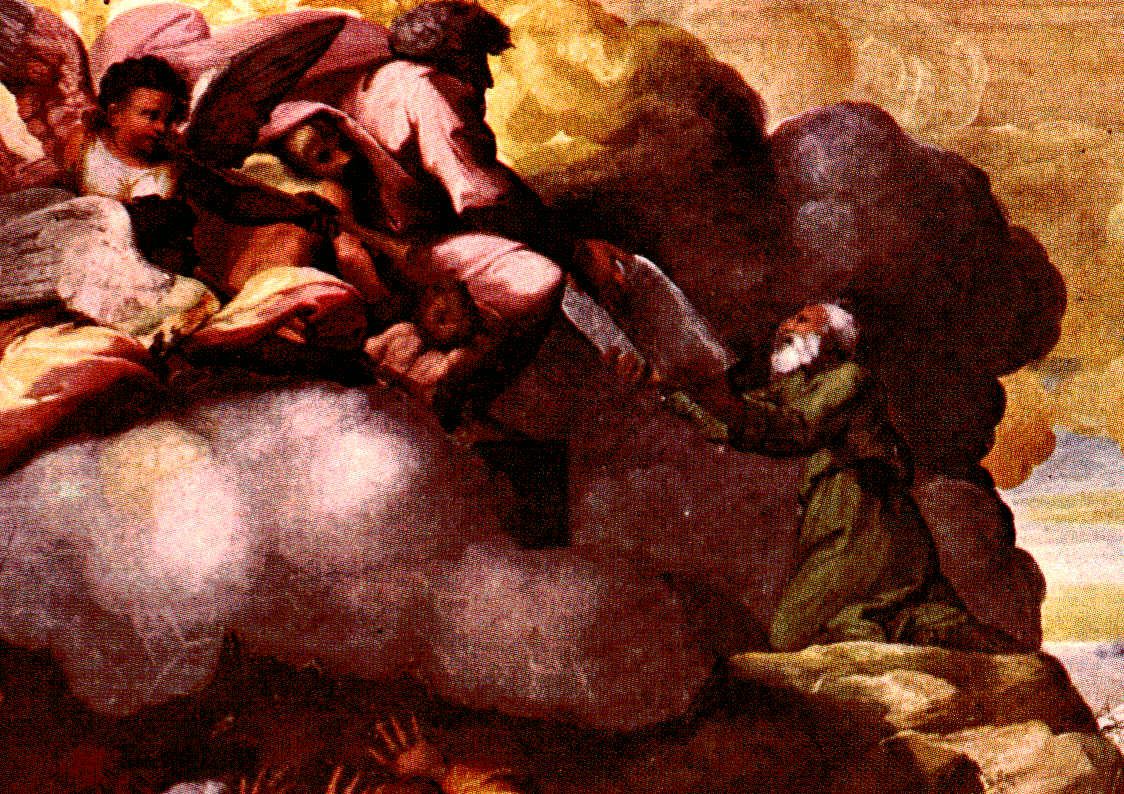
A Renaissance fresco of a mountaintop scene. On the right, an old, bearded man in flowing green robes kneels on bare rock, reaching upward with both hands. On the left, a mass of winged figures rises out of a bank of clouds, one of them extending a flat gray stone tablet down toward the kneeling man's outstretched hands. Golden light fills the sky behind the cloud; a strip of blue sky and distant landscape is visible below the rocky ledge at right.
Moses Receiving the Tablets of the Law
Raphael, 1518 · Fresco, Loggia of the Palazzi Pontifici, Vatican

⚠ Raphael paints the handoff itself, the single instant this chapter's own last verse names: Moses kneeling on Sinai, both hands reaching up, as a tablet passes from the cloud into his grip. The winged figures crowding the cloud are the painter's own addition — the text names no attendants, only ‘the finger of God’ — but the composition's real argument is the OUTSTRETCHED HAND itself: a small, plain gesture asked to carry the weight of an entire covenant. Painted in 1518 for the Vatican Loggia's biblical fresco cycle, two years before Raphael's death at thirty-seven.

Public domain · View the original
1
וַיְדַבֵּר יְהוָה, אֶל-מֹשֶׁה לֵּאמֹר.
And Jehovah spoke to Moses, saying:note
Y habló Jehová a Moisés, diciendo:
2
רְאֵה, קָרָאתִי בְשֵׁם, בְּצַלְאֵל בֶּן-אוּרִי בֶן-חוּר, לְמַטֵּה יְהוּדָה.
See, I have called by name Bezalel the son of Uri, the son of Hur, of the tribe of Judah;note
Mira, he llamado por nombre a Bezalel hijo de Uri, hijo de Hur, de la tribu de Judá;
3
וָאֲמַלֵּא אֹתוֹ, רוּחַ אֱלֹהִים, בְּחָכְמָה וּבִתְבוּנָה וּבְדַעַת, וּבְכָל-מְלָאכָה.
and I have filled him with the spirit of God, in wisdom, and in understanding, and in knowledge, and in all manner of workmanship,note
y lo he llenado del espíritu de Dios, en sabiduría, y en inteligencia, y en conocimiento, y en toda clase de obra,
cross-refs⤷ Gen 1:2
4
לַחְשֹׁב, מַחֲשָׁבֹת; לַעֲשׂוֹת בַּזָּהָב וּבַכֶּסֶף, וּבַנְּחֹשֶׁת.
to devise skillful works, to work in gold, and in silver, and in bronze,note
para diseñar obras de arte, para trabajar en oro, y en plata, y en bronce,
5
וּבַחֲרֹשֶׁת אֶבֶן לְמַלֹּאת, וּבַחֲרֹשֶׁת עֵץ; לַעֲשׂוֹת, בְּכָל-מְלָאכָה.
and in cutting stones for setting, and in carving wood, to work in every kind of workmanship.note
y en el labrado de piedras de engaste, y en el tallado de madera, para trabajar en toda clase de obra.
6
וַאֲנִי הִנֵּה נָתַתִּי אִתּוֹ, אֵת אָהֳלִיאָב בֶּן-אֲחִיסָמָךְ לְמַטֵּה-דָן, וּבְלֵב כָּל-חֲכַם-לֵב, נָתַתִּי חָכְמָה; וְעָשׂוּ, אֵת כָּל-אֲשֶׁר צִוִּיתִךָ.
And I, behold, I have appointed with him Oholiab the son of Ahisamach, of the tribe of Dan; and in the heart of everyone who is wise of heart I have put wisdom, that they may make everything that I have commanded you:note
Y yo, he aquí, he puesto con él a Aholiab hijo de Ahisamac, de la tribu de Dan; y en el corazón de todo sabio de corazón he puesto sabiduría, para que hagan todo lo que te he mandado:
cross-refs⤷ 28:3
7
אֵת אֹהֶל מוֹעֵד, וְאֶת-הָאָרֹן לָעֵדֻת, וְאֶת-הַכַּפֹּרֶת, אֲשֶׁר עָלָיו; וְאֵת, כָּל-כְּלֵי הָאֹהֶל.
the tent of meeting, and the ark of the testimony, and the cover that is upon it, and all the furnishings of the tent;note
la tienda de reunión, y el arca del testimonio, y la cubierta que está sobre ella, y todo el mobiliario de la tienda;
8
וְאֶת-הַשֻּׁלְחָן, וְאֶת-כֵּלָיו, וְאֶת-הַמְּנֹרָה הַטְּהֹרָה, וְאֶת-כָּל-כֵּלֶיהָ; וְאֵת, מִזְבַּח הַקְּטֹרֶת.
and the table and its vessels, and the pure lampstand with all its vessels, and the altar of incense;note
y la mesa y sus utensilios, y el candelero puro con todos sus utensilios, y el altar del incienso;
9
וְאֶת-מִזְבַּח הָעֹלָה, וְאֶת-כָּל-כֵּלָיו; וְאֶת-הַכִּיּוֹר, וְאֶת-כַּנּוֹ.
and the altar of burnt offering with all its vessels, and the laver and its base;note
y el altar del holocausto con todos sus utensilios, y la fuente y su base;
10
וְאֵת, בִּגְדֵי הַשְּׂרָד; וְאֶת-בִּגְדֵי הַקֹּדֶשׁ לְאַהֲרֹן הַכֹּהֵן, וְאֶת-בִּגְדֵי בָנָיו לְכַהֵן.
and the finely worked garments, and the holy garments for Aaron the priest, and the garments of his sons, to serve as priests;note
y las vestiduras primorosamente labradas, y las vestiduras santas para Aarón el sacerdote, y las vestiduras de sus hijos, para servir como sacerdotes;
11
וְאֵת שֶׁמֶן הַמִּשְׁחָה וְאֶת-קְטֹרֶת הַסַּמִּים, לַקֹּדֶשׁ: כְּכֹל אֲשֶׁר-צִוִּיתִךָ, יַעֲשׂוּ. {פ}
and the anointing oil, and the incense of spices for the holy place — according to all that I have commanded you, they shall do. {פ}note
y el aceite de la unción, y el incienso de especias para el lugar santo —conforme a todo lo que te he mandado, harán. {פ}
12
וַיֹּאמֶר יְהוָה, אֶל-מֹשֶׁה לֵּאמֹר.
And Jehovah spoke to Moses, saying:note
Y habló Jehová a Moisés, diciendo:
cross-refs⤷ 35:2
13
וְאַתָּה דַּבֵּר אֶל-בְּנֵי יִשְׂרָאֵל, לֵאמֹר, אַךְ אֶת-שַׁבְּתֹתַי, תִּשְׁמֹרוּ: כִּי אוֹת הִוא בֵּינִי וּבֵינֵיכֶם, לְדֹרֹתֵיכֶם--לָדַעַת, כִּי אֲנִי יְהוָה מְקַדִּשְׁכֶם.
Speak also to the children of Israel, saying: Surely you shall keep my Sabbaths, for it is a sign between me and you throughout your generations, that you may know that I am Jehovah who sanctifies you.note
Habla también a los hijos de Israel, diciendo: Ciertamente guardaréis mis sábados, porque es una señal entre yo y vosotros por vuestras generaciones, para que sepáis que yo soy Jehová que os santifica.
14
וּשְׁמַרְתֶּם, אֶת-הַשַּׁבָּת, כִּי קֹדֶשׁ הִוא, לָכֶם; מְחַלְלֶיהָ, מוֹת יוּמָת--כִּי כָּל-הָעֹשֶׂה בָהּ מְלָאכָה, וְנִכְרְתָה הַנֶּפֶשׁ הַהִוא מִקֶּרֶב עַמֶּיהָ.
You shall keep the Sabbath, therefore, for it is holy to you; everyone who profanes it shall surely be put to death; for whoever does any work on it, that soul shall be cut off from among his people.note
Guardaréis, por tanto, el sábado, porque santo es para vosotros; el que lo profane, ciertamente morirá; porque cualquiera que haga obra en él, esa alma será cortada de entre su pueblo.
cross-refs⤷ Gen 17:14
15
שֵׁשֶׁת יָמִים, יֵעָשֶׂה מְלָאכָה, וּבַיּוֹם הַשְּׁבִיעִי שַׁבַּת שַׁבָּתוֹן קֹדֶשׁ, לַיהוָה; כָּל-הָעֹשֶׂה מְלָאכָה בְּיוֹם הַשַּׁבָּת, מוֹת יוּמָת.
Six days work shall be done, but on the seventh day is a Sabbath of complete rest, holy to Jehovah; whoever does any work on the Sabbath day shall surely be put to death.note
Seis días se hará obra, mas el séptimo día es sábado de reposo completo, santo a Jehová; cualquiera que haga obra en el día de sábado, ciertamente morirá.
cross-refs⤷ 20:9
16
וְשָׁמְרוּ בְנֵי-יִשְׂרָאֵל, אֶת-הַשַּׁבָּת, לַעֲשׂוֹת אֶת-הַשַּׁבָּת לְדֹרֹתָם, בְּרִית עוֹלָם.
And the children of Israel shall keep the Sabbath, to observe the Sabbath throughout their generations, as an everlasting covenant.note
Y los hijos de Israel guardarán el sábado, para observar el sábado por sus generaciones, como pacto perpetuo.
17
בֵּינִי, וּבֵין בְּנֵי יִשְׂרָאֵל--אוֹת הִוא, לְעֹלָם: כִּי-שֵׁשֶׁת יָמִים, עָשָׂה יְהוָה אֶת-הַשָּׁמַיִם וְאֶת-הָאָרֶץ, וּבַיּוֹם הַשְּׁבִיעִי, שָׁבַת וַיִּנָּפַשׁ. {ס}
It is a sign between me and the children of Israel forever; for in six days Jehovah made heaven and earth, and on the seventh day he ceased from work and was refreshed. {ס}note
Es una señal entre yo y los hijos de Israel para siempre; porque en seis días hizo Jehová los cielos y la tierra, y en el séptimo día cesó de su obra y fue refrescado. {ס}
18
וַיִּתֵּן אֶל-מֹשֶׁה, כְּכַלֹּתוֹ לְדַבֵּר אִתּוֹ בְּהַר סִינַי, שְׁנֵי, לֻחֹת הָעֵדֻת--לֻחֹת אֶבֶן, כְּתֻבִים בְּאֶצְבַּע אֱלֹהִים.
And he gave to Moses, when he had finished speaking with him on Mount Sinai, the two tablets of the testimony, tablets of stone, written with the finger of God.note
Y dio a Moisés, cuando acabó de hablar con él en el monte Sinaí, las dos tablas del testimonio, tablas de piedra, escritas con el dedo de Dios.

The Spirit that hovered at creation now fills a craftsman, and the whole building project is read back in eleven verses

Bezalel is filled with ‘the spirit of God’ (v3, ruach Elohim) — the identical phrase for the identical Spirit that hovered over the waters at the very first creation (Genesis 1:2, already on these pages). The same power that shaped the world out of formlessness now indwells one man so he can shape gold, silver, bronze, stone, and wood into a dwelling for the God who made them. Bezalel is also named by full genealogy — ‘the son of Uri, the son of Hur’ (v2) — and Hur is not a stranger to these pages: he is the very man who, with Aaron, held up Moses’ failing hands at Rephidim so Israel could win the battle against Amalek (Exodus 17:12, already on these pages). The grandson of the man who once held up a leader’s arms now builds the house where that leader’s God will dwell.

‘Wise of heart’ (v6, chakham-lev) is the exact phrase Exodus 28:3 (already on these pages) already used for the anonymous craftsmen who make Aaron’s garments — ‘all who are wise of heart, whom I have filled with a spirit of wisdom.’ That earlier promise widens here into every skilled hand building any part of the tabernacle, not garments alone. And vv7–11 are the chapter reading its own preceding five chapters back to itself in miniature: tent, ark, cover, table, lampstand, altar of incense, altar of burnt offering, laver, garments, oil, incense — every object Exodus 25–30 specified, named once more in one breath. The order is not chronological (the incense altar of Exodus 30 is named before the burnt-offering altar of Exodus 27) but spatial — innermost furniture first, working outward to the courtyard, then garments, then the two recipes.

The ‘finely worked garments’ (v10, bigdei ha-serad) are a genuinely uncertain phrase, and the shelf shows it. KJV guesses ‘the cloths of service’; ASV and ESV both read ‘the finely wrought/worked garments,’ the reading this translation follows; NIV and NASB both simplify to ‘the woven garments.’ Strong’s own note calls the root ‘perhaps plaited or braided work’ — an honest ‘perhaps’ for a word that occurs only here and twice more in Exodus 39, all describing the same unspecified vestments.

A third covenant sign, and the strangest verb in the whole chapter

The Sabbath is called ‘a sign’ (v13, ot) between God and Israel — the THIRD covenant-sign this translation has met, after the rainbow (Genesis 9:12–13) and circumcision (Genesis 17:11, both already on these pages). Each covenant gets its own visible mark: a bow in the sky for every living thing, a cut in the flesh for Abraham’s line, a kept day for the nation redeemed from Egypt. ⚠ And the penalty for violating this sign is the identical formula already fixed for violating the circumcision-sign: ‘that soul shall be cut off from among his people’ (v14) — the same clause, almost word for word, that closed Genesis 17:14. Two different signs, one shared consequence for breaking either.

Verses 15 and 17 restate the Fourth Commandment almost verbatim — ‘six days shall work be done’ and ‘in six days Jehovah made heaven and earth’ both already fixed at Exodus 20:9–10 (already on these pages). ⚠ But v17’s closing verb is new and startling: God rested ‘and was REFRESHED’ (vayinafash) — the identical rare verb already used at Exodus 23:12 (already on these pages) for the exhausted ox, donkey, slave, and foreigner who are refreshed by the very same weekly rest. The word appears nowhere else in the Torah. God is not merely described as resting on the seventh day; God is described, in the one verb this book otherwise reserves for a tired laborer or animal, as catching his breath.

A promise from seven chapters back, finally kept

‘I will give you the tablets of stone… that I have written’ — Jehovah’s own words to Moses at Exodus 24:12 (already on these pages), spoken before a single verse of tabernacle instruction had been given. Everything since — the ark, the table, the lampstand, the tent, the altar, the courtyard, the priesthood’s garments, the ordination, the incense altar, the census, the laver, the anointing oil, the incense, and now the appointment of the craftsmen who will build it all — has unfolded inside a single suspended sentence, Moses still standing on the mountain waiting for what was promised him seven chapters ago. This verse is where that sentence finally closes: he gives him the tablets.

They are written ‘with the finger of God’ — the identical idiom Pharaoh’s own magicians were forced to use of the plague of gnats they could not reproduce (Exodus 8:15, already on these pages). The same small phrase for God acting directly, without instrument or effort, first wrung as an unwilling confession out of Egypt’s own sorcerers, now names the writing of Israel’s own covenant law. And the chapter ends there, with no scribal paragraph break at all — unlike every other section of this instruction, the story does not pause to let the reader catch up. It runs straight on.

Notes on this translation

Decisions.Finely worked garments’ for bigdei ha-serad (v10) — a genuinely uncertain phrase; see the note above for the full shelf split. ‘Sign’ kept for ot (vv13, 17), matching the rainbow and circumcision entries already on these pages, rather than varying the English across three covenants that share one Hebrew word. ‘Refreshed’ kept literal for vayinafash (v17) rather than folded into ‘rested’ — see the note above for why the distinction matters. The chapter’s own two paragraph breaks ({פ} at v11, {ס} at v17) mark exactly the seam between the craftsmen and the Sabbath command; v18 carries none at all, running straight into the next chapter without pause. Verse numbering follows the Hebrew exactly; Hebrew and English Exodus 31 both run 1–18.

A note on order: Exodus stands on these pages at chapters 1–40 — the whole tabernacle instruction, begun at Exodus 25, is now complete, its craftsmen named, its Sabbath commanded, and its promised tablets delivered. Exodus 32, the golden calf and Moses’ intercession, and Exodus 33, Moses’ plea to see Jehovah’s glory and his glimpse of God’s back from the cleft of the rock, and Exodus 34, the covenant remade and Moses’ own face left shining, and Exodus 35, the people’s own gifts for the tabernacle at last brought forward, and Exodus 36, the craftsmen at work and the people’s giving finally restrained, and Exodus 37, the ark and the table and the lampstand actually built, and Exodus 38, the bronze altar and the courtyard built at last, and Exodus 39, the priestly garments finally sewn, are now on these pages too. Exodus 40 — the tabernacle raised and the glory of Jehovah filling it, the book’s own last chapter — is now on these pages too. Exodus stands complete here, all forty chapters; the story continues in Leviticus, already begun on these pages.