The MisterLibrarian Bible Project
Catalogued & compared, one chapter at a time
☰ Menu
🌐 Español🗺️ Atlas
CreationBefore the FloodThe FloodAfter the FloodThe PatriarchsEgypt and the ExodusThe KingdomThe ExileThe ReturnBetween the TestamentsThe GospelsThe Apostolic Age
🕰
Israel's last camp before Sinai. No water at Rephidim, the rock struck at Horeb, and the battle with Amalek — Joshua's first appearance, Moses' hands held up by Aaron and Hur until sunset, and an altar named Jehovah-nissi.
c. 1446 BC on the early-date chronology this project foregrounds — shortly after chapter 16, still within the second month out of Egypt, on the final approach to Sinai (19:1-2).
Full chronology →

Exodus 17 — The Mister Translation
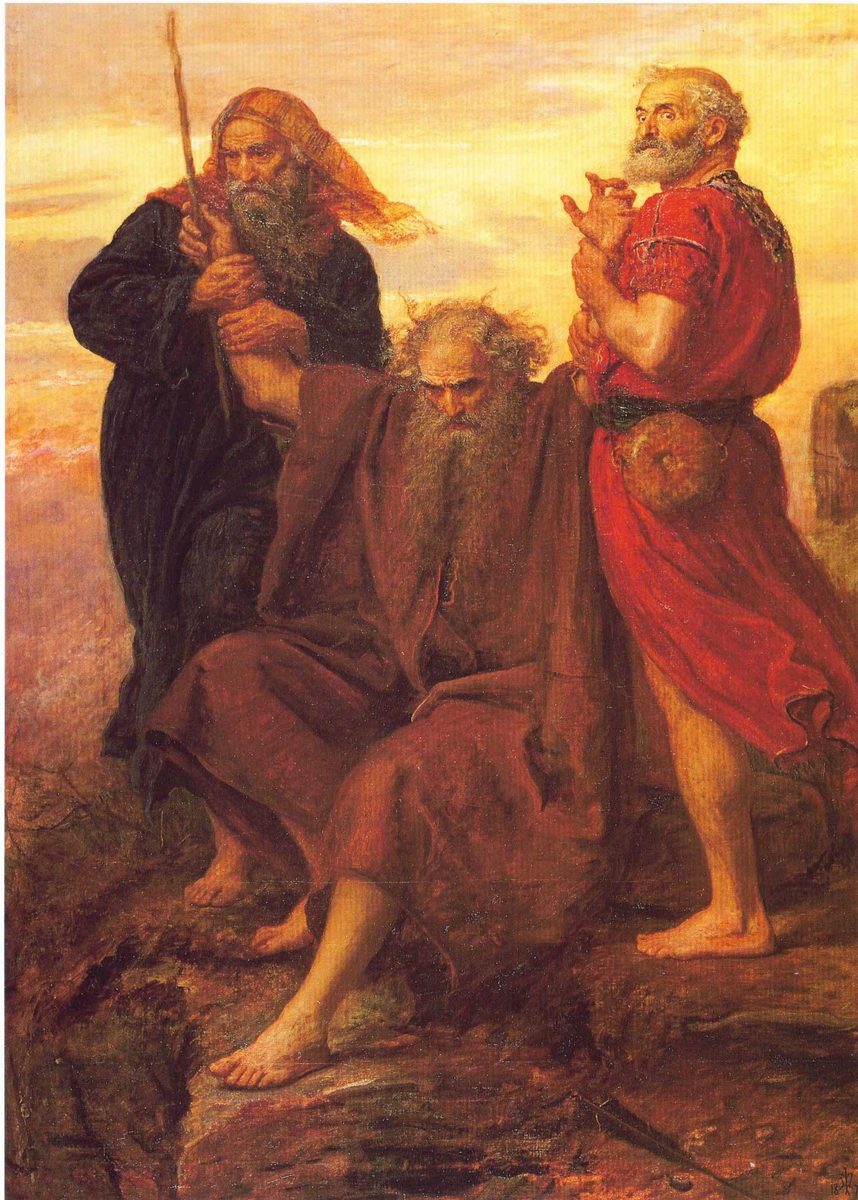
An oil painting in warm golds and reds. An old, bearded man in a brown robe sits exhausted at the center, head bowed, arms held up and outward by two men flanking him on a rocky hilltop against a sunset sky. On the left a gray-bearded man in dark robes grips a wooden staff alongside the seated man's raised arm. On the right a younger man in a red tunic and armor plate braces the other arm, looking off toward an unseen battle. All three figures are barefoot.
Victory O Lord!
John Everett Millais, 1871 · Manchester Art Gallery, Manchester, United Kingdom

⚠ The figure in red on the right is AARON, not Hur — easy to get backward, since Hur is the one on the left, in dark robes, still gripping his own staff. Millais painted this at what critics call a turning point in his career, working the canvas over repeatedly (‘scraping and repainting the surface’) to get the exhaustion right. Contemporary critic F. G. Stephens praised exactly that choice: the painting sets ‘the unyielding and steadfast willpower of Moses’ against ‘the physical and emotional exhaustion of his companions’ — an old man's raw, aged flesh doing the work, not a triumphant hero. Some readers of the painting have noted the raised, outstretched arms as an unmistakable echo of crucifixion imagery, suffering and victory painted as the same gesture. Millais gives no glimpse of the battle itself — only three men on a hill, watching what their own held-up arms are deciding.

Public domain · View the original
1
וַיִּסְעוּ כָּל-עֲדַת בְּנֵי-יִשְׂרָאֵל מִמִּדְבַּר-סִין, לְמַסְעֵיהֶם--עַל-פִּי יְהוָה; וַיַּחֲנוּ, בִּרְפִידִים, וְאֵין מַיִם, לִשְׁתֹּת הָעָם.
And all the congregation of the children of Israel set out from the wilderness of Sin, by their stages, according to the command of Jehovah, and camped in Rephidim; and there was no water for the people to drink.note
Toda la congregación de los hijos de Israel partió del desierto de Sin, por sus jornadas, conforme al mandamiento de Jehová, y acamparon en Refidim; y no había agua para que el pueblo bebiese.
2
וַיָּרֶב הָעָם, עִם-מֹשֶׁה, וַיֹּאמְרוּ, תְּנוּ-לָנוּ מַיִם וְנִשְׁתֶּה; וַיֹּאמֶר לָהֶם, מֹשֶׁה, מַה-תְּרִיבוּן עִמָּדִי, מַה-תְּנַסּוּן אֶת-יְהוָה.
And the people strove with Moses, and said, ‘Give us water, that we may drink.’ And Moses said to them, ‘Why do you strive with me? Why do you test Jehovah?’note
Y el pueblo altercó con Moisés, y dijeron: Danos agua para que bebamos. Y Moisés les dijo: ¿Por qué altercáis conmigo? ¿Por qué tentáis a Jehová?
3
וַיִּצְמָא שָׁם הָעָם לַמַּיִם, וַיָּלֶן הָעָם עַל-מֹשֶׁה; וַיֹּאמֶר, לָמָּה זֶּה הֶעֱלִיתָנוּ מִמִּצְרַיִם, לְהָמִית אֹתִי וְאֶת-בָּנַי וְאֶת-מִקְנַי, בַּצָּמָא.
And the people thirsted there for water, and the people grumbled against Moses, and said, ‘Why did you bring us up out of Egypt, to kill us and our children and our livestock with thirst?’note
Así que el pueblo tuvo allí sed, y murmuró contra Moisés, y dijo: ¿Por qué nos hiciste subir de Egipto para matarnos de sed a nosotros, a nuestros hijos y a nuestros ganados?
cross-refs⤷ 16:2
4
וַיִּצְעַק מֹשֶׁה אֶל-יְהוָה לֵאמֹר, מָה אֶעֱשֶׂה לָעָם הַזֶּה; עוֹד מְעַט, וּסְקָלֻנִי.
And Moses cried out to Jehovah, saying, ‘What shall I do with this people? A little more and they will stone me.’note
Entonces clamó Moisés a Jehová, diciendo: ¿Qué haré con este pueblo? De aquí a un poco me apedrearán.
5
וַיֹּאמֶר יְהוָה אֶל-מֹשֶׁה, עֲבֹר לִפְנֵי הָעָם, וְקַח אִתְּךָ, מִזִּקְנֵי יִשְׂרָאֵל; וּמַטְּךָ, אֲשֶׁר הִכִּיתָ בּוֹ אֶת-הַיְאֹר--קַח בְּיָדְךָ, וְהָלָכְתָּ.
And Jehovah said to Moses, ‘Pass on before the people, and take with you some of the elders of Israel, and take in your hand your staff, with which you struck the Nile, and go.note
Y Jehová dijo a Moisés: Pasa delante del pueblo, y toma contigo algunos de los ancianos de Israel; y toma también en tu mano tu vara, con que golpeaste el río, y ve.
6
הִנְנִי עֹמֵד לְפָנֶיךָ שָּׁם עַל-הַצּוּר, בְּחֹרֵב, וְהִכִּיתָ בַצּוּר וְיָצְאוּ מִמֶּנּוּ מַיִם, וְשָׁתָה הָעָם; וַיַּעַשׂ כֵּן מֹשֶׁה, לְעֵינֵי זִקְנֵי יִשְׂרָאֵל.
Behold, I will stand before you there on the rock at Horeb, and you shall strike the rock, and water shall come out of it, that the people may drink.’ And Moses did so before the eyes of the elders of Israel.note
He aquí que yo estaré delante de ti allí sobre la peña en Horeb; y golpearás la peña, y saldrán de ella aguas, y beberá el pueblo. Y Moisés lo hizo así en presencia de los ancianos de Israel.
7
וַיִּקְרָא שֵׁם הַמָּקוֹם, מַסָּה וּמְרִיבָה: עַל-רִיב בְּנֵי יִשְׂרָאֵל, וְעַל נַסֹּתָם אֶת-יְהוָה לֵאמֹר, הֲיֵשׁ יְהוָה בְּקִרְבֵּנוּ, אִם-אָיִן. {פ}
And he called the name of the place Massah and Meribah, because of the strife of the children of Israel, and because they tested Jehovah, saying, ‘Is Jehovah among us, or not?’note
Y llamó el nombre de aquel lugar Masah y Meriba, por la rencilla de los hijos de Israel, y porque tentaron a Jehová, diciendo: ¿Está, pues, Jehová entre nosotros, o no?
8
וַיָּבֹא, עֲמָלֵק; וַיִּלָּחֶם עִם-יִשְׂרָאֵל, בִּרְפִידִם.
Then Amalek came and fought with Israel at Rephidim.note
Entonces vino Amalec y peleó contra Israel en Refidim.
9
וַיֹּאמֶר מֹשֶׁה אֶל-יְהוֹשֻׁעַ בְּחַר-לָנוּ אֲנָשִׁים, וְצֵא הִלָּחֵם בַּעֲמָלֵק; מָחָר, אָנֹכִי נִצָּב עַל-רֹאשׁ הַגִּבְעָה, וּמַטֵּה הָאֱלֹהִים, בְּיָדִי.
And Moses said to Joshua, ‘Choose for us men, and go out, fight with Amalek. Tomorrow I will stand on the top of the hill with the staff of God in my hand.’note
Y dijo Moisés a Josué: Escógenos varones, y sal a pelear contra Amalec; mañana yo estaré sobre la cumbre del collado, y la vara de Dios en mi mano.
10
וַיַּעַשׂ יְהוֹשֻׁעַ, כַּאֲשֶׁר אָמַר-לוֹ מֹשֶׁה--לְהִלָּחֵם, בַּעֲמָלֵק; וּמֹשֶׁה אַהֲרֹן וְחוּר, עָלוּ רֹאשׁ הַגִּבְעָה.
So Joshua did as Moses had said to him, to fight with Amalek; and Moses, Aaron, and Hur went up to the top of the hill.note
E hizo Josué como le dijo Moisés, peleando contra Amalec; y Moisés y Aarón y Hur subieron a la cumbre del collado.
11
וְהָיָה, כַּאֲשֶׁר יָרִים מֹשֶׁה יָדוֹ--וְגָבַר יִשְׂרָאֵל; וְכַאֲשֶׁר יָנִיחַ יָדוֹ, וְגָבַר עֲמָלֵק.
And whenever Moses raised his hand, Israel prevailed; and whenever he lowered his hand, Amalek prevailed.note
Y sucedía que cuando alzaba Moisés su mano, Israel prevalecía; mas cuando él bajaba su mano, prevalecía Amalec.
12
וִידֵי מֹשֶׁה כְּבֵדִים, וַיִּקְחוּ-אֶבֶן וַיָּשִׂימוּ תַחְתָּיו וַיֵּשֶׁב עָלֶיהָ; וְאַהֲרֹן וְחוּר תָּמְכוּ בְיָדָיו, מִזֶּה אֶחָד וּמִזֶּה אֶחָד, וַיְהִי יָדָיו אֱמוּנָה, עַד-בֹּא הַשָּׁמֶשׁ.
But Moses’ hands grew heavy, so they took a stone and put it under him, and he sat on it; and Aaron and Hur held up his hands, one on this side and one on that side, so his hands were steady until the sun went down.note
Y las manos de Moisés se cansaban; por lo que tomaron una piedra y la pusieron debajo de él, y se sentó sobre ella; y Aarón y Hur sostenían sus manos, el uno de un lado y el otro de otro, así hubo en sus manos firmeza hasta que se puso el sol.
13
וַיַּחֲלֹשׁ יְהוֹשֻׁעַ אֶת-עֲמָלֵק וְאֶת-עַמּוֹ, לְפִי-חָרֶב. {פ}
And Joshua overwhelmed Amalek and his people with the edge of the sword.note
Y Josué deshizo a Amalec y a su pueblo a filo de espada.
14
וַיֹּאמֶר יְהוָה אֶל-מֹשֶׁה, כְּתֹב זֹאת זִכָּרוֹן בַּסֵּפֶר, וְשִׂים, בְּאָזְנֵי יְהוֹשֻׁעַ: כִּי-מָחֹה אֶמְחֶה אֶת-זֵכֶר עֲמָלֵק, מִתַּחַת הַשָּׁמָיִם.
And Jehovah said to Moses, ‘Write this as a memorial in the book, and recite it in the ears of Joshua: that I will utterly blot out the remembrance of Amalek from under heaven.’note
Y Jehová dijo a Moisés: Escribe esto para memoria en un libro, y di a Josué que del todo raeré la memoria de Amalec de debajo del cielo.
15
וַיִּבֶן מֹשֶׁה, מִזְבֵּחַ; וַיִּקְרָא שְׁמוֹ, יְהוָה נִסִּי.
And Moses built an altar, and called its name ‘Jehovah is my banner’;note
Y Moisés edificó un altar, y llamó su nombre Jehová es mi enseña;
16
וַיֹּאמֶר, כִּי-יָד עַל-כֵּס יָהּ, מִלְחָמָה לַיהוָה, בַּעֲמָלֵק--מִדֹּר, דֹּר. {פ}
and he said, ‘A hand upon the throne of Yah — Jehovah will have war with Amalek from generation to generation.’note
y dijo: Por cuanto la mano está sobre el trono de Jah, Jehová tendrá guerra con Amalec de generación en generación.

Translator’s Notes

Rephidim, and a murmur this book has already used once

Rephidim is the last stop before Sinai, and its name may mean “supports” or “resting places” — fittingly, since it is where Aaron and Hur will physically SUPPORT Moses’ arms later in this same chapter (v12), a small echo the text does not comment on.

“Grumbled” (v3) is the identical Hebrew root, lun, that fell nine times across last chapter — the people who were just fed daily bread from heaven are thirsty again within what the text implies is days, and reach for the same word. The split repeats too: KJV and ASV keep the older “murmured,” while NIV and ESV both modernize to “grumbled” — for the same reason noted there: a plain word repeated is a drumbeat, not decoration.

A test named twice, in two different words

Moses asks ‘why do you TEST Jehovah?’ (v2, nissah) before a drop of water has moved — the accusation precedes the miracle. The same staff that turned the Nile to blood (7:20) now strikes a rock instead of a river, pulling water out of stone instead of poisoning a lifeline; the text seems to want the same object doing an opposite thing.

⚠ The place-name lands twice, in two different roots: Massah (massah, from nissah, TESTING) and Meribah (merivah, from riv, STRIFE, the very verb v2 used — ‘why do you STRIVE with me’). One event, one place, and a name built from both charges at once: the people tested God, and quarreled with Moses, and the map remembers both. The location recurs — Numbers 20 tells an almost identical story at a DIFFERENT Meribah, late in the wilderness years, which costs Moses entry into the land.

The first Joshua, and a man named for a bridge

This is Joshua’s first appearance anywhere in the Bible — introduced with no genealogy, no backstory, already trusted enough to command troops while Moses climbs a hill. His name at this point is likely still HOSHEA (‘he saves’); Moses renames him YEHOSHUA, folding in the divine name, only later (Numbers 13:16). This chapter uses the later name a chapter early, which is either the narrator writing with hindsight or this translation’s source text harmonizing forward — the Torah is not perfectly consistent about when the switch happens.

Hur appears for the first time here too, promoted straight to the summit with Aaron and never explained; later tradition (not the text itself) makes him Miriam’s husband and Caleb’s father. He is left in charge of the camp, with Aaron, the next time Moses goes up a mountain (24:14) — the same two names, the same job.

A battle that runs on an image, not a strategy

No tactics are described — no flanking, no formation. The chapter states the mechanism bluntly and lets it stand: hand up, Israel wins; hand down, Amalek wins. ⚠ Whether the raised hand is meant as intercession, as a rallying signal the troops could see, or simply as a visible sign that the outcome runs through Jehovah and not through Joshua’s sword arm is not settled by the text — v13 gives Joshua the sword-work outright (‘overwhelmed Amalek... with the edge of the sword’) in the very next verse, so the chapter does not read the hand as replacing the fighting, only as deciding it.

Moses sitting on a stone while two men hold his arms up is a small, almost embarrassing physical detail for a text this compressed to keep — proof, maybe, that fatigue and leadership are not opposites here.

A command to write, aimed at a man not yet a leader

“Write this... and recite it in the ears of Joshua” is Israel’s first recorded command to preserve an event in writing specifically so that it will still be known later — read TO Joshua rather than written BY him, since he is a battlefield commander here, not yet the man who will lead the conquest. The sentence God wants preserved is total: Amalek’s memory utterly blotted out, worded as a promise that outlasts any single battle. Deuteronomy 25:17-19 later turns this into formal law — remember what Amalek did, and do not forget — collapsing memory and command into the same instruction.

A hapax legomenon in the very last line

“Jehovah is my banner” (v15, nes) names the altar after the very image v16 may or may not be quoting. ⚠ The Hebrew of v16 is genuinely among the hardest in the Torah: kes, translated here ‘throne,’ occurs EXACTLY ONCE in the entire Hebrew Bible. Lexicographers are divided on whether it is a contracted spelling of kisse (throne) or a scribal slip for nes (banner) — the very word the altar was just named for, one verse earlier. KJV and ASV take the sentence in a third direction entirely, reading it as an oath — ‘the LORD hath sworn’ — following an old interpretive tradition rather than the bare consonants. NIV makes Amalek the subject, ‘hands were lifted up against the throne of the LORD’; ESV leaves it as a bare exclamation, ‘a hand upon the throne of the LORD!’, unresolved as to whose hand. This translation follows the consonantal text as most literally as English allows and lets the ambiguity stand rather than picking a side the Hebrew itself will not settle.

Notes on this translation

Decisions. V16 is left deliberately unresolved — ‘a hand upon the throne of Yah’ — rather than smoothed into any one of the shelf’s three competing readings (oath, banner, or bare image), since the Hebrew word itself is a hapax legomenon lexicographers do not agree on. Lun (v3) again rendered grumbled, matching Exodus 16’s choice, to keep the repetition of the same word across chapters visible rather than varied for style.

⚠ A note on order: Exodus stands on these pages at chapters 1–17, and 20. Exodus 18–19 and 21–40 remain the open sequence.