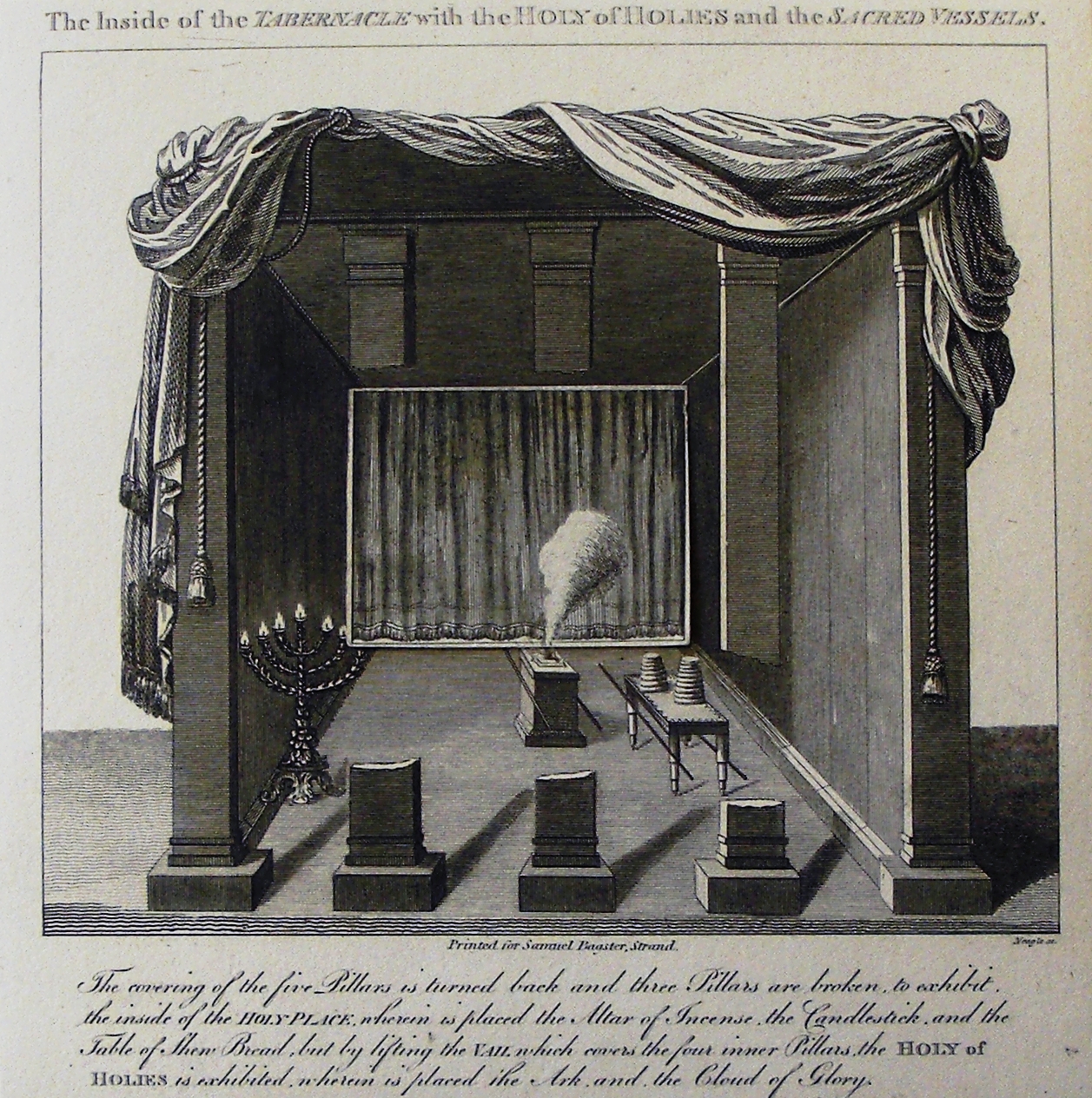
1
וַיְדַבֵּר יְהוָה, אֶל-מֹשֶׁה לֵּאמֹר.
Y Jehová habló a Moisés, diciendo,
2
בְּיוֹם-הַחֹדֶשׁ הָרִאשׁוֹן, בְּאֶחָד לַחֹדֶשׁ, תָּקִים, אֶת-מִשְׁכַּן אֹהֶל מוֹעֵד.
On the first day of the first month you shall set up the tabernacle of the tent of meeting.
noteEl primer día del primer mes levantarás el tabernáculo de la tienda de reunión.
3
וְשַׂמְתָּ שָׁם, אֵת אֲרוֹן הָעֵדוּת; וְסַכֹּתָ עַל-הָאָרֹן, אֶת-הַפָּרֹכֶת.
Y pondrás allí el arca del testimonio, y cubrirás el arca con el
velo.
4
וְהֵבֵאתָ, אֶת-הַשֻּׁלְחָן, וְעָרַכְתָּ, אֶת-עֶרְכּוֹ; וְהֵבֵאתָ, אֶת-הַמְּנֹרָה, וְהַעֲלֵיתָ, אֶת-נֵרֹתֶיהָ.
And you shall bring in the table, and arrange its arrangement; and you shall bring in the lampstand, and light its lamps.
noteY meterás la mesa, y ordenarás su orden; y meterás el candelabro, y encenderás sus lámparas.
5
וְנָתַתָּה אֶת-מִזְבַּח הַזָּהָב, לִקְטֹרֶת, לִפְנֵי, אֲרוֹן הָעֵדֻת; וְשַׂמְתָּ אֶת-מָסַךְ הַפֶּתַח, לַמִּשְׁכָּן.
And you shall put the golden altar for incense before the ark of the testimony, and put the
screen of the door to the tabernacle.
noteY pondrás el altar de oro para el incienso delante del arca del testimonio, y pondrás la
cortina de la puerta al tabernáculo.
6
וְנָתַתָּה, אֵת מִזְבַּח הָעֹלָה, לִפְנֵי, פֶּתַח מִשְׁכַּן אֹהֶל-מוֹעֵד.
And you shall put the
altar of burnt offering before the door of the tabernacle of the tent of meeting.
noteY pondrás el
altar del holocausto delante de la puerta del tabernáculo de la tienda de reunión.
7
וְנָתַתָּ, אֶת-הַכִּיֹּר, בֵּין-אֹהֶל מוֹעֵד, וּבֵין הַמִּזְבֵּחַ; וְנָתַתָּ שָׁם, מָיִם.
And you shall put the
laver between the tent of meeting and the altar, and put water there.
noteY pondrás la
fuente entre la tienda de reunión y el altar, y pondrás allí agua.
8
וְשַׂמְתָּ אֶת-הֶחָצֵר, סָבִיב; וְנָתַתָּ, אֶת-מָסַךְ שַׁעַר הֶחָצֵר.
And you shall set up the courtyard all around, and put the screen of the gate of the courtyard.
noteY levantarás el atrio alrededor, y pondrás la cortina de la puerta del atrio.
9
וְלָקַחְתָּ אֶת-שֶׁמֶן הַמִּשְׁחָה, וּמָשַׁחְתָּ אֶת-הַמִּשְׁכָּן וְאֶת-כָּל-אֲשֶׁר-בּוֹ; וְקִדַּשְׁתָּ אֹתוֹ וְאֶת-כָּל-כֵּלָיו, וְהָיָה קֹדֶשׁ.
And you shall take the anointing oil, and anoint the tabernacle and all that is in it, and
hallow it and all its furnishings, and it shall be holy.
noteY tomarás el aceite de la unción, y ungirás el tabernáculo y todo lo que hay en él, y lo
santificarás a él y todos sus utensilios, y será santo.
10
וּמָשַׁחְתָּ אֶת-מִזְבַּח הָעֹלָה, וְאֶת-כָּל-כֵּלָיו; וְקִדַּשְׁתָּ, אֶת-הַמִּזְבֵּחַ, וְהָיָה הַמִּזְבֵּחַ, קֹדֶשׁ קָדָשִׁים.
And you shall anoint the altar of burnt offering and all its vessels, and hallow the altar; and the altar shall be most holy.
noteY ungirás el altar del holocausto y todos sus utensilios, y santificarás el altar; y el altar será santísimo.
11
וּמָשַׁחְתָּ אֶת-הַכִּיֹּר, וְאֶת-כַּנּוֹ; וְקִדַּשְׁתָּ, אֹתוֹ.
And you shall anoint the laver and its base, and hallow it.
noteY ungirás la fuente y su base, y la santificarás.
12
וְהִקְרַבְתָּ אֶת-אַהֲרֹן וְאֶת-בָּנָיו, אֶל-פֶּתַח אֹהֶל מוֹעֵד; וְרָחַצְתָּ אֹתָם, בַּמָּיִם.
And you shall bring Aaron and his sons to the door of the tent of meeting, and wash them with water.
noteY llevarás a Aarón y a sus hijos a la puerta de la tienda de reunión, y los lavarás con agua.
13
וְהִלְבַּשְׁתָּ, אֶת-אַהֲרֹן, אֵת, בִּגְדֵי הַקֹּדֶשׁ; וּמָשַׁחְתָּ אֹתוֹ וְקִדַּשְׁתָּ אֹתוֹ, וְכִהֵן לִי.
And you shall put on Aaron the holy garments, and anoint him, and hallow him, that he may serve as priest to me.
noteY pondrás sobre Aarón las vestiduras sagradas, y lo ungirás, y lo santificarás, para que me sirva como sacerdote.
14
וְאֶת-בָּנָיו, תַּקְרִיב; וְהִלְבַּשְׁתָּ אֹתָם, כֻּתֳּנֹת.
And you shall bring his sons, and put tunics on them.
noteY llevarás a sus hijos, y les pondrás túnicas.
15
וּמָשַׁחְתָּ אֹתָם, כַּאֲשֶׁר מָשַׁחְתָּ אֶת-אֲבִיהֶם, וְכִהֲנוּ, לִי; וְהָיְתָה לִהְיֹת לָהֶם מָשְׁחָתָם, לִכְהֻנַּת עוֹלָם--לְדֹרֹתָם.
And you shall anoint them, as you anointed their father, that they may serve as priests to me; and their anointing shall be to them for an everlasting priesthood throughout their generations.
noteY los ungirás, como ungiste a su padre, para que me sirvan como sacerdotes; y su unción les será por sacerdocio perpetuo por sus generaciones.
16
וַיַּעַשׂ, מֹשֶׁה: כְּכֹל אֲשֶׁר צִוָּה יְהוָה, אֹתוֹ--כֵּן עָשָׂה. {ס}
Thus Moses did; according to everything Jehovah commanded him, so he did.
{ס}noteAsí lo hizo Moisés; conforme a todo lo que Jehová le mandó, así lo hizo. {ס}
17
וַיְהִי בַּחֹדֶשׁ הָרִאשׁוֹן, בַּשָּׁנָה הַשֵּׁנִית--בְּאֶחָד לַחֹדֶשׁ: הוּקַם, הַמִּשְׁכָּן.
And it came to pass in the first month, in the second year, on the first day of the month, that the tabernacle was set up.
noteY aconteció en el primer mes, en el año segundo, el primer día del mes, que el tabernáculo fue levantado.
18
וַיָּקֶם מֹשֶׁה אֶת-הַמִּשְׁכָּן, וַיִּתֵּן אֶת-אֲדָנָיו, וַיָּשֶׂם אֶת-קְרָשָׁיו, וַיִּתֵּן אֶת-בְּרִיחָיו; וַיָּקֶם, אֶת-עַמּוּדָיו.
And Moses set up the tabernacle, and laid its sockets, and set up its boards, and put in its bars, and set up its pillars.
noteY Moisés levantó el tabernáculo, y puso sus basas, y colocó sus tablas, y metió sus barras, y levantó sus columnas.
19
וַיִּפְרֹשׂ אֶת-הָאֹהֶל, עַל-הַמִּשְׁכָּן, וַיָּשֶׂם אֶת-מִכְסֵה הָאֹהֶל עָלָיו, מִלְמָעְלָה--כַּאֲשֶׁר צִוָּה יְהוָה, אֶת-מֹשֶׁה. {ס}
And he spread the tent over the tabernacle, and put the covering of the tent over it, above, as Jehovah commanded Moses.
{ס}noteY extendió la tienda sobre el tabernáculo, y puso la cubierta de la tienda sobre ella, por encima, como Jehová mandó a Moisés. {ס}
20
וַיִּקַּח וַיִּתֵּן אֶת-הָעֵדֻת, אֶל-הָאָרֹן, וַיָּשֶׂם אֶת-הַבַּדִּים, עַל-הָאָרֹן; וַיִּתֵּן אֶת-הַכַּפֹּרֶת עַל-הָאָרֹן, מִלְמָעְלָה.
And he took and put the testimony into the ark, and set the poles on the ark, and put the
cover on the ark, above.
noteY tomó y puso el testimonio dentro del arca, y colocó las varas sobre el arca, y puso la
cubierta sobre el arca, por encima.
21
וַיָּבֵא אֶת-הָאָרֹן, אֶל-הַמִּשְׁכָּן, וַיָּשֶׂם אֵת פָּרֹכֶת הַמָּסָךְ, וַיָּסֶךְ עַל אֲרוֹן הָעֵדוּת--כַּאֲשֶׁר צִוָּה יְהוָה, אֶת-מֹשֶׁה. {ס}
And he brought the ark into the tabernacle, and set up the veil of the screen, and screened the ark of the testimony, as Jehovah commanded Moses.
{ס}noteY llevó el arca al tabernáculo, y colocó el velo de la cortina, y cubrió el arca del testimonio, como Jehová mandó a Moisés. {ס}
22
וַיִּתֵּן אֶת-הַשֻּׁלְחָן בְּאֹהֶל מוֹעֵד, עַל יֶרֶךְ הַמִּשְׁכָּן צָפֹנָה, מִחוּץ, לַפָּרֹכֶת.
And he put the table in the tent of meeting, on the side of the tabernacle northward, outside the veil.
noteY puso la mesa en la tienda de reunión, al lado del tabernáculo hacia el norte, fuera del velo.
23
וַיַּעֲרֹךְ עָלָיו עֵרֶךְ לֶחֶם, לִפְנֵי יְהוָה--כַּאֲשֶׁר צִוָּה יְהוָה, אֶת-מֹשֶׁה. {ס}
And he arranged on it a row of bread before Jehovah, as Jehovah commanded Moses.
{ס}noteY ordenó sobre ella una hilera de pan delante de Jehová, como Jehová mandó a Moisés. {ס}
24
וַיָּשֶׂם אֶת-הַמְּנֹרָה בְּאֹהֶל מוֹעֵד, נֹכַח הַשֻּׁלְחָן, עַל יֶרֶךְ הַמִּשְׁכָּן, נֶגְבָּה.
And he put the lampstand in the tent of meeting, opposite the table, on the side of the tabernacle southward.
noteY puso el candelabro en la tienda de reunión, frente a la mesa, al lado del tabernáculo hacia el sur.
25
וַיַּעַל הַנֵּרֹת, לִפְנֵי יְהוָה--כַּאֲשֶׁר צִוָּה יְהוָה, אֶת-מֹשֶׁה. {ס}
And he lit the lamps before Jehovah, as Jehovah commanded Moses.
{ס}noteY encendió las lámparas delante de Jehová, como Jehová mandó a Moisés. {ס}
26
וַיָּשֶׂם אֶת-מִזְבַּח הַזָּהָב, בְּאֹהֶל מוֹעֵד, לִפְנֵי, הַפָּרֹכֶת.
And he put the golden altar in the tent of meeting before the veil,
noteY puso el altar de oro en la tienda de reunión, delante del velo,
27
וַיַּקְטֵר עָלָיו, קְטֹרֶת סַמִּים--כַּאֲשֶׁר צִוָּה יְהוָה, אֶת-מֹשֶׁה. {ס}
and he burned on it sweet incense, as Jehovah commanded Moses.
{ס}notey quemó sobre él incienso aromatizado, como Jehová mandó a Moisés. {ס}
28
וַיָּשֶׂם אֶת-מָסַךְ הַפֶּתַח, לַמִּשְׁכָּן.
And he put the screen of the door to the tabernacle.
noteY puso la cortina de la puerta al tabernáculo.
29
וְאֵת, מִזְבַּח הָעֹלָה, שָׂם, פֶּתַח מִשְׁכַּן אֹהֶל-מוֹעֵד; וַיַּעַל עָלָיו, אֶת-הָעֹלָה וְאֶת-הַמִּנְחָה--כַּאֲשֶׁר צִוָּה יְהוָה, אֶת-מֹשֶׁה. {ס}
And the altar of burnt offering he put at the door of the tabernacle of the tent of meeting, and offered on it the burnt offering and the
grain offering, as Jehovah commanded Moses.
{ס}noteY el altar del holocausto lo puso a la puerta del tabernáculo de la tienda de reunión, y ofreció sobre él el holocausto y la
ofrenda de grano, como Jehová mandó a Moisés.
{ס}
30
וַיָּשֶׂם, אֶת-הַכִּיֹּר, בֵּין-אֹהֶל מוֹעֵד, וּבֵין הַמִּזְבֵּחַ; וַיִּתֵּן שָׁמָּה מַיִם, לְרָחְצָה.
And he put the laver between the tent of meeting and the altar, and put water there, to wash with.
noteY puso la fuente entre la tienda de reunión y el altar, y puso allí agua, para lavarse.
31
וְרָחֲצוּ מִמֶּנּוּ, מֹשֶׁה וְאַהֲרֹן וּבָנָיו, אֶת-יְדֵיהֶם, וְאֶת-רַגְלֵיהֶם.
And Moses and Aaron and his sons washed their hands and their feet from it,
noteY Moisés y Aarón y sus hijos se lavaban de ella las manos y los pies,
32
בְּבֹאָם אֶל-אֹהֶל מוֹעֵד, וּבְקָרְבָתָם אֶל-הַמִּזְבֵּחַ--יִרְחָצוּ: כַּאֲשֶׁר צִוָּה יְהוָה, אֶת-מֹשֶׁה. {ס}
when they went into the tent of meeting, and when they came near to the altar, they washed, as Jehovah commanded Moses.
{ס}notecuando entraban en la tienda de reunión, y cuando se acercaban al altar, se lavaban, como Jehová mandó a Moisés. {ס}
33
וַיָּקֶם אֶת-הֶחָצֵר, סָבִיב לַמִּשְׁכָּן וְלַמִּזְבֵּחַ, וַיִּתֵּן, אֶת-מָסַךְ שַׁעַר הֶחָצֵר; וַיְכַל מֹשֶׁה, אֶת-הַמְּלָאכָה. {פ}
And he set up the courtyard all around the tabernacle and the altar, and put the screen of the gate of the courtyard. So Moses finished the work.
{פ}noteY levantó el atrio alrededor del tabernáculo y del altar, y puso la cortina de la puerta del atrio. Así Moisés terminó la obra. {פ}
34
וַיְכַס הֶעָנָן, אֶת-אֹהֶל מוֹעֵד; וּכְבוֹד יְהוָה, מָלֵא אֶת-הַמִּשְׁכָּן.
Then the cloud covered the tent of meeting, and the glory of Jehovah filled the tabernacle.
noteEntonces la nube cubrió la tienda de reunión, y la gloria de Jehová llenó el tabernáculo.
35
וְלֹא-יָכֹל מֹשֶׁה, לָבוֹא אֶל-אֹהֶל מוֹעֵד--כִּי-שָׁכַן עָלָיו, הֶעָנָן; וּכְבוֹד יְהוָה, מָלֵא אֶת-הַמִּשְׁכָּן.
And Moses was not able to enter the tent of meeting, because the cloud settled on it, and the glory of Jehovah filled the tabernacle.
noteY Moisés no pudo entrar en la tienda de reunión, porque la nube se había posado sobre ella, y la gloria de Jehová llenaba el tabernáculo.
36
וּבְהֵעָלוֹת הֶעָנָן מֵעַל הַמִּשְׁכָּן, יִסְעוּ בְּנֵי יִשְׂרָאֵל, בְּכֹל, מַסְעֵיהֶם.
And whenever the cloud was taken up from over the tabernacle, the children of Israel would set out, throughout all their journeys.
noteY cuando la nube se levantaba de sobre el tabernáculo, los hijos de Israel partían, en todas sus jornadas.
37
וְאִם-לֹא יֵעָלֶה, הֶעָנָן--וְלֹא יִסְעוּ, עַד-יוֹם הֵעָלֹתוֹ.
But if the cloud was not taken up, they did not set out, until the day it was taken up.
notePero si la nube no se levantaba, no partían, hasta el día en que se levantaba.
38
כִּי עֲנַן יְהוָה עַל-הַמִּשְׁכָּן, יוֹמָם, וְאֵשׁ, תִּהְיֶה לַיְלָה בּוֹ--לְעֵינֵי כָל-בֵּית-יִשְׂרָאֵל, בְּכָל-מַסְעֵיהֶם. {ש}
For the cloud of Jehovah was on the tabernacle by day, and fire was in it by night, in the sight of all the house of Israel, throughout all their journeys.
{ש}notePorque la nube de Jehová estaba sobre el tabernáculo de día, y había fuego en ella de noche, ante los ojos de toda la casa de Israel, en todas sus jornadas. {ש}
The command repeated, one last time, then obeyed in a single sentence
Verses 2–15 repeat, almost word for word, instructions this book has already given in pieces across five chapters — the ark screened by the veil (Exodus 26:31–33, already on these pages), the anointing oil (Exodus 30:26–30, already on these pages), Aaron and his sons washed, clothed, and anointed at the tent’s door (Exodus 29:4–9, already on these pages) — but now given as one continuous sequence, an assembly order rather than a materials list. And the whole nine-chapter, nine-verse command is answered in a single line: ‘Thus Moses did; according to everything Jehovah commanded him, so he did’ (v16). Not a report of each step — that comes next, in exhausting, satisfying detail — but a verdict rendered before the detail even starts.
⚠ Verse 15’s ‘everlasting priesthood throughout their generations’ is where the shelf quietly splits over one adjective. KJV and ASV agree exactly, ‘an everlasting priesthood’; NASB softens it to ‘a permanent priesthood’; NIV drops the adjective altogether and restructures the clause as ‘a priesthood that will continue’ — converting a claim about eternal STATUS into a claim about ongoing continuity, a real shift in what is being promised.
⚠ A second, smaller shelf split sits in plain sight at v4: this translation calls the object ‘the lampstand,’ and stays with that word every time it appears, rather than the older English name for the same thing. KJV renders the Hebrew menorah as ‘candlestick’ throughout the tabernacle account, including here; ASV, NASB, and NIV all render it ‘lampstand’ instead — the more accurate word, since the object held burning oil lamps, not wax candles, which had no place in the tabernacle at all.
Command becomes report, one more time — and Moses finishes what was only ever finished FOR him before
The assembly itself (vv17–33) answers verses 2–15 point for point, in order, closing seven of its clauses with the identical formula that dominated the last chapter — ‘as Jehovah commanded Moses’ (vv19, 21, 23, 25, 27, 29, 32). Nothing here is new information; the whole passage is a checklist being ticked off, object by object, in the exact sequence the command laid out. ⚠ One small, consistent choice this translation makes and two of the five shelf versions do not: the recurring verb for ‘set up’ (taqim/vayakem, vv2, 18, 33) is rendered the same way every time it appears. KJV shifts from ‘set up’ (v2) to ‘reared up’ (vv18, 33); NASB shifts from ‘set up’ (v2) to ‘erected’ (vv18, 33) — the same Hebrew word, translated two different ways within a single Bible.
‘So Moses finished the work’ (v33, vayechal Moshe) uses the identical root, kalah, that closed the last chapter — but where Exodus 39:32 said the work ‘WAS finished’ (vatechel, a passive, no one named), this verse names the man: Moses himself finishes it. The same completion, said twice, in two grammatical voices — first as a fact about the tabernacle, then as an act of the one person who oversaw its every piece from a mountain’s worth of instructions down to a single gold thread.
The glory Moses could not survive facing now fills the whole room
‘The glory of Jehovah filled the tabernacle’ (v34) — the same word, the same weight, that Moses begged to see outright three chapters ago and was shown only a retreating back, because ‘man shall not see me and live’ (Exodus 33:18–23, already on these pages). That refusal is not undone here; it is confirmed at a larger scale. The very man who spoke with Jehovah ‘face to face, as a man speaks to his friend’ (Exodus 33:11, already on these pages), who came and went from the tent of meeting freely, now cannot enter it at all — ‘Moses was not able to enter’ (v35). The glory that once had to be limited to a hand over his eyes and a hand’s-width of God’s back now fills an entire building, and even Moses stands outside it.
The verb for the cloud ‘settling’ (v35, shakhan) is the exact root behind this whole structure’s own name, mishkan, ‘dwelling-place’ — the promise made in the abstract nine chapters ago, ‘I will DWELL among the children of Israel’ (Exodus 29:45–46, already on these pages), is not merely kept here; it is enacted, the tabernacle’s own name turning into a verb one final time as the thing it names actually happens.
The pillar that led them out now settles where it led them to — and the book ends with the door still shut
The cloud by day and the fire by night (v38) are not a new sign — they are the identical pillar that went before Israel out of Egypt, at the very start of this book’s wilderness road (Exodus 13:21–22, already on these pages). There it MOVED, leading a people with nowhere yet to live. Here it SETTLES, marking a place that now exists for it to settle on. The same sign that once meant ‘follow me’ now also means ‘stay,’ and will keep meaning both for the whole of the next book — when the cloud lifts, the camp moves; when it does not, no one does (Numbers 9:15–23, already on these pages) — the rule this closing image quietly establishes for a journey that has not ended.
Exodus itself ends on that unresolved image: the door shut, Moses outside, the glory inside. The very next words in the Torah answer it — ‘Jehovah called to Moses, and spoke to him FROM THE TENT OF MEETING’ (Leviticus 1:1, already on these pages) — but that answer belongs to a different book. This one closes with the door still closed.
Notes on this translation
Decisions. Every technical term (veil, screen, altar, laver, cover, tabernacle, tent of meeting) matches this translation’s own established choices throughout Exodus 25–39, already on these pages — a closing chapter is the wrong place to introduce a new word for something already named a dozen times. ‘Set up’ is kept consistently for the recurring verb taqim/vayakem at vv2, 18, and 33 — see the note above on where two of the shelf’s own five versions do not manage the same consistency. ‘Jehovah’ kept throughout for the divine name. The chapter’s nine ordinary paragraph breaks ({ס} at v16, v19, v21, v23, v25, v27, v29, v32, and {פ} at v33) mark the command’s own close and each finished task in turn. Verse 38 carries a rarer mark instead — {ש}, ‘an empty line at the end of some books,’ Mechon-Mamre’s own name for it — the traditional scribal notation that this is where a book actually ends, used nowhere else on these pages yet. Verse numbering follows the Hebrew exactly; Hebrew and English Exodus 40 both run 1–38.
📖 That is the end of Exodus. Forty chapters — the second complete book in this translation, and the harder one to keep whole: a slave people leave a country with nothing but borrowed silver and a promise, cross a sea, break the covenant within weeks of receiving it at a mountain that is still shaking, and spend the back half of the book building, with their own hands and their own gold, a small tent for the thing that terrified them at the mountain to live in permanently. The book that opens with a people who have no dwelling — not even their own bodies are safe, boys drowned at birth by decree — closes with God dwelling among them, so completely that the man who used to walk in and speak to him face to face can no longer get through the door. Nothing about that ending resolves cleanly; it is not supposed to. The glory that fills the tabernacle in the last verses is the same glory Moses begged, three chapters earlier, to see just once, and was refused. Exodus does not answer that refusal by softening it. It answers it by building a room large enough to hold what could not be looked at directly, and then reporting, honestly, that even Moses cannot go in.
Next in this translation: the story continues directly from where this chapter leaves off — Leviticus 1, already on these pages, opens with Jehovah calling to Moses FROM the tent of meeting he could not enter a chapter ago. Leviticus 1 and 19 are already translated here; the rest of the book, and the rest of the Torah’s own unfinished journey, remains open.