1
וַיְדַבֵּר יְהוָה, אֶל-מֹשֶׁה לֵּאמֹר.
Y Jehová habló a Moisés, diciendo,
2
קַח אֶת-אַהֲרֹן, וְאֶת-בָּנָיו אִתּוֹ, וְאֵת הַבְּגָדִים, וְאֵת שֶׁמֶן הַמִּשְׁחָה; וְאֵת פַּר הַחַטָּאת, וְאֵת שְׁנֵי הָאֵילִים, וְאֵת, סַל הַמַּצּוֹת.
Take
Aaron and his sons with him, and the garments, and the anointing oil, and the bull of the sin-offering, and the two rams, and the basket of unleavened bread;
noteToma a Aarón y a sus hijos con él, y las vestiduras, y el aceite de la unción, y el novillo de la ofrenda por el pecado, y los dos carneros, y la cesta de panes sin levadura;
3
וְאֵת כָּל-הָעֵדָה, הַקְהֵל, אֶל-פֶּתַח, אֹהֶל מוֹעֵד.
y reúne a toda la congregación a la puerta del tabernáculo de reunión.
4
וַיַּעַשׂ מֹשֶׁה, כַּאֲשֶׁר צִוָּה יְהוָה אֹתוֹ; וַתִּקָּהֵל, הָעֵדָה, אֶל-פֶּתַח, אֹהֶל מוֹעֵד.
And Moses did as Jehovah commanded him; and the congregation was assembled at the door of the tent of meeting.
noteY Moisés hizo como Jehová le mandó; y la congregación se reunió a la puerta del tabernáculo de reunión.
5
וַיֹּאמֶר מֹשֶׁה, אֶל-הָעֵדָה: זֶה הַדָּבָר, אֲשֶׁר-צִוָּה יְהוָה לַעֲשׂוֹת.
And Moses said to the congregation: This is the thing that Jehovah has commanded to be done.
noteY Moisés dijo a la congregación: Esto es lo que Jehová ha mandado hacer.
6
וַיַּקְרֵב מֹשֶׁה, אֶת-אַהֲרֹן וְאֶת-בָּנָיו; וַיִּרְחַץ אֹתָם, בַּמָּיִם.
And Moses brought Aaron and his sons near, and washed them with water.
noteY Moisés hizo acercarse a Aarón y a sus hijos, y los lavó con agua.
7
וַיִּתֵּן עָלָיו אֶת-הַכֻּתֹּנֶת, וַיַּחְגֹּר אֹתוֹ בָּאַבְנֵט, וַיַּלְבֵּשׁ אֹתוֹ אֶת-הַמְּעִיל, וַיִּתֵּן עָלָיו אֶת-הָאֵפֹד; וַיַּחְגֹּר אֹתוֹ, בְּחֵשֶׁב הָאֵפֹד, וַיֶּאְפֹּד לוֹ, בּוֹ.
And he put the tunic on him, and girded him with the sash, and clothed him with the robe, and put the ephod on him; and he girded him with the skillfully woven band of the ephod, and fastened it to him with it.
noteY le puso la túnica, y lo ciñó con el cinturón, y lo vistió con el manto, y le puso el efod; y lo ciñó con la banda tejida con destreza del efod, y se lo ató con ella.
8
וַיָּשֶׂם עָלָיו, אֶת-הַחֹשֶׁן; וַיִּתֵּן, אֶל-הַחֹשֶׁן, אֶת-הָאוּרִים, וְאֶת-הַתֻּמִּים.
9
וַיָּשֶׂם אֶת-הַמִּצְנֶפֶת, עַל-רֹאשׁוֹ; וַיָּשֶׂם עַל-הַמִּצְנֶפֶת אֶל-מוּל פָּנָיו, אֵת צִיץ הַזָּהָב נֵזֶר הַקֹּדֶשׁ, כַּאֲשֶׁר צִוָּה יְהוָה, אֶת-מֹשֶׁה.
And he set the turban on his head; and on the turban, at the front, he set the golden plate, the holy crown, as Jehovah commanded Moses.
noteY le puso la mitra sobre la cabeza; y sobre la mitra, por delante, puso la lámina de oro, la diadema santa, como Jehová había mandado a Moisés.
10
וַיִּקַּח מֹשֶׁה אֶת-שֶׁמֶן הַמִּשְׁחָה, וַיִּמְשַׁח אֶת-הַמִּשְׁכָּן וְאֶת-כָּל-אֲשֶׁר-בּוֹ; וַיְקַדֵּשׁ, אֹתָם.
And Moses took the anointing oil, and anointed the tabernacle and everything in it, and consecrated them.
noteY Moisés tomó el aceite de la unción, y ungió el tabernáculo y todo lo que había en él, y los santificó.
11
וַיַּז מִמֶּנּוּ עַל-הַמִּזְבֵּחַ, שֶׁבַע פְּעָמִים; וַיִּמְשַׁח אֶת-הַמִּזְבֵּחַ וְאֶת-כָּל-כֵּלָיו, וְאֶת-הַכִּיֹּר וְאֶת-כַּנּוֹ--לְקַדְּשָׁם.
And he sprinkled some of it on the altar seven times, and anointed the altar and all its utensils, and the basin and its stand, to consecrate them.
noteY roció de él sobre el altar siete veces, y ungió el altar y todos sus utensilios, y la fuente y su base, para santificarlos.
12
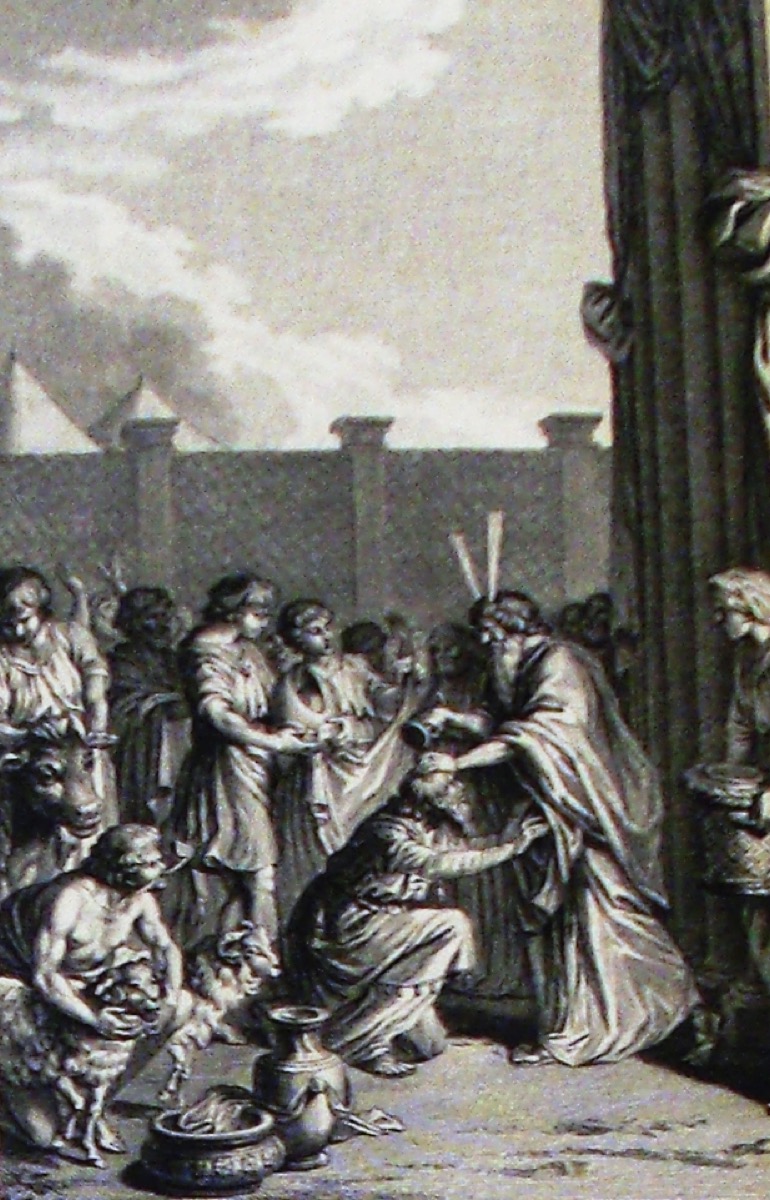
וַיִּצֹק מִשֶּׁמֶן הַמִּשְׁחָה, עַל רֹאשׁ אַהֲרֹן; וַיִּמְשַׁח אֹתוֹ, לְקַדְּשׁוֹ.
And he poured some of the anointing oil on Aaron’s head, and anointed him, to consecrate him.
noteY derramó del aceite de la unción sobre la cabeza de Aarón, y lo ungió, para santificarlo.
13
וַיַּקְרֵב מֹשֶׁה אֶת-בְּנֵי אַהֲרֹן, וַיַּלְבִּשֵׁם כֻּתֳּנֹת וַיַּחְגֹּר אֹתָם אַבְנֵט, וַיַּחֲבֹשׁ לָהֶם, מִגְבָּעוֹת--כַּאֲשֶׁר צִוָּה יְהוָה, אֶת-מֹשֶׁה.
And Moses brought Aaron’s sons near, and clothed them with tunics, and girded them with sashes, and bound headpieces on them, as Jehovah commanded Moses.
noteY Moisés hizo acercarse a los hijos de Aarón, y los vistió con túnicas, y los ciñó con cinturones, y les ató tocados, como Jehová había mandado a Moisés.
14
וַיַּגֵּשׁ, אֵת פַּר הַחַטָּאת; וַיִּסְמֹךְ אַהֲרֹן וּבָנָיו אֶת-יְדֵיהֶם, עַל-רֹאשׁ פַּר הַחַטָּאת.
And he brought the bull of the
sin-offering near; and Aaron and his sons laid their hands on the head of the bull of the sin-offering.
noteY trajo el novillo de la
ofrenda por el pecado; y Aarón y sus hijos pusieron sus manos sobre la cabeza del novillo de la ofrenda por el pecado.
15
וַיִּשְׁחָט, וַיִּקַּח מֹשֶׁה אֶת-הַדָּם וַיִּתֵּן עַל-קַרְנוֹת הַמִּזְבֵּחַ סָבִיב בְּאֶצְבָּעוֹ, וַיְחַטֵּא, אֶת-הַמִּזְבֵּחַ; וְאֶת-הַדָּם, יָצַק אֶל-יְסוֹד הַמִּזְבֵּחַ, וַיְקַדְּשֵׁהוּ, לְכַפֵּר עָלָיו.
And it was slaughtered; and Moses took the blood, and put it on the horns of the altar all around with his finger, and purified the altar, and poured out the blood at the base of the altar, and consecrated it, to make atonement for it.
noteY fue degollado; y Moisés tomó la sangre, y la puso con su dedo sobre los cuernos del altar todo alrededor, y purificó el altar, y derramó la sangre restante al pie del altar, y lo santificó, para hacer expiación por él.
16
וַיִּקַּח, אֶת-כָּל-הַחֵלֶב אֲשֶׁר עַל-הַקֶּרֶב, וְאֵת יֹתֶרֶת הַכָּבֵד, וְאֶת-שְׁתֵּי הַכְּלָיֹת וְאֶת-חֶלְבְּהֶן; וַיַּקְטֵר מֹשֶׁה, הַמִּזְבֵּחָה.
And he took all the
fat that was on the entrails, and the lobe on the liver, and the two kidneys and their fat, and Moses turned it into smoke on the altar.
noteY tomó toda la
grasa que estaba sobre los intestinos, y el lóbulo sobre el hígado, y los dos riñones y su grasa, y Moisés los hizo arder en el altar.
17
וְאֶת-הַפָּר וְאֶת-עֹרוֹ, וְאֶת-בְּשָׂרוֹ וְאֶת-פִּרְשׁוֹ--שָׂרַף בָּאֵשׁ, מִחוּץ לַמַּחֲנֶה: כַּאֲשֶׁר צִוָּה יְהוָה, אֶת-מֹשֶׁה.
But the bull, and its skin, and its flesh, and its dung, he burned with fire outside the camp, as Jehovah commanded Moses.
notePero el novillo, y su piel, y su carne, y su estiércol, los quemó con fuego fuera del campamento, como Jehová había mandado a Moisés.
18
וַיַּקְרֵב, אֵת אֵיל הָעֹלָה; וַיִּסְמְכוּ אַהֲרֹן וּבָנָיו, אֶת-יְדֵיהֶם--עַל-רֹאשׁ הָאָיִל.
And he brought the ram of the
burnt-offering near; and Aaron and his sons laid their hands on the head of the ram.
noteY trajo el carnero del holocausto; y Aarón y sus hijos pusieron sus manos sobre la cabeza del carnero.
19
וַיִּשְׁחָט; וַיִּזְרֹק מֹשֶׁה אֶת-הַדָּם עַל-הַמִּזְבֵּחַ, סָבִיב.
And it was slaughtered; and Moses dashed the blood against the altar all around.
noteY fue degollado; y Moisés roció la sangre sobre el altar todo alrededor.
20
וְאֶת-הָאַיִל--נִתַּח, לִנְתָחָיו; וַיַּקְטֵר מֹשֶׁה אֶת-הָרֹאשׁ, וְאֶת-הַנְּתָחִים וְאֶת-הַפָּדֶר.
And the ram was cut into its pieces; and Moses turned the head, and the pieces, and the fat into smoke.
noteY el carnero fue cortado en sus piezas; y Moisés hizo arder la cabeza, y las piezas, y la grasa.
21
וְאֶת-הַקֶּרֶב וְאֶת-הַכְּרָעַיִם, רָחַץ בַּמָּיִם; וַיַּקְטֵר מֹשֶׁה אֶת-כָּל-הָאַיִל הַמִּזְבֵּחָה, עֹלָה הוּא לְרֵיחַ-נִיחֹחַ אִשֶּׁה הוּא לַיהוָה, כַּאֲשֶׁר צִוָּה יְהוָה, אֶת-מֹשֶׁה.
And the entrails and the legs he washed with water; and Moses turned the whole ram into smoke on the altar. It was a burnt-offering as a soothing aroma; it was an offering made by fire to Jehovah, as Jehovah commanded Moses.
noteY los intestinos y las patas los lavó con agua; y Moisés hizo arder todo el carnero en el altar. Era un holocausto de aroma apacible; era una ofrenda encendida a Jehová, como Jehová había mandado a Moisés.
22
וַיַּקְרֵב אֶת-הָאַיִל הַשֵּׁנִי, אֵיל הַמִּלֻּאִים; וַיִּסְמְכוּ אַהֲרֹן וּבָנָיו, אֶת-יְדֵיהֶם--עַל-רֹאשׁ הָאָיִל.
And he brought the second ram near, the ram of
consecration; and Aaron and his sons laid their hands on the head of the ram.
noteY trajo el segundo carnero, el carnero de la
consagración; y Aarón y sus hijos pusieron sus manos sobre la cabeza del carnero.
23
וַיִּשְׁחָט--וַיִּקַּח מֹשֶׁה מִדָּמוֹ, וַיִּתֵּן עַל-תְּנוּךְ אֹזֶן-אַהֲרֹן הַיְמָנִית; וְעַל-בֹּהֶן יָדוֹ הַיְמָנִית, וְעַל-בֹּהֶן רַגְלוֹ הַיְמָנִית.
And it was slaughtered; and Moses took some of its blood, and put it on the tip of Aaron’s right ear, and on the thumb of his right hand, and on the big toe of his right foot.
noteY fue degollado; y Moisés tomó de su sangre, y la puso sobre el lóbulo de la oreja derecha de Aarón, y sobre el pulgar de su mano derecha, y sobre el dedo gordo de su pie derecho.
24
וַיַּקְרֵב אֶת-בְּנֵי אַהֲרֹן, וַיִּתֵּן מֹשֶׁה מִן-הַדָּם עַל-תְּנוּךְ אָזְנָם הַיְמָנִית, וְעַל-בֹּהֶן יָדָם הַיְמָנִית, וְעַל-בֹּהֶן רַגְלָם הַיְמָנִית; וַיִּזְרֹק מֹשֶׁה אֶת-הַדָּם עַל-הַמִּזְבֵּחַ, סָבִיב.
And he brought Aaron’s sons near, and Moses put some of the blood on the tip of their right ear, and on the thumb of their right hand, and on the big toe of their right foot; and Moses dashed the blood against the altar all around.
noteY trajo a los hijos de Aarón, y Moisés puso de la sangre sobre el lóbulo de su oreja derecha, y sobre el pulgar de su mano derecha, y sobre el dedo gordo de su pie derecho; y Moisés roció la sangre sobre el altar todo alrededor.
25
וַיִּקַּח אֶת-הַחֵלֶב וְאֶת-הָאַלְיָה, וְאֶת-כָּל-הַחֵלֶב אֲשֶׁר עַל-הַקֶּרֶב, וְאֵת יֹתֶרֶת הַכָּבֵד, וְאֶת-שְׁתֵּי הַכְּלָיֹת וְאֶת-חֶלְבְּהֶן; וְאֵת, שׁוֹק הַיָּמִין.
And he took the fat, and the fat tail, and all the fat that was on the entrails, and the lobe on the liver, and the two kidneys and their fat, and the right thigh.
noteY tomó la grasa, y la cola entera, y toda la grasa que estaba sobre los intestinos, y el lóbulo sobre el hígado, y los dos riñones y su grasa, y el muslo derecho.
26
וּמִסַּל הַמַּצּוֹת אֲשֶׁר לִפְנֵי יְהוָה, לָקַח חַלַּת מַצָּה אַחַת וְחַלַּת לֶחֶם שֶׁמֶן אַחַת--וְרָקִיק אֶחָד; וַיָּשֶׂם, עַל-הַחֲלָבִים, וְעַל, שׁוֹק הַיָּמִין.
And from the basket of unleavened bread that was before Jehovah, he took one unleavened cake, and one cake of oiled bread, and one wafer, and placed them on the fat portions and on the right thigh.
noteY de la cesta de panes sin levadura que estaba delante de Jehová, tomó una torta sin levadura, y una torta de pan con aceite, y una oblea, y las puso sobre las porciones de grasa y sobre el muslo derecho.
27
וַיִּתֵּן אֶת-הַכֹּל--עַל כַּפֵּי אַהֲרֹן, וְעַל כַּפֵּי בָנָיו; וַיָּנֶף אֹתָם תְּנוּפָה, לִפְנֵי יְהוָה.
And he put it all on the palms of Aaron, and on the palms of his sons, and
waved them as a wave-offering before Jehovah.
noteY lo puso todo sobre las palmas de Aarón, y sobre las palmas de sus hijos, y lo
meció como ofrenda mecida delante de Jehová.
28
וַיִּקַּח מֹשֶׁה אֹתָם מֵעַל כַּפֵּיהֶם, וַיַּקְטֵר הַמִּזְבֵּחָה עַל-הָעֹלָה; מִלֻּאִים הֵם לְרֵיחַ נִיחֹחַ, אִשֶּׁה הוּא לַיהוָה.
And Moses took them from their palms, and turned them into smoke on the altar, on the burnt-offering; they were a consecration-offering as a soothing aroma; it was an offering made by fire to Jehovah.
noteY Moisés los tomó de sus palmas, y los hizo arder en el altar, sobre el holocausto; eran una ofrenda de consagración de aroma apacible; era una ofrenda encendida a Jehová.
29
וַיִּקַּח מֹשֶׁה אֶת-הֶחָזֶה, וַיְנִיפֵהוּ תְנוּפָה לִפְנֵי יְהוָה: מֵאֵיל הַמִּלֻּאִים, לְמֹשֶׁה הָיָה לְמָנָה, כַּאֲשֶׁר צִוָּה יְהוָה, אֶת-מֹשֶׁה.
And Moses took the breast, and waved it as a wave-offering before Jehovah; it was Moses’ portion of the ram of consecration, as Jehovah commanded Moses.
noteY Moisés tomó el pecho, y lo meció como ofrenda mecida delante de Jehová; fue la porción de Moisés del carnero de la consagración, como Jehová había mandado a Moisés.
30
וַיִּקַּח מֹשֶׁה מִשֶּׁמֶן הַמִּשְׁחָה, וּמִן-הַדָּם אֲשֶׁר עַל-הַמִּזְבֵּחַ, וַיַּז עַל-אַהֲרֹן עַל-בְּגָדָיו, וְעַל-בָּנָיו וְעַל-בִּגְדֵי בָנָיו אִתּוֹ; וַיְקַדֵּשׁ אֶת-אַהֲרֹן אֶת-בְּגָדָיו, וְאֶת-בָּנָיו וְאֶת-בִּגְדֵי בָנָיו אִתּוֹ.
And Moses took some of the anointing oil, and some of the blood that was on the altar, and sprinkled it on Aaron, on his garments, and on his sons, and on his sons’ garments with him; and he consecrated Aaron, his garments, and his sons, and his sons’ garments with him.
noteY Moisés tomó del aceite de la unción, y de la sangre que estaba sobre el altar, y roció sobre Aarón, sobre sus vestiduras, y sobre sus hijos, y sobre las vestiduras de sus hijos con él; y santificó a Aarón, sus vestiduras, y a sus hijos, y las vestiduras de sus hijos con él.
31
וַיֹּאמֶר מֹשֶׁה אֶל-אַהֲרֹן וְאֶל-בָּנָיו, בַּשְּׁלוּ אֶת-הַבָּשָׂר פֶּתַח אֹהֶל מוֹעֵד, וְשָׁם תֹּאכְלוּ אֹתוֹ, וְאֶת-הַלֶּחֶם אֲשֶׁר בְּסַל הַמִּלֻּאִים: כַּאֲשֶׁר צִוֵּיתִי לֵאמֹר, אַהֲרֹן וּבָנָיו יֹאכְלֻהוּ.
And Moses said to Aaron and his sons: Boil the flesh at the door of the tent of meeting, and eat it there, together with the bread that is in the basket of consecration, as I commanded, saying, Aaron and his sons shall eat it.
noteY Moisés dijo a Aarón y a sus hijos: Coced la carne a la puerta del tabernáculo de reunión, y allí la comeréis, junto con el pan que está en la cesta de la consagración, como mandé diciendo: Aarón y sus hijos la comerán.
32
וְהַנּוֹתָר בַּבָּשָׂר, וּבַלָּחֶם--בָּאֵשׁ, תִּשְׂרֹפוּ.
And what remains of the flesh and of the bread you shall burn with fire.
noteY lo que quede de la carne y del pan lo quemaréis con fuego.
33
וּמִפֶּתַח אֹהֶל מוֹעֵד לֹא תֵצְאוּ, שִׁבְעַת יָמִים--עַד יוֹם מְלֹאת, יְמֵי מִלֻּאֵיכֶם: כִּי שִׁבְעַת יָמִים, יְמַלֵּא אֶת-יֶדְכֶם.
And you shall not go out from the door of the tent of meeting for seven days, until the days of your consecration are completed; for he will consecrate you for seven days.
noteY no saldréis de la puerta del tabernáculo de reunión durante siete días, hasta el día en que se cumplan los días de vuestra consagración; porque durante siete días él os consagrará.
34
כַּאֲשֶׁר עָשָׂה, בַּיּוֹם הַזֶּה--צִוָּה יְהוָה לַעֲשֹׂת, לְכַפֵּר עֲלֵיכֶם.
As he has done this day, so Jehovah has commanded to do, to make atonement for you.
noteComo se ha hecho en este día, así ha mandado Jehová hacer, para hacer expiación por vosotros.
35
וּפֶתַח אֹהֶל מוֹעֵד תֵּשְׁבוּ יוֹמָם וָלַיְלָה, שִׁבְעַת יָמִים, וּשְׁמַרְתֶּם אֶת-מִשְׁמֶרֶת יְהוָה, וְלֹא תָמוּתוּ: כִּי-כֵן, צֻוֵּיתִי.
And you shall remain at the door of the tent of meeting day and night for seven days, and keep the charge of Jehovah, so that you do not die; for so I have been commanded.
noteY permaneceréis a la puerta del tabernáculo de reunión día y noche durante siete días, y guardaréis la ordenanza de Jehová, para que no muriáis; porque así se me ha mandado.
36
וַיַּעַשׂ אַהֲרֹן, וּבָנָיו--אֵת, כָּל-הַדְּבָרִים, אֲשֶׁר-צִוָּה יְהוָה, בְּיַד-מֹשֶׁה. {ס}
And Aaron and his sons did all the things that Jehovah commanded by the hand of Moses.
{ס}noteY Aarón y sus hijos hicieron todas las cosas que Jehová había mandado por mano de Moisés. {ס}
Seven chapters of law, and now the story that carries it out
This chapter is the narrated fulfillment of a command given fifteen chapters earlier: Exodus 29’s own ordination instructions, spoken to Moses at Sinai before the tabernacle even existed, are finally carried out here almost word for word. Leviticus 1–7 closed by naming the ‘consecration-offering’ as one of six laws it never actually legislated (Leviticus 7:37, already on these pages) — because its only law was always going to be a STORY, not a statute, and this is that story. The whole congregation is summoned to watch (v3) — ordination is not performed in private.
⚠ Verse 5’s public announcement, ‘this is the thing Jehovah has commanded’, opens a chapter that will close on the mirror image of the same claim: not one private detail is left undocumented, and the whole thing ends with Aaron and his sons simply having ‘done all the things Jehovah commanded’ (v36). Everything between those two lines is the record of exactly what that obedience looked like, gesture by gesture.
Dressed, then anointed — the building first, the man second
The order is easy to miss but is not accidental: Moses anoints the TABERNACLE AND ITS FURNISHINGS (v10–11) before he ever pours oil on Aaron’s own head (v12). The building becomes holy first; the priest who will serve inside it is consecrated only afterward, and only once the place he is entering is already sanctified. Aaron is fully dressed — tunic, sash, robe, ephod, breastplate with the Urim and Thummim, turban and its golden plate — before a drop of oil touches him at all.
⚠ Every single garment named here was specified, item by item, in Exodus 28 (already on these pages) — this chapter does not describe new clothing, it describes the first time it was actually worn. The gap between instruction and event is the entire second half of Exodus and the first seven chapters of this book: years, on any reckoning, between the pattern shown on the mountain and the moment it is finally put on a living person.
Two of the garment words repeat choices already made when the clothing itself was only a pattern, now finally worn rather than described: ‘tunic’ for kuttonet (v7) follows the modern shelf against KJV’s older ‘coat’; ‘turban’ for Aaron’s own mitznefet (v9) follows the modern shelf against KJV and ASV’s older ‘mitre’ (both already established at Exodus 28:4, already on these pages).
Two familiar rituals, performed here for the very first time
The sin-offering bull follows Leviticus 4’s own law for a priestly sin-offering almost exactly — blood on the horns of the altar, the body burned outside the camp (v14–17) — except that this is the FIRST time it has ever actually happened; Leviticus 4 legislated the rule before there was any ordained priest to follow it. The burnt-offering ram that follows (v18–21) is the same relationship to Leviticus 1: the law, finally enacted.
⚠ Notice who performs the ritual actions: MOSES, not Aaron. Aaron and his sons only lay their hands on the animals’ heads (v14, v18) — the ordinary offerer’s own gesture from Leviticus 1–4, not the priest’s. Aaron cannot yet act as a priest, because he is not yet a priest; Moses functions as the one performing every act of atonement on Aaron’s own behalf, in the one ceremony in Scripture where the future high priest is himself, briefly, just an offerer like anyone else.
Blood on the ear, the thumb, and the big toe
The second ram, ‘the ram of consecration’ (v22), gets a blood rite unlike any other offering in this book: not thrown against the altar, but touched with a finger to the tip of the right ear, the thumb of the right hand, and the big toe of the right foot (v23–24). Three extremities, one on each side of the body’s own working parts — hearing, doing, and walking — consecrated one at a time, by touch, before the same blood is finally dashed against the altar like every other offering’s.
⚠ Then, uniquely, the raw fat and bread are placed directly on Aaron’s own open hands and his sons’, and WAVED there before ever reaching the altar (v27) — the idiom this project has tracked since Exodus 28:41, ‘filling the hand,’ enacted so literally that the hands are physically filled with the offering itself. Ear, hand, and foot are consecrated by touch; then the very hand just consecrated becomes the instrument that presents the offering. The man’s whole body is being made ready to serve, one working part at a time.
‘Big toe’ (v23–24) follows the modern shelf over KJV’s more archaic ‘great toe’ for the same Hebrew word — a small choice, but one made for the same reason as ‘tunic’ and ‘turban’ above: to keep the vocabulary of this very physical ceremony sounding like a body being touched, not a museum label.
A week that does not end until it ends
The ceremony closes with an instruction found nowhere else in this book: eat the meat and bread at the tent door, burn what is left, and do not step outside that doorway — day or night — for seven full days (v31–35). Ordination is not a single afternoon’s ritual; it is a week-long confinement, repeated (implicitly) each day, with the explicit warning that leaving early risks death (v35). Holiness here is not switched on by one anointing; it is something the text treats as needing time to fully take.
⚠ The chapter’s very last line, ‘Aaron and his sons did all the things Jehovah commanded’ (v36), is the identical formula — word for word — that closes the tabernacle’s own construction (Exodus 39:43, already on these pages): ‘as Jehovah had commanded, so they had done it.’ The building and the priesthood that serves inside it are sealed with the same six words. Two enormous projects, one shared verdict.
Notes on this translation
Decisions. Hebrew and English Leviticus 8 both run 1–36 — no versification split. This chapter has only ONE paragraph break in the entire Masoretic text, a single {ס} at the very end (v36) — unlike every other Leviticus chapter shipped so far, which divides into several internal units, this one is presented as a single unbroken narrative from start to finish, matching its own content: one continuous ceremony, not a series of separable laws. ‘Consecration’ is kept for both millu'im (the noun, ‘ram of consecration’, v22) and the verb qadash (‘to consecrate/sanctify’, used repeatedly of the tabernacle, the altar, and Aaron himself) — two different Hebrew roots doing related work in English; see the Dictionary for millu-yad’s own separate history.
⚠ A note on order: Leviticus stands complete on these pages, chapters 1–27.