1
וַיְדַבֵּר יְהוָה, אֶל-מֹשֶׁה, אַחֲרֵי מוֹת, שְׁנֵי בְּנֵי אַהֲרֹן--בְּקָרְבָתָם לִפְנֵי-יְהוָה, וַיָּמֻתוּ.
And Jehovah spoke to
Moses after the death of
Aaron’s two sons, who died when they drew near before Jehovah.
noteY Jehová habló a Moisés después de la muerte de los dos hijos de Aarón, que murieron al acercarse delante de Jehová.
2
וַיֹּאמֶר יְהוָה אֶל-מֹשֶׁה, דַּבֵּר אֶל-אַהֲרֹן אָחִיךָ, וְאַל-יָבֹא בְכָל-עֵת אֶל-הַקֹּדֶשׁ, מִבֵּית לַפָּרֹכֶת--אֶל-פְּנֵי הַכַּפֹּרֶת אֲשֶׁר עַל-הָאָרֹן, וְלֹא יָמוּת, כִּי בֶּעָנָן, אֵרָאֶה עַל-הַכַּפֹּרֶת.
Jehovah said to Moses: ‘Speak to Aaron your brother, and tell him not to come at just any time into the holy place inside
the veil, in front of
the cover that is on the ark, or he will die — for I appear in the cloud over the cover.
noteJehová dijo a Moisés: Habla a Aarón tu hermano, y dile que no entre en cualquier momento en el lugar santo, dentro
del velo, delante
de la cubierta que está sobre el arca, para que no muera —porque yo aparezco en la nube sobre la cubierta.
3
בְּזֹאת יָבֹא אַהֲרֹן, אֶל-הַקֹּדֶשׁ: בְּפַר בֶּן-בָּקָר לְחַטָּאת, וְאַיִל לְעֹלָה.
With this Aaron shall come into the holy place: with a young bull for a sin-offering, and a ram for a burnt-offering.
noteCon esto entrará Aarón en el lugar santo: con un becerro para ofrenda por el pecado, y un carnero para holocausto.
4
כְּתֹנֶת-בַּד קֹדֶשׁ יִלְבָּשׁ, וּמִכְנְסֵי-בַד יִהְיוּ עַל-בְּשָׂרוֹ, וּבְאַבְנֵט בַּד יַחְגֹּר, וּבְמִצְנֶפֶת בַּד יִצְנֹף; בִּגְדֵי-קֹדֶשׁ הֵם, וְרָחַץ בַּמַּיִם אֶת-בְּשָׂרוֹ וּלְבֵשָׁם.
He shall put on the holy linen tunic, with linen breeches on his body, girded with a linen sash, and wrapped in a linen turban — these are holy garments — and he shall bathe his body in water before he puts them on.
noteSe pondrá la túnica de lino santa, con calzoncillos de lino sobre su cuerpo, ceñido con un ceñidor de lino, y envuelto en un turbante de lino —estas son vestiduras santas—, y bañará su cuerpo en agua antes de vestirlas.
5
וּמֵאֵת, עֲדַת בְּנֵי יִשְׂרָאֵל, יִקַּח שְׁנֵי-שְׂעִירֵי עִזִּים, לְחַטָּאת; וְאַיִל אֶחָד, לְעֹלָה.
And from the congregation of the children of Israel he shall take two goats for a sin-offering, and one ram for a burnt-offering.
noteY de la congregación de los hijos de Israel tomará dos machos cabríos para ofrenda por el pecado, y un carnero para holocausto.
6
וְהִקְרִיב אַהֲרֹן אֶת-פַּר הַחַטָּאת, אֲשֶׁר-לוֹ; וְכִפֶּר בַּעֲדוֹ, וּבְעַד בֵּיתוֹ.
Aaron shall present the bull of the sin-offering that is his own, and make atonement for himself and for his household.
noteY Aarón presentará el becerro de la ofrenda por el pecado que es suyo, y hará expiación por sí mismo y por su casa.
7
וְלָקַח, אֶת-שְׁנֵי הַשְּׂעִירִם; וְהֶעֱמִיד אֹתָם לִפְנֵי יְהוָה, פֶּתַח אֹהֶל מוֹעֵד.
He shall take the two goats and stand them before Jehovah at the entrance of the
tent of meeting.
noteTomará los dos machos cabríos y los pondrá en pie delante de Jehová, a la entrada del tabernáculo de reunión.
8
וְנָתַן אַהֲרֹן עַל-שְׁנֵי הַשְּׂעִירִם, גֹּרָלוֹת--גּוֹרָל אֶחָד לַיהוָה, וְגוֹרָל אֶחָד לַעֲזָאזֵל.
Aaron shall cast lots over the two goats — one lot for Jehovah, and one lot for
Azazel.
noteY Aarón echará suertes sobre los dos machos cabríos: una suerte por Jehová, y otra suerte por
Azazel.
9
וְהִקְרִיב אַהֲרֹן אֶת-הַשָּׂעִיר, אֲשֶׁר עָלָה עָלָיו הַגּוֹרָל לַיהוָה; וְעָשָׂהוּ, חַטָּאת.
Aaron shall present the goat on which the lot for Jehovah fell, and offer it as a sin-offering.
noteY Aarón presentará el macho cabrío sobre el cual cayó la suerte por Jehová, y lo ofrecerá como ofrenda por el pecado.
10
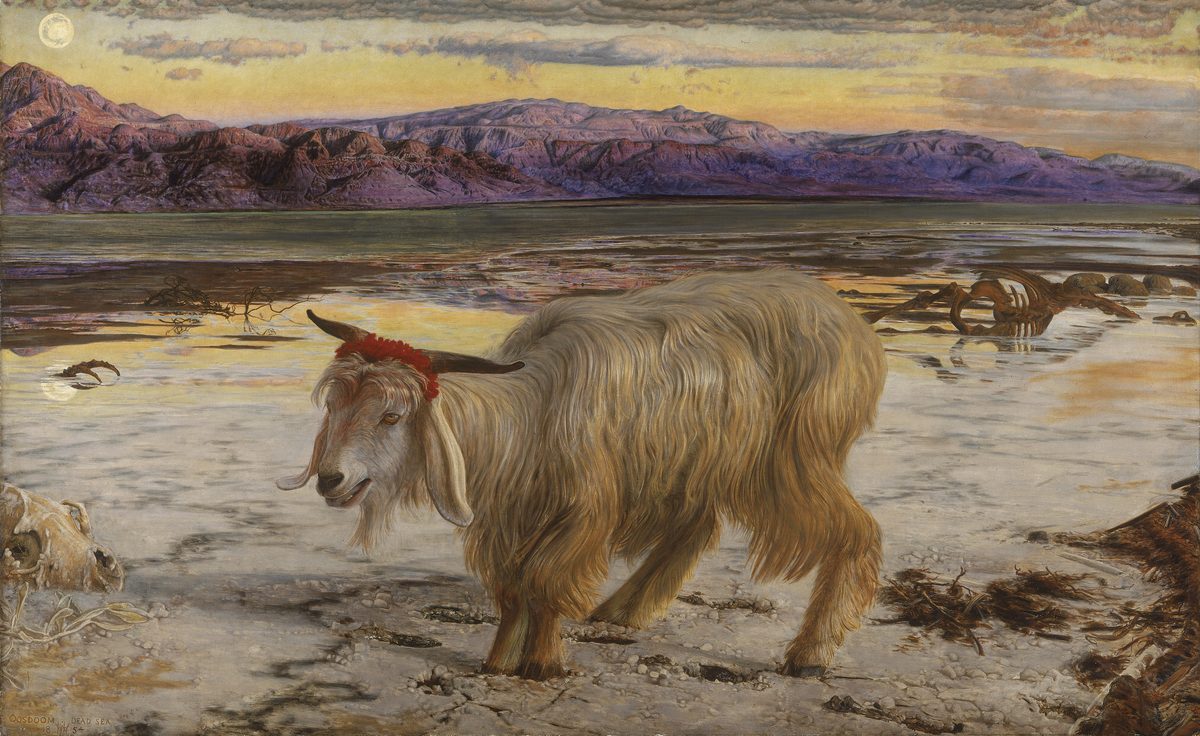
וְהַשָּׂעִיר, אֲשֶׁר עָלָה עָלָיו הַגּוֹרָל לַעֲזָאזֵל, יָעֳמַד-חַי לִפְנֵי יְהוָה, לְכַפֵּר עָלָיו--לְשַׁלַּח אֹתוֹ לַעֲזָאזֵל, הַמִּדְבָּרָה.
But the goat on which the lot for Azazel fell shall be stood alive before Jehovah, to make atonement over it — to send it away to Azazel, into the wilderness.
notePero el macho cabrío sobre el cual cayó la suerte por Azazel será puesto vivo delante de Jehová, para hacer expiación sobre él —para enviarlo a Azazel, al desierto.
11
וְהִקְרִיב אַהֲרֹן אֶת-פַּר הַחַטָּאת, אֲשֶׁר-לוֹ, וְכִפֶּר בַּעֲדוֹ, וּבְעַד בֵּיתוֹ; וְשָׁחַט אֶת-פַּר הַחַטָּאת, אֲשֶׁר-לוֹ.
Aaron shall present the bull of the sin-offering that is his own, and make atonement for himself and for his household, and he shall slaughter the bull of the sin-offering that is his own.
noteY Aarón presentará el becerro de la ofrenda por el pecado que es suyo, y hará expiación por sí mismo y por su casa, y degollará el becerro de la ofrenda por el pecado que es suyo.
12
וְלָקַח מְלֹא-הַמַּחְתָּה גַּחֲלֵי-אֵשׁ מֵעַל הַמִּזְבֵּחַ, מִלִּפְנֵי יְהוָה, וּמְלֹא חָפְנָיו, קְטֹרֶת סַמִּים דַּקָּה; וְהֵבִיא, מִבֵּית לַפָּרֹכֶת.
He shall take a censer full of burning coals from the altar before Jehovah, and two handfuls of finely-ground fragrant incense, and bring it inside the veil.
noteTomará un incensario lleno de brasas encendidas del altar que está delante de Jehová, y sus dos manos llenas de incienso aromático molido fino, y lo llevará dentro del velo.
13
וְנָתַן אֶת-הַקְּטֹרֶת עַל-הָאֵשׁ, לִפְנֵי יְהוָה; וְכִסָּה עֲנַן הַקְּטֹרֶת, אֶת-הַכַּפֹּרֶת אֲשֶׁר עַל-הָעֵדוּת--וְלֹא יָמוּת.
He shall put the incense on the fire before Jehovah, so that the cloud of incense covers the cover that is on
the testimony, or he will die.
notePondrá el incienso sobre el fuego delante de Jehová, de modo que la nube del incienso cubra la cubierta que está sobre el testimonio, para que no muera.
14
וְלָקַח מִדַּם הַפָּר, וְהִזָּה בְאֶצְבָּעוֹ עַל-פְּנֵי הַכַּפֹּרֶת קֵדְמָה; וְלִפְנֵי הַכַּפֹּרֶת, יַזֶּה שֶׁבַע-פְּעָמִים מִן-הַדָּם--בְּאֶצְבָּעוֹ.
He shall take some of the bull’s blood and sprinkle it with his finger on the front of the cover, eastward, and in front of the cover he shall sprinkle some of the blood with his finger seven times.
noteTomará de la sangre del becerro y la rociará con su dedo sobre el frente de la cubierta, hacia el oriente, y delante de la cubierta rociará de la sangre con su dedo siete veces.
15
וְשָׁחַט אֶת-שְׂעִיר הַחַטָּאת, אֲשֶׁר לָעָם, וְהֵבִיא אֶת-דָּמוֹ, אֶל-מִבֵּית לַפָּרֹכֶת; וְעָשָׂה אֶת-דָּמוֹ, כַּאֲשֶׁר עָשָׂה לְדַם הַפָּר, וְהִזָּה אֹתוֹ עַל-הַכַּפֹּרֶת, וְלִפְנֵי הַכַּפֹּרֶת.
Then he shall slaughter the goat of the sin-offering that is for the people, and bring its blood inside the veil, and do with its blood as he did with the bull’s blood, sprinkling it on the cover and in front of the cover.
noteLuego degollará el macho cabrío de la ofrenda por el pecado que es por el pueblo, y llevará su sangre dentro del velo, y hará con su sangre como hizo con la sangre del becerro, rociaándola sobre la cubierta y delante de la cubierta.
16
וְכִפֶּר עַל-הַקֹּדֶשׁ, מִטֻּמְאֹת בְּנֵי יִשְׂרָאֵל, וּמִפִּשְׁעֵיהֶם, לְכָל-חַטֹּאתָם; וְכֵן יַעֲשֶׂה, לְאֹהֶל מוֹעֵד, הַשֹּׁכֵן אִתָּם, בְּתוֹךְ טֻמְאֹתָם.
He shall make atonement for the holy place because of the uncleannesses of the children of Israel and their transgressions, all their sins; and he shall do the same for the tent of meeting that dwells with them in the midst of their uncleannesses.
noteHará expiación por el lugar santo, a causa de las impurezas de los hijos de Israel y de sus transgresiones, todos sus pecados; y así hará por el tabernáculo de reunión, que mora con ellos en medio de sus impurezas.
17
וְכָל-אָדָם לֹא-יִהְיֶה בְּאֹהֶל מוֹעֵד, בְּבֹאוֹ לְכַפֵּר בַּקֹּדֶשׁ--עַד-צֵאתוֹ; וְכִפֶּר בַּעֲדוֹ וּבְעַד בֵּיתוֹ, וּבְעַד כָּל-קְהַל יִשְׂרָאֵל.
No one shall be in the tent of meeting when he goes in to make atonement in the holy place, until he comes out, having made atonement for himself, and for his household, and for the whole assembly of Israel.
noteNinguna persona estará en el tabernáculo de reunión cuando él entre a hacer expiación en el lugar santo, hasta que salga, habiendo hecho expiación por sí mismo, por su casa, y por toda la asamblea de Israel.
18
וְיָצָא, אֶל-הַמִּזְבֵּחַ אֲשֶׁר לִפְנֵי-יְהוָה--וְכִפֶּר עָלָיו; וְלָקַח מִדַּם הַפָּר, וּמִדַּם הַשָּׂעִיר, וְנָתַן עַל-קַרְנוֹת הַמִּזְבֵּחַ, סָבִיב.
Then he shall go out to the altar that is before Jehovah and make atonement for it; he shall take some of the bull’s blood and some of the goat’s blood and put it on the horns of the altar, all around.
noteEntonces saldrá al altar que está delante de Jehová y hará expiación por él; tomará de la sangre del becerro y de la sangre del macho cabrío, y la pondrá sobre los cuernos del altar, alrededor.
19
וְהִזָּה עָלָיו מִן-הַדָּם בְּאֶצְבָּעוֹ, שֶׁבַע פְּעָמִים; וְטִהֲרוֹ וְקִדְּשׁוֹ, מִטֻּמְאֹת בְּנֵי יִשְׂרָאֵל.
He shall sprinkle some of the blood on it with his finger seven times, and cleanse it and consecrate it from the uncleannesses of the children of Israel.
noteRociará sobre él de la sangre con su dedo siete veces, y lo purificará y lo consagrará de las impurezas de los hijos de Israel.
20
וְכִלָּה מִכַּפֵּר אֶת-הַקֹּדֶשׁ, וְאֶת-אֹהֶל מוֹעֵד וְאֶת-הַמִּזְבֵּחַ; וְהִקְרִיב, אֶת-הַשָּׂעִיר הֶחָי.
When he has finished making atonement for the holy place, the tent of meeting, and the altar, he shall present the live goat.
noteCuando haya terminado de hacer expiación por el lugar santo, por el tabernáculo de reunión, y por el altar, presentará el macho cabrío vivo.
21
וְסָמַךְ אַהֲרֹן אֶת-שְׁתֵּי יָדָו, עַל רֹאשׁ הַשָּׂעִיר הַחַי, וְהִתְוַדָּה עָלָיו אֶת-כָּל-עֲוֺנֹת בְּנֵי יִשְׂרָאֵל, וְאֶת-כָּל-פִּשְׁעֵיהֶם לְכָל-חַטֹּאתָם; וְנָתַן אֹתָם עַל-רֹאשׁ הַשָּׂעִיר, וְשִׁלַּח בְּיַד-אִישׁ עִתִּי הַמִּדְבָּרָה.
Aaron shall lay both his hands on the head of the live goat, and confess over it all the iniquities of the children of Israel, all their transgressions, all their sins, and put them on the goat’s head, and send it away into the wilderness, by the hand of
a man kept ready for it.
noteY Aarón pondrá sus dos manos sobre la cabeza del macho cabrío vivo, y confesará sobre él todas las iniquidades de los hijos de Israel, todas sus transgresiones, todos sus pecados, y los pondrá sobre la cabeza del macho cabrío, y lo enviará al desierto por mano de
un hombre mantenido listo para ello.
22
וְנָשָׂא הַשָּׂעִיר עָלָיו אֶת-כָּל-עֲוֺנֹתָם, אֶל-אֶרֶץ גְּזֵרָה; וְשִׁלַּח אֶת-הַשָּׂעִיר, בַּמִּדְבָּר.
The goat shall carry on itself all their iniquities to a land cut off, and he shall release the goat in the wilderness.
noteEl macho cabrío llevará sobre sí todas las iniquidades de ellos a una tierra de separación; y soltará el macho cabrío en el desierto.
23
וּבָא אַהֲרֹן, אֶל-אֹהֶל מוֹעֵד, וּפָשַׁט אֶת-בִּגְדֵי הַבָּד, אֲשֶׁר לָבַשׁ בְּבֹאוֹ אֶל-הַקֹּדֶשׁ; וְהִנִּיחָם, שָׁם.
Then Aaron shall come into the tent of meeting and take off the linen garments that he put on when he went into the holy place, and leave them there.
noteEntonces Aarón entrará en el tabernáculo de reunión, y se quitará las vestiduras de lino que se puso al entrar en el lugar santo, y las dejará allí.
24
וְרָחַץ אֶת-בְּשָׂרוֹ בַמַּיִם בְּמָקוֹם קָדוֹשׁ, וְלָבַשׁ אֶת-בְּגָדָיו; וְיָצָא, וְעָשָׂה אֶת-עֹלָתוֹ וְאֶת-עֹלַת הָעָם, וְכִפֶּר בַּעֲדוֹ, וּבְעַד הָעָם.
He shall bathe his body in water in a holy place, and put on his own garments, and come out and offer his burnt-offering and the burnt-offering of the people, and make atonement for himself and for the people.
noteBañará su cuerpo en agua en un lugar santo, y se pondrá sus propias vestiduras, y saldrá y ofrecerá su holocausto y el holocausto del pueblo, y hará expiación por sí mismo y por el pueblo.
25
וְאֵת חֵלֶב הַחַטָּאת, יַקְטִיר הַמִּזְבֵּחָה.
And the fat of the sin-offering he shall burn on the altar.
noteY quemará sobre el altar la grosura de la ofrenda por el pecado.
26
וְהַמְשַׁלֵּחַ אֶת-הַשָּׂעִיר, לַעֲזָאזֵל--יְכַבֵּס בְּגָדָיו, וְרָחַץ אֶת-בְּשָׂרוֹ בַּמָּיִם; וְאַחֲרֵי-כֵן, יָבוֹא אֶל-הַמַּחֲנֶה.
The one who releases the goat for Azazel shall wash his clothes and bathe his body in water, and afterward he may come into the camp.
noteEl que suelte el macho cabrío para Azazel lavará sus vestidos, y bañará su cuerpo en agua, y después podrá entrar en el campamento.
27
וְאֵת פַּר הַחַטָּאת וְאֵת שְׂעִיר הַחַטָּאת, אֲשֶׁר הוּבָא אֶת-דָּמָם לְכַפֵּר בַּקֹּדֶשׁ--יוֹצִיא, אֶל-מִחוּץ לַמַּחֲנֶה; וְשָׂרְפוּ בָאֵשׁ, אֶת-עֹרֹתָם וְאֶת-בְּשָׂרָם וְאֶת-פִּרְשָׁם.
The bull of the sin-offering and the goat of the sin-offering, whose blood was brought in to make atonement in the holy place, shall be carried outside the camp, and their skins, their flesh, and their dung shall be burned in fire.
noteEl becerro de la ofrenda por el pecado y el macho cabrío de la ofrenda por el pecado, cuya sangre fue llevada para hacer expiación en el lugar santo, serán llevados fuera del campamento; y quemarán en fuego sus pieles, su carne y su estiércol.
28
וְהַשֹּׂרֵף אֹתָם--יְכַבֵּס בְּגָדָיו, וְרָחַץ אֶת-בְּשָׂרוֹ בַּמָּיִם; וְאַחֲרֵי-כֵן, יָבוֹא אֶל-הַמַּחֲנֶה.
The one who burns them shall wash his clothes and bathe his body in water, and afterward he may come into the camp.
noteEl que los queme lavará sus vestidos, y bañará su cuerpo en agua, y después podrá entrar en el campamento.
29
וְהָיְתָה לָכֶם, לְחֻקַּת עוֹלָם: בַּחֹדֶשׁ הַשְּׁבִיעִי בֶּעָשׂוֹר לַחֹדֶשׁ תְּעַנּוּ אֶת-נַפְשֹׁתֵיכֶם, וְכָל-מְלָאכָה לֹא תַעֲשׂוּ--הָאֶזְרָח, וְהַגֵּר הַגָּר בְּתוֹכְכֶם.
And it shall be a statute forever for you: in the seventh month, on the tenth day of the month, you shall
afflict your souls, and do no work at all — the native-born, or the foreigner living among you.
noteY esto será para vosotros un estatuto perpetuo: en el mes séptimo, a los diez días del mes,
afligiréis vuestras almas, y ninguna obra haréis, ni el natural ni el extranjero que habita entre vosotros.
30
כִּי-בַיּוֹם הַזֶּה יְכַפֵּר עֲלֵיכֶם, לְטַהֵר אֶתְכֶם: מִכֹּל, חַטֹּאתֵיכֶם, לִפְנֵי יְהוָה, תִּטְהָרוּ.
For on this day atonement shall be made for you, to cleanse you; from all your sins you shall be clean before Jehovah.
notePorque en este día se hará expiación por vosotros, para purificaros; de todos vuestros pecados quedaréis puros delante de Jehová.
31
שַׁבַּת שַׁבָּתוֹן הִיא לָכֶם, וְעִנִּיתֶם אֶת-נַפְשֹׁתֵיכֶם--חֻקַּת, עוֹלָם.
It is a sabbath of solemn rest for you, and you shall afflict your souls — a statute forever.
noteEs para vosotros un sábado de reposo solemne, y afligiréis vuestras almas —estatuto perpetuo.
32
וְכִפֶּר הַכֹּהֵן אֲשֶׁר-יִמְשַׁח אֹתוֹ, וַאֲשֶׁר יְמַלֵּא אֶת-יָדוֹ, לְכַהֵן, תַּחַת אָבִיו; וְלָבַשׁ אֶת-בִּגְדֵי הַבָּד, בִּגְדֵי הַקֹּדֶשׁ.
The priest who is anointed and ordained to serve as priest in his father’s place shall make the atonement, wearing the linen garments, the holy garments.
noteEl sacerdote que sea ungido y consagrado para servir como sacerdote en lugar de su padre hará la expiación, vistiendo las vestiduras de lino, las vestiduras santas.
33
וְכִפֶּר אֶת-מִקְדַּשׁ הַקֹּדֶשׁ, וְאֶת-אֹהֶל מוֹעֵד וְאֶת-הַמִּזְבֵּחַ יְכַפֵּר; וְעַל הַכֹּהֲנִים וְעַל-כָּל-עַם הַקָּהָל, יְכַפֵּר.
He shall make atonement for the most holy place, and he shall make atonement for the tent of meeting and the altar, and he shall make atonement for the priests and for all the people of the assembly.
noteHará expiación por el lugar santísimo, y hará expiación por el tabernáculo de reunión y por el altar, y hará expiación por los sacerdotes y por todo el pueblo de la asamblea.
34
וְהָיְתָה-זֹּאת לָכֶם לְחֻקַּת עוֹלָם, לְכַפֵּר עַל-בְּנֵי יִשְׂרָאֵל מִכָּל-חַטֹּאתָם--אַחַת, בַּשָּׁנָה; וַיַּעַשׂ, כַּאֲשֶׁר צִוָּה יְהוָה אֶת-מֹשֶׁה. {פ}
And this shall be a statute forever for you, to make atonement for the children of Israel because of all their sins, once a year. And he did as Jehovah commanded Moses.
noteY esto será para vosotros un estatuto perpetuo, para hacer expiación por los hijos de Israel a causa de todos sus pecados, una vez al año. E hizo Aarón como Jehová mandó a Moisés.
Day of Atonement meaning — why Leviticus 16 opens with a death
The chapter’s very first clause — ‘after the death of Aaron’s two sons’ — names the reason this whole law exists before it states a single instruction. Nadab and Abihu died for approaching wrongly (Leviticus 10:1–2, already on these pages); this chapter’s answer is not ‘never approach’ but ‘approach exactly this way, exactly once a year.’ ‘Not at just any time’ (v2, be-khol et) restricts what their deaths made obviously dangerous: unscheduled entry into the space behind the veil.
The cover (v2, kapporet) is kept literal, exactly as this project’s own Exodus 25 entry promised it would be — not ‘KJV/Geneva mercy seat,’ William Tyndale’s 16th-century coinage, and not Douay-Rheims’s ‘propitiatory’ (from the Vulgate’s Latin), but the plain gold lid the Hebrew actually names.
Aaron’s clothing for this one day (v4) is the same fabric — linen, bad — as his ordination, but stripped of everything that made the ordination garments splendid: no gold, no blue-and-purple, no bells, no breastplate (compare Exodus 28:4, already on these pages). The high priest’s single grandest duty of the year is performed in his plainest clothes.
Azazel meaning — scapegoat, demon, or cliff?
Azazel (v8, v10) is kept transliterated here, matching NIV, NASB, and NWT, rather than translated as an English common noun. Three readings of the name have real scholarly standing and this translation does not choose among them — see the dictionary entry for the full case. What the Hebrew itself is unambiguous about is the grammar: ‘one lot for Jehovah, and one lot for Azazel’ (v8) sets a proper name against a proper name, in an identical construction — whatever else Azazel is, the text treats the word as naming a destination or recipient, symmetrical in FORM to the LORD’s own name, not merely a place description.
⚠ KJV and Geneva both render the word ‘the scapegoat’ — Tyndale’s 1530 coinage (‘(e)scape-goat’), built on the folk etymology that reads azazel as ez (goat) plus azal (departs): ‘the goat that goes away.’ Douay-Rheims, translating the Vulgate, has ‘the emissary goat’ (caper emissarius), the same idea in Latin. Both are translations of a GUESSED etymology, not of the Hebrew word actually printed on the page — which is why this project keeps the name instead.
Inside the veil — the one day a year anyone entered the Holy of Holies
The incense cloud (vv12–13) is not ceremonial atmosphere; the text states its function bluntly — it must cover the cover ‘or he will die.’ Whatever exactly is meant by seeing the cover directly, the smoke is protective, not decorative.
The sevenfold sprinkling (v14, v19) repeats the exact number this project’s own Leviticus 14:7 (already on these pages) used for the healed person’s cleansing blood — the same ritual arithmetic scaled up from one body to the whole sanctuary.
‘The testimony’ (v13) names the stone tablets inside the ark, the same word this project’s Exodus 25 note already used for the ark’s own contents (Exodus 25:16, already on these pages) — the cover sits directly over the covenant document itself.
Two goats, two atonements — Leviticus 16’s confession and the goat sent away
The chapter runs two mechanisms side by side, and keeps them distinct. Blood, sprinkled on the cover and the altar (vv14–19), atones for the SANCTUARY — cleansing a holy place defiled simply by standing in the middle of an unclean people, whether or not any one person intended wrong. Confession, spoken over a live animal’s head (v21), carries away the PEOPLE’S own ‘iniquities... transgressions... sins’ — named with all three Hebrew words this project has kept distinct since Leviticus 5 (already on these pages). One rite, two kinds of wrong, never merged into a single vocabulary word — the same discipline this project has kept since Leviticus 11 first separated ritual impurity from moral guilt, now visible in one chapter’s own two goats.
⚠ ‘A man kept ready for it’ (v21, ish itti) is a genuinely uncertain phrase — see the dictionary entry. ‘A land cut off’ (v22, eretz gezerah) shares its root with the ordinary Hebrew word for a legal decree (gezerah) — not simply remote, but a land legally severed from the camp, the same root sense NIV’s ‘a remote place’ loses and ASV’s literal ‘a land which is cut off’ keeps.
Why even removing sin makes you unclean
The linen garments worn inside the veil are LEFT there (v23) — never carried back into ordinary priestly service, worn for this single rite and no other. And everyone who so much as handles this day’s ritual at second hand — the man who released the goat (v26), the man who burned the remains (v28) — must wash and stay outside the camp until evening, the identical ‘unclean until evening’ formula this project has tracked since Leviticus 11. Even the instruments used to REMOVE a people’s uncleanness become, briefly, unclean themselves by the contact — the clean/unclean system’s own logic applied to its own machinery.
Yom Kippur origins — the Bible’s only commanded fast
‘Afflict your souls’ (vv29, 31, inuy nefesh) is kept literal, matching KJV and ASV; NIV smooths it to ‘deny yourselves,’ and The Living Bible paraphrases outright: ‘you must go without food.’ The verse itself never uses tzum, Hebrew’s ordinary fasting verb — later practice (and Isaiah 58:3, 5, not yet on these pages) reads the idiom as fasting, but the text’s own wording is broader than that one inference, covering washing, anointing, and sandals along with food in the practice this verse eventually produced.
The tenth day of the seventh month named here (v29) is the day still kept as Yom Kippur. ‘A statute forever’ (vv29, 31, 34, chukat olam) is repeated three times in six verses — and v32’s ‘the priest who is anointed... in his father’s place’ writes Aaron’s own name out of the law entirely, anticipating every high priest who will ever stand where he stood.
Notes on this translation
Decisions. Hebrew and English Leviticus 16 both run 1–34 — verified against the Masoretic text, no versification shift. Unusually for this book, the chapter carries no internal paragraph break at all: a single Masoretic unit from v1 to the open break that closes v34, the whole Day of Atonement rite told in one unbroken breath. ‘The cover’ (kapporet) and ‘the veil’ (parochet) both pay off dictionary entries fixed at Exodus 25–26 (already on these pages). ‘Azazel’ is kept transliterated; ‘a land cut off’ and ‘a man kept ready for it’ render two genuinely uncertain phrases as literally as English allows. ‘Afflict your souls’ keeps the Hebrew idiom behind the fast, rather than naming the fast itself.
Echoes paid. Nadab and Abihu’s deaths at Leviticus 10:1–2 (already on these pages), named outright as this chapter’s own reason for existing; the sevenfold blood-sprinkling of Leviticus 14:7 (already on these pages), scaled from one healed body to the whole sanctuary; the ordination garments of Exodus 28:4 and Leviticus 8 (already on these pages), stripped to linen alone for this one day; and the clean/unclean distinction this whole book has kept since Leviticus 11 (already on these pages), now visible in the chapter’s own two goats, one mechanism for the sanctuary and one for the people.
Echoes planted. The live goat released ‘to a land cut off’ (v22) answers, at last, the promise this project’s own Leviticus 14 chnote (already on these pages) made and left open: the released living bird over open country there sets up ‘the more famous scapegoat sent into the wilderness at Leviticus 16’ — now paid. ‘Once a year’ (v34, achat bashanah) is the phrase the letter to the Hebrews will build its own argument on, reading this repeated annual rite against a single, unrepeated one — not yet on these pages, but the case is already made here, in the number itself.
⚠ A note on order: Leviticus stands complete on these pages, chapters 1–27.