1
וַיְדַבֵּר יְהוָה, אֶל-מֹשֶׁה לֵּאמֹר.
Jehová habló a Moisés, diciendo:
2
צַו אֶת-בְּנֵי יִשְׂרָאֵל, וְיִקְחוּ אֵלֶיךָ שֶׁמֶן זַיִת זָךְ כָּתִית--לַמָּאוֹר: לְהַעֲלֹת נֵר, תָּמִיד.
Manda a los hijos de Israel que te traigan aceite puro de oliva prensado para el alumbrado, para hacer arder
una lámpara continuamente.
3
מִחוּץ לְפָרֹכֶת הָעֵדֻת בְּאֹהֶל מוֹעֵד, יַעֲרֹךְ אֹתוֹ אַהֲרֹן מֵעֶרֶב עַד-בֹּקֶר לִפְנֵי יְהוָה--תָּמִיד: חֻקַּת עוֹלָם, לְדֹרֹתֵיכֶם.
Outside the
veil of the testimony, in the
tent of meeting,
Aaron shall arrange it from evening to morning before Jehovah, continually; it shall be a statute forever throughout your generations.
noteFuera del
velo del testimonio, en el tabernáculo de reunión, Aarón la dispondrá desde la tarde hasta la mañana delante de Jehová, continuamente; será estatuto perpetuo por vuestras generaciones.
4
עַל הַמְּנֹרָה הַטְּהֹרָה, יַעֲרֹךְ אֶת-הַנֵּרוֹת, לִפְנֵי יְהוָה, תָּמִיד. {פ}
He shall arrange the lamps on the pure lampstand before Jehovah, continually.
{פ}noteDispondrá las lámparas sobre el candelabro puro delante de Jehová, continuamente.
5
וְלָקַחְתָּ סֹלֶת--וְאָפִיתָ אֹתָהּ, שְׁתֵּים עֶשְׂרֵה חַלּוֹת; שְׁנֵי, עֶשְׂרֹנִים, יִהְיֶה, הַחַלָּה הָאֶחָת.
And you shall take fine flour, and bake twelve loaves from it; two-tenths of an ephah shall be in each loaf.
noteTomarás flor de harina, y hornearás doce panes; cada pan será de dos décimas de efa.
6
וְשַׂמְתָּ אוֹתָם שְׁתַּיִם מַעֲרָכוֹת, שֵׁשׁ הַמַּעֲרָכֶת, עַל הַשֻּׁלְחָן הַטָּהֹר, לִפְנֵי יְהוָה.
And you shall set them in two rows, six in a row, on the pure table before Jehovah.
noteY los pondrás en dos hileras, seis en cada hilera, sobre la mesa pura delante de Jehová.
7
וְנָתַתָּ עַל-הַמַּעֲרֶכֶת, לְבֹנָה זַכָּה; וְהָיְתָה לַלֶּחֶם לְאַזְכָּרָה, אִשֶּׁה לַיהוָה.
And you shall put pure frankincense on each row, that it may be a memorial portion for the bread, an offering made by fire to Jehovah.
noteY pondrás incienso puro sobre cada hilera, para que sea porción memorial del pan, ofrenda por fuego a Jehová.
8
בְּיוֹם הַשַּׁבָּת בְּיוֹם הַשַּׁבָּת, יַעַרְכֶנּוּ לִפְנֵי יְהוָה--תָּמִיד: מֵאֵת בְּנֵי-יִשְׂרָאֵל, בְּרִית עוֹלָם.
Every sabbath day he shall arrange it before Jehovah, continually; it is from the children of Israel, an everlasting covenant.
noteCada día de sábado lo dispondrá delante de Jehová, continuamente; es de los hijos de Israel, pacto perpetuo.
9
וְהָיְתָה לְאַהֲרֹן וּלְבָנָיו, וַאֲכָלֻהוּ בְּמָקוֹם קָדֹשׁ: כִּי קֹדֶשׁ קָדָשִׁים הוּא לוֹ, מֵאִשֵּׁי יְהוָה--חָק-עוֹלָם. {ס}
And it shall belong to
Aaron and his sons, and they shall eat it in a holy place, for it is most holy to him, from the offerings of Jehovah made by fire — a perpetual due.
{ס}noteY será de
Aarón y de sus hijos, y lo comerán en un lugar santo, porque es cosa santísima para él, de las ofrendas de Jehová hechas por fuego —derecho perpetuo.
10
וַיֵּצֵא, בֶּן-אִשָּׁה יִשְׂרְאֵלִית, וְהוּא בֶּן-אִישׁ מִצְרִי, בְּתוֹךְ בְּנֵי יִשְׂרָאֵל; וַיִּנָּצוּ, בַּמַּחֲנֶה, בֶּן הַיִּשְׂרְאֵלִית, וְאִישׁ הַיִּשְׂרְאֵלִי.
And the son of an Israelite woman, whose father was an Egyptian, went out among the children of Israel; and the son of the Israelite woman and a man of Israel fought with each other in the camp.
noteY salió el hijo de una mujer israelita, que era hijo de un hombre egipcio, en medio de los hijos de Israel; y el hijo de la israelita y un hombre de Israel reñían en el campamento.
11
וַיִּקֹּב בֶּן-הָאִשָּׁה הַיִּשְׂרְאֵלִית אֶת-הַשֵּׁם, וַיְקַלֵּל, וַיָּבִיאוּ אֹתוֹ, אֶל-מֹשֶׁה; וְשֵׁם אִמּוֹ שְׁלֹמִית בַּת-דִּבְרִי, לְמַטֵּה-דָן.
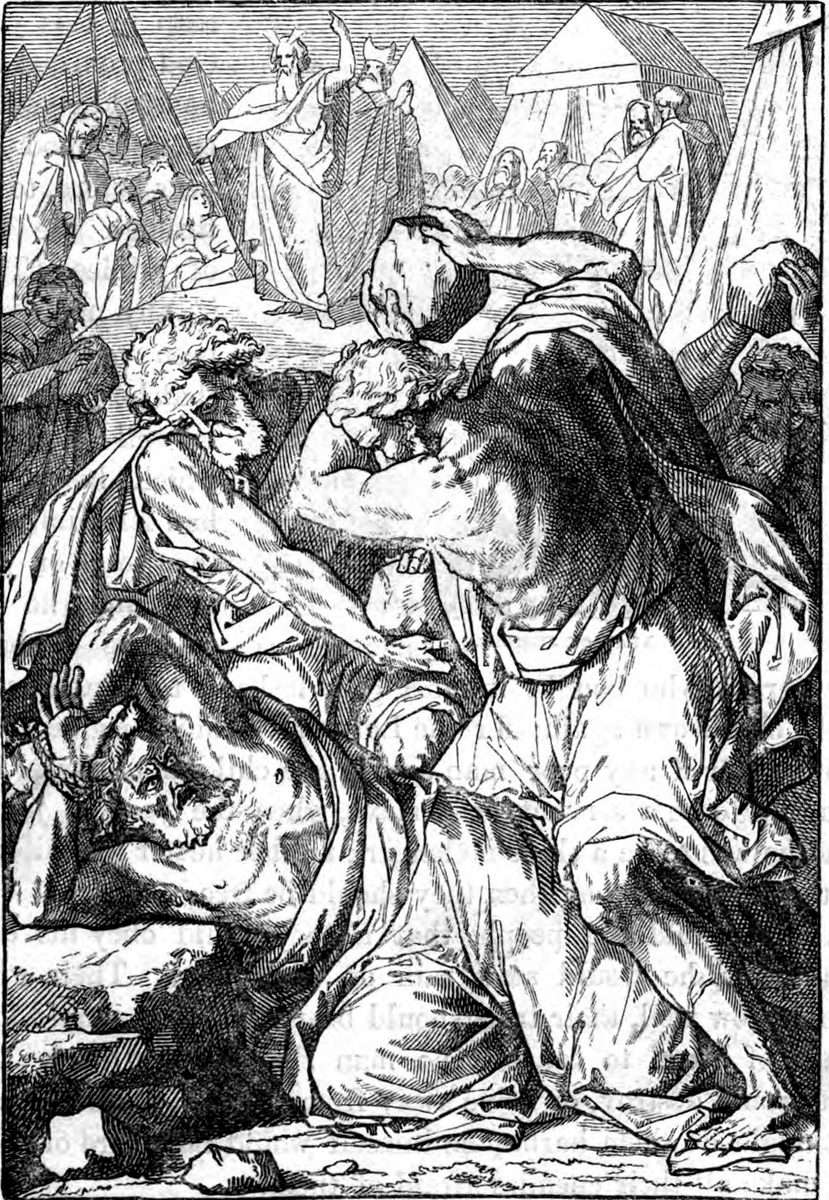
And the son of the Israelite woman
blasphemed the Name and cursed, and they brought him to Moses. His mother's name was Shelomith, daughter of Dibri, of the tribe of Dan.
noteY el hijo de la mujer israelita
blasfemó el Nombre y maldijo, y lo llevaron a Moisés. El nombre de su madre era Selomit, hija de Dibri, de la tribu de Dan.
12
וַיַּנִּיחֻהוּ, בַּמִּשְׁמָר, לִפְרֹשׁ לָהֶם, עַל-פִּי יְהוָה. {פ}
And they put him in custody, until the matter should be made clear to them at the mouth of Jehovah.
{פ}noteY lo pusieron bajo custodia, hasta que se les aclarara el asunto por boca de Jehová.
13
וַיְדַבֵּר יְהוָה, אֶל-מֹשֶׁה לֵּאמֹר.
Jehovah spoke to Moses, saying:
noteJehová habló a Moisés, diciendo:
14
הוֹצֵא אֶת-הַמְקַלֵּל, אֶל-מִחוּץ לַמַּחֲנֶה, וְסָמְכוּ כָל-הַשֹּׁמְעִים אֶת-יְדֵיהֶם, עַל-רֹאשׁוֹ; וְרָגְמוּ אֹתוֹ, כָּל-הָעֵדָה.
Bring the one who cursed outside the camp, and let all who heard him lay their hands on his head, and let the whole congregation stone him.
noteSaca al que maldijo fuera del campamento, y que todos los que lo oyeron pongan sus manos sobre su cabeza, y que toda la congregación lo apedree.
15
וְאֶל-בְּנֵי יִשְׂרָאֵל, תְּדַבֵּר לֵאמֹר: אִישׁ אִישׁ כִּי-יְקַלֵּל אֱלֹהָיו, וְנָשָׂא חֶטְאוֹ.
And you shall speak to the children of Israel, saying: Whoever curses his God shall bear his sin.
noteY hablarás a los hijos de Israel, diciendo: Cualquiera que maldiga a su Dios cargará su pecado.
16
וְנֹקֵב שֵׁם-יְהוָה מוֹת יוּמָת, רָגוֹם יִרְגְּמוּ-בוֹ כָּל-הָעֵדָה: כַּגֵּר, כָּאֶזְרָח--בְּנָקְבוֹ-שֵׁם, יוּמָת.
And whoever blasphemes the name of Jehovah shall surely be put to death; the whole congregation shall stone him. Whether foreigner or native-born, when he blasphemes the Name, he shall be put to death.
noteY el que blasfeme el nombre de Jehová morirá sin falta; toda la congregación lo apedreará. Sea extranjero o nativo, cuando blasfeme el Nombre, morirá.
17
וְאִישׁ, כִּי יַכֶּה כָּל-נֶפֶשׁ אָדָם--מוֹת, יוּמָת.
And whoever strikes any human being fatally shall surely be put to death.
noteY el que hiera mortalmente a cualquier ser humano morirá sin falta.
18
וּמַכֵּה נֶפֶשׁ-בְּהֵמָה, יְשַׁלְּמֶנָּה--נֶפֶשׁ, תַּחַת נָפֶשׁ.
And whoever strikes an animal fatally shall make restitution for it — life for life.
noteY el que hiera mortalmente a un animal lo restituirá —vida por vida.
19
וְאִישׁ, כִּי-יִתֵּן מוּם בַּעֲמִיתוֹ--כַּאֲשֶׁר עָשָׂה, כֵּן יֵעָשֶׂה לּוֹ.
And if a man inflicts a
injury on his neighbor, as he has done, so shall it be done to him:
noteY si un hombre inflige una
lesión a su prójimo, como él hizo, así se le hará a él:
20
שֶׁבֶר, תַּחַת שֶׁבֶר, עַיִן תַּחַת עַיִן, שֵׁן תַּחַת שֵׁן--כַּאֲשֶׁר יִתֵּן מוּם בָּאָדָם, כֵּן יִנָּתֶן בּוֹ.
fracture for fracture, eye for eye, tooth for tooth — whatever injury he has inflicted on a person, the same shall be inflicted on him.
notefractura por fractura, ojo por ojo, diente por diente —la misma lesión que haya infligido a una persona, esa misma se le infligirá a él.
21
וּמַכֵּה בְהֵמָה, יְשַׁלְּמֶנָּה; וּמַכֵּה אָדָם, יוּמָת.
Whoever kills an animal shall make restitution for it; and whoever kills a human being shall be put to death.
noteEl que mate a un animal lo restituirá; y el que mate a un ser humano morirá.
22
מִשְׁפַּט אֶחָד יִהְיֶה לָכֶם, כַּגֵּר כָּאֶזְרָח יִהְיֶה: כִּי אֲנִי יְהוָה, אֱלֹהֵיכֶם.
You shall have one law, whether for the foreigner or for the native-born; for I am Jehovah your God.
noteTendréis una sola ley, tanto para el extranjero como para el nativo; porque yo soy Jehová vuestro Dios.
23
וַיְדַבֵּר מֹשֶׁה, אֶל-בְּנֵי יִשְׂרָאֵל, וַיּוֹצִיאוּ אֶת-הַמְקַלֵּל אֶל-מִחוּץ לַמַּחֲנֶה, וַיִּרְגְּמוּ אֹתוֹ אָבֶן; וּבְנֵי-יִשְׂרָאֵל עָשׂוּ, כַּאֲשֶׁר צִוָּה יְהוָה אֶת-מֹשֶׁה. {פ}
So Moses spoke to the children of Israel, and they brought the one who cursed outside the camp, and stoned him with stones. And the children of Israel did as Jehovah commanded Moses.
{פ}noteAsí habló Moisés a los hijos de Israel, y sacaron al que había maldecido fuera del campamento, y lo apedrearon. Y los hijos de Israel hicieron como Jehová mandó a Moisés.
Leviticus 24 meaning — the eternal lamp, restated word for word
Verses 2–3 repeat Exodus 27:20–21 (already on these pages) almost verbatim — the same command, the same closing formula, ‘a statute forever throughout your generations.’ This project's own ner tamid entry (already on these pages) already noted that phrase's own history, sealing the priesthood's first standing duty before Aaron and his sons even had garments. Here, restated in Leviticus's own voice, the same lamp still burns.
Bread of the presence — the ritual a promise from Exodus finally keeps
This is the chapter Exodus 25's own note on the golden table (already on these pages) said would come: ‘the fuller weekly-replacement ritual is developed only much later, at Leviticus 24:5–9’ — it arrives here. This project's own lechem panim entry (already on these pages) already named its New Testament afterlife: Mark 2 and Matthew 12 (both already on these pages) both cite David eating this exact bread at Nob (1 Samuel 21, not yet on these pages) to defend his hungry men, and Jesus reaches for the same precedent to defend his own disciples on the Sabbath. A loaf replaced weekly, eaten only by priests in a holy place, becomes, a millennium later, the strongest kind of argument Scripture can make for itself: not a loophole invented, but an irregularity already on the record.
A name too specific to be a parable
Nothing else in this book names a minor character's mother, her father, and her tribe — ‘Shelomith, daughter of Dibri, of the tribe of Dan’ (v11) is a level of specificity this narrative did not need to include if it were only illustrating a principle. The son of a mixed marriage, Israelite mother and Egyptian father, blasphemes during an ordinary camp fight; the text reads like a report of something that actually happened, not a hypothetical built to generate a law.
⚠ ‘Blasphemed’ (v11, vayikov) is a startling verb choice: its root, naqav, ordinarily means ‘to pierce, to bore through’ — and, by extension, ‘to specify precisely, to name outright.’ The man's offense was not vague impiety; he said the Name itself, aloud, as a curse. That is very likely the seed of a much later practice: Jewish tradition's own refusal to pronounce YHVH at all, substituting HaShem, ‘the Name’ — the identical word this verse already uses as a stand-in.
Eye for eye, restated as a court case rather than a rule
Verse 14's detail is easy to read past: those who HEARD the blasphemy lay their own hands on the offender's head before the community stones him — the identical gesture Leviticus 16:21 (already on these pages) uses to load Israel's sins onto the scapegoat's head, here turned back on the man whose own words caused the harm. Guilt, elsewhere transferred outward onto an animal, here returns to its own source.
Vv17–22 restate Exodus 21:24's own ‘eye for eye, tooth for tooth’ (already on these pages) — but this time the abstract law arrives attached to a concrete story, not floating free in a list of case-rulings. ⚠ V19's ‘injury’ (mum) is the identical word this project has already tracked disqualifying a priest from the altar (Leviticus 21, already on these pages) and an animal from the offering (Leviticus 22, already on these pages) — the same noun now doing a third job, as the measure of harm one person inflicts on another. KJV and ASV both keep ‘blemish’ even here, carrying the ritual-disqualification sense over into a case about one person injuring another; NIV shifts to ‘defect’. This translation breaks from all three: ‘injury’ names what mum is actually measuring in this third context — harm inflicted on a person, not a physical mark on him. And v22's ‘one law’ for foreigner and native-born restates, word for word in principle, the standard Exodus 12:49 (already on these pages) already fixed before Israel had even left Egypt.
Notes on this translation
Decisions. Hebrew and English Leviticus 24 both run 1–23 — verified against the Masoretic text, no versification shift. Four Masoretic paragraphs divide it: open after v4, closed after v9, open after v12, open after v23. Naqav ha-Shem, ‘pierced/specified the Name,’ is newly entered — the literal root behind ‘blasphemed,’ and very possibly the seed of HaShem as a later spoken substitute for the divine name itself. ‘Injury’ renders mum in its third distinct legal context this project has now tracked.
Echoes paid. Exodus 27:20–21's eternal lamp (already on these pages), restated here almost verbatim; Exodus 25:30's bread of the presence and this project's own lechem panim entry (already on these pages), finally given its full weekly ritual; Mark 2 and Matthew 12 (both already on these pages), whose own citations of this bread's precedent this chapter now grounds; Leviticus 16:21's hand-laying on the scapegoat (already on these pages), reversed here onto the offender's own head; Exodus 21:24's eye-for-eye formula (already on these pages), now attached to an actual case; Leviticus 21 and 22's own mum (already on these pages), extended to interpersonal injury; and Exodus 12:49's one law for native and foreigner (already on these pages), restated word for word in principle.
Echoes planted. 1 Samuel 21 (not yet on these pages), where David actually eats the bread this chapter institutes; Numbers 15:15–16 (now on these pages), which repeats this chapter's own ‘one law’ formula a third time — and, counting v29, a fourth.
⚠ A note on order: Leviticus stands complete on these pages, chapters 1–27.