1
וְאֵלֶּה, הַמִּשְׁפָּטִים, אֲשֶׁר תָּשִׂים, לִפְנֵיהֶם.
Now these are the ordinances that you shall set before them:
noteEstas son las ordenanzas que pondrás delante de ellos:
2
כִּי תִקְנֶה עֶבֶד עִבְרִי, שֵׁשׁ שָׁנִים יַעֲבֹד; וּבַשְּׁבִעִת--יֵצֵא לַחָפְשִׁי, חִנָּם.
If you buy a
Hebrew servant, he shall serve six years, and in the seventh he shall go out free, for nothing.
noteSi compras un siervo hebreo, seis años servirá, y en el séptimo saldrá libre, de balde.
3
אִם-בְּגַפּוֹ יָבֹא, בְּגַפּוֹ יֵצֵא; אִם-בַּעַל אִשָּׁה הוּא, וְיָצְאָה אִשְׁתּוֹ עִמּוֹ.
If he comes in alone, he shall go out alone; if he is married, then his wife shall go out with him.
noteSi entra solo, solo saldrá; si tiene esposa, su esposa saldrá con él.
4
אִם-אֲדֹנָיו יִתֶּן-לוֹ אִשָּׁה, וְיָלְדָה-לוֹ בָנִים אוֹ בָנוֹת--הָאִשָּׁה וִילָדֶיהָ, תִּהְיֶה לַאדֹנֶיהָ, וְהוּא, יֵצֵא בְגַפּוֹ.
If his master gives him a wife, and she bears him sons or daughters, the wife and her children shall belong to her master, and he shall go out alone.
noteSi su amo le da esposa, y ella le da hijos o hijas, la esposa y sus hijos serán de su amo, y él saldrá solo.
5
וְאִם-אָמֹר יֹאמַר, הָעֶבֶד, אָהַבְתִּי אֶת-אֲדֹנִי, אֶת-אִשְׁתִּי וְאֶת-בָּנָי; לֹא אֵצֵא, חָפְשִׁי.
But if the servant plainly says, ‘I love my master, my wife, and my children; I will not go out free,’
notePero si el siervo dice claramente: ‘Amo a mi amo, a mi esposa y a mis hijos; no saldré libre’,
6
וְהִגִּישׁוֹ אֲדֹנָיו, אֶל-הָאֱלֹהִים, וְהִגִּישׁוֹ אֶל-הַדֶּלֶת, אוֹ אֶל-הַמְּזוּזָה; וְרָצַע אֲדֹנָיו אֶת-אָזְנוֹ בַּמַּרְצֵעַ, וַעֲבָדוֹ לְעֹלָם. {ס}
then his master shall bring him to God, and shall bring him to the door or to the doorpost, and his master shall pierce his ear with an
awl, and he shall serve him forever.
noteentonces su amo lo llevará ante Dios, y lo llevará a la puerta o al poste, y su amo le horadará la oreja con una lezna, y le servirá para siempre.
7
וְכִי-יִמְכֹּר אִישׁ אֶת-בִּתּוֹ, לְאָמָה--לֹא תֵצֵא, כְּצֵאת הָעֲבָדִים.
And if a man sells his daughter as a
servant-wife, she shall not go out as the male servants do.
noteY si un hombre vende a su hija como sierva-esposa, ella no saldrá como salen los siervos varones.
8
אִם-רָעָה בְּעֵינֵי אֲדֹנֶיהָ, אֲשֶׁר-לא לוֹ יְעָדָהּ--וְהֶפְדָּהּ: לְעַם נָכְרִי לֹא-יִמְשֹׁל לְמָכְרָהּ, בְּבִגְדוֹ-בָהּ.
If she is displeasing in the eyes of her master, who designated her for himself, then he shall let her be redeemed; he has no right to sell her to a foreign people, since he has dealt deceitfully with her.
noteSi ella no agrada a los ojos de su amo, que la había destinado para sí, la dejará ser rescatada; no tendrá derecho de venderla a un pueblo extraño, pues la ha tratado con engaño.
9
וְאִם-לִבְנוֹ, יִיעָדֶנָּה--כְּמִשְׁפַּט הַבָּנוֹת, יַעֲשֶׂה-לָּהּ.
And if he designates her for his son, he shall deal with her according to the custom of daughters.
noteY si la destina a su hijo, la tratará conforme a la costumbre de las hijas.
10
אִם-אַחֶרֶת, יִקַּח-לוֹ--שְׁאֵרָהּ כְּסוּתָהּ וְעֹנָתָהּ, לֹא יִגְרָע.
If he takes another wife for himself, he shall not diminish her food, her clothing, or her
conjugal rights.
noteSi toma para sí otra esposa, no disminuirá el alimento de ella, ni su vestido, ni sus derechos conyugales.
11
וְאִם-שְׁלָשׁ-אֵלֶּה--לֹא יַעֲשֶׂה, לָהּ: וְיָצְאָה חִנָּם, אֵין כָּסֶף. {ס}
And if he does not do these three things for her, she shall go out for nothing, without payment.
noteY si no hace estas tres cosas por ella, ella saldrá de balde, sin pago alguno.
12
מַכֵּה אִישׁ וָמֵת, מוֹת יוּמָת.
Whoever strikes a man so that he dies shall surely be put to death.
noteEl que hiere a un hombre y muere, ciertamente morirá.
13
וַאֲשֶׁר לֹא צָדָה, וְהָאֱלֹהִים אִנָּה לְיָדוֹ--וְשַׂמְתִּי לְךָ מָקוֹם, אֲשֶׁר יָנוּס שָׁמָּה. {ס}
But if he did not lie in wait, and God let him fall into his hand, then I will appoint you a place to which he may flee.
noteMas el que no acechó, sino que Dios lo dejó caer en su mano, yo te señalaré un lugar al cual pueda huir.
14
וְכִי-יָזִד אִישׁ עַל-רֵעֵהוּ, לְהָרְגוֹ בְעָרְמָה--מֵעִם מִזְבְּחִי, תִּקָּחֶנּוּ לָמוּת. {ס}
But if a man schemes against his neighbor, to kill him by cunning, you shall take him even from
my altar, that he may die.
notePero si alguno se ensoberbece contra su prójimo, para matarlo con alevosía, de mi altar lo tomarás para que muera.
15
וּמַכֵּה אָבִיו וְאִמּוֹ, מוֹת יוּמָת. {ס}
Whoever strikes his father or his mother shall surely be put to death.
noteEl que hiere a su padre o a su madre, ciertamente morirá.
16
וְגֹנֵב אִישׁ וּמְכָרוֹ וְנִמְצָא בְיָדוֹ, מוֹת יוּמָת. {ס}
Whoever
kidnaps a man, whether he sells him or he is found in his possession, shall surely be put to death.
noteEl que secuestra a una persona, sea que la venda o se halle en su poder, ciertamente morirá.
17
וּמְקַלֵּל אָבִיו וְאִמּוֹ, מוֹת יוּמָת. {ס}
Whoever curses his father or his mother shall surely be put to death.
noteEl que maldice a su padre o a su madre, ciertamente morirá.
18
וְכִי-יְרִיבֻן אֲנָשִׁים--וְהִכָּה-אִישׁ אֶת-רֵעֵהוּ, בְּאֶבֶן אוֹ בְאֶגְרֹף; וְלֹא יָמוּת, וְנָפַל לְמִשְׁכָּב.
If men quarrel, and one strikes the other with a stone or with his fist, and he does not die but is confined to his bed,
noteSi dos hombres reñan, y uno hiere al otro con piedra o con el puño, y este no muere, pero cae en cama,
19
אִם-יָקוּם וְהִתְהַלֵּךְ בַּחוּץ, עַל-מִשְׁעַנְתּוֹ--וְנִקָּה הַמַּכֶּה: רַק שִׁבְתּוֹ יִתֵּן, וְרַפֹּא יְרַפֵּא. {ס}
if he rises again and walks outside on his staff, then the one who struck him shall be acquitted; only he shall pay for his loss of time, and shall see that he is thoroughly healed.
notesi se levanta y anda fuera con su bastón, el que lo hirió será absuelto; solo le pagará por su tiempo perdido, y hará que lo curen por completo.
20
וְכִי-יַכֶּה אִישׁ אֶת-עַבְדּוֹ אוֹ אֶת-אֲמָתוֹ, בַּשֵּׁבֶט, וּמֵת, תַּחַת יָדוֹ--נָקֹם, יִנָּקֵם.
If a man strikes his male or female servant with a rod, and the servant dies under his hand, he shall surely be punished.
noteSi un hombre hiere a su siervo o a su sierva con una vara, y muere bajo su mano, ciertamente será castigado.
21
אַךְ אִם-יוֹם אוֹ יוֹמַיִם, יַעֲמֹד--לֹא יֻקַּם, כִּי כַסְפּוֹ הוּא. {ס}
But if the servant survives a day or two, he shall not be punished, for the servant is his property.
notePero si sobrevive un día o dos, no será castigado, porque es propiedad suya.
22
וְכִי-יִנָּצוּ אֲנָשִׁים, וְנָגְפוּ אִשָּׁה הָרָה וְיָצְאוּ יְלָדֶיהָ, וְלֹא יִהְיֶה, אָסוֹן--עָנוֹשׁ יֵעָנֵשׁ, כַּאֲשֶׁר יָשִׁית עָלָיו בַּעַל הָאִשָּׁה, וְנָתַן, בִּפְלִלִים.
If men fight and strike a
pregnant woman so that her children come out, but no further harm follows, the one responsible shall surely be fined, as the woman's husband shall impose on him, and he shall pay as the judges determine.
noteSi algunos hombres pelean y golpean a una mujer embarazada de modo que salgan sus hijos, pero no sigue daño mayor, el responsable será multado según lo que le imponga el marido de la mujer, y pagará según determinen los jueces.
23
וְאִם-אָסוֹן, יִהְיֶה--וְנָתַתָּה נֶפֶשׁ, תַּחַת נָפֶשׁ.
But if further harm follows, then you shall give life for life,
noteMas si sigue daño mayor, entonces darás vida por vida,
24
עַיִן תַּחַת עַיִן, שֵׁן תַּחַת שֵׁן, יָד תַּחַת יָד, רֶגֶל תַּחַת רָגֶל.
eye for eye, tooth for tooth, hand for hand, foot for foot,
note
ojo por ojo, diente por diente, mano por mano, pie por pie,
25
כְּוִיָּה תַּחַת כְּוִיָּה, פֶּצַע תַּחַת פָּצַע, חַבּוּרָה, תַּחַת חַבּוּרָה. {ס}
burn for burn, wound for wound, bruise for bruise.
notequemadura por quemadura, herida por herida, golpe por golpe.
26
וְכִי-יַכֶּה אִישׁ אֶת-עֵין עַבְדּוֹ, אוֹ-אֶת-עֵין אֲמָתוֹ--וְשִׁחֲתָהּ: לַחָפְשִׁי יְשַׁלְּחֶנּוּ, תַּחַת עֵינוֹ.
If a man strikes the eye of his male or female servant and destroys it, he shall let the servant go free, in compensation for the eye.
noteSi un hombre hiere el ojo de su siervo o el ojo de su sierva, y lo destruye, lo dejará ir libre a cambio de su ojo.
27
וְאִם-שֵׁן עַבְדּוֹ אוֹ-שֵׁן אֲמָתוֹ, יַפִּיל--לַחָפְשִׁי יְשַׁלְּחֶנּוּ, תַּחַת שִׁנּוֹ. {פ}
And if he knocks out the tooth of his male or female servant, he shall let the servant go free, in compensation for the tooth.
noteY si hace caer el diente de su siervo o de su sierva, lo dejará ir libre a cambio de su diente.
28
וְכִי-יִגַּח שׁוֹר אֶת-אִישׁ אוֹ אֶת-אִשָּׁה, וָמֵת--סָקוֹל יִסָּקֵל הַשּׁוֹר, וְלֹא יֵאָכֵל אֶת-בְּשָׂרוֹ, וּבַעַל הַשּׁוֹר, נָקִי.
If an
ox gores a man or a woman to death, the ox shall surely be stoned, and its flesh shall not be eaten, but the owner of the ox shall be acquitted.
noteSi un buey acornea a un hombre o a una mujer y muere, el buey será apedreado, y no se comerá su carne, pero el dueño del buey será absuelto.
29
וְאִם שׁוֹר נַגָּח הוּא מִתְּמֹל שִׁלְשֹׁם, וְהוּעַד בִּבְעָלָיו וְלֹא יִשְׁמְרֶנּוּ, וְהֵמִית אִישׁ, אוֹ אִשָּׁה--הַשּׁוֹר, יִסָּקֵל, וְגַם-בְּעָלָיו, יוּמָת.
But if the ox has a habit of goring, and its owner has been warned and has not restrained it, and it kills a man or a woman, the ox shall be stoned, and its owner also shall be put to death.
notePero si el buey era acorneador desde antes, y su dueño fue advertido y no lo guardó, y mata a un hombre o a una mujer, el buey será apedreado, y su dueño también morirá.
30
אִם-כֹּפֶר, יוּשַׁת עָלָיו--וְנָתַן פִּדְיֹן נַפְשׁוֹ, כְּכֹל אֲשֶׁר-יוּשַׁת עָלָיו.
If a
ransom is imposed on him, he shall pay whatever is imposed for the redemption of his life.
noteSi le es impuesto un rescate, pagará todo lo que le sea impuesto por la redención de su vida.
31
אוֹ-בֵן יִגָּח, אוֹ-בַת יִגָּח--כַּמִּשְׁפָּט הַזֶּה, יֵעָשֶׂה לּוֹ.
Whether it gores a son or gores a daughter, this same rule shall be applied to him.
noteYa sea que acornee a un hijo o a una hija, conforme a esta misma norma se hará con él.
32
אִם-עֶבֶד יִגַּח הַשּׁוֹר, אוֹ אָמָה--כֶּסֶף שְׁלֹשִׁים שְׁקָלִים, יִתֵּן לַאדֹנָיו, וְהַשּׁוֹר, יִסָּקֵל. {ס}
If the ox gores a male or female servant, the owner shall pay
thirty shekels of silver to their master, and the ox shall be stoned.
noteSi el buey acornea a un siervo o a una sierva, el dueño pagará treinta siclos de plata a su amo, y el buey será apedreado.
33
וְכִי-יִפְתַּח אִישׁ בּוֹר, אוֹ כִּי-יִכְרֶה אִישׁ בֹּר--וְלֹא יְכַסֶּנּוּ; וְנָפַל-שָׁמָּה שּׁוֹר, אוֹ חֲמוֹר.
If a man opens a
pit, or digs a pit and does not cover it, and an ox or a donkey falls into it,
noteSi un hombre abre un pozo, o cava un pozo y no lo cubre, y cae en él un buey o un asno,
34
בַּעַל הַבּוֹר יְשַׁלֵּם, כֶּסֶף יָשִׁיב לִבְעָלָיו; וְהַמֵּת, יִהְיֶה-לּוֹ. {ס}
the owner of the pit shall make restitution; he shall pay money to its owner, and the dead animal shall be his.
noteel dueño del pozo pagará; dará dinero a su dueño, y el animal muerto será suyo.
35
וְכִי-יִגֹּף שׁוֹר-אִישׁ אֶת-שׁוֹר רֵעֵהוּ, וָמֵת--וּמָכְרוּ אֶת-הַשּׁוֹר הַחַי, וְחָצוּ אֶת-כַּסְפּוֹ, וְגַם אֶת-הַמֵּת, יֶחֱצוּן.
If one man's ox injures another's ox so that it dies, they shall sell the live ox and divide its price, and they shall also divide the dead animal.
noteSi el buey de un hombre hiere al buey de su prójimo, y muere, venderán el buey vivo y repartirán su precio, y también repartirán el muerto.
36
אוֹ נוֹדַע, כִּי שׁוֹר נַגָּח הוּא מִתְּמוֹל שִׁלְשֹׁם, וְלֹא יִשְׁמְרֶנּוּ, בְּעָלָיו--שַׁלֵּם יְשַׁלֵּם שׁוֹר תַּחַת הַשּׁוֹר, וְהַמֵּת יִהְיֶה-לּוֹ. {ס}
Or if it is known that the ox had a habit of goring, and its owner has not restrained it, he shall surely pay ox for ox, and the dead animal shall be his.
noteO si se sabe que el buey era acorneador desde antes, y su dueño no lo guardó, ciertamente pagará buey por buey, y el muerto será suyo.
37
כִּי יִגְנֹב-אִישׁ שׁוֹר אוֹ-שֶׂה, וּטְבָחוֹ אוֹ מְכָרוֹ--חֲמִשָּׁה בָקָר, יְשַׁלֵּם תַּחַת הַשּׁוֹר, וְאַרְבַּע-צֹאן, תַּחַת הַשֶּׂה.
If a man steals an ox or a sheep and slaughters it or sells it, he shall pay
five oxen for the ox, and four sheep for the sheep.
noteSi un hombre roba un buey o una oveja, y lo mata o lo vende, pagará cinco bueyes por el buey, y cuatro ovejas por la oveja.
Translator’s Notes
Six years, then free — and an ear pierced at the door for the one who stays
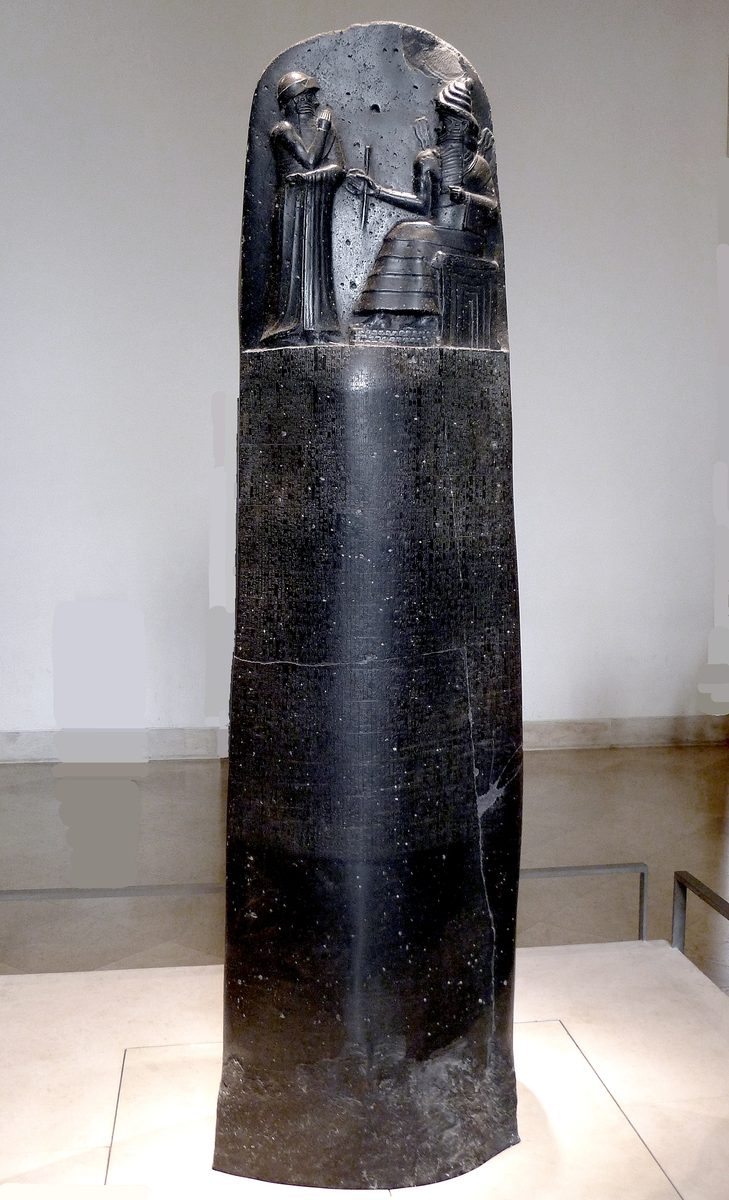
This chapter opens the Mishpatim, the ‘ordinances’ — the Torah’s first extended law code, and its own traditional name for this whole Torah portion. The Ten Commandments (ch. 20) were apodictic law: bare, unconditional ‘you shall/shall not.’ What follows here is casuistic law instead — case law, built entirely on ‘if… then,’ the same legal genre found across the ancient Near East, including the far more famous Code of Hammurabi. The two genres sit back to back on purpose: the absolute commands first, then the working-out of what a society actually does with them.
⚠ A Hebrew servant is not what later slavery means, and the text draws the line itself. Six years is a hard ceiling (v2) — a limit this law nowhere sets for a foreign-born slave (see Leviticus 25:44-46, already on these pages). The shelf itself splits on what to call him: KJV, ASV, and NIV all read v2 as ‘Hebrew servant,’ while NWT reads ‘Hebrew slave’ outright — the same fork this translation faces and resolves below. A man who has grown to love his household inside servitude may choose to stay permanently, but only through a real, witnessed ritual: brought ‘to God’ (a local shrine or the judges, ancient interpreters differ) and to the doorpost, his ear pierced with an awl (v6, KJV spells it the older way, ‘aul’) — a permanent, visible mark of a voluntary choice, not a brand imposed on him.
⚠ The daughter sold as a servant-wife (vv7–11) gets a different, in some ways stronger, protection than the male servant does. She does not simply go free after six years — because the arrangement is a marriage contract, not ordinary servitude. If her intended husband is displeased with her, he cannot sell her onward to outsiders (v8); if he marries her to his son, she gets a daughter’s standing (v9); and if he takes a second wife, her food, clothing, and conjugal rights (v10) are guaranteed by name. Fail on any of the three, and she goes free with no payment owed by her at all (v11) — a real legal exit clause, in a text with no obligation to supply one.
Five capital sentences, and an altar that stops being a hiding place
Five ‘shall surely be put to death’ sentences run in a row (vv12, 15, 16, 17, and the murder case of v14) — but the FIRST thing this list does, immediately after the opening capital sentence for killing, is carve out the one case where it does not apply. Verse 13's unintentional killer, whom ‘God let fall into his hand,’ is promised a place to flee — the seed of the full city-of-refuge system Numbers 35 builds out in detail (now on these pages). The distinction between intent and accident is drawn here, right at the root of the law, not added later as an afterthought.
⚠ Verse 14 answers a real, physical form of asylum that existed at the time: grabbing the horns of the altar. Later narrative shows exactly this move — Adonijah and Joab both cling to the altar horns hoping sanctuary will protect them (1 Kings 1, already on these pages, and 1 Kings 2, not yet on these pages). This verse rules in advance that premeditated murder gets no such protection: ‘you shall take him even from my altar, that he may die.’ The sanctuary can shelter the desperate; it cannot shelter the deliberate.
Striking or cursing a parent (vv15, 17) sit inside the same capital list as murder — not because this translation reads them as morally equivalent, but because the text places them there without comment, and the discipline of this project is to report the text as it stands rather than soften what it actually says. Verse 16's kidnapping law — stealing a person to sell them — is worth holding next to verse 2's own Hebrew-servant law: the same chapter that regulates servitude also makes the trade in human beings, by force, a capital crime.
⚠ Eye for eye — a ceiling on vengeance, not a license for it
The opening two cases here set the scale that everything after them measures against. A fistfight injury that heals is compensated only for lost time and medical cost, not punished as violence in its own right (vv18–19) — the victim's own recovery closes the case. But a master who beats a servant to death IS punished (v20, the same ‘surely be punished’ language used of capital crimes elsewhere in this chapter) — a real check on a master's power over a servant's body, in a document written by and for a slaveholding society. Verse 21's qualifying clause, that no punishment follows if the servant lingers a day or two before dying, ‘for the servant is his property,’ is one of this chapter's hardest sentences precisely because it sits right next to v20's real protection: the text extends genuine legal personhood to the servant and then, in almost the same breath, prices him as an asset. This translation states both halves plainly rather than resolving the tension the Hebrew itself does not resolve.
This is the most famous line in the chapter, and it is very widely misread. ‘Eye for eye, tooth for tooth’ (vv23–25) sits inside a specific case — men fighting, a pregnant woman struck, harm following — and its function in that setting is to set a LIMIT: the punishment may not exceed the injury. One eye, not a life, not a feud, not the offender's whole family. Ancient Near Eastern law elsewhere allowed exactly the kind of escalating blood-vengeance this formula caps. Jewish legal tradition from an early date read the whole formula as fixing MONETARY compensation equivalent to the injury, not literal mutilation — a reading vv26–27 make explicit two verses later, where injuring a servant's eye or tooth is compensated not with the master's own eye or tooth but with the servant's freedom.
⚠ This exact verse is quoted, by name, centuries later: ‘you have heard that it was said, an eye for an eye and a tooth for a tooth’ (Matthew 5:38, already on these pages), where Jesus does not deny the law was a real limit on vengeance — he lowers the ceiling further still, to no retaliation at all. Reading Exodus 21 first is worth doing before reading that verse: the sermon is answering an actual legal ceiling, not a caricature of one.
Verse 22's case is genuinely difficult and this translation does not resolve it for the reader. A pregnant woman struck in a fight, her children ‘come out’ (a live birth is at least as natural a reading as a miscarriage), with a fine assessed ‘as the woman's husband shall impose’ — only if further harm follows does the life-for-life scale of vv23–25 apply at all. The shelf splits on exactly this point: KJV and ASV both keep the older, more ambiguous ‘her fruit depart from her,’ while NIV and NWT both commit to ‘she gives birth prematurely,’ leaning the reading toward a live birth rather than leaving it open. Whether the child counts as a life in its own right under this specific statute, or whether the fine in v22 already covers the loss of the pregnancy itself, is genuinely disputed among translators and has been for centuries; this translation reports the ambiguity rather than choosing a side the Hebrew itself does not clearly choose.
The goring ox, and a law shared with Babylon
⚠ This exact case — a habitually goring ox, an owner warned and negligent — appears almost word for word in the Laws of Eshnunna and the Code of Hammurabi, centuries before Moses on any conventional dating. It is one of the clearest, most specific points of contact between biblical law and its wider ancient Near Eastern legal environment: a first offense forfeits the animal alone (v28), a second offense after documented warning costs the owner his own life unless a ransom is accepted instead (vv29–30) — the same two-tier liability structure found in the Mesopotamian codes, adapted rather than invented from nothing.
The same case, run again for a servant instead of a free person (v32), settles at a fixed price: thirty shekels of silver — the same figure Zechariah 11:12 names as ‘the price at which I was valued by them’ (not yet on these pages), and the sum the Gospels report Judas was paid (Matthew 26:15, already on these pages), whether or not either later text means to invoke this specific statute by the number.
Whoever digs the pit owns the fall
The chapter closes on straightforward property law: an uncovered pit (vv33–34), one ox goring another (v35–36, the same warned/unwarned distinction as vv28–29 applied to animal-on-animal harm), and theft with restitution set ABOVE simple replacement — five oxen for one stolen ox, four sheep for one stolen sheep (v37). The multiplied penalty, rather than plain repayment, is the chapter's last word: restitution here is not merely making a victim whole, but making theft a losing proposition.
Notes on this translation
Decisions. ‘Servant’ kept for eved throughout rather than ‘slave,’ since the six-year ceiling, the ear-piercing ritual for a voluntary permanent stay, and the daughter's marriage-contract protections describe an institution this translation judges too different from chattel slavery to use the harsher word without comment — a judgment call, flagged here rather than hidden. ‘Servant-wife’ for v7's amah in this specific context, since the following verses make clear a marriage arrangement is meant, not ordinary domestic service. And the case-law ‘if… then’ structure kept exactly as the Hebrew has it, verse by verse, rather than smoothed into continuous prose.
A note on order: this chapter opens the Mishpatim — the covenant code that runs on these pages through Exodus 23.