1
Καὶ μετὰ ταῦτα περιεπάτει ὁ Ἰησοῦς ἐν τῇ Γαλιλαίᾳ, οὐ γὰρ ἤθελεν ἐν τῇ Ἰουδαίᾳ περιπατεῖν, ὅτι ἐζήτουν αὐτὸν οἱ Ἰουδαῖοι ἀποκτεῖναι.
After this,
Jesus went about in Galilee. He did not want to go about in Judea, because the Jewish leaders were looking for a way to kill him.
noteDespués de esto, Jesús andaba por Galilea. No quería andar por Judea, porque los líderes judíos buscaban cómo matarlo.
2
ἦν δὲ ἐγγὺς ἡ ἑορτὴ τῶν Ἰουδαίων ἡ σκηνοπηγία.
3
εἶπον οὖν πρὸς αὐτὸν οἱ ἀδελφοὶ αὐτοῦ· Μετάβηθι ἐντεῦθεν καὶ ὕπαγε εἰς τὴν Ἰουδαίαν, ἵνα καὶ οἱ μαθηταί σου θεωρήσουσιν σοῦ τὰ ἔργα ἃ ποιεῖς·
So his brothers said to him, ‘Leave here and go to Judea, so that your disciples too may see the works you are doing.
noteEntonces sus hermanos le dijeron: «Sal de aquí y vete a Judea, para que también tus discípulos vean las obras que haces.
4
οὐδεὶς γάρ τι ἐν κρυπτῷ ποιεῖ καὶ ζητεῖ αὐτὸς ἐν παρρησίᾳ εἶναι· εἰ ταῦτα ποιεῖς, φανέρωσον σεαυτὸν τῷ κόσμῳ.
For no one who wants to be widely known acts in secret. Since you are doing these things, show yourself to the world.’
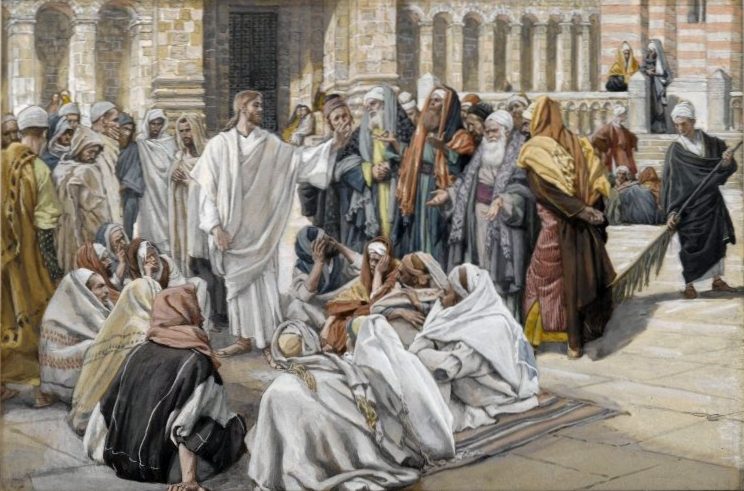
notePorque nadie que quiere ser conocido abiertamente actúa en secreto. Ya que haces estas cosas, muéstrate al mundo.»
5
οὐδὲ γὰρ οἱ ἀδελφοὶ αὐτοῦ ἐπίστευον εἰς αὐτόν.
For not even his own brothers
believed in him.
notePorque ni siquiera sus propios hermanos creían en él.
6
λέγει οὖν αὐτοῖς ὁ Ἰησοῦς· Ὁ καιρὸς ὁ ἐμὸς οὔπω πάρεστιν, ὁ δὲ καιρὸς ὁ ὑμέτερος πάντοτέ ἐστιν ἕτοιμος.
So Jesus told them,
‘My time has not yet come, but your time is always at hand.noteJesús les dijo: «Mi tiempo aún no ha llegado, pero el tiempo de ustedes siempre está listo.
7
οὐ δύναται ὁ κόσμος μισεῖν ὑμᾶς, ἐμὲ δὲ μισεῖ, ὅτι ἐγὼ μαρτυρῶ περὶ αὐτοῦ ὅτι τὰ ἔργα αὐτοῦ πονηρά ἐστιν.
The world cannot hate you, but it hates me, because I testify about it that its works are evil.note
El mundo no puede odiarlos a ustedes, pero a mí me odia, porque yo testifico de él que sus obras son malas.
8
ὑμεῖς ἀνάβητε εἰς τὴν ἑορτήν· ἐγὼ οὐκ ἀναβαίνω εἰς τὴν ἑορτὴν ταύτην, ὅτι ὁ ἐμὸς καιρὸς οὔπω πεπλήρωται.
You go up to the festival. I am not going up to this festival, because my time has not yet fully come.’note
Suban ustedes a la fiesta. Yo no subo a esta fiesta, porque mi tiempo aún no se ha cumplido.»
9
ταῦτα δὲ εἰπὼν αὐτὸς ἔμεινεν ἐν τῇ Γαλιλαίᾳ.
Having said this, he stayed behind in Galilee.
noteHabiendo dicho esto, se quedó en Galilea.
10
Ὡς δὲ ἀνέβησαν οἱ ἀδελφοὶ αὐτοῦ εἰς τὴν ἑορτήν, τότε καὶ αὐτὸς ἀνέβη, οὐ φανερῶς ἀλλὰ ὡς ἐν κρυπτῷ.
But after his brothers had gone up to the festival, he also went up, not openly but
in secret.
notePero después de que sus hermanos habían subido a la fiesta, entonces él también subió, no abiertamente, sino en secreto.
11
οἱ οὖν Ἰουδαῖοι ἐζήτουν αὐτὸν ἐν τῇ ἑορτῇ καὶ ἔλεγον· Ποῦ ἐστιν ἐκεῖνος;
So the Jewish leaders were looking for him at the festival and asking, ‘Where is he?’
noteLos líderes judíos lo buscaban en la fiesta y decían: «¿Dónde está ese?»
12
καὶ γογγυσμὸς περὶ αὐτοῦ ἦν πολὺς ἐν τοῖς ὄχλοις· οἱ μὲν ἔλεγον ὅτι Ἀγαθός ἐστιν, ἄλλοι δὲ ἔλεγον· Οὔ, ἀλλὰ πλανᾷ τὸν ὄχλον.
And there was much
murmuring about him among the crowds. Some said, ‘He is a good man.’ Others said, ‘No, he
deceives the crowd.’
noteY había mucho murmullo acerca de él entre las multitudes. Unos decían: «Es un hombre bueno». Otros decían: «No, engaña a la gente».
13
οὐδεὶς μέντοι παρρησίᾳ ἐλάλει περὶ αὐτοῦ διὰ τὸν φόβον τῶν Ἰουδαίων.
Yet no one spoke openly about him, for fear of the Jewish leaders.
noteSin embargo, nadie hablaba abiertamente de él, por miedo a los líderes judíos.
14
Ἤδη δὲ τῆς ἑορτῆς μεσούσης ἀνέβη Ἰησοῦς εἰς τὸ ἱερὸν καὶ ἐδίδασκεν.
When the festival was already half over, Jesus went up into the temple and began to teach.
noteCuando la fiesta ya iba por la mitad, Jesús subió al templo y comenzó a enseñar.
15
ἐθαύμαζον οὖν οἱ Ἰουδαῖοι λέγοντες· Πῶς οὗτος γράμματα οἶδεν μὴ μεμαθηκώς;
The Jewish leaders were astonished and said, ‘How does this man know his
letters, when he has never studied?’
noteLos líderes judíos se asombraban y decían: «¿Cómo sabe este las letras, sin haber estudiado?»
16
ἀπεκρίθη οὖν αὐτοῖς ὁ Ἰησοῦς καὶ εἶπεν· Ἡ ἐμὴ διδαχὴ οὐκ ἔστιν ἐμὴ ἀλλὰ τοῦ πέμψαντός με·
Jesus answered them,
‘My teaching is not mine, but his who sent me.noteJesús les respondió: «Mi enseñanza no es mía, sino de aquel que me envió.
17
ἐάν τις θέλῃ τὸ θέλημα αὐτοῦ ποιεῖν, γνώσεται περὶ τῆς διδαχῆς πότερον ἐκ τοῦ θεοῦ ἐστιν ἢ ἐγὼ ἀπʼ ἐμαυτοῦ λαλῶ.
If anyone is willing to do his will, he will know whether the teaching is from God, or whether I am speaking on my own.note
Si alguien está dispuesto a hacer su voluntad, sabrá si esta enseñanza viene de Dios o si yo hablo por mi propia cuenta.
18
ὁ ἀφʼ ἑαυτοῦ λαλῶν τὴν δόξαν τὴν ἰδίαν ζητεῖ· ὁ δὲ ζητῶν τὴν δόξαν τοῦ πέμψαντος αὐτὸν οὗτος ἀληθής ἐστιν καὶ ἀδικία ἐν αὐτῷ οὐκ ἔστιν.
The one who speaks on his own seeks his own glory, but the one who seeks the glory of him who sent him is true, and there is no falsehood in him.note
El que habla por su propia cuenta busca su propia gloria, pero el que busca la gloria del que lo envió es veraz, y no hay falsedad en él.
19
Οὐ Μωϋσῆς δέδωκεν ὑμῖν τὸν νόμον; καὶ οὐδεὶς ἐξ ὑμῶν ποιεῖ τὸν νόμον. τί με ζητεῖτε ἀποκτεῖναι;
Did not Moses give you the law? Yet none of you keeps the law. Why are you seeking to kill me?’note
¿No les dio Moisés la ley? Y ninguno de ustedes cumple la ley. ¿Por qué buscan matarme?»
20
ἀπεκρίθη ὁ ὄχλος· Δαιμόνιον ἔχεις· τίς σε ζητεῖ ἀποκτεῖναι;
The crowd answered, ‘You have a demon! Who is seeking to kill you?’
noteLa multitud respondió: «¡Tienes un demonio! ¿Quién busca matarte?»
21
ἀπεκρίθη Ἰησοῦς καὶ εἶπεν αὐτοῖς· Ἓν ἔργον ἐποίησα καὶ πάντες θαυμάζετε.
Jesus answered them,
‘I did one work, and you are all astonished.noteJesús les respondió: «Hice una sola obra, y todos ustedes están asombrados.
22
διὰ τοῦτο Μωϋσῆς δέδωκεν ὑμῖν τὴν περιτομήν — οὐχ ὅτι ἐκ τοῦ Μωϋσέως ἐστὶν ἀλλʼ ἐκ τῶν πατέρων — καὶ ἐν σαββάτῳ περιτέμνετε ἄνθρωπον.
This is why Moses gave you circumcision — not that it is from Moses, but from the fathers — and you circumcise a man on the Sabbath.note
Por esto Moisés les dio la circuncisión —no porque venga de Moisés, sino de los patriarcas—, y en sábado circuncidan a un hombre.
23
εἰ περιτομὴν λαμβάνει ἄνθρωπος ἐν σαββάτῳ ἵνα μὴ λυθῇ ὁ νόμος Μωϋσέως, ἐμοὶ χολᾶτε ὅτι ὅλον ἄνθρωπον ὑγιῆ ἐποίησα ἐν σαββάτῳ;
If a man receives circumcision on the Sabbath so that the law of Moses is not broken, are you angry at me because I made a man's whole body well on the Sabbath?note
Si un hombre recibe la circuncisión en sábado para que no se quebrante la ley de Moisés, ¿por qué se enojan conmigo porque sané por completo a un hombre en sábado?
24
μὴ κρίνετε κατʼ ὄψιν, ἀλλὰ τὴν δικαίαν κρίσιν κρίνετε.
Stop judging by appearance, and judge with right judgment.’note
Dejen de juzgar por las apariencias, y juzguen con juicio justo.»
25
Ἔλεγον οὖν τινες ἐκ τῶν Ἱεροσολυμιτῶν· Οὐχ οὗτός ἐστιν ὃν ζητοῦσιν ἀποκτεῖναι;
Then some of the people of
Jerusalem said, ‘Isn't this the man they are seeking to kill?
noteEntonces algunos de los de Jerusalén decían: «¿No es este al que buscan para matarlo?
26
καὶ ἴδε παρρησίᾳ λαλεῖ καὶ οὐδὲν αὐτῷ λέγουσιν· μήποτε ἀληθῶς ἔγνωσαν οἱ ἄρχοντες ὅτι οὗτός ἐστιν ὁ χριστός;
And look, he is speaking openly, and they say nothing to him! Can the rulers really have concluded that this is the
Christ?
noteY miren, habla abiertamente y no le dicen nada. ¿Será que los gobernantes en verdad han reconocido que este es el Cristo?
27
ἀλλὰ τοῦτον οἴδαμεν πόθεν ἐστίν· ὁ δὲ χριστὸς ὅταν ἔρχηται οὐδεὶς γινώσκει πόθεν ἐστίν.
But we know where this man is from. When the Christ comes, no one will know where he is from.’
notePero de este sabemos de dónde es. Cuando venga el Cristo, nadie sabrá de dónde es.»
28
ἔκραξεν οὖν ἐν τῷ ἱερῷ διδάσκων ὁ Ἰησοῦς καὶ λέγων· Κἀμὲ οἴδατε καὶ οἴδατε πόθεν εἰμί· καὶ ἀπʼ ἐμαυτοῦ οὐκ ἐλήλυθα, ἀλλʼ ἔστιν ἀληθινὸς ὁ πέμψας με, ὃν ὑμεῖς οὐκ οἴδατε·
So Jesus, still teaching in the temple, cried out,
‘You know me, and you know where I am from. And I have not come on my own, but he who sent me is true, and him you do not know.noteEntonces Jesús, mientras enseñaba en el templo, exclamó: «A mí me conocen, y saben de dónde soy. Y no he venido por mi propia cuenta, sino que es verdadero el que me envió, a quien ustedes no conocen.
29
ἐγὼ οἶδα αὐτόν, ὅτι παρʼ αὐτοῦ εἰμι κἀκεῖνός με ἀπέστειλεν.
I know him, because I am from him, and he sent me.’note
Yo lo conozco, porque de él vengo, y él me envió.»
30
ἐζήτουν οὖν αὐτὸν πιάσαι, καὶ οὐδεὶς ἐπέβαλεν ἐπʼ αὐτὸν τὴν χεῖρα, ὅτι οὔπω ἐληλύθει ἡ ὥρα αὐτοῦ.
So they were seeking to seize him, but no one laid a hand on him, because his
hour had not yet come.
notePor eso buscaban prenderlo, pero nadie le puso la mano encima, porque su hora aún no había llegado.
31
ἐκ τοῦ ὄχλου δὲ πολλοὶ ἐπίστευσαν εἰς αὐτόν, καὶ ἔλεγον· Ὁ χριστὸς ὅταν ἔλθῃ μὴ πλείονα σημεῖα ποιήσει ὧν οὗτος ἐποίησεν;
Yet many in the crowd believed in him and said, ‘When the Christ comes, will he perform more signs than this man has done?’
notePero muchos de la multitud creyeron en él y decían: «Cuando venga el Cristo, ¿acaso hará más señales que las que ha hecho este?»
32
Ἤκουσαν οἱ Φαρισαῖοι τοῦ ὄχλου γογγύζοντος περὶ αὐτοῦ ταῦτα, καὶ ἀπέστειλαν οἱ ἀρχιερεῖς καὶ οἱ Φαρισαῖοι ὑπηρέτας ἵνα πιάσωσιν αὐτόν.
The Pharisees heard the crowd murmuring these things about him, and the chief priests and the Pharisees sent
officers to seize him.
noteLos fariseos oyeron a la multitud murmurar estas cosas acerca de él, y los sumos sacerdotes y los fariseos enviaron alguaciles para prenderlo.
33
εἶπεν οὖν ὁ Ἰησοῦς· Ἔτι χρόνον μικρὸν μεθʼ ὑμῶν εἰμι καὶ ὑπάγω πρὸς τὸν πέμψαντά με.
So Jesus said,
‘I am with you only a little longer, and then I am going to him who sent me.noteJesús dijo: «Todavía estoy con ustedes un poco de tiempo, y luego voy al que me envió.
34
ζητήσετέ με καὶ οὐχ εὑρήσετε καὶ ὅπου εἰμὶ ἐγὼ ὑμεῖς οὐ δύνασθε ἐλθεῖν.
You will look for me and not find me. Where I am, you cannot come.’note
Me buscarán y no me encontrarán. Y adonde yo estoy, ustedes no pueden venir.»
35
εἶπον οὖν οἱ Ἰουδαῖοι πρὸς ἑαυτούς· Ποῦ οὗτος μέλλει πορεύεσθαι ὅτι ἡμεῖς οὐχ εὑρήσομεν αὐτόν; μὴ εἰς τὴν διασπορὰν τῶν Ἑλλήνων μέλλει πορεύεσθαι καὶ διδάσκειν τοὺς Ἕλληνας;
So the Jewish leaders said to one another, ‘Where does this man intend to go, that we will not find him? Does he intend to go to the
Dispersion among the Greeks, and teach the Greeks?
noteEntonces los líderes judíos se decían unos a otros: «¿Adonde piensa irse este, que no lo encontraremos? ¿Acaso piensa irse a la Diáspora entre los griegos, y enseñar a los griegos?
36
τίς ἐστιν ὁ λόγος οὗτος ὃν εἶπε· Ζητήσετέ με καὶ οὐχ εὑρήσετε καὶ ὅπου εἰμὶ ἐγὼ ὑμεῖς οὐ δύνασθε ἐλθεῖν;
What does he mean by saying, “You will look for me and not find me,” and, “Where I am, you cannot come”?’
note¿Qué quiere decir con eso de: «Me buscarán y no me encontrarán», y «adonde yo estoy, ustedes no pueden venir»?»
37
Ἐν δὲ τῇ ἐσχάτῃ ἡμέρᾳ τῇ μεγάλῃ τῆς ἑορτῆς εἱστήκει ὁ Ἰησοῦς, καὶ ἔκραξεν λέγων· Ἐάν τις διψᾷ ἐρχέσθω πρός με καὶ πινέτω.
On the last day, the great day of the festival, Jesus stood up and cried out,
‘If anyone thirsts, let him come to me and drink.noteEl último día, el gran día de la fiesta, Jesús se puso de pie y exclamó: «Si alguien tiene sed, que venga a mí y beba.
38
ὁ πιστεύων εἰς ἐμέ, καθὼς εἶπεν ἡ γραφή, ποταμοὶ ἐκ τῆς κοιλίας αὐτοῦ ῥεύσουσιν ὕδατος ζῶντος.
Whoever believes in me, as the Scripture has said, out of his heart will flow rivers of living water.’note
El que cree en mí, como dijo la Escritura, de su interior correrán ríos de agua viva.»
39
τοῦτο δὲ εἶπεν περὶ τοῦ πνεύματος οὗ ἔμελλον λαμβάνειν οἱ πιστεύσαντες εἰς αὐτόν· οὔπω γὰρ ἦν πνεῦμα, ὅτι Ἰησοῦς οὐδέπω ἐδοξάσθη.
Now he said this about the
Spirit, whom those who believed in him were later to receive. For the Spirit had not yet been given, because Jesus had not yet been glorified.
noteEsto lo dijo acerca del Espíritu, que habían de recibir más adelante los que creyeran en él. Porque el Espíritu aún no había sido dado, ya que Jesús todavía no había sido glorificado.
40
Ἐκ τοῦ ὄχλου οὖν ἀκούσαντες τῶν λόγων τούτων ἔλεγον· Οὗτός ἐστιν ἀληθῶς ὁ προφήτης·
When they heard these words, some in the crowd said, ‘This really is
the Prophet.’
noteAl oír estas palabras, algunos de la multitud decían: «Este es en verdad el Profeta».
41
ἄλλοι ἔλεγον· Οὗτός ἐστιν ὁ χριστός· οἱ δὲ ἔλεγον· Μὴ γὰρ ἐκ τῆς Γαλιλαίας ὁ χριστὸς ἔρχεται;
Others said, ‘This is the Christ.’ Still others said, ‘Is the Christ really to come from
Galilee?
noteOtros decían: «Este es el Cristo». Pero otros decían: «¿Acaso el Cristo viene de Galilea?
42
οὐχ ἡ γραφὴ εἶπεν ὅτι ἐκ τοῦ σπέρματος Δαυίδ, καὶ ἀπὸ Βηθλέεμ τῆς κώμης ὅπου ἦν Δαυίδ, ἔρχεται ὁ χριστός;
Does not the Scripture say that the Christ comes from the offspring of David, and from
Bethlehem, the village where David was?’
note¿No dice la Escritura que el Cristo viene de la descendencia de David, y de Belén, la aldea de donde era David?»
43
σχίσμα οὖν ἐγένετο ἐν τῷ ὄχλῳ διʼ αὐτόν.
So there was a
division in the crowd because of him.
noteAsí que hubo división en la multitud por causa de él.
44
τινὲς δὲ ἤθελον ἐξ αὐτῶν πιάσαι αὐτόν, ἀλλʼ οὐδεὶς ἐπέβαλεν ἐπʼ αὐτὸν τὰς χεῖρας.
Some of them wanted to seize him, but no one laid hands on him.
noteAlgunos de ellos querían prenderlo, pero nadie le puso las manos encima.
45
Ἦλθον οὖν οἱ ὑπηρέται πρὸς τοὺς ἀρχιερεῖς καὶ Φαρισαίους, καὶ εἶπον αὐτοῖς ἐκεῖνοι· Διὰ τί οὐκ ἠγάγετε αὐτόν;
The officers then went back to the chief priests and Pharisees, who said to them, ‘Why did you not bring him?’
noteEntonces los alguaciles volvieron a los sumos sacerdotes y fariseos, quienes les dijeron: «¿Por qué no lo trajeron?»
46
ἀπεκρίθησαν οἱ ὑπηρέται· Οὐδέποτε ἐλάλησεν οὕτως ἄνθρωπος.
The officers answered, ‘No one has ever spoken like this man!’
noteLos alguaciles respondieron: «¡Jamás nadie ha hablado como este hombre!»
47
ἀπεκρίθησαν οὖν αὐτοῖς οἱ Φαρισαῖοι· Μὴ καὶ ὑμεῖς πεπλάνησθε;
The Pharisees answered them, ‘Have you also been
deceived?
noteLos fariseos les respondieron: «¿También ustedes han sido engañados?
48
μή τις ἐκ τῶν ἀρχόντων ἐπίστευσεν εἰς αὐτὸν ἢ ἐκ τῶν Φαρισαίων;
Has any one of the rulers believed in him, or any of the Pharisees?
note¿Acaso ha creído en él alguno de los gobernantes, o de los fariseos?
49
ἀλλὰ ὁ ὄχλος οὗτος ὁ μὴ γινώσκων τὸν νόμον ἐπάρατοί εἰσιν.
But this crowd that does not know the law — they are
accursed.’
notePero esta gente que no conoce la ley —malditos son.»
50
λέγει Νικόδημος πρὸς αὐτούς, ὁ ἐλθὼν πρὸς αὐτὸν πρότερον, εἷς ὢν ἐξ αὐτῶν·
Nicodemus, who had gone to him before and was one of them, said to them,
note
Nicodemo, que había ido antes a él y era uno de ellos, les dijo:
51
Μὴ ὁ νόμος ἡμῶν κρίνει τὸν ἄνθρωπον ἐὰν μὴ ἀκούσῃ πρῶτον παρʼ αὐτοῦ καὶ γνῷ τί ποιεῖ;
‘Does our law judge a man without first hearing from him and learning what he is doing?’
note«¿Acaso nuestra ley juzga a un hombre sin oírlo primero y saber qué está haciendo?»
52
ἀπεκρίθησαν καὶ εἶπαν αὐτῷ· Μὴ καὶ σὺ ἐκ τῆς Γαλιλαίας εἶ; ἐραύνησον καὶ ἴδε ὅτι ἐκ τῆς Γαλιλαίας προφήτης οὐκ ἐγείρεται.
They replied, ‘Are you from Galilee too? Search and see: no
prophet arises from Galilee.’
noteLe respondieron: «¿También tú eres de Galilea? Investiga y verás que de Galilea no se levanta ningún profeta».
53
καὶ ἐπορεύθη ἕκαστος εἰς τὸν οἶκον αὐτοῦ.
Then each of them went home.
noteY cada uno se fue a su casa.
Notes on this translation
Verses 1–9 · ‘my time has not yet come’ — and a Greek variant a pagan critic used to call Jesus a liar
The brothers’ challenge (vv3–4) is edged: go public, prove yourself, stop hiding — and John states plainly why it cuts as it does, ‘for not even his own brothers believed in him’ (v5). Jesus’ answer turns on a distinction this Gospel keeps making between his TIME (kairos, the appointed moment) and theirs, always available because nothing hangs on it.
⚠ Verse 8 carries one of this Gospel’s most consequential single-word textual variants. The earliest and best manuscripts (Sinaiticus, Vaticanus, and the reading followed by Tregellius and NA28) read ouk, a flat ‘I am NOT going up to this feast’ — and Jesus goes up anyway, secretly, nine verses later (v10). The majority Byzantine text, and the earliest surviving papyrus witnesses, instead read oupō, ‘I am not YET going up,’ which removes the apparent contradiction outright. The shelf splits accordingly: KJV reads ‘I go not up YET’; ASV prints the shorter ‘I go not up’ with a footnote — ‘many ancient authorities add yet’; NIV and ESV both read the plain ‘I am not going up.’ ⚠ This is not a modern discovery: the third-century pagan philosopher Porphyry cited this exact verse to accuse Jesus of inconsistency, and Jerome, writing against him, already knew and discussed both readings. This translation follows the earlier, harder text — ‘I am not going up’ — and lets the tension it creates stand, rather than resolving a difficulty ancient scribes may themselves have smoothed away.
Jesus does go up — just not the way his brothers demanded. ‘Not openly but in secret’ (v10) answers their ‘show yourself to the world’ (v4) with almost the opposite posture, and the chapter spends its next fourteen verses on a crowd that cannot settle what he is: ‘a good man’ against ‘he deceives the crowd’ (v12, planaō) — the identical verb the Pharisees will use of the crowd itself at v47, closing a frame around the whole chapter with the one charge everybody keeps handing to somebody else.
Verses 14–24 · unschooled learning, and a healing answered with a legal technicality
‘How does this man know his letters, when he has never studied?’ (v15) is a question about credentials — rabbinic teaching authority normally required formal discipleship under a recognized teacher, which Jesus visibly lacked. His answer relocates the test entirely: not lineage but obedience, ‘if anyone is willing to do his will, he will know’ (v17) — a claim that the teaching authenticates itself to anyone actually willing to live by it, not to a credentialing committee.
⚠ The Sabbath argument (vv21–23) reaches back to a specific, already-told story. ‘I did one work, and you are all astonished’ is the Bethesda healing of John 5 (already on these pages), and Jesus answers the charge with a rabbinic argument from lesser to greater: circumcision, which itself overrides the Sabbath and which the law traces to the patriarchs rather than to Moses (v22), is routinely performed on the eighth day even when it falls on a Sabbath; if a single body part may be legally treated on the Sabbath, how much more the whole man made well? ‘Stop judging by appearance’ (v24) closes the argument by naming exactly what the objection had done — judged the act by its calendar rather than its content.
Verses 25–31 · does anyone actually know where the Christ is from?
The Jerusalem crowd’s reasoning in v27 draws on a real strand of Jewish expectation — that the Messiah’s origin would remain hidden until the moment of his sudden revealing, so a man everyone already knows (a Galilean, Joseph’s son) is disqualified by the very fact of being known. Jesus’ reply plays the same word two ways: yes, they know where he is from in the surface sense (v28, ‘you know me and you know where I am from’), and no, they do not, in the sense that actually matters — ‘he who sent me is true, and him you do not know’ (v28b). ⚠ This is dramatic irony aimed at a reader this Gospel assumes already knows what this crowd does not: that this same Galilean was in fact born in Bethlehem, David’s own village — the very objection raised again at v42, and never answered within this chapter at all.
Verses 32–36 · officers sent, and a saying nobody in the crowd can parse
The temple authorities escalate from watching to acting — officers dispatched to seize him (v32) — and Jesus answers with a saying that lands as pure riddle: ‘where I am, you cannot come’ (v34). The Jewish leaders’ guess, that he might mean teaching ‘the Dispersion among the Greeks’ (v35), is wrong about his own immediate meaning (he means his death and return to the Father) but not wrong, in the larger shape of this Gospel’s own future, about where the message actually goes.
Verses 37–39 · streams from within — the cry at the water-pouring, and a Spirit not yet given
The setting is a real, specific Temple ritual, not a generic feast-day backdrop. On each of the seven days of Tabernacles, a priest drew water from the Pool of Siloam in a golden vessel and poured it out at the altar while pilgrims sang the Hallel — a water-libation ceremony tied to prayer for rain and, in later tradition, to the outpouring of God’s Spirit. Jesus stands and cries out during exactly this ritual, on its climactic last day, and redirects its whole action onto himself: not water drawn and poured, but water flowing FROM the believer.
⚠ The Greek of v38 is genuinely ambiguous about one thing English punctuation has to decide: whose heart the rivers flow from. Read one way, ‘as the Scripture has said’ belongs with what follows and the rivers flow from the BELIEVER’s own heart; read the other way, the clause about believing stands alone and the rivers flow from CHRIST, cited as the true rock of Exodus 17 or Ezekiel’s temple-river (Ezekiel 47, not yet on these pages). No single verse in the Old Testament matches the citation exactly either way, which is itself part of the puzzle. This translation follows the more common punctuation (the believer’s own heart) without silencing the alternative.
The parenthetical in v39 is the narrator, not Jesus, glossing the image directly: this is about the Spirit, not yet given because Jesus is not yet glorified. It answers, in advance, the promise this Gospel keeps at John 14 and 15 (already on these pages) — the Spirit-Paraclete who comes only after Jesus goes. And ‘living water’ itself is not a new image here: John 4 (already on these pages) already gave the phrase to a Samaritan woman at a well, who heard it, correctly, as running water before hearing it as anything more.
Verses 40–53 · a Bethlehem child mistaken for a Galilean, and a passage that begins here without ending here
The crowd splits three ways over a single question — prophet, Christ, or neither, on the grounds that ‘the Christ’ cannot come from Galilee (v41) because Scripture places him in Bethlehem, David’s village (v42) — and this Gospel, which never narrates a birth at all, lets the objection stand completely unanswered on the page, trusting a reader who already knows the nativity traditions this book itself never tells.
The officers’ report is the chapter’s plainest line: sent to arrest a man, they return empty-handed and explain themselves with ‘no one has ever spoken like this man’ (v46) — testimony from men with no stake in believing anything, which is exactly why it counts. The Pharisees’ retort dismisses the whole crowd as ‘accursed’ for its ignorance of the law (v49), the same contempt for the ordinary and unlearned this Gospel keeps setting the actual evidence against.
⚠ Nicodemus, returning from John 3 (already on these pages), asks a narrow, careful, entirely defensible legal question — does the law convict a man unheard? (v51) — and gets mocked for it rather than answered: ‘are you from Galilee too?’ The Pharisees’ own proof text, ‘no prophet arises from Galilee’ (v52), is worth checking against the record: Jonah, one of the few named writing prophets with a stated hometown, came from Gath-hepher in Galilee (2 Kings 14:25, not yet on these pages) — a claim made with total confidence, in the middle of a chapter about knowing where things are actually from, that does not survive its own test.
⚠ Verse 53 is where one of the New Testament’s most famous textual questions begins, and this translation states the problem rather than hiding it. ‘Then each of them went home’ is, in the earliest and best Greek manuscripts (including the two oldest complete New Testaments, Sinaiticus and Vaticanus, and the earliest papyri that cover this stretch of text), followed immediately by the start of chapter 8's Sermon on the Mount material with no gap at all — the story of the woman caught in adultery (traditionally John 7:53–8:11) is simply absent from them. It appears first in manuscripts of the Western textual tradition, then spreads into the Byzantine text that underlies the King James Version, and in some manuscript families it floats to other locations entirely — after Luke 21, or at the very end of this Gospel. Nearly every modern translation prints it, because it is old and its vocabulary reads as genuinely Johannine in style and it may well preserve a real, early tradition about Jesus — but nearly all of them also mark it off with brackets or a footnote explaining that it is not present in the earliest witnesses. This translation follows that near-universal practice: the passage appears at the start of John 8, already on these pages, clearly marked, reported rather than either suppressed or silently absorbed into the text as though its transmission history were simple.
Patterns worth carrying forward.
⚠ Renderings chosen. Oupō tracked consistently as ‘not yet’ everywhere it is textually secure in this chapter (vv30, 39 twice) so that its ABSENCE at the disputed v8 stays visible to an English reader rather than being harmonized away. Planaō (vv12, 47) kept as ‘deceive’ both times it is used, preserving the frame between the crowd's early whisper and the Pharisees' late insult. And the feast’s own name — skēnopēgia, ‘tent-pitching,’ v2 — kept as ‘Tabernacles’ rather than the more literal ‘Booths,’ matching this shelf's own majority practice.
Echoes paid. Chapter 6’s own closing note named this chapter by number and previewed exactly this — a crowd divided over whether Jesus is the Christ — now shown in full rather than miniature. Chapter 4’s living water, first offered privately to one Samaritan woman at a well, is here offered publicly, at the Temple's own water-ritual, to everyone within earshot. And chapter 5’s Bethesda healing, left as an open charge at the end of that chapter, finally gets its Sabbath defense argued out loud.
Echoes planted. The Spirit not yet given (v39) is the marker this Gospel will not resolve until the Farewell Discourse promises the Paraclete by name (John 14 and 15, already on these pages) and, beyond that, until 20:22. The hidden-origin Christ expectation (v27) and the Bethlehem objection (v42) are both left standing, unresolved within this chapter, for a reader to carry forward. And v34’s riddle, ‘where I am you cannot come,’ recurs almost word for word at 13:33, spoken this time to his own disciples rather than to hostile crowds.
Left open on purpose. Whether v38’s rivers flow from the believer or from Christ himself — a live and old dispute this translation reports rather than resolves. Whether Jesus’ own words at v8 originally read ‘not’ or ‘not yet’ — a real textual fork with real theological weight riding on it, not a rounding error. And the hidden origin of the Christ (v27) against the Bethlehem tradition (v42) — two pieces of messianic expectation this chapter lets sit unreconciled, in the mouths of characters who never learn they are talking about the same man twice.
Next installment in this book, whenever it is translated: John 8, opening with the woman caught in adultery — the passage this chapter's own last verse leads directly into, textual questions and all.
_-_James_Tissot.jpg)