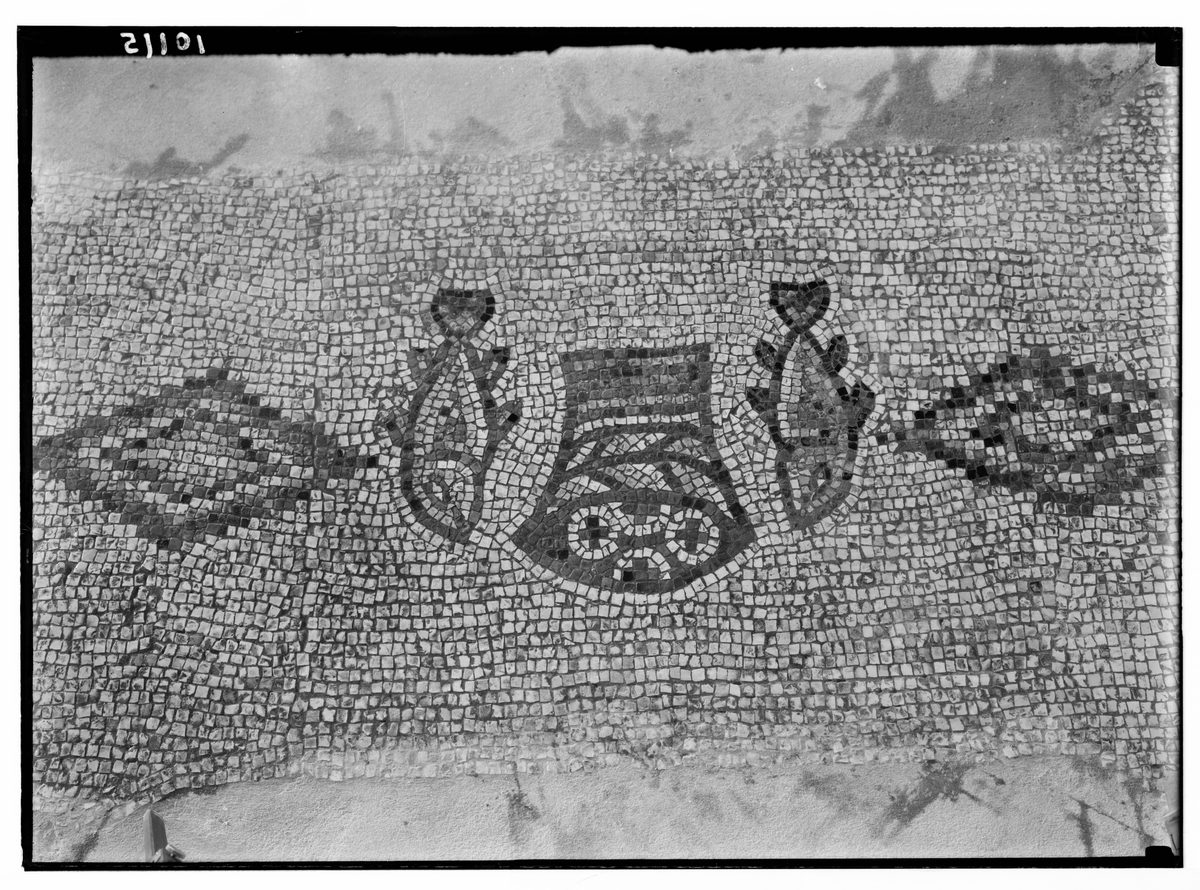
1
Μετὰ ταῦτα ἀπῆλθεν ὁ Ἰησοῦς πέραν τῆς θαλάσσης τῆς Γαλιλαίας τῆς Τιβεριάδος.
After this
Jesus went away to the other side of the Sea of Galilee, that is, of Tiberias.
noteDespués de esto, Jesús se fue al otro lado del mar de Galilea, que es el de Tiberias.
2
ἠκολούθει δὲ αὐτῷ ὄχλος πολύς, ὅτι ἐθεώρουν τὰ σημεῖα ἃ ἐποίει ἐπὶ τῶν ἀσθενούντων.
And a great crowd was following him, because they saw the signs that he was doing on those who were sick.
noteY le seguía una gran multitud, porque veían las señales que hacía en los enfermos.
3
ἀνῆλθεν δὲ εἰς τὸ ὄρος Ἰησοῦς, καὶ ἐκεῖ ἐκάθητο μετὰ τῶν μαθητῶν αὐτοῦ.
And Jesus went up on the mountain, and there he sat with his disciples.
noteY subió Jesús al monte, y se sentó allí con sus discípulos.
4
ἦν δὲ ἐγγὺς τὸ πάσχα, ἡ ἑορτὴ τῶν Ἰουδαίων.
Now the Passover, the feast of the Jews, was near.
noteY estaba cerca la pascua, la fiesta de los judíos.
5
ἐπάρας οὖν τοὺς ὀφθαλμοὺς ὁ Ἰησοῦς καὶ θεασάμενος ὅτι πολὺς ὄχλος ἔρχεται πρὸς αὐτὸν λέγει πρὸς Φίλιππον· Πόθεν ἀγοράσωμεν ἄρτους ἵνα φάγωσιν οὗτοι;
Then Jesus, lifting up his eyes and seeing that a great crowd was coming to him, said to
Philip,
‘Where are we to buy bread, that these people may eat?’noteEntonces Jesús, alzando los ojos y viendo que una gran multitud venía a él, dijo a Felipe: «¿Dónde compraremos pan para que coman estos?»
6
τοῦτο δὲ ἔλεγεν πειράζων αὐτόν, αὐτὸς γὰρ ᾔδει τί ἔμελλεν ποιεῖν.
But he said this to test him, for he himself knew what he was about to do.
notePero decía esto para probarlo, porque él sabía lo que iba a hacer.
7
ἀπεκρίθη αὐτῷ Φίλιππος· Διακοσίων δηναρίων ἄρτοι οὐκ ἀρκοῦσιν αὐτοῖς ἵνα ἕκαστος βραχύ τι λάβῃ.
Philip answered him, ‘Two hundred denarii worth of bread would not be enough for each of them to get a little.’
noteFelipe le respondió: «Doscientos denarios de pan no bastarían para que cada uno de ellos tomase un poco.»
8
λέγει αὐτῷ εἷς ἐκ τῶν μαθητῶν αὐτοῦ, Ἀνδρέας ὁ ἀδελφὸς Σίμωνος Πέτρου·
Uno de sus discípulos, Andrés, hermano de Simón Pedro, le dijo:
9
Ἔστιν παιδάριον ὧδε ὃς ἔχει πέντε ἄρτους κριθίνους καὶ δύο ὀψάρια· ἀλλὰ ταῦτα τί ἐστιν εἰς τοσούτους;
‘There is a young boy here who has five barley loaves and two small fish, but what are these for so many?’
note«Aquí hay un muchacho que tiene cinco panes de cebada y dos pececillos; ¿pero qué es esto para tantos?»
10
εἶπεν ὁ Ἰησοῦς· Ποιήσατε τοὺς ἀνθρώπους ἀναπεσεῖν. ἦν δὲ χόρτος πολὺς ἐν τῷ τόπῳ. ἀνέπεσαν οὖν οἱ ἄνδρες τὸν ἀριθμὸν ὡς πεντακισχίλιοι.
Jesus said,
‘Make the people sit down.’ Now there was much grass in the place. So the men sat down, in number about five thousand.
noteJesús dijo: «Haced recostar a la gente.» Había mucha hierba en aquel lugar; se recostaron, pues, los hombres, en número como de cinco mil.
11
ἔλαβεν οὖν τοὺς ἄρτους ὁ Ἰησοῦς καὶ εὐχαριστήσας διέδωκεν τοῖς ἀνακειμένοις, ὁμοίως καὶ ἐκ τῶν ὀψαρίων ὅσον ἤθελον.
Then Jesus took the loaves, and having given thanks, he distributed them to those reclining; so also of the fish, as much as they wanted.
noteY tomó Jesús los panes, y habiendo dado gracias, los repartió a los que estaban recostados; asimismo de los peces, cuanto querían.
12
ὡς δὲ ἐνεπλήσθησαν λέγει τοῖς μαθηταῖς αὐτοῦ· Συναγάγετε τὰ περισσεύσαντα κλάσματα, ἵνα μή τι ἀπόληται.
And when they were filled, he said to his disciples,
‘Gather up the fragments left over, so that nothing may be lost.’noteY cuando se saciaron, dijo a sus discípulos: «Recoged los pedazos que sobraron, para que no se pierda nada.»
13
συνήγαγον οὖν, καὶ ἐγέμισαν δώδεκα κοφίνους κλασμάτων ἐκ τῶν πέντε ἄρτων τῶν κριθίνων ἃ ἐπερίσσευσαν τοῖς βεβρωκόσιν.
So they gathered them up, and filled twelve baskets with fragments from the five barley loaves, left over by those who had eaten.
noteLos recogieron, pues, y llenaron doce cestas de pedazos de los cinco panes de cebada, que sobraron a los que habían comido.
14
οἱ οὖν ἄνθρωποι ἰδόντες ὃ ἐποίησεν σημεῖον ἔλεγον ὅτι Οὗτός ἐστιν ἀληθῶς ὁ προφήτης ὁ ἐρχόμενος εἰς τὸν κόσμον.
When the people saw the sign that he had done, they said, ‘This is truly the
prophet who is to come into the world.’
noteAl ver la gente la señal que había hecho, decían: «Este es verdaderamente el profeta que había de venir al mundo.»
15
Ἰησοῦς οὖν γνοὺς ὅτι μέλλουσιν ἔρχεσθαι καὶ ἁρπάζειν αὐτὸν ἵνα ποιήσωσιν βασιλέα ἀνεχώρησεν πάλιν εἰς τὸ ὄρος αὐτὸς μόνος.
Jesus therefore, knowing that they were about to come and seize him to make him
king, withdrew again to the mountain by himself alone.
noteSabiendo Jesús que iban a venir para apoderarse de él y hacerlo rey, volvió a retirarse al monte él solo.
16
Ὡς δὲ ὀψία ἐγένετο κατέβησαν οἱ μαθηταὶ αὐτοῦ ἐπὶ τὴν θάλασσαν,
Now when evening came, his disciples went down to the sea,
noteAl atardecer, descendieron sus discípulos al mar,
17
καὶ ἐμβάντες εἰς πλοῖον ἤρχοντο πέραν τῆς θαλάσσης εἰς Καφαρναούμ. καὶ σκοτία ἤδη ἐγεγόνει καὶ οὔπω ἐληλύθει πρὸς αὐτοὺς ὁ Ἰησοῦς,
and getting into a boat, they were going over the sea to
Capernaum. It was now dark, and Jesus had not yet come to them.
notey entrando en una barca, se dirigían al otro lado del mar hacia Capernaum. Ya había oscurecido, y Jesús no había venido a ellos.
18
ἥ τε θάλασσα ἀνέμου μεγάλου πνέοντος διεγείρετο
The sea was rising because a strong wind was blowing.
noteY el mar se embravecía porque soplaba un gran viento.
19
ἐληλακότες οὖν ὡς σταδίους εἴκοσι πέντε ἢ τριάκοντα θεωροῦσιν τὸν Ἰησοῦν περιπατοῦντα ἐπὶ τῆς θαλάσσης καὶ ἐγγὺς τοῦ πλοίου γινόμενον, καὶ ἐφοβήθησαν.
When they had rowed about twenty-five or thirty stadia, they saw Jesus walking on the sea and coming near the boat, and they were afraid.
noteCuando habían remado como veinticinco o treinta estadios, vieron a Jesús que andaba sobre el mar y se acercaba a la barca, y tuvieron miedo.
20
ὁ δὲ λέγει αὐτοῖς· Ἐγώ εἰμι, μὴ φοβεῖσθε.
But he said to them,
‘It is I; do not be afraid.’notePero él les dijo: «Yo soy; no temáis.»
21
ἤθελον οὖν λαβεῖν αὐτὸν εἰς τὸ πλοῖον, καὶ εὐθέως ἐγένετο τὸ πλοῖον ἐπὶ τῆς γῆς εἰς ἣν ὑπῆγον.
Then they were willing to take him into the boat, and immediately the boat was at the land to which they were going.
noteEntonces quisieron recibirlo en la barca, y en seguida la barca llegó a la tierra adonde iban.
22
Τῇ ἐπαύριον ὁ ὄχλος ὁ ἑστηκὼς πέραν τῆς θαλάσσης εἶδον ὅτι πλοιάριον ἄλλο οὐκ ἦν ἐκεῖ εἰ μὴ ἕν καὶ ὅτι οὐ συνεισῆλθεν τοῖς μαθηταῖς αὐτοῦ ὁ Ἰησοῦς εἰς τὸ πλοῖον ἀλλὰ μόνοι οἱ μαθηταὶ αὐτοῦ ἀπῆλθον·
On the next day the crowd that stood on the other side of the sea saw that there had been only one boat there, and that Jesus had not entered the boat with his disciples, but that his disciples had gone away alone.
noteAl día siguiente, la multitud que estaba al otro lado del mar vio que no había allí sino una barca, y que Jesús no había entrado en ella con sus discípulos, sino que sus discípulos se habían ido solos.
23
ἀλλὰ ἦλθεν πλοιάρια ἐκ Τιβεριάδος ἐγγὺς τοῦ τόπου ὅπου ἔφαγον τὸν ἄρτον εὐχαριστήσαντος τοῦ κυρίου.
Other boats from Tiberias came near the place where they had eaten the bread after the Lord had given thanks.
notePero otras barcas habían llegado de Tiberias, cerca del lugar donde habían comido el pan después de haber dado gracias el Señor.
24
ὅτε οὖν εἶδεν ὁ ὄχλος ὅτι Ἰησοῦς οὐκ ἔστιν ἐκεῖ οὐδὲ οἱ μαθηταὶ αὐτοῦ, ἐνέβησαν αὐτοὶ εἰς τὰ πλοιάρια καὶ ἦλθον εἰς Καφαρναοὺμ ζητοῦντες τὸν Ἰησοῦν.
So when the crowd saw that Jesus was not there, nor his disciples, they themselves got into the boats and went to Capernaum, seeking Jesus.
noteCuando vio, pues, la gente que Jesús no estaba allí, ni sus discípulos, entraron ellos mismos en las barcas y fueron a Capernaum, buscando a Jesús.
25
Καὶ εὑρόντες αὐτὸν πέραν τῆς θαλάσσης εἶπον αὐτῷ· Ῥαββί, πότε ὧδε γέγονας;
And having found him on the other side of the sea, they said to him, ‘Rabbi, when did you get here?’
noteY hallándolo al otro lado del mar, le dijeron: «Rabino, ¿cuándo llegaste acá?»
26
ἀπεκρίθη αὐτοῖς ὁ Ἰησοῦς καὶ εἶπεν· Ἀμὴν ἀμὴν λέγω ὑμῖν, ζητεῖτέ με οὐχ ὅτι εἴδετε σημεῖα ἀλλʼ ὅτι ἐφάγετε ἐκ τῶν ἄρτων καὶ ἐχορτάσθητε·
Jesus answered them,
‘Truly, truly, I say to you, you seek me not because you saw signs, but because you ate of the loaves and were filled.noteJesús les respondió: «De cierto, de cierto os digo, me buscáis no porque habéis visto señales, sino porque comisteis el pan y os saciasteis.
27
ἐργάζεσθε μὴ τὴν βρῶσιν τὴν ἀπολλυμένην ἀλλὰ τὴν βρῶσιν τὴν μένουσαν εἰς ζωὴν αἰώνιον, ἣν ὁ υἱὸς τοῦ ἀνθρώπου ὑμῖν δώσει, τοῦτον γὰρ ὁ πατὴρ ἐσφράγισεν ὁ θεός.
Do not work for the food that perishes, but for the food that endures to eternal life, which the Son of Man will give to you; for on him God the Father has set his seal.’note
Trabajad no por la comida que perece, sino por la comida que a vida eterna permanece, la cual el Hijo del Hombre os dará; porque a este señaló Dios el Padre.»
28
εἶπον οὖν πρὸς αὐτόν· Τί ποιῶμεν ἵνα ἐργαζώμεθα τὰ ἔργα τοῦ θεοῦ;
Then they said to him, ‘What must we do, to be working the works of God?’
noteEntonces le dijeron: «¿Qué debemos hacer para poner por obra las obras de Dios?»
29
ἀπεκρίθη ὁ Ἰησοῦς καὶ εἶπεν αὐτοῖς· Τοῦτό ἐστιν τὸ ἔργον τοῦ θεοῦ ἵνα πιστεύητε εἰς ὃν ἀπέστειλεν ἐκεῖνος.
Jesus answered and said to them,
‘This is the work of God, that you believe in him whom he has sent.’noteRespondió Jesús y les dijo: «Esta es la obra de Dios, que creáis en el que él ha enviado.»
30
εἶπον οὖν αὐτῷ· Τί οὖν ποιεῖς σὺ σημεῖον, ἵνα ἴδωμεν καὶ πιστεύσωμέν σοι; τί ἐργάζῃ;
So they said to him, ‘Then what sign do you do, that we may see and believe you? What work do you perform?
noteLe dijeron entonces: «¿Qué señal, pues, haces tú, para que veamos y te creamos? ¿Qué obra haces?
31
οἱ πατέρες ἡμῶν τὸ μάννα ἔφαγον ἐν τῇ ἐρήμῳ, καθώς ἐστιν γεγραμμένον· Ἄρτον ἐκ τοῦ οὐρανοῦ ἔδωκεν αὐτοῖς φαγεῖν.
Our fathers ate the manna in the wilderness, just as it is written, “He gave them bread out of heaven to eat.”’
noteNuestros padres comieron el maná en el desierto, como está escrito: «Pan del cielo les dio a comer.»»
32
εἶπεν οὖν αὐτοῖς ὁ Ἰησοῦς· Ἀμὴν ἀμὴν λέγω ὑμῖν, οὐ Μωϋσῆς δέδωκεν ὑμῖν τὸν ἄρτον ἐκ τοῦ οὐρανοῦ, ἀλλʼ ὁ πατήρ μου δίδωσιν ὑμῖν τὸν ἄρτον ἐκ τοῦ οὐρανοῦ τὸν ἀληθινόν·
Jesus then said to them,
‘Truly, truly, I say to you, it was not Moses who gave you the bread out of heaven, but my Father gives you the true bread out of heaven.noteY Jesús les dijo: «De cierto, de cierto os digo, no os dio Moisés el pan del cielo, mas mi Padre os da el verdadero pan del cielo.
33
ὁ γὰρ ἄρτος τοῦ θεοῦ ἐστιν ὁ καταβαίνων ἐκ τοῦ οὐρανοῦ καὶ ζωὴν διδοὺς τῷ κόσμῳ.
For the bread of God is that which comes down out of heaven and gives life to the world.’note
Porque el pan de Dios es aquel que descendió del cielo y da vida al mundo.»
34
εἶπον οὖν πρὸς αὐτόν· Κύριε, πάντοτε δὸς ἡμῖν τὸν ἄρτον τοῦτον.
They said to him, ‘Lord, give us this bread always.’
noteLe dijeron: «Señor, danos siempre este pan.»
35
Εἶπεν αὐτοῖς ὁ Ἰησοῦς· Ἐγώ εἰμι ὁ ἄρτος τῆς ζωῆς· ὁ ἐρχόμενος πρὸς ἐμὲ οὐ μὴ πεινάσῃ, καὶ ὁ πιστεύων εἰς ἐμὲ οὐ μὴ διψήσει πώποτε.
Jesus said to them,
‘I am the bread of life; whoever comes to me shall not hunger, and whoever believes in me shall never thirst.noteJesús les dijo: «Yo soy el pan de vida; el que a mí viene, nunca tendrá hambre, y el que en mí cree, no tendrá sed jamás.
36
ἀλλʼ εἶπον ὑμῖν ὅτι καὶ ἑωράκατέ με καὶ οὐ πιστεύετε.
But I said to you that you have seen me and yet do not believe.note
Mas os he dicho que aunque me habéis visto, no creéis.
37
πᾶν ὃ δίδωσίν μοι ὁ πατὴρ πρὸς ἐμὲ ἥξει, καὶ τὸν ἐρχόμε ον πρός με οὐ μὴ ἐκβάλω ἔξω,
All that the Father gives me will come to me, and whoever comes to me I will never cast out,note
Todo lo que el Padre me da, vendrá a mí; y al que a mí viene, no lo echo fuera,
38
ὅτι καταβέβηκα ἀπὸ τοῦ οὐρανοῦ οὐχ ἵνα ποιῶ τὸ θέλημα τὸ ἐμὸν ἀλλὰ τὸ θέλημα τοῦ πέμψαντός με·
for I have come down from heaven, not to do my own will, but the will of him who sent me.note
porque he descendido del cielo, no para hacer mi voluntad, sino la voluntad del que me envió.
39
τοῦτο δέ ἐστιν τὸ θέλημα τοῦ πέμψαντός με ἵνα πᾶν ὃ δέδωκέν μοι μὴ ἀπολέσω ἐξ αὐτοῦ ἀλλὰ ἀναστήσω αὐτὸ τῇ ἐσχάτῃ ἡμέρᾳ.
And this is the will of him who sent me, that I should lose nothing of all that he has given me, but should raise it up at the last day.note
Y esta es la voluntad del que me envió: que de todo lo que me diere, no pierda yo nada, sino que lo resucite en el día postrero.
40
τοῦτο γάρ ἐστιν τὸ θέλημα τοῦ πατρός μου ἵνα πᾶς ὁ θεωρῶν τὸν υἱὸν καὶ πιστεύων εἰς αὐτὸν ἔχῃ ζωὴν αἰώνιον, καὶ ἀναστήσω αὐτὸν ἐγὼ τῇ ἐσχάτῃ ἡμέρᾳ.
For this is the will of my Father, that everyone who looks on the Son and believes in him should have eternal life, and I will raise him up at the last day.’note
Porque esta es la voluntad de mi Padre: que todo aquel que ve al Hijo, y cree en él, tenga vida eterna; y yo lo resucitaré en el día postrero.»
41
Ἐγόγγυζον οὖν οἱ Ἰουδαῖοι περὶ αὐτοῦ ὅτι εἶπεν· Ἐγώ εἰμι ὁ ἄρτος ὁ καταβὰς ἐκ τοῦ οὐρανοῦ,
So the Jews
grumbled about him, because he said, ‘I am the bread that came down from heaven.’
noteMurmuraban entonces de él los judíos, porque había dicho: «Yo soy el pan que descendió del cielo.»
42
καὶ ἔλεγον· Οὐχ οὗτός ἐστιν Ἰησοῦς ὁ υἱὸς Ἰωσήφ, οὗ ἡμεῖς οἴδαμεν τὸν πατέρα καὶ τὴν μητέρα; πῶς νῦν λέγει ὅτι Ἐκ τοῦ οὐρανοῦ καταβέβηκα;
And they said, ‘Is not this Jesus, the son of Joseph, whose father and mother we know? How does he now say, “I have come down from heaven”?’
noteY decían: «¿No es este Jesús, el hijo de José, cuyo padre y madre nosotros conocemos? ¿Cómo, pues, dice este: «Del cielo he descendido»?»
43
ἀπεκρίθη Ἰησοῦς καὶ εἶπεν αὐτοῖς· Μὴ γογγύζετε μετʼ ἀλλήλων.
Jesus answered and said to them,
‘Do not grumble among yourselves.noteRespondió entonces Jesús y les dijo: «No murmuréis entre vosotros.
44
οὐδεὶς δύναται ἐλθεῖν πρός με ἐὰν μὴ ὁ πατὴρ ὁ πέμψας με ἑλκύσῃ αὐτόν, κἀγὼ ἀναστήσω αὐτὸν ἐν τῇ ἐσχάτῃ ἡμέρᾳ.
No one can come to me unless the Father who sent me draws him, and I will raise him up at the last day.note
Ninguno puede venir a mí, si el Padre que me envió no lo trajere; y yo lo resucitaré en el día postrero.
45
ἔστιν γεγραμμένον ἐν τοῖς προφήταις· Καὶ ἔσονται πάντες διδακτοὶ θεοῦ· πᾶς ὁ ἀκούσας παρὰ τοῦ πατρὸς καὶ μαθὼν ἔρχεται πρὸς ἐμέ
It is written in the prophets, “And they will all be taught by God.” Everyone who has heard and learned from the Father comes to me —note
Escrito está en los profetas: «Y serán todos enseñados por Dios.» Así, todo aquel que oyó al Padre y aprendió de él, viene a mí —
46
οὐχ ὅτι τὸν πατέρα ἑώρακέν τις εἰ μὴ ὁ ὢν παρὰ τοῦ θεοῦ, οὗτος ἑώρακεν τὸν πατέρα.
not that anyone has seen the Father except him who is from God; he has seen the Father.note
no que alguno haya visto al Padre, sino aquel que vino de Dios; este ha visto al Padre.
47
ἀμὴν ἀμὴν λέγω ὑμῖν, ὁ πιστεύων ἔχει ζωὴν αἰώνιον.
Truly, truly, I say to you, whoever believes has eternal life.note
De cierto, de cierto os digo: El que cree en mí tiene vida eterna.
48
ἐγώ εἰμι ὁ ἄρτος τῆς ζωῆς·
I am the bread of life.note
Yo soy el pan de vida.
49
οἱ πατέρες ὑμῶν ἔφαγον ἐν τῇ ἐρήμῳ τὸ μάννα καὶ ἀπέθανον·
Your fathers ate the manna in the wilderness, and they died.note
Vuestros padres comieron el maná en el desierto, y murieron.
50
οὗτός ἐστιν ὁ ἄρτος ὁ ἐκ τοῦ οὐρανοῦ καταβαίνων ἵνα τις ἐξ αὐτοῦ φάγῃ καὶ μὴ ἀποθάνῃ·
This is the bread that comes down out of heaven, so that one may eat of it and not die.note
Este es el pan que desciende del cielo, para que el que de él come, no muera.
51
ἐγώ εἰμι ὁ ἄρτος ὁ ζῶν ὁ ἐκ τοῦ οὐρανοῦ καταβάς· ἐάν τις φάγῃ ἐκ τούτου τοῦ ἄρτου ζήσει εἰς τὸν αἰῶνα, καὶ ὁ ἄρτος δὲ ὃν ἐγὼ δώσω ἡ σάρξ μού ἐστιν ὑπὲρ τῆς τοῦ κόσμου ζωῆς.
I am the living bread that came down out of heaven; if anyone eats of this bread, he will live forever; and the bread that I will give for the life of the world is my flesh.’note
Yo soy el pan vivo que descendió del cielo; si alguno comiere de este pan, vivirá para siempre; y el pan que yo daré es mi carne, la cual yo daré por la vida del mundo.»
52
Ἐμάχοντο οὖν πρὸς ἀλλήλους οἱ Ἰουδαῖοι λέγοντες· Πῶς δύναται οὗτος ἡμῖν δοῦναι τὴν σάρκα αὐτοῦ φαγεῖν;
The Jews then quarreled among themselves, saying, ‘How can this man give us his flesh to eat?’
noteEntonces los judíos contendían entre sí, diciendo: «¿Cómo puede este darnos a comer su carne?»
53
εἶπεν οὖν αὐτοῖς ὁ Ἰησοῦς· Ἀμὴν ἀμὴν λέγω ὑμῖν, ἐὰν μὴ φάγητε τὴν σάρκα τοῦ υἱοῦ τοῦ ἀνθρώπου καὶ πίητε αὐτοῦ τὸ αἷμα, οὐκ ἔχετε ζωὴν ἐν ἑαυτοῖς.
So Jesus said to them,
‘Truly, truly, I say to you, unless you eat the flesh of the Son of Man and drink his blood, you have no life in yourselves.noteJesús les dijo: «De cierto, de cierto os digo: Si no coméis la carne del Hijo del Hombre, y bebéis su sangre, no tenéis vida en vosotros.
54
ὁ τρώγων μου τὴν σάρκα καὶ πίνων μου τὸ αἷμα ἔχει ζωὴν αἰώνιον, κἀγὼ ἀναστήσω αὐτὸν τῇ ἐσχάτῃ ἡμέρᾳ.
Whoever gnaws my flesh and drinks my blood has eternal life, and I will raise him up at the last day.note
El que come mi carne y bebe mi sangre, tiene vida eterna; y yo lo resucitaré en el día postrero.
55
ἡ γὰρ σάρξ μου ἀληθής ἐστι βρῶσις, καὶ τὸ αἷμά μου ἀληθής ἐστι πόσις.
For my flesh is true food, and my blood is true drink.note
Porque mi carne es verdadera comida, y mi sangre es verdadera bebida.
56
ὁ τρώγων μου τὴν σάρκα καὶ πίνων μου τὸ αἷμα ἐν ἐμοὶ μένει κἀγὼ ἐν αὐτῷ.
Whoever gnaws my flesh and drinks my blood abides in me, and I in him.note
El que come mi carne y bebe mi sangre, en mí permanece, y yo en él.
57
καθὼς ἀπέστειλέν με ὁ ζῶν πατὴρ κἀγὼ ζῶ διὰ τὸν πατέρα, καὶ ὁ τρώγων με κἀκεῖνος ζήσει διʼ ἐμέ.
As the living Father sent me, and I live because of the Father, so whoever gnaws me, he also will live because of me.note
Como me envió el Padre viviente, y yo vivo por el Padre, asimismo el que me come, también vivirá por mí.
58
οὗτός ἐστιν ὁ ἄρτος ὁ ἐξ οὐρανοῦ καταβάς, οὐ καθὼς ἔφαγον οἱ πατέρες καὶ ἀπέθανον· ὁ τρώγων τοῦτον τὸν ἄρτον ζήσει εἰς τὸν αἰῶνα.
This is the bread that came down out of heaven, not as the fathers ate and died; whoever gnaws this bread will live forever.’note
Este es el pan que descendió del cielo; no como vuestros padres comieron el maná, y murieron; el que come este pan, vivirá para siempre.»
59
ταῦτα εἶπεν ἐν συναγωγῇ διδάσκων ἐν Καφαρναούμ.
He said these things in the synagogue, as he taught in Capernaum.
noteEstas cosas dijo en la sinagoga, enseñando en Capernaum.
60
Πολλοὶ οὖν ἀκούσαντες ἐκ τῶν μαθητῶν αὐτοῦ εἶπαν· Σκληρός ἐστιν ὁ λόγος οὗτος· τίς δύναται αὐτοῦ ἀκούειν;
When many of his disciples heard this, they said, ‘This is a
hard saying; who can listen to it?’
noteAl oírlas, muchos de sus discípulos dijeron: «Dura es esta palabra; ¿quién la puede oír?»
61
εἰδὼς δὲ ὁ Ἰησοῦς ἐν ἑαυτῷ ὅτι γογγύζουσιν περὶ τούτου οἱ μαθηταὶ αὐτοῦ εἶπεν αὐτοῖς· Τοῦτο ὑμᾶς σκανδαλίζει;
But Jesus, knowing in himself that his disciples were grumbling about this, said to them,
‘Does this offend you?noteSabiendo Jesús en sí mismo que sus discípulos murmuraban de esto, les dijo: «¿Esto os ofende?
62
ἐὰν οὖν θεωρῆτε τὸν υἱὸν τοῦ ἀνθρώπου ἀναβαίνοντα ὅπου ἦν τὸ πρότερον;
Then what if you were to see the Son of Man ascending to where he was before?note
¿Pues qué si viereis al Hijo del Hombre subir adonde estaba primero?
63
τὸ πνεῦμά ἐστιν τὸ ζῳοποιοῦν, ἡ σὰρξ οὐκ ὠφελεῖ οὐδέν· τὰ ῥήματα ἃ ἐγὼ λελάληκα ὑμῖν πνεῦμά ἐστιν καὶ ζωή ἐστιν.
It is the spirit that gives life; the flesh profits nothing. The words that I have spoken to you are spirit, and are life.note
El espíritu es el que da vida; la carne para nada aprovecha; las palabras que yo os he hablado son espíritu y son vida.
64
ἀλλὰ εἰσὶν ἐξ ὑμῶν τινες οἳ οὐ πιστεύουσιν. ᾔδει γὰρ ἐξ ἀρχῆς ὁ Ἰησοῦς τίνες εἰσὶν οἱ μὴ πιστεύοντες καὶ τίς ἐστιν ὁ παραδώσων αὐτόν.
But there are some of you who do not believe.’ For Jesus knew from the beginning who those were who did not believe, and who it was who would betray him.
note
Pero hay algunos de vosotros que no creéis.» Porque Jesús sabía desde el principio quiénes eran los que no creían, y quién lo había de entregar.
65
καὶ ἔλεγεν· Διὰ τοῦτο εἴρηκα ὑμῖν ὅτι οὐδεὶς δύναται ἐλθεῖν πρός με ἐὰν μὴ ᾖ δεδομένον αὐτῷ ἐκ τοῦ πατρός
And he said,
‘This is why I told you that no one can come to me unless it is granted him by the Father.’noteY dijo: «Por eso os he dicho que ninguno puede venir a mí, si no le fuere dado del Padre.»
66
Ἐκ τούτου πολλοὶ ἐκ τῶν μαθητῶν αὐτοῦ ἀπῆλθον εἰς τὰ ὀπίσω καὶ οὐκέτι μετʼ αὐτοῦ περιεπάτουν.
From this time many of his disciples
turned back and no longer walked with him.
noteDesde entonces muchos de sus discípulos volvieron atrás, y ya no andaban con él.
67
εἶπεν οὖν ὁ Ἰησοῦς τοῖς δώδεκα· Μὴ καὶ ὑμεῖς θέλετε ὑπάγειν;
So Jesus said to the Twelve,
‘Do you also want to go away?’noteDijo entonces Jesús a los doce: «¿Queréis acaso iros también vosotros?»
68
ἀπεκρίθη αὐτῷ Σίμων Πέτρος· Κύριε, πρὸς τίνα ἀπελευσόμεθα; ῥήματα ζωῆς αἰωνίου ἔχεις,
Simon Peter answered him, ‘Lord, to whom shall we go? You have the
words of eternal life,
noteLe respondió Simón Pedro: «Señor, ¿a quién iremos? Tú tienes palabras de vida eterna,
69
καὶ ἡμεῖς πεπιστεύκαμεν καὶ ἐγνώκαμεν ὅτι σὺ εἶ ὁ ἅγιος τοῦ θεοῦ
and we have believed and have come to know that you are the
Holy One of God.’
notey nosotros hemos creído y conocemos que tú eres el Santo de Dios.»
70
ἀπεκρίθη αὐτοῖς ὁ Ἰησοῦς· Οὐκ ἐγὼ ὑμᾶς τοὺς δώδεκα ἐξελεξάμην; καὶ ἐξ ὑμῶν εἷς διάβολός ἐστιν.
Jesus answered them,
‘Did I not choose you, the Twelve? And one of you is a devil.’noteJesús les respondió: «¿No os he escogido yo a vosotros los doce, y uno de vosotros es diablo?»
71
ἔλεγεν δὲ τὸν Ἰούδαν Σίμωνος Ἰσκαριώτου οὗτος γὰρ ἔμελλεν παραδιδόναι αὐτόν, εἷς ἐκ τῶν δώδεκα.
He spoke of
Judas, son of Simon Iscariot, for he, one of the Twelve, was about to betray him.
noteHablaba de Judas Iscariote, hijo de Simón, porque este, uno de los doce, era el que lo iba a entregar.
Translator’s Notes
Verses 1–15 · the sign, and the crown they tried to force on him
“Now the Passover, the feast of the Jews, was near” (v4) is
one of only a handful of explicit Passover markers in this Gospel (2:13, 6:4, and 11:55/12:1
before the final one at 13:1) — the seam that lets readers count roughly three years of
ministry between the first Passover in Jerusalem and the last. It also puts the feast that
will define the discourse to come — a meal, bread, a body given — on the calendar
before a single loaf is broken.
⚠ The crowd’s two responses to the sign (vv14-15) run in the same direction and
overshoot it: ‘the prophet who is to come’ draws on Deuteronomy 18:15’s
promised prophet like Moses (the same text Peter will cite
directly in Acts 3), and from there it is a short step to trying to make him
king by force — a title Jesus withdraws from rather than accepts,
alone, up a mountain, exactly where this same Gospel will later have him accept a very
different kind of kingship (18:36-37).
“It is I; do not be afraid” (v20) translates egō
eimi, the same two words this Gospel elsewhere lets stand absolutely, without a
predicate, as a claim of divine self-identification (8:58, 18:5-6). In this verse’s own
context it is simply the ordinary way a Greek speaker would say ‘it’s
me’ — a frightened boat crew needs identification, not theology, in the dark.
⚠ Whether John means his readers to hear the deeper register too, on a lake at night
with the wind against them, is a real question the grammar alone cannot answer; this Gospel
has already shown a habit of letting ordinary words carry a second, heavier sense (4:10’s
‘living water,’ 3:3’s ‘born again/from above’), which is the
whole reason the question is worth asking here at all.
The crowd’s arithmetic (vv22-24) is oddly precise for a detail that does no
narrative work except to make a theological point: they counted the boats, know Jesus did
not leave in one, and still cannot explain how he is now in Capernaum — the walking on
water is confirmed backhandedly, by people who never saw it happen and are only totting up
what does not fit.
“Do not work for the food that perishes” (v27) redirects a
crowd that came back for more bread, not more meaning — the same crowd Jesus had just
told, bluntly, that they missed the sign entirely and only wanted a second lunch (v26). "This
is the work of God, that you believe" (v29) answers their own question about "works" (plural,
v28) with a single verb: not a checklist, one act.
Verses 30–35 · manna demanded, and the first ‘I am’ with a name attached
⚠ The crowd asks for a sign after already receiving one, and reaches for
the same precedent Israel’s own history supplies: manna in the wilderness (v31,
quoting Psalm 78:24, itself recalling Exodus 16 — the
chapter that spent its own six notes on exactly this bread, including the pun buried in its
Hebrew name, man, ‘what is it?’). Jesus’s answer corrects the
attribution before it corrects anything else: not Moses who gave it, but the Father, and not
in the past tense — ‘my Father gives you the true bread’
(v32), present tense, still happening.
“I am the bread of life” (v35) is the first of this
Gospel’s seven egō eimi sayings built with a stated predicate — the bread
of life, the light of the world, the door, the good shepherd, the resurrection and the life,
the way/truth/life, the true vine — a series this chapter opens and the rest of the book
completes one at a time.
⚠ “Raise him up at the last day” (v39) is the first of
four nearly identical occurrences of this exact clause in this one chapter (v39, v40, v44,
and again at v54) — a refrain repeated more densely here than anywhere else in the
Gospel, closing four separate movements of the discourse on the same note, as if the sermon
keeps returning to the one thing it will not let the crowd forget.
The Jews’ grumbling (v41, egogguzon) uses the identical
root that fell nine times across Exodus 16 for Israel’s
complaint against Moses over — pointedly — the very same bread. A crowd fed
miraculously grumbles about the one who fed them; the pattern repeats across fourteen
centuries with the identical verb. ⚠ The same shelf split recurs here that this
translation flagged in Exodus 16: KJV and ASV both keep ‘murmured’; NIV and
ESV both modernize to ‘grumbled.’
Verses 45–51 · living bread, and the word that turns the crowd
“They will all be taught by God” (v45) draws on Isaiah
54:13’s promise of a restored Jerusalem where every child is God’s own pupil
— cited here as already underway, in the middle of an argument about bread, to the
people the prophecy was made to.
⚠ The turn is v51’s last clause. Everything before it can be
heard as a fairly conventional metaphor — bread standing for teaching, wisdom, the
Torah itself, images already at home in Jewish thought. ‘The bread that I will give for
the life of the world is my flesh’ will not resolve into metaphor that
easily, and the text marks the change: it is exactly here, at this sentence, that the
audience stops merely grumbling (v41) and starts fighting each other over what he could
possibly mean (v52).
⚠ The Greek changes its verb for ‘eat’ at v54, and does not
change back. Every occurrence of eating up to this point uses phagein/esthiō,
the ordinary, colorless verb for eating (vv5, 23, 26, 31, 49-53). From v54 on, six times
running (vv54, 56, 57, 58), John switches to trōgō — a coarser, more physical
word, properly ‘to gnaw, to munch,’ used elsewhere of animals feeding. This
translation renders it gnaws to keep the harder word audible where English
versions almost universally flatten both Greek verbs to the same ‘eat.’ The shift
in vocabulary tracks the shift in offense exactly: the more literal and physical the language
gets, the more of the audience it loses.
The scene is anchored, almost as an afterthought, to a real place: ‘in the synagogue
… in Capernaum’ (v59) — the town this Gospel has already made Jesus’s
base of operations (2:12), now the site of his hardest teaching.
⚠ This is the moment the note at the end of chapter 5 already named as
waiting here: the first point in this Gospel where some of Jesus’s own
disciples — not outsiders, not hostile Pharisees, people who had been walking with him
— hear him out and turn back (v66). Nothing is retracted or softened
to keep them; v61-65 restates the same claim in harder terms, not easier ones, ending on the
same predestination-adjacent line that opened this whole section (v44, v65: no one comes
unless given/drawn by the Father).
“This is a hard saying” (v60, sklēros ho logos
houtos) is the disciples’ own verdict, not the narrator’s; sklēros
is the word for something literally hard or harsh — the same root behind English
‘sclerosis.’ ‘Does this offend you?’ (v61, skandalizei) names
the reaction precisely: not confusion but scandal, a stumbling block they trip over rather
than a puzzle they cannot solve.
Verses 67–71 · to whom shall we go — and a title the shelf can’t agree on
“Lord, to whom shall we go? You have the words of eternal life”
(v68) is not an answer to the hard teaching — Peter does not claim to understand it any
better than the disciples who left. It is a confession that there is nowhere else worth going,
offered by someone who is staying without having resolved the difficulty.
⚠ V69’s title for Jesus is a genuine textual crux, not just a
translation choice. KJV reads ‘that Christ, the
Son of the living God’ — matching Peter’s famous confession at Matthew
16:16 almost word for word. ASV, NIV and ESV all read instead ‘the Holy One
of God,’ the earlier and better-attested reading — and the harder one to explain
as a later change, since a scribe harmonizing toward the Synoptics’ famous line is a
far likelier accident than one harmonizing away from it. RV60
follows the Byzantine reading, ‘el Cristo, el Hijo del Dios viviente’; NVI reads ‘el Santo de Dios.’ This translation follows
the earlier text.
The chapter that opened with bread enough for five thousand closes on one man revealed as
a devil (v70) — chosen, present, still one of the Twelve, named only in
the narrator’s own aside (v71) rather than by Jesus in the moment.
Patterns worth carrying forward.
⚠ Renderings chosen. Trōgō (vv54, 56, 57, 58) rendered
gnaws rather than folded into the same ‘eat’ used for
phagein earlier in the chapter, so the Greek's own escalation stays visible in
English. Egō eimi (v20, v35, v48, v51) kept as the plain ‘I am,’ the
predicate present where the Greek has one and absent where it does not, rather than
smoothing every instance to the same register. And ‘the Holy One of God’ (v69)
follows the earlier text against the Byzantine ‘Christ, the Son of the living
God,’ noted in full in the verse's own note rather than silently adopted.
Echoes paid. The disciples turning back (v66) is exactly what chapter 5's own closing note named as waiting in this chapter, by
number, before it was translated. The manna of Exodus 16,
cited directly at v31 and answered at v49-51 with living bread that does not leave its
eaters dead in the wilderness. And gogguzō, grumbling (v41, v43, v61) — the
identical root Israel used against Moses over the same substance, fourteen centuries
earlier.
Echoes planted. The seven egō eimi-with-predicate sayings,
opened here at v35 with bread and completed one at a time through the rest of the book.
‘Raised up at the last day’ (vv39, 40, 44, 54), a refrain this
Gospel will return to at 11:24. And Judas, named for the first time as the one who will
betray him (v71) — a fact the reader now carries into every scene he appears in from
here on.
⚠ Left open on purpose. Whether egō eimi at v20 is meant
to carry its heavier, absolute sense or is simply idiomatic self-identification in the dark
— the library states the question and does not resolve it by translation choice alone.
And exactly how literally the ‘eating’ of vv53-58 was meant — sacramental,
purely figurative, or something this chapter's own audience was never meant to fully
resolve either, since many of them left rather than ask.
Next installment in this book, whenever it is
translated: John 7, where Jesus teaches at the Feast of Tabernacles and the crowd divides
over whether he is the Christ — the same division, in miniature, that this chapter's
ending already showed in full.