The Chairman Retires, the Advice Doesn't
SEPTEMBER 19, 2026
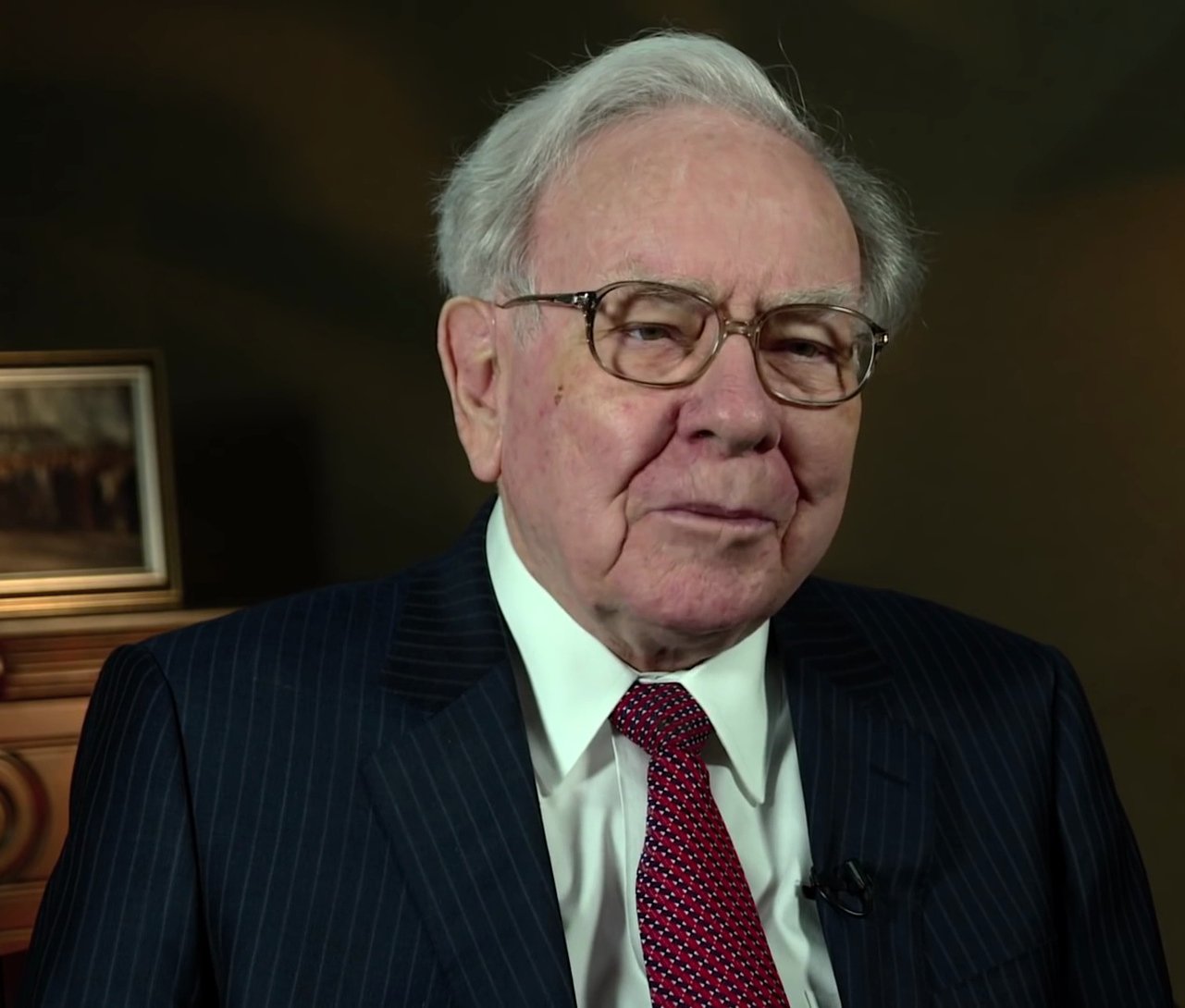
Warren Buffett stepped down Friday as chairman of Berkshire Hathaway, a title he had held since 1970 — fifty-six years. In a letter to shareholders he wrote, "Father Time always wins. He has, however, been generous with me." He becomes chairman emeritus and stays on the board; his son Howard Buffett, a Berkshire director for 33 years, becomes chairman. Buffett is 96. Greg Abel, who took over as CEO in January after Buffett stepped down from that role last year, keeps running the company exactly as he has been.
What Actually Changes
Less than the headline suggests. Berkshire's real succession — who runs the businesses, allocates the capital, makes the calls — happened in January, when Abel became CEO. Buffett said at the time that Abel had "the priority and the authority" over every investment decision, chairman title or not. Friday's move closes out the title that was left over. Buffett's own explanation for the timing leaned on something smaller than strategy: he mentioned that one of his great-grandchildren had just turned one and was "moving a bit faster than I am these days."
What Howard Buffett's job actually is was the more interesting line in the letter: "Greg runs the company; Howard will guard its culture and values — both worth more than anything on our balance sheet. Think of Howard as a policy the shareholders own and hope never to claim against." That's a specific kind of role — not an operator, an insurance policy against Berkshire's decentralized, handshake-based way of running dozens of businesses ever getting run over by someone who doesn't understand why it worked. Howard is a former county sheriff and war photographer, not an investment manager, which fits: his job was never supposed to be picking stocks.
The market's verdict, same day. Berkshire's Class B shares dipped about 0.3% on the announcement and are up roughly 1% year-to-date — against the S&P 500's own 11.5% gain over the same period. A single day's stock move after an already-telegraphed succession isn't much of a verdict on anything, but it's worth naming rather than skipping past.
The Advice That Outlived the Job
The part of Buffett's legacy that reaches the most people was never a stock pick. It was an instruction for what to do instead of picking stocks. In his 2013 letter to shareholders, laying out what he'd told the trustee managing money for his wife after his death, he wrote: "My advice to the trustee could not be more simple: Put 10% of the cash in short-term government bonds and 90% in a very low-cost S&P 500 index fund. (I suggest Vanguard's.) I believe the trust's long-term results from this policy will be superior to those attained by most investors — whether pension funds, institutions or individuals — who employ high-fee managers." He'd already put a number behind the claim five years earlier, betting $1 million against the fund manager Protégé Partners that a plain S&P 500 index fund would beat a basket of hand-picked hedge funds over ten years, after fees. It won, easily, and the payout went to a charity in Omaha.
Where I Think He's Wrong
I've been influenced by Buffett for a long time, and I don't think the trustee advice is bad — low fees beating high fees is about as close to a law of finance as exists. But I think "buy the S&P 500" undersells what a person is actually buying, and it's worth saying plainly: I think it amounts to telling people to buy 493 laggards so they can hold seven winners, and calling the whole package diversification.
The number behind that isn't a guess. The ten largest companies in the S&P 500 — Apple, Microsoft, Nvidia, Amazon, Alphabet and the rest of the group the market nicknamed the "Magnificent Seven" plus a few more — now carry something like 35–40% of the index's total weight, a record, and close to double the 18–23% range that held from 1990 through 2015. An index fund is cap-weighted by construction: it doesn't hold 500 companies at equal size, it holds the market's own bet on which companies matter, re-weighted automatically as that bet compounds. So a buyer of "the S&P 500" is, to a much larger degree than the pitch implies, a buyer of a small cluster of the biggest technology companies in the world, with 490-odd smaller positions riding along mostly as ballast. That's not what "index fund" sounds like it means to someone buying it for the diversification.
Where I Could Be Wrong
The honest counter-argument is that concentration isn't a flaw in the index, it's the index doing exactly its job. Cap-weighting isn't a strategy choice that happens to have piled into a handful of winners — it's a mirror held up to the market's own judgment about where value sits, and that judgment has genuinely been that ten companies now produce an outsized share of American corporate earnings and cash flow. An investor who's uneasy with that concentration can already buy an equal-weight S&P 500 fund instead, at only a slightly higher cost, and get the diversification the plain version doesn't fully deliver — the option exists; most people just don't reach for it.
And Buffett's underlying claim was never really "the S&P 500 is a perfectly diversified basket." It was narrower and, on its own terms, still true regardless of concentration: a fund that charges almost nothing beats a manager who charges a lot, over long periods, after fees, more often than not. The Protégé bet didn't test diversification theory. It tested whether expensive, actively managed money beats cheap, passive money, and it did that cleanly. My complaint is with how the advice gets summarized to ordinary investors — "buy the index, you're diversified" — not with the arithmetic Buffett was actually defending.
Sources
- CNBC. Warren Buffett steps down as chairman of Berkshire Hathaway: "Father Time always wins." 18 September 2026. cnbc.com
- Fortune. Warren Buffett abruptly steps down as Berkshire chair as "Father Time" wins, handing role to son Howard. 18 September 2026. fortune.com
- PBS NewsHour. Warren Buffett steps down as Berkshire Hathaway chairman, after holding the post since 1970. 18 September 2026. pbs.org
- Berkshire Hathaway Inc. 2013 Annual Letter to Shareholders (the 90%/10% trustee instruction). February 2014. berkshirehathaway.com
- Pensions & Investments. Top 10 stocks account for nearly 40% of the S&P 500. 2026. pionline.com
- RBC Wealth Management. The "Great Narrowing": S&P 500 concentration. 2026. rbcwealthmanagement.com