1
Ἐν τῇ ἡμέρᾳ ἐκείνῃ ἐξελθὼν ὁ Ἰησοῦς τῆς οἰκίας ἐκάθητο παρὰ τὴν θάλασσαν·
On that day,
Jesus went out of the house and sat beside the sea.
noteAquel día, Jesús salió de la casa y se sentó junto al mar.
2
καὶ συνήχθησαν πρὸς αὐτὸν ὄχλοι πολλοί, ὥστε αὐτὸν εἰς πλοῖον ἐμβάντα καθῆσθαι, καὶ πᾶς ὁ ὄχλος ἐπὶ τὸν αἰγιαλὸν εἱστήκει.
And great crowds gathered to him, so that he got into a boat and sat down, and the whole crowd stood on the shore.
noteY se reunieron junto a él grandes multitudes, de modo que subió a una barca y se sentó, y toda la multitud estaba de pie en la orilla.
3
καὶ ἐλάλησεν αὐτοῖς πολλὰ ἐν παραβολαῖς λέγων· Ἰδοὺ ἐξῆλθεν ὁ σπείρων τοῦ σπείρειν.
And he spoke many things to them in parables, saying,
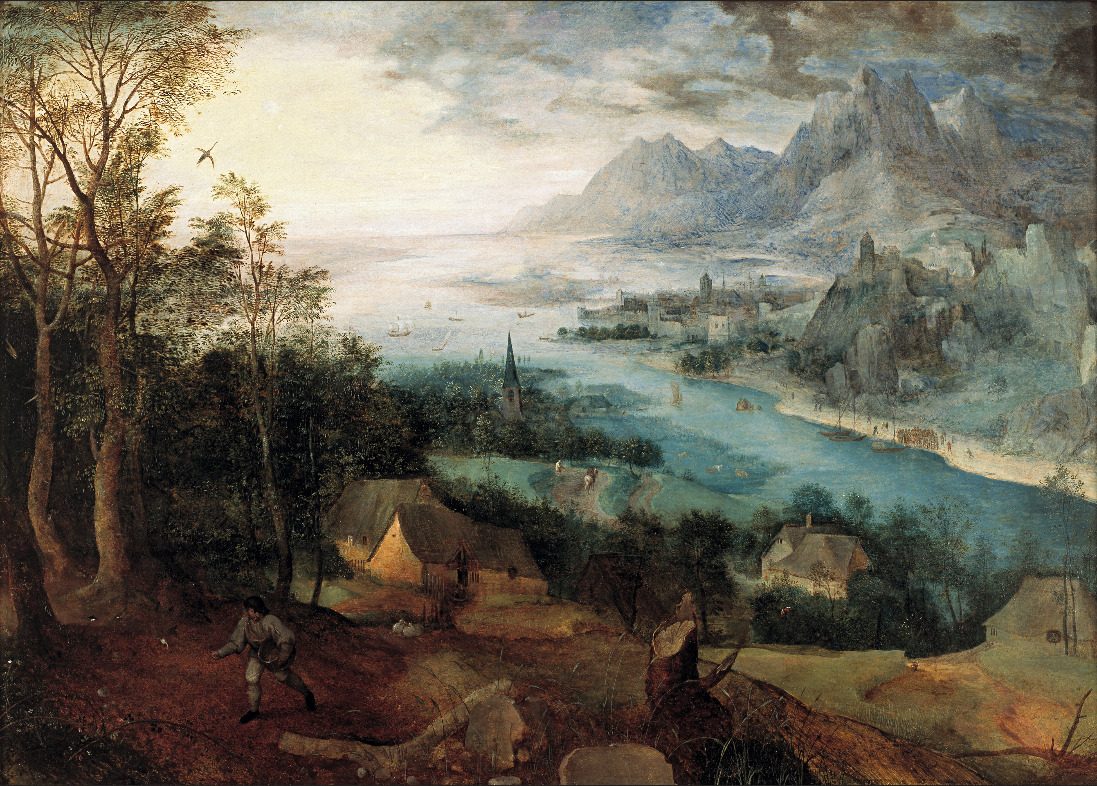
“Look, the sower went out to sow.noteY les habló muchas cosas en parábolas, diciendo: «He aquí, el sembrador salió a sembrar.
4
καὶ ἐν τῷ σπείρειν αὐτὸν ἃ μὲν ἔπεσεν παρὰ τὴν ὁδόν, καὶ ἐλθόντα τὰ πετεινὰ κατέφαγεν αὐτά.
And as he sowed, some seeds fell beside the path, and the birds came and devoured them.note
Y mientras sembraba, unas semillas cayeron junto al camino, y vinieron las aves y las devoraron.
5
ἄλλα δὲ ἔπεσεν ἐπὶ τὰ πετρώδη ὅπου οὐκ εἶχεν γῆν πολλήν, καὶ εὐθέως ἐξανέτειλεν διὰ τὸ μὴ ἔχειν βάθος γῆς,
Other seeds fell on the rocky ground, where they did not have much soil, and immediately they sprang up, because they had no depth of soil,note
Otras cayeron en pedregales, donde no tenían mucha tierra, y brotaron pronto, porque no tenían profundidad de tierra;
6
ἡλίου δὲ ἀνατείλαντος ἐκαυματίσθη καὶ διὰ τὸ μὴ ἔχειν ῥίζαν ἐξηράνθη.
but when the sun rose, they were scorched, and because they had no root, they withered away.note
mas salido el sol, se quemaron, y porque no tenían raíz, se secaron.
7
ἄλλα δὲ ἔπεσεν ἐπὶ τὰς ἀκάνθας, καὶ ἀνέβησαν αἱ ἄκανθαι καὶ ἔπνιξαν αὐτά.
Other seeds fell among the thorns, and the thorns grew up and choked them.note
Otras cayeron entre espinos, y los espinos crecieron y las ahogaron.
8
ἄλλα δὲ ἔπεσεν ἐπὶ τὴν γῆν τὴν καλὴν καὶ ἐδίδου καρπόν, ὃ μὲν ἑκατὸν ὃ δὲ ἑξήκοντα ὃ δὲ τριάκοντα.
Other seeds fell on the good soil and produced grain, some a hundredfold, some sixty, some thirty.note
Y otras cayeron en buena tierra, y dieron fruto: una, ciento; otra, sesenta; y otra, treinta.
9
ὁ ἔχων ὦτα ἀκουέτω.
Whoever has ears, let him hear.”note
El que tiene oídos, oiga.»
10
Καὶ προσελθόντες οἱ μαθηταὶ εἶπαν αὐτῷ· Διὰ τί ἐν παραβολαῖς λαλεῖς αὐτοῖς;
And the disciples came and said to him, “Why do you speak to them in parables?”
noteY acercándose los discípulos, le dijeron: «¿Por qué les hablas en parábolas?»
11
ὁ δὲ ἀποκριθεὶς εἶπεν αὐτοῖς Ὅτι ὑμῖν δέδοται γνῶναι τὰ μυστήρια τῆς βασιλείας τῶν οὐρανῶν, ἐκείνοις δὲ οὐ δέδοται.
He answered and said to them,
“Because to you it has been given to know the mysteries of the kingdom of the heavens, but to them it has not been given.noteÉl, respondiendo, les dijo: «Porque a vosotros os es dado conocer los misterios del reino de los cielos, mas a ellos no les es dado.
12
ὅστις γὰρ ἔχει, δοθήσεται αὐτῷ καὶ περισσευθήσεται· ὅστις δὲ οὐκ ἔχει, καὶ ὃ ἔχει ἀρθήσεται ἀπʼ αὐτοῦ.
For whoever has, to him more will be given, and he will have abundance; but whoever does not have, even what he has will be taken from him.note
Porque a cualquiera que tiene, se le dará, y tendrá en abundancia; pero al que no tiene, aun lo que tiene le será quitado.
13
διὰ τοῦτο ἐν παραβολαῖς αὐτοῖς λαλῶ, ὅτι βλέποντες οὐ βλέπουσιν καὶ ἀκούοντες οὐκ ἀκούουσιν οὐδὲ συνίουσιν·
This is why I speak to them in parables: because seeing they do not see, and hearing they do not hear, nor do they understand.note
Por eso les hablo en parábolas: porque viendo no ven, y oyendo no oyen ni entienden.
14
καὶ ἀναπληροῦται αὐτοῖς ἡ προφητεία Ἠσαΐου ἡ λέγουσα· Ἀκοῇ ἀκούσετε καὶ οὐ μὴ συνῆτε, καὶ βλέποντες βλέψετε καὶ οὐ μὴ ἴδητε.
In them the prophecy of Isaiah is fulfilled, which says: ‘You will indeed hear, and never understand; and you will indeed see, and never perceive.note
Y en ellos se cumple la profecía de Isaías, que dice: ‘De oído oiréis, y no entenderéis; y viendo veréis, y no percibiréis.
15
ἐπαχύνθη γὰρ ἡ καρδία τοῦ λαοῦ τούτου, καὶ τοῖς ὠσὶν βαρέως ἤκουσαν, καὶ τοὺς ὀφθαλμοὺς αὐτῶν ἐκάμμυσαν· μήποτε ἴδωσιν τοῖς ὀφθαλμοῖς καὶ τοῖς ὠσὶν ἀκούσωσιν καὶ τῇ καρδίᾳ συνῶσιν καὶ ἐπιστρέψωσιν, καὶ ἰάσομαι αὐτούς.
For this people’s heart has grown dull, and their ears are heavy of hearing, and their eyes they have closed; lest they should see with their eyes, and hear with their ears, and understand with their heart, and turn, and I would heal them.’note
Porque el corazón de este pueblo se ha embotado, y con los oídos oyen pesadamente, y han cerrado sus ojos; no sea que vean con los ojos, y oigan con los oídos, y con el corazón entiendan, y se conviertan, y yo los sane.’
16
ὑμῶν δὲ μακάριοι οἱ ὀφθαλμοὶ ὅτι βλέπουσιν, καὶ τὰ ὦτα ὑμῶν ὅτι ἀκούουσιν.
But happy are your eyes, because they see, and your ears, because they hear.note
Mas dichosos vuestros ojos, porque ven; y vuestros oídos, porque oyen.
17
ἀμὴν γὰρ λέγω ὑμῖν ὅτι πολλοὶ προφῆται καὶ δίκαιοι ἐπεθύμησαν ἰδεῖν ἃ βλέπετε καὶ οὐκ εἶδαν, καὶ ἀκοῦσαι ἃ ἀκούετε καὶ οὐκ ἤκουσαν.
For amen I tell you that many prophets and righteous people desired to see what you see, and did not see it, and to hear what you hear, and did not hear it.note
Porque de cierto os digo que muchos profetas y justos desearon ver lo que veis, y no lo vieron; y oír lo que oís, y no lo oyeron.
18
Ὑμεῖς οὖν ἀκούσατε τὴν παραβολὴν τοῦ σπείραντος.
You then, hear the parable of the sower.note
Vosotros, pues, oíd la parábola del sembrador.
19
παντὸς ἀκούοντος τὸν λόγον τῆς βασιλείας καὶ μὴ συνιέντος, ἔρχεται ὁ πονηρὸς καὶ ἁρπάζει τὸ ἐσπαρμένον ἐν τῇ καρδίᾳ αὐτοῦ· οὗτός ἐστιν ὁ παρὰ τὴν ὁδὸν σπαρείς.
When anyone hears the word of the kingdom and does not understand it, the evil one comes and snatches away what was sown in his heart. This is the one sown beside the path.note
Cuando alguien oye la palabra del reino y no la entiende, viene el maligno y arrebata lo sembrado en su corazón; este es el sembrado junto al camino.
20
ὁ δὲ ἐπὶ τὰ πετρώδη σπαρείς, οὗτός ἐστιν ὁ τὸν λόγον ἀκούων καὶ εὐθὺς μετὰ χαρᾶς λαμβάνων αὐτόν,
As for the one sown on the rocky ground, this is the one who hears the word and immediately receives it with joy,note
Y el sembrado en pedregales, este es el que oye la palabra, y al momento la recibe con gozo;
21
οὐκ ἔχει δὲ ῥίζαν ἐν ἑαυτῷ ἀλλὰ πρόσκαιρός ἐστιν, γενομένης δὲ θλίψεως ἢ διωγμοῦ διὰ τὸν λόγον εὐθὺς σκανδαλίζεται.
yet he has no root in himself, but endures only for a while; and when affliction or persecution arises on account of the word, immediately he falls away.note
pero no tiene raíz en sí, sino que dura por un tiempo, y al venir la aflicción o la persecución por causa de la palabra, luego tropieza.
22
ὁ δὲ εἰς τὰς ἀκάνθας σπαρείς, οὗτός ἐστιν ὁ τὸν λόγον ἀκούων, καὶ ἡ μέριμνα τοῦ αἰῶνος τούτου καὶ ἡ ἀπάτη τοῦ πλούτου συμπνίγει τὸν λόγον, καὶ ἄκαρπος γίνεται.
As for the one sown among the thorns, this is the one who hears the word, but the care of this age and the deceitfulness of riches choke the word, and it becomes unfruitful.note
Y el sembrado entre espinos, este es el que oye la palabra, pero el afán de este siglo y el engaño de las riquezas ahogan la palabra, y se hace infructuosa.
23
ὁ δὲ ἐπὶ τὴν καλὴν γῆν σπαρείς, οὗτός ἐστιν ὁ τὸν λόγον ἀκούων καὶ συνιείς ὃς δὴ καρποφορεῖ καὶ ποιεῖ ὃ μὲν ἑκατὸν ὃ δὲ ἑξήκοντα ὃ δὲ τριάκοντα.
As for the one sown on the good soil, this is the one who hears the word and understands it, who indeed bears fruit and produces, some a hundredfold, some sixty, some thirty.”note
Mas el sembrado en buena tierra, este es el que oye la palabra y la entiende, y da fruto, y produce: uno, ciento; otro, sesenta; y otro, treinta.»
24
Ἄλλην παραβολὴν παρέθηκεν αὐτοῖς λέγων· Ὡμοιώθη ἡ βασιλεία τῶν οὐρανῶν ἀνθρώπῳ σπείραντι καλὸν σπέρμα ἐν τῷ ἀγρῷ αὐτοῦ.
He put another parable before them, saying,
“The kingdom of the heavens may be compared to a man who sowed good seed in his field.noteOtra parábola les propuso, diciendo: «El reino de los cielos es semejante a un hombre que sembró buena semilla en su campo.
25
ἐν δὲ τῷ καθεύδειν τοὺς ἀνθρώπους ἦλθεν αὐτοῦ ὁ ἐχθρὸς καὶ ἐπέσπειρεν ζιζάνια ἀνὰ μέσον τοῦ σίτου καὶ ἀπῆλθεν.
But while everyone was sleeping, his enemy came and sowed weeds among the wheat, and went away.note
Pero mientras dormían los hombres, vino su enemigo y sembró cizaña entre el trigo, y se fue.
26
ὅτε δὲ ἐβλάστησεν ὁ χόρτος καὶ καρπὸν ἐποίησεν, τότε ἐφάνη καὶ τὰ ζιζάνια.
So when the plants sprouted and produced grain, then the weeds appeared also.note
Y cuando brotó la hierba y dio fruto, entonces apareció también la cizaña.
27
προσελθόντες δὲ οἱ δοῦλοι τοῦ οἰκοδεσπότου εἶπον αὐτῷ· Κύριε, οὐχὶ καλὸν σπέρμα ἔσπειρας ἐν τῷ σῷ ἀγρῷ; πόθεν οὖν ἔχει ζιζάνια;
And the servants of the master of the house came and said to him, ‘Master, did you not sow good seed in your field? Where then did the weeds come from?’note
Y vinieron los siervos del señor de la casa y le dijeron: ‘Señor, ¿no sembraste buena semilla en tu campo? ¿De dónde, pues, tiene cizaña?’
28
ὁ δὲ ἔφη αὐτοῖς· Ἐχθρὸς ἄνθρωπος τοῦτο ἐποίησεν. οἱ δὲ δοῦλοι αὐτῷ λέγουσιν· Θέλεις οὖν ἀπελθόντες συλλέξωμεν αὐτά;
He said to them, ‘An enemy has done this.’ The servants said to him, ‘Then do you want us to go and gather them up?’note
Él les dijo: ‘Un enemigo ha hecho esto.’ Los siervos le dijeron: ‘¿Quieres, pues, que vayamos y la arranquemos?’
29
ὁ δέ φησιν Οὔ, μήποτε συλλέγοντες τὰ ζιζάνια ἐκριζώσητε ἅμα αὐτοῖς τὸν σῖτον·
But he said, ‘No, lest in gathering the weeds you root up the wheat along with them.note
Mas él dijo: ‘No, no sea que al arrancar la cizaña, arranquéis también con ella el trigo.
30
ἄφετε συναυξάνεσθαι ἀμφότερα μέχρι τοῦ θερισμοῦ· καὶ ἐν καιρῷ τοῦ θερισμοῦ ἐρῶ τοῖς θερισταῖς· Συλλέξατε πρῶτον τὰ ζιζάνια καὶ δήσατε αὐτὰ εἰς δέσμας πρὸς τὸ κατακαῦσαι αὐτά, τὸν δὲ σῖτον συναγάγετε εἰς τὴν ἀποθήκην μου.
Let both grow together until the harvest, and at harvest time I will tell the reapers, “Gather the weeds first and bind them in bundles to burn them, but gather the wheat into my barn.”’note
Dejad crecer juntamente lo uno y lo otro hasta la siega; y al tiempo de la siega, diré a los segadores: “Recoged primero la cizaña, y atadla en manojos para quemarla; pero recoged el trigo en mi granero.”’
31
Ἄλλην παραβολὴν παρέθηκεν αὐτοῖς λέγων· Ὁμοία ἐστὶν ἡ βασιλεία τῶν οὐρανῶν κόκκῳ σινάπεως, ὃν λαβὼν ἄνθρωπος ἔσπειρεν ἐν τῷ ἀγρῷ αὐτοῦ·
He put another parable before them, saying,
“The kingdom of the heavens is like a grain of mustard seed, which a man took and sowed in his field.noteOtra parábola les propuso, diciendo: «El reino de los cielos es semejante a un grano de mostaza, que un hombre tomó y sembró en su campo;
32
ὃ μικρότερον μέν ἐστιν πάντων τῶν σπερμάτων, ὅταν δὲ αὐξηθῇ μεῖζον τῶν λαχάνων ἐστὶν καὶ γίνεται δένδρον, ὥστε ἐλθεῖν τὰ πετεινὰ τοῦ οὐρανοῦ καὶ κατασκηνοῦν ἐν τοῖς κλάδοις αὐτοῦ.
It is the smallest of all seeds, but when it has grown it is larger than the garden plants, and becomes a tree, so that the birds of the sky come and nest in its branches.”note
el cual, a la verdad, es la más pequeña de todas las semillas; pero cuando ha crecido, es mayor que las hortalizas, y se hace árbol, de tal manera que vienen las aves del cielo y anidan en sus ramas.»
33
Ἄλλην παραβολὴν ἐλάλησεν αὐτοῖς· Ὁμοία ἐστὶν ἡ βασιλεία τῶν οὐρανῶν ζύμῃ, ἣν λαβοῦσα γυνὴ ἐνέκρυψεν εἰς ἀλεύρου σάτα τρία ἕως οὗ ἐζυμώθη ὅλον.
He spoke another parable to them:
“The kingdom of the heavens is like leaven, which a woman took and hid in three measures of flour, until it was all leavened.”noteOtra parábola les dijo: «El reino de los cielos es semejante a la levadura que una mujer tomó y escondió en tres medidas de harina, hasta que todo quedó leudado.»
34
Ταῦτα πάντα ἐλάλησεν ὁ Ἰησοῦς ἐν παραβολαῖς τοῖς ὄχλοις, καὶ χωρὶς παραβολῆς οὐδὲν ἐλάλει αὐτοῖς·
All these things Jesus spoke to the crowds in parables, and without a parable he was not speaking to them,
noteTodo esto habló Jesús a las multitudes en parábolas, y sin parábolas no les hablaba nada,
35
ὅπως πληρωθῇ τὸ ῥηθὲν διὰ τοῦ προφήτου λέγοντος· Ἀνοίξω ἐν παραβολαῖς τὸ στόμα μου, ἐρεύξομαι κεκρυμμένα ἀπὸ καταβολῆς.
so that what was spoken through the prophet might be fulfilled, saying, “I will open my mouth in parables; I will utter what has been hidden since the foundation.”
notepara que se cumpliera lo dicho por el profeta, que dijo: «Abriré en parábolas mi boca; declararé cosas escondidas desde la fundación.»
36
Τότε ἀφεὶς τοὺς ὄχλους ἦλθεν εἰς τὴν οἰκίαν καὶ προσῆλθον αὐτῷ οἱ μαθηταὶ αὐτοῦ λέγοντες· Διασάφησον ἡμῖν τὴν παραβολὴν τῶν ζιζανίων τοῦ ἀγροῦ.
Then he left the crowds and went into the house. And his disciples came to him, saying, “Explain to us the parable of the weeds of the field.”
noteEntonces, despidiendo a las multitudes, entró en la casa; y sus discípulos vinieron a él, diciendo: «Explícanos la parábola de la cizaña del campo.»
37
ὁ δὲ ἀποκριθεὶς εἶπεν Ὁ σπείρων τὸ καλὸν σπέρμα ἐστὶν ὁ υἱὸς τοῦ ἀνθρώπου·
He answered and said,
“The one who sows the good seed is the Son of Man.noteÉl, respondiendo, les dijo: «El que siembra la buena semilla es el Hijo del Hombre.
38
ὁ δὲ ἀγρός ἐστιν ὁ κόσμος· τὸ δὲ καλὸν σπέρμα, οὗτοί εἰσιν οἱ υἱοὶ τῆς βασιλείας· τὰ δὲ ζιζάνιά εἰσιν οἱ υἱοὶ τοῦ πονηροῦ,
The field is the world, and the good seed, these are the sons of the kingdom. The weeds are the sons of the evil one,note
El campo es el mundo; la buena semilla son los hijos del reino, y la cizaña son los hijos del maligno.
39
ὁ δὲ ἐχθρὸς ὁ σπείρας αὐτά ἐστιν ὁ διάβολος· ὁ δὲ θερισμὸς συντέλεια αἰῶνός ἐστιν, οἱ δὲ θερισταὶ ἄγγελοί εἰσιν.
and the enemy who sowed them is the devil. The harvest is the end of the age, and the reapers are angels.note
El enemigo que la sembró es el diablo; la siega es el fin del siglo, y los segadores son los ángeles.
40
ὥσπερ οὖν συλλέγεται τὰ ζιζάνια καὶ πυρὶ καίεται οὕτως ἔσται ἐν τῇ συντελείᾳ τοῦ αἰῶνος.
Just as the weeds are gathered and burned with fire, so it will be at the end of the age.note
De manera que como se recoge la cizaña y se quema en el fuego, así será en el fin del siglo.
41
ἀποστελεῖ ὁ υἱὸς τοῦ ἀνθρώπου τοὺς ἀγγέλους αὐτοῦ, καὶ συλλέξουσιν ἐκ τῆς βασιλείας αὐτοῦ πάντα τὰ σκάνδαλα καὶ τοὺς ποιοῦντας τὴν ἀνομίαν,
The Son of Man will send his angels, and they will gather out of his kingdom all causes of sin and all who do lawlessness,note
Enviará el Hijo del Hombre a sus ángeles, y recogerán de su reino todos los tropiezos y a los que hacen iniquidad,
42
καὶ βαλοῦσιν αὐτοὺς εἰς τὴν κάμινον τοῦ πυρός· ἐκεῖ ἔσται ὁ κλαυθμὸς καὶ ὁ βρυγμὸς τῶν ὀδόντων.
and they will throw them into the furnace of fire; there will be weeping and gnashing of teeth.note
y los echarán en el horno de fuego; allí será el llanto y el crujir de dientes.
43
Τότε οἱ δίκαιοι ἐκλάμψουσιν ὡς ὁ ἥλιος ἐν τῇ βασιλείᾳ τοῦ πατρὸς αὐτῶν. ὁ ἔχων ὦτα ἀκουέτω.
Then the righteous will shine like the sun in the kingdom of their Father. Whoever has ears, let him hear.note
Entonces los justos resplandecerán como el sol en el reino de su Padre. El que tiene oídos, oiga.
44
Ὁμοία ἐστὶν ἡ βασιλεία τῶν οὐρανῶν θησαυρῷ κεκρυμμένῳ ἐν τῷ ἀγρῷ, ὃν εὑρὼν ἄνθρωπος ἔκρυψεν, καὶ ἀπὸ τῆς χαρᾶς αὐτοῦ ὑπάγει καὶ πωλεῖ πάντα ὅσα ἔχει καὶ ἀγοράζει τὸν ἀγρὸν ἐκεῖνον.
The kingdom of the heavens is like treasure hidden in a field, which a man found and hid; and in his joy he goes and sells all that he has, and buys that field.note
El reino de los cielos es semejante a un tesoro escondido en un campo, el cual un hombre halló y encubrió; y de gozo por ello va y vende todo lo que tiene, y compra aquel campo.
45
Πάλιν ὁμοία ἐστὶν ἡ βασιλεία τῶν οὐρανῶν ἀνθρώπῳ ἐμπόρῳ ζητοῦντι καλοὺς μαργαρίτας·
Again, the kingdom of the heavens is like a merchant seeking fine pearls,note
También el reino de los cielos es semejante a un mercader que busca buenas perlas,
46
εὑρὼν δὲ ἕνα πολύτιμον μαργαρίτην ἀπελθὼν πέπρακεν πάντα ὅσα εἶχεν καὶ ἠγόρασεν αὐτόν.
who, on finding one pearl of great value, went and sold all that he had and bought it.note
y hallando una perla preciosa, fue y vendió todo lo que tenía, y la compró.
47
Πάλιν ὁμοία ἐστὶν ἡ βασιλεία τῶν οὐρανῶν σαγήνῃ βληθείσῃ εἰς τὴν θάλασσαν καὶ ἐκ παντὸς γένους συναγαγούσῃ·
Again, the kingdom of the heavens is like a net that was thrown into the sea and gathered fish of every kind.note
Asimismo el reino de los cielos es semejante a una red que, echada en el mar, recoge de toda clase de peces;
48
ἣν ὅτε ἐπληρώθη ἀναβιβάσαντες ἐπὶ τὸν αἰγιαλὸν καὶ καθίσαντες συνέλεξαν τὰ καλὰ εἰς ἄγγη τὰ δὲ σαπρὰ ἔξω ἔβαλον.
When it was full, they hauled it up on the beach, and sitting down, they gathered the good into containers but threw away the bad.note
y una vez llena, la sacaron a la orilla, y sentándose, recogieron lo bueno en cestas, y lo malo echaron fuera.
49
οὕτως ἔσται ἐν τῇ συντελείᾳ τοῦ αἰῶνος· ἐξελεύσονται οἱ ἄγγελοι καὶ ἀφοριοῦσιν τοὺς πονηροὺς ἐκ μέσου τῶν δικαίων
So it will be at the end of the age: the angels will go out and separate the evil from among the righteous,note
Así será al fin del siglo: saldrán los ángeles, y apartarán a los malos de entre los justos,
50
καὶ βαλοῦσιν αὐτοὺς εἰς τὴν κάμινον τοῦ πυρός· ἐκεῖ ἔσται ὁ κλαυθμὸς καὶ ὁ βρυγμὸς τῶν ὀδόντων.
and throw them into the furnace of fire; there will be weeping and gnashing of teeth.”note
y los echarán en el horno de fuego; allí será el llanto y el crujir de dientes.»
51
Συνήκατε ταῦτα πάντα; λέγουσιν αὐτῷ· Ναί.
“Have you understood all these things?” They said to him, “Yes.”
note
«¿Habéis entendido todas estas cosas?» Le dijeron: «Sí».
52
ὁ δὲ εἶπεν αὐτοῖς· Διὰ τοῦτο πᾶς γραμματεὺς μαθητευθεὶς τῇ βασιλείᾳ τῶν οὐρανῶν ὅμοιός ἐστιν ἀνθρώπῳ οἰκοδεσπότῃ ὅστις ἐκβάλλει ἐκ τοῦ θησαυροῦ αὐτοῦ καινὰ καὶ παλαιά.
He said to them,
“Therefore every scribe trained for the kingdom of the heavens is like a master of a house who brings out of his treasure things new and old.”noteÉl les dijo: «Por eso todo escriba discipulado para el reino de los cielos es semejante a un padre de familia que saca de su tesoro cosas nuevas y cosas viejas.»
53
καὶ ἐγένετο ὅτε ἐτέλεσεν ὁ Ἰησοῦς τὰς παραβολὰς ταύτας, μετῆρεν ἐκεῖθεν.
And it happened, when Jesus had finished these parables, he went on from there.
noteY aconteció que, cuando terminó Jesús estas parábolas, se fue de allí.
54
καὶ ἐλθὼν εἰς τὴν πατρίδα αὐτοῦ ἐδίδασκεν αὐτοὺς ἐν τῇ συναγωγῇ αὐτῶν, ὥστε ἐκπλήσσεσθαι αὐτοὺς καὶ λέγειν· Πόθεν τούτῳ ἡ σοφία αὕτη καὶ αἱ δυνάμεις;
And coming to his hometown, he taught them in their synagogue, so that they were astonished and said, “Where did this man get this wisdom and these mighty works?
noteY venido a su tierra, les enseñaba en la sinagoga de ellos, de tal manera que se admiraban y decían: «¿De dónde tiene este esta sabiduría y estos milagros?
55
οὐχ οὗτός ἐστιν ὁ τοῦ τέκτονος υἱός; οὐχ ἡ μήτηρ αὐτοῦ λέγεται Μαριὰμ καὶ οἱ ἀδελφοὶ αὐτοῦ Ἰάκωβος καὶ Ἰωσὴφ καὶ Σίμων καὶ Ἰούδας;
Is not this the carpenter’s son? Is not his mother called
Mary, and his brothers James and
Joseph and
Simon and Judas?
note¿No es este el hijo del carpintero? ¿No se llama su madre María, y sus hermanos Santiago, José, Simón y Judas?
56
καὶ αἱ ἀδελφαὶ αὐτοῦ οὐχὶ πᾶσαι πρὸς ἡμᾶς εἰσιν; πόθεν οὖν τούτῳ ταῦτα πάντα;
And are not all his sisters with us? Where then did this man get all these things?”
note¿No están todas sus hermanas con nosotros? ¿De dónde, pues, tiene este todas estas cosas?»
57
καὶ ἐσκανδαλίζοντο ἐν αὐτῷ. ὁ δὲ Ἰησοῦς εἶπεν αὐτοῖς· Οὐκ ἔστιν προφήτης ἄτιμος εἰ μὴ ἐν τῇ πατρίδι καὶ ἐν τῇ οἰκίᾳ αὐτοῦ.
And they took offense at him. But Jesus said to them,
“A prophet is not without honor except in his hometown and in his own household.”noteY se escandalizaban de él. Mas Jesús les dijo: «No hay profeta sin honra, sino en su propia tierra y en su casa.»
58
καὶ οὐκ ἐποίησεν ἐκεῖ δυνάμεις πολλὰς διὰ τὴν ἀπιστίαν αὐτῶν.
And he did not do many mighty works there, because of their unbelief.
noteY no hizo allí muchos milagros, a causa de la incredulidad de ellos.
Translator’s Notes
The first parable of the discourse, and it is ABOUT the discourse. Before this chapter Jesus has taught in plain speech and short comparisons; here, for the first time, Matthew gathers a whole SET of parables into one sitting — seven of them before the chapter closes — and opens with one about hearing itself, so that how the crowd receives the story about seed is already an enactment of the story.
Four soils, one seed. The path (trampled, seed simply lying exposed), the rocky ground (a thin skin of soil over limestone shelf, common in Galilee, where a root cannot get down before the sun gets up), the thorns (soil good enough to grow BOTH crop and weed at once), and the good soil — the same seed, the same sower, four different outcomes, and the difference is never named as the sower’s skill.
A yield worth noticing. Thirtyfold was already a very good harvest by ancient Mediterranean farming; a hundredfold is exceptional — the parable’s ending is not modest.
Verses 10–23 ·
ἐπαχύνθη ἡ καρδία epachynthē hē kardia — this people’s heart has grown dull
⚠ The question the disciples ask is not the one modern readers expect. ‘Why do you speak in parables’ assumes parables OBSCURE rather than illustrate — the opposite of how a Sunday-school lesson usually frames them. Jesus’ answer confirms the disciples’ assumption rather than correcting it: to them the mysteries are GIVEN; from ‘them’ (the crowds) parables withhold as much as they reveal. Mystēria is kept as ‘mysteries’ by KJV/ASV/this translation alike; NWT prints ‘sacred secrets’, glossing the sense (a truth withheld until revealed) rather than transliterating the Greek term.
⚠ A citation that shifts from COMMAND to DESCRIPTION, and the shift is not small. The Hebrew of Isaiah 6:9–10 (not yet on these pages) is God’s own IMPERATIVE to the prophet at his commissioning — ‘hashmen lev ha’am hazeh, MAKE the heart of this people fat’ — an active charge to harden, startling enough that it has driven centuries of debate about divine agency in unbelief. The Greek Old Testament (which this quotation follows) already softens the command into something closer to observation — epachynthē, the heart ‘HAS GROWN dull’, a description of a state rather than an order to produce one — and Matthew’s citation preserves that softened Greek shape rather than the Hebrew’s command. Two readings of the whole passage follow from this, and this translation adopts neither over the other: that Jesus speaks in parables in order to conceal truth from those already resistant to it (parables as a further, deserved hardening), or that the people’s hardness is prior and self-caused, and the parable simply exposes a blindness that was already there rather than creating it.
This is the single most quoted Old Testament passage in the whole New Testament’s handling of unbelief — the identical Isaiah text is invoked again at the sending of the Twelve into hostile territory (Mark 4, already on these pages), the healing ministry’s puzzle (John 12), and Paul’s own explanation for Israel’s response to the gospel (Romans 11) — four separate New Testament writers reaching for the same six verses to explain the same mystery.
⚠ ‘Amen I tell you’ — kept identical to its uses since chapter 5 — and the sentence it introduces (v17) is a genuine consolation set directly against the hard saying before it: prophets and righteous people LONGED to see what the disciples are seeing now and did not get to.
The parable interpreted, verse by verse against verse by verse. The interpretation (vv18–23) maps each soil onto a hearer’s response with unusual precision for a Gospel parable — most of Jesus’ parables are left to stand without a decoded key at all. ‘The deceitfulness of riches’ (v22) choking the word alongside ‘the care of this age’ treats worldly SUCCESS, not only worldly hardship, as a genuine threat to fruitfulness — the thorny ground is not the poor soil, it is the soil good enough to grow something else at the same time.
⚠ A specific, deliberately chosen weed. Zizania is almost certainly darnel (Lolium temulentum), a poisonous rye-grass that is all but indistinguishable from wheat until the heads finally form — which is the entire mechanism of the parable’s middle act: no one can tell crop from weed early enough to safely pull one without the other. This is a genuinely different agricultural problem than an ordinary field weed, and an ancient audience farming this region would have known the plant by name and by grudge.
Patience as the point, not permissiveness. The master’s answer to ‘shall we pull them now’ is not ‘it doesn’t matter’ but ‘not yet, and not by you’ — the weeds are real, the danger of pulling them is real, and the separation is deferred to a harvest with its own appointed reapers, not cancelled.
Verses 31–33 · the smallest seed and a woman’s three measures
⚠ A tree with birds nesting in its branches is a borrowed image, and the borrowing is the point. A great tree sheltering birds of every kind in its branches is standing Old Testament shorthand for an EMPIRE giving shelter to many nations (Ezekiel 17:23, 31:6; Daniel 4:12, 20–22, none yet on these pages, all describing literal kingdoms this way). The mustard plant is a garden herb, not a forest tree — a deliberately modest, almost comic substitute for cedar-of-Lebanon imagery, making the same imperial claim from the smallest possible starting size.
⚠ ‘Three measures’ — the identical rare word for the identical quantity, once already on this site. Sata (from Hebrew se’ah) is the same Greek Old Testament loanword-measure Sarah uses at Genesis 18:6, where ‘three seahs of fine flour’ turns a promised ‘piece of bread’ into enough dough for a feast — several gallons of flour, wildly more than one woman needs for one household. The same improbable quantity here means the same thing: a small, hidden beginning working through an amount vastly disproportionate to it, until the whole is transformed. KJV domesticates the measure to ‘three measures of meal’ here exactly as it did at Genesis 18:6; NIV and NWT both keep a literal weight/volume gloss instead.
Verses 34–35 · a citation, and an old debate over whose name belongs on it
⚠ The words are Psalm 78:2, a psalm of ASAPH — and this translation’s base text names no prophet at all. A small number of ancient witnesses instead read ‘spoken through the prophet ISAIAH,’ a reading old enough that Jerome and other early commentators already had to address it. Almost no modern textual critic thinks ‘Isaiah’ was original: Isaiah is quoted by name so often elsewhere in this Gospel that a copyist filling in an anonymous ‘the prophet’ would likelier reach for the most familiar name than invent an error naming the far less quoted Asaph. The base text followed here has no name; the honest oddity is that the psalm quoted is attributed, in its own heading, to a LEVITICAL SINGER (Asaph, one of David’s chief musicians, not usually classed among ‘the prophets’ at all) — which is very possibly why the formula drops the name rather than risk it.
Told to the crowds, explained only to the Twelve. The house (v36) marks the same public/private divide this chapter opened on — the parable is public property, its decoding is not.
⚠ ‘The field is the WORLD’ — a scope wider than it first sounds. Kosmos, not merely Israel or the visible congregation: the wheat and the weeds grow mixed across the whole inhabited world, not sorted by nation or institution, which is exactly why premature sorting by human hands is refused in the parable itself.
«Weeping and gnashing of teeth» — a phrase that recurs. This is its first appearance in this translation; it will return at the closing of the very next parable in this same chapter (v50, worded almost identically) and again later in this Gospel — a fixed formula for final loss, not a one-time flourish. Every shelf version keeps some form of the same image intact — KJV/ASV ‘wailing and gnashing of teeth’, NIV ‘weeping and gnashing of teeth’, NWT ‘weeping and the gnashing of their teeth’ — a rare case of the whole shelf agreeing down to the image.
Two more, paired by their ending rather than their opening. The hidden treasure is found by ACCIDENT — a man stumbling onto it in someone else’s field; the pearl is found by DELIBERATE, professional search — a merchant who was already looking for exactly this. One parable for the person who never went looking, one for the person who spent a life searching; both end in the identical act, selling everything, and neither man is said to hesitate or grieve the cost.
⚠ A property-law wrinkle sits under the treasure parable. Under the going legal logic of the period, a found object’s claim was entangled with who owned the ground it was found in; a finder with no clear title to keep treasure discovered in someone else’s field had a straightforward, if costly, solution — buy the field itself, and the treasure inside it becomes uncontestably his. The joy is genuine, but the purchase is also the obvious legal move, not merely a poetic gesture.
A third separation-parable, closing on the same two lines as the second. The net’s ending (v50) repeats v41–42’s furnace and weeping almost word for word — the weeds-parable and the net-parable bracket the whole discourse’s middle with the identical warning, stated twice rather than varied, as if repetition itself were doing some of the work.
⚠ A scribe who is, quite possibly, describing the book he is sitting inside of. ‘Every scribe trained for the kingdom of the heavens… brings out of his treasure things NEW and OLD’ is widely read as Matthew’s own quiet self-description — a converted grammateus (the same word for the professional Torah-scholars who have opposed Jesus all through this Gospel) writing a book that is constantly doing exactly this: holding Hebrew Scripture and the new teaching of Jesus together in one hand. The reading is not stated in the text and cannot be proven from it, but it fits this particular author unusually well.
Verses 53–58 ·
οἱ ἀδελφοὶ αὐτοῦ Ἰάκωβος καὶ Ἰωσὴφ καὶ Σίμων καὶ Ἰούδας — his brothers, named at last
⚠ A promise from the previous chapter, paid in full. At 12:46 ‘his mother and his brothers’ stood outside unnamed; this translation’s note there promised they would be ‘named outright’ here. They are: James, Joseph, Simon, and Judas, plus unnamed sisters (plural — ‘ALL of them,’ implying more than one). Douay, alone on the shelf, prints ‘brethren’ rather than ‘brothers’ — an older, gender-inclusive-sounding English word that happens to soften nothing doctrinally (it meant the same as ‘brothers’ in 1610), but is a small reminder that the Catholic tradition behind this translation carried the broader-kinship reading of the underlying word into its very vocabulary. The question of whether adelphoi means full siblings or a broader kin term was already stated at 12:46 and is not repeated here; this is simply where the census the earlier note promised actually happens.
The carpenter’s son. Tektōn covers a wider trade than the English ‘carpenter’ suggests — a general craftsman working in wood, stone, or both, the ordinary builder’s trade of a small Galilean town, not a narrow specialism.
⚠ Familiarity as the actual obstacle. The Nazarenes’ objection is not that Jesus’ teaching is wrong but that they know exactly where he came from — whose son, whose brother, whose neighbor. ‘A prophet is not without honor except in his hometown’ reads as an already-known saying quoted rather than coined on the spot; a similar sentiment about familiarity breeding contempt for a local figure’s gifts turns up in other ancient literature outside the Bible, not as a citation here but as evidence the proverb was simply current.
⚠ Unbelief, and what it is said to limit. ‘He did not do many mighty works there BECAUSE OF their unbelief’ is a striking sentence to end a discourse-and-rejection chapter on: not that Jesus WOULD NOT act, but that something about the town’s posture is presented as a real, load-bearing condition on what happened next. Readers differ on how far to press the causality, and the text does not settle it further than it states it.
Patterns worth carrying forward
Where this translation keeps the exact / distinct words: “the kingdom of
the heavens” kept plural throughout, as at every occurrence since 3:2; “amen I
tell you” kept identical to chapter 5 onward; and ‘three measures’
(sata) kept as the literal Semitic loanword-measure, matching this translation’s own choice at
Genesis 18:6 rather than smoothing it into an English unit.
Where it goes its own way: the fulfillment formula at v35 prints no prophet’s name,
following the base text against a minority reading that supplies ‘Isaiah’ over a psalm that is
actually Asaph’s; and the Isaiah 6 citation (vv14–15) is presented with its two live readings
— parables as deserved hardening, or parables as exposing a hardness already there — without a
vote cast between them.
Echoes paid. The promise at 12:46 that ‘his
mother and his brothers,’ left unnamed there, would be ‘named outright’ is paid in full at
13:55–56 — James, Joseph, Simon, and Judas, plus unnamed sisters. And ‘three
measures’ of flour recovers the exact rare word this library already met at Genesis 18:6,
turning Sarah’s hospitality-scale abundance into a parable about the kingdom’s own
disproportionate growth.
Echoes planted. ‘Whoever has, to him more will be given’
(13:12) is the same principle the Parable of the Talents builds an entire story around (25:29); ‘weeping and gnashing of teeth’ (13:42, repeated at 13:50) is
a fixed phrase this Gospel will keep returning to; and the trained scribe ‘bringing out of his
treasure things new and old’ (13:52) — very possibly Matthew’s own self-portrait —
is worth remembering the next time this Gospel visibly welds a piece of the Hebrew Bible onto something
new.
Next in this book: chapter 14 — a birthday banquet, a
dance, and John the Baptist’s head on a platter; then five loaves and two fish feed a multitude,
and Peter steps out of a boat onto the water and starts to sink.