1
וַיְדַבֵּר יְהוָה, אֶל-מֹשֶׁה וְאֶל-אַהֲרֹן לֵאמֹר.
Y Jehová habló a Moisés y a Aarón, diciendo:
2
אָדָם, כִּי-יִהְיֶה בְעוֹר-בְּשָׂרוֹ שְׂאֵת אוֹ-סַפַּחַת אוֹ בַהֶרֶת, וְהָיָה בְעוֹר-בְּשָׂרוֹ, לְנֶגַע צָרָעַת--וְהוּבָא אֶל-אַהֲרֹן הַכֹּהֵן, אוֹ אֶל-אַחַד מִבָּנָיו הַכֹּהֲנִים.
When a person has, on the skin of his flesh, a swelling, or a scab, or a bright spot, and it becomes, on the skin of his flesh,
an affliction of
scaly disease, he shall be brought to Aaron the priest, or to one of his sons the priests.
noteCuando una persona tenga, en la piel de su cuerpo, una hinchazón, o una costra, o una mancha blanca, y se vuelva, en la piel de su cuerpo,
una afección de
enfermedad escamosa, será llevada a Aarón el sacerdote, o a uno de sus hijos los sacerdotes.
3
וְרָאָה הַכֹּהֵן אֶת-הַנֶּגַע בְּעוֹר-הַבָּשָׂר וְשֵׂעָר בַּנֶּגַע הָפַךְ לָבָן, וּמַרְאֵה הַנֶּגַע עָמֹק מֵעוֹר בְּשָׂרוֹ--נֶגַע צָרַעַת, הוּא; וְרָאָהוּ הַכֹּהֵן, וְטִמֵּא אֹתוֹ.
And the priest shall look at the affliction on the skin of the flesh: if the hair in the affliction has turned white, and the appearance of the affliction is deeper than the skin of his flesh, it is an affliction of scaly disease; and the priest shall look at him and pronounce him
unclean.
noteY el sacerdote mirará la afección en la piel del cuerpo: si el pelo de la afección se ha vuelto blanco, y la apariencia de la afección es más profunda que la piel de su cuerpo, es una afección de enfermedad escamosa; y el sacerdote lo mirará y lo declarará
impuro.
4
וְאִם-בַּהֶרֶת לְבָנָה הִוא בְּעוֹר בְּשָׂרוֹ, וְעָמֹק אֵין-מַרְאֶהָ מִן-הָעוֹר, וּשְׂעָרָה, לֹא-הָפַךְ לָבָן--וְהִסְגִּיר הַכֹּהֵן אֶת-הַנֶּגַע, שִׁבְעַת יָמִים.
But if the bright spot on the skin of his flesh is white, and its appearance is not deeper than the skin, and its hair has not turned white, the priest shall confine the afflicted person seven days.
notePero si la mancha blanca en la piel de su cuerpo no es más profunda que la piel, y su pelo no se ha vuelto blanco, el sacerdote recluirá a la persona afectada siete días.
5
וְרָאָהוּ הַכֹּהֵן, בַּיּוֹם הַשְּׁבִיעִי, וְהִנֵּה הַנֶּגַע עָמַד בְּעֵינָיו, לֹא-פָשָׂה הַנֶּגַע בָּעוֹר--וְהִסְגִּירוֹ הַכֹּהֵן שִׁבְעַת יָמִים, שֵׁנִית.
And the priest shall look at him on the seventh day, and if, in his eyes, the affliction has stayed as it was, not spread on the skin, the priest shall confine him seven more days, a second time.
noteY el sacerdote lo mirará al séptimo día, y si a sus ojos la afección ha permanecido igual, sin propagarse en la piel, el sacerdote lo recluirá siete días más, por segunda vez.
6
וְרָאָה הַכֹּהֵן אֹתוֹ בַּיּוֹם הַשְּׁבִיעִי, שֵׁנִית, וְהִנֵּה כֵּהָה הַנֶּגַע, וְלֹא-פָשָׂה הַנֶּגַע בָּעוֹר--וְטִהֲרוֹ הַכֹּהֵן מִסְפַּחַת הִוא, וְכִבֶּס בְּגָדָיו וְטָהֵר.
And the priest shall look at him again on the seventh day, and if the affliction has faded, and it has not spread on the skin, the priest shall pronounce him
clean — it is a scab. He shall wash his clothes and be clean.
noteY el sacerdote lo mirará de nuevo al séptimo día, y si la afección se ha desvaído, y no se ha propagado en la piel, el sacerdote lo declarará
puro —es una costra. Él lavará sus vestidos, y quedará puro.
7
וְאִם-פָּשֹׂה תִפְשֶׂה הַמִּסְפַּחַת בָּעוֹר, אַחֲרֵי הֵרָאֹתוֹ אֶל-הַכֹּהֵן לְטָהֳרָתוֹ; וְנִרְאָה שֵׁנִית, אֶל-הַכֹּהֵן.
But if the scab spreads further on the skin, after he has shown himself to the priest for his cleansing, he shall show himself to the priest again.
notePero si la costra se propaga más en la piel, después de haberse mostrado al sacerdote para su purificación, se mostrará al sacerdote otra vez.
8
וְרָאָה, הַכֹּהֵן, וְהִנֵּה פָּשְׂתָה הַמִּסְפַּחַת, בָּעוֹר--וְטִמְּאוֹ הַכֹּהֵן, צָרַעַת הִוא. {פ}
And the priest shall look, and if the scab has spread on the skin, the priest shall pronounce him unclean — it is scaly disease.
noteY el sacerdote mirará, y si la costra se ha propagado en la piel, el sacerdote lo declarará impuro —es enfermedad escamosa.
9
נֶגַע צָרַעַת, כִּי תִהְיֶה בְּאָדָם; וְהוּבָא, אֶל-הַכֹּהֵן.
When an affliction of scaly disease is in a person, he shall be brought to the priest.
noteCuando haya una afección de enfermedad escamosa en una persona, será llevada al sacerdote.
10
וְרָאָה הַכֹּהֵן, וְהִנֵּה שְׂאֵת-לְבָנָה בָּעוֹר, וְהִיא, הָפְכָה שֵׂעָר לָבָן; וּמִחְיַת בָּשָׂר חַי, בַּשְׂאֵת.
And the priest shall look, and if there is a white swelling on the skin, and it has turned the hair white, and there is raw flesh alive in the swelling —
noteY el sacerdote mirará, y si hay una hinchazón blanca en la piel, que ha vuelto blanco el pelo, y hay carne viva y expuesta en la hinchazón —
11
צָרַעַת נוֹשֶׁנֶת הִוא בְּעוֹר בְּשָׂרוֹ, וְטִמְּאוֹ הַכֹּהֵן: לֹא יַסְגִּרֶנּוּ, כִּי טָמֵא הוּא.
it is an old scaly disease in the skin of his flesh, and the priest shall pronounce him unclean. He shall not confine him, for he is unclean.
notees una enfermedad escamosa antigua en la piel de su cuerpo, y el sacerdote lo declarará impuro. No lo recluirá, porque ya es impuro.
12
וְאִם-פָּרוֹחַ תִּפְרַח הַצָּרַעַת, בָּעוֹר, וְכִסְּתָה הַצָּרַעַת אֵת כָּל-עוֹר הַנֶּגַע, מֵרֹאשׁוֹ וְעַד-רַגְלָיו--לְכָל-מַרְאֵה, עֵינֵי הַכֹּהֵן.
But if the scaly disease breaks out further on the skin, and it covers all the skin of the afflicted person, from his head to his feet, everywhere the priest’s eyes can see —
notePero si la enfermedad escamosa brota más en la piel, y cubre toda la piel de la persona afectada, de la cabeza a los pies, hasta donde alcancen a ver los ojos del sacerdote —
13
וְרָאָה הַכֹּהֵן, וְהִנֵּה כִסְּתָה הַצָּרַעַת אֶת-כָּל-בְּשָׂרוֹ--וְטִהַר, אֶת-הַנָּגַע: כֻּלּוֹ הָפַךְ לָבָן, טָהוֹר הוּא.
then the priest shall look, and if the scaly disease has covered all his flesh, he shall pronounce the afflicted person clean. It has all turned white — he is clean.
noteentonces el sacerdote mirará, y si la enfermedad escamosa ha cubierto toda su carne, declarará puro al afectado. Se ha vuelto todo blanco —está puro.
14
וּבְיוֹם הֵרָאוֹת בּוֹ בָּשָׂר חַי, יִטְמָא.
But on the day raw flesh appears in him, he shall be unclean.
notePero el día en que aparezca en él carne viva, quedará impuro.
15
וְרָאָה הַכֹּהֵן אֶת-הַבָּשָׂר הַחַי, וְטִמְּאוֹ: הַבָּשָׂר הַחַי טָמֵא הוּא, צָרַעַת הוּא.
And the priest shall look at the raw flesh and pronounce him unclean. The raw flesh is unclean — it is scaly disease.
noteY el sacerdote mirará la carne viva, y lo declarará impuro. La carne viva es impura —es enfermedad escamosa.
16
אוֹ כִי יָשׁוּב הַבָּשָׂר הַחַי, וְנֶהְפַּךְ לְלָבָן; וּבָא, אֶל-הַכֹּהֵן.
But if the raw flesh turns again and becomes white, he shall come to the priest,
notePero si la carne viva vuelve a ponerse blanca, vendrá al sacerdote,
17
וְרָאָהוּ, הַכֹּהֵן, וְהִנֵּה נֶהְפַּךְ הַנֶּגַע, לְלָבָן--וְטִהַר הַכֹּהֵן אֶת-הַנֶּגַע, טָהוֹר הוּא. {פ}
and the priest shall look at him, and if the affliction has turned white, the priest shall pronounce the afflicted person clean. He is clean.
notey el sacerdote lo mirará, y si la afección se ha vuelto blanca, el sacerdote declarará puro al afectado. Está puro.
18
וּבָשָׂר, כִּי-יִהְיֶה בוֹ-בְעֹרוֹ שְׁחִין; וְנִרְפָּא.
And when flesh has, on its skin, a
boil, and it is healed,
noteY cuando un cuerpo tenga, en su piel,
una úlcera, y sane,
19
וְהָיָה בִּמְקוֹם הַשְּׁחִין, שְׂאֵת לְבָנָה, אוֹ בַהֶרֶת, לְבָנָה אֲדַמְדָּמֶת; וְנִרְאָה, אֶל-הַכֹּהֵן.
and in the place of the boil there is a white swelling, or a bright spot, reddish-white, it shall be shown to the priest.
notey en el lugar de la úlcera hay una hinchazón blanca, o una mancha blanca rojiza, se mostrará al sacerdote.
20
וְרָאָה הַכֹּהֵן, וְהִנֵּה מַרְאֶהָ שָׁפָל מִן-הָעוֹר, וּשְׂעָרָהּ, הָפַךְ לָבָן--וְטִמְּאוֹ הַכֹּהֵן נֶגַע-צָרַעַת הִוא, בַּשְּׁחִין פָּרָחָה.
And the priest shall look, and if its appearance is lower than the skin, and its hair has turned white, the priest shall pronounce him unclean — it is an affliction of scaly disease; it has broken out in the boil.
noteY el sacerdote mirará, y si su apariencia es más baja que la piel, y su pelo se ha vuelto blanco, el sacerdote lo declarará impuro —es una afección de enfermedad escamosa; ha brotado en la úlcera.
21
וְאִם יִרְאֶנָּה הַכֹּהֵן, וְהִנֵּה אֵין-בָּהּ שֵׂעָר לָבָן, וּשְׁפָלָה אֵינֶנָּה מִן-הָעוֹר, וְהִיא כֵהָה--וְהִסְגִּירוֹ הַכֹּהֵן, שִׁבְעַת יָמִים.
But if the priest looks at it, and there is no white hair in it, and it is not lower than the skin, and it has faded, the priest shall confine him seven days.
notePero si el sacerdote la mira, y no hay en ella pelo blanco, y no es más baja que la piel, y se ha desvaído, el sacerdote lo recluirá siete días.
22
וְאִם-פָּשֹׂה תִפְשֶׂה, בָּעוֹר--וְטִמֵּא הַכֹּהֵן אֹתוֹ, נֶגַע הִוא.
And if it spreads further on the skin, the priest shall pronounce him unclean — it is an affliction.
noteY si se propaga más en la piel, el sacerdote lo declarará impuro —es una afección.
23
וְאִם-תַּחְתֶּיהָ תַּעֲמֹד הַבַּהֶרֶת, לֹא פָשָׂתָה--צָרֶבֶת הַשְּׁחִין, הִוא; וְטִהֲרוֹ, הַכֹּהֵן. {ס}
But if the bright spot stays in its place, not spreading, it is the scar of the boil, and the priest shall pronounce him clean.
notePero si la mancha blanca permanece en su lugar, sin propagarse, es la cicatriz de la úlcera, y el sacerdote lo declarará puro.
24
אוֹ בָשָׂר, כִּי-יִהְיֶה בְעֹרוֹ מִכְוַת-אֵשׁ; וְהָיְתָה מִחְיַת הַמִּכְוָה, בַּהֶרֶת לְבָנָה אֲדַמְדֶּמֶת--אוֹ לְבָנָה.
Or when flesh has, on its skin, a burn by fire, and the raw flesh of the burn becomes a bright spot, reddish-white, or white,
noteO cuando un cuerpo tenga, en su piel, una quemadura de fuego, y la carne viva de la quemadura se vuelva una mancha blanca rojiza, o blanca,
25
וְרָאָה אֹתָהּ הַכֹּהֵן וְהִנֵּה נֶהְפַּךְ שֵׂעָר לָבָן בַּבַּהֶרֶת, וּמַרְאֶהָ עָמֹק מִן-הָעוֹר--צָרַעַת הִוא, בַּמִּכְוָה פָּרָחָה; וְטִמֵּא אֹתוֹ הַכֹּהֵן, נֶגַע צָרַעַת הִוא.
the priest shall look at it, and if the hair in the bright spot has turned white, and its appearance is deeper than the skin, it is scaly disease — it has broken out in the burn. The priest shall pronounce him unclean; it is an affliction of scaly disease.
noteel sacerdote la mirará, y si el pelo de la mancha blanca se ha vuelto blanco, y su apariencia es más profunda que la piel, es enfermedad escamosa —ha brotado en la quemadura. El sacerdote lo declarará impuro; es una afección de enfermedad escamosa.
26
וְאִם יִרְאֶנָּה הַכֹּהֵן, וְהִנֵּה אֵין-בַּבַּהֶרֶת שֵׂעָר לָבָן, וּשְׁפָלָה אֵינֶנָּה מִן-הָעוֹר, וְהִוא כֵהָה--וְהִסְגִּירוֹ הַכֹּהֵן, שִׁבְעַת יָמִים.
But if the priest looks at it, and there is no white hair in the bright spot, and it is not lower than the skin, and it has faded, the priest shall confine him seven days.
notePero si el sacerdote la mira, y no hay pelo blanco en la mancha blanca, y no es más baja que la piel, y se ha desvaído, el sacerdote lo recluirá siete días.
27
וְרָאָהוּ הַכֹּהֵן, בַּיּוֹם הַשְּׁבִיעִי: אִם-פָּשֹׂה תִפְשֶׂה, בָּעוֹר--וְטִמֵּא הַכֹּהֵן אֹתוֹ, נֶגַע צָרַעַת הִוא.
And the priest shall look at him on the seventh day: if it spreads further on the skin, the priest shall pronounce him unclean — it is an affliction of scaly disease.
noteY el sacerdote lo mirará al séptimo día: si se ha propagado más en la piel, el sacerdote lo declarará impuro —es una afección de enfermedad escamosa.
28
וְאִם-תַּחְתֶּיהָ תַעֲמֹד הַבַּהֶרֶת לֹא-פָשְׂתָה בָעוֹר, וְהִוא כֵהָה--שְׂאֵת הַמִּכְוָה, הִוא; וְטִהֲרוֹ, הַכֹּהֵן--כִּי-צָרֶבֶת הַמִּכְוָה, הִוא. {פ}
But if the bright spot stays in its place, not spreading on the skin, and it has faded, it is the swelling of the burn, and the priest shall pronounce him clean, for it is the scar of the burn.
notePero si la mancha blanca permanece en su lugar, sin propagarse en la piel, y se ha desvaído, es la hinchazón de la quemadura, y el sacerdote lo declarará puro, porque es la cicatriz de la quemadura.
29
וְאִישׁ אוֹ אִשָּׁה, כִּי-יִהְיֶה בוֹ נָגַע, בְּרֹאשׁ, אוֹ בְזָקָן.
And when a man or a woman has an affliction on the head or in the beard,
noteY cuando un hombre o una mujer tenga una afección en la cabeza o en la barba,
30
וְרָאָה הַכֹּהֵן אֶת-הַנֶּגַע, וְהִנֵּה מַרְאֵהוּ עָמֹק מִן-הָעוֹר, וּבוֹ שֵׂעָר צָהֹב, דָּק--וְטִמֵּא אֹתוֹ הַכֹּהֵן נֶתֶק הוּא, צָרַעַת הָרֹאשׁ אוֹ הַזָּקָן הוּא.
the priest shall look at the affliction, and if its appearance is deeper than the skin, and there is in it thin, yellow hair, the priest shall pronounce him unclean — it is
a scale; it is scaly disease of the head or of the beard.
noteel sacerdote mirará la afección, y si su apariencia es más profunda que la piel, y hay en ella pelo amarillo y fino, el sacerdote lo declarará impuro —es
una escama; es enfermedad escamosa de la cabeza o de la barba.
31
וְכִי-יִרְאֶה הַכֹּהֵן אֶת-נֶגַע הַנֶּתֶק, וְהִנֵּה אֵין-מַרְאֵהוּ עָמֹק מִן-הָעוֹר, וְשֵׂעָר שָׁחֹר, אֵין בּוֹ--וְהִסְגִּיר הַכֹּהֵן אֶת-נֶגַע הַנֶּתֶק, שִׁבְעַת יָמִים.
But if the priest looks at the affliction of the scale, and its appearance is not deeper than the skin, and there is no black hair in it, the priest shall confine the one with the affliction of the scale seven days.
notePero si el sacerdote mira la afección de la escama, y su apariencia no es más profunda que la piel, y no hay en ella pelo negro, el sacerdote recluirá al afectado por la escama siete días.
32
וְרָאָה הַכֹּהֵן אֶת-הַנֶּגַע, בַּיּוֹם הַשְּׁבִיעִי, וְהִנֵּה לֹא-פָשָׂה הַנֶּתֶק, וְלֹא-הָיָה בוֹ שֵׂעָר צָהֹב; וּמַרְאֵה הַנֶּתֶק, אֵין עָמֹק מִן-הָעוֹר.
And on the seventh day the priest shall look at the affliction, and if the scale has not spread, and there is no yellow hair in it, and the appearance of the scale is not deeper than the skin,
noteY al séptimo día el sacerdote mirará la afección, y si la escama no se ha propagado, y no hay en ella pelo amarillo, y la apariencia de la escama no es más profunda que la piel,
33
וְהִתְגַּלָּח--וְאֶת-הַנֶּתֶק, לֹא יְגַלֵּחַ; וְהִסְגִּיר הַכֹּהֵן אֶת-הַנֶּתֶק שִׁבְעַת יָמִים, שֵׁנִית.
he shall be shaved — but the scale he shall not shave — and the priest shall confine the one with the scale seven more days.
notese rasurará —pero no rasurará la escama—, y el sacerdote recluirá al afectado por la escama siete días más.
34
וְרָאָה הַכֹּהֵן אֶת-הַנֶּתֶק בַּיּוֹם הַשְּׁבִיעִי, וְהִנֵּה לֹא-פָשָׂה הַנֶּתֶק בָּעוֹר, וּמַרְאֵהוּ, אֵינֶנּוּ עָמֹק מִן-הָעוֹר--וְטִהַר אֹתוֹ הַכֹּהֵן, וְכִבֶּס בְּגָדָיו וְטָהֵר.
And on the seventh day the priest shall look at the scale, and if the scale has not spread on the skin, and its appearance is not deeper than the skin, the priest shall pronounce him clean. He shall wash his clothes and be clean.
noteY al séptimo día el sacerdote mirará la escama, y si la escama no se ha propagado en la piel, y su apariencia no es más profunda que la piel, el sacerdote lo declarará puro. Lavará sus vestidos, y quedará puro.
35
וְאִם-פָּשֹׂה יִפְשֶׂה הַנֶּתֶק, בָּעוֹר, אַחֲרֵי, טָהֳרָתוֹ.
But if the scale spreads further on the skin after his cleansing,
notePero si la escama se propaga más en la piel después de su purificación,
36
וְרָאָהוּ, הַכֹּהֵן, וְהִנֵּה פָּשָׂה הַנֶּתֶק, בָּעוֹר--לֹא-יְבַקֵּר הַכֹּהֵן לַשֵּׂעָר הַצָּהֹב, טָמֵא הוּא.
the priest shall look at him, and if the scale has spread on the skin, the priest need not look for yellow hair — he is unclean.
noteel sacerdote lo mirará, y si la escama se ha propagado en la piel, el sacerdote no necesita buscar pelo amarillo —ya es impuro.
37
וְאִם-בְּעֵינָיו עָמַד הַנֶּתֶק וְשֵׂעָר שָׁחֹר צָמַח-בּוֹ, נִרְפָּא הַנֶּתֶק--טָהוֹר הוּא; וְטִהֲרוֹ, הַכֹּהֵן. {ס}
But if, in his eyes, the scale has stayed as it was, and black hair has grown in it, the scale is healed — he is clean, and the priest shall pronounce him clean.
notePero si a sus ojos la escama ha permanecido igual, y ha crecido en ella pelo negro, la escama ha sanado —está puro—, y el sacerdote lo declarará puro.
38
וְאִישׁ, אוֹ-אִשָּׁה, כִּי-יִהְיֶה בְעוֹר-בְּשָׂרָם, בֶּהָרֹת--בֶּהָרֹת, לְבָנֹת.
And when a man or a woman has, on the skin of their flesh, bright spots — white bright spots —
noteY cuando un hombre o una mujer tengan, en la piel de su cuerpo, manchas blancas —manchas blancas resplandecientes—,
39
וְרָאָה הַכֹּהֵן, וְהִנֵּה בְעוֹר-בְּשָׂרָם בֶּהָרֹת--כֵּהוֹת לְבָנֹת: בֹּהַק הוּא פָּרַח בָּעוֹר, טָהוֹר הוּא. {ס}
the priest shall look, and if the bright spots on the skin of their flesh are a faded white, it is
bohaq, breaking out in the skin. He is clean.
noteel sacerdote mirará, y si las manchas en la piel de su cuerpo son de un blanco desvaído, es
bohaq, que ha brotado en la piel. Está puro.
40
וְאִישׁ, כִּי יִמָּרֵט רֹאשׁוֹ--קֵרֵחַ הוּא, טָהוֹר הוּא.
And when a man’s hair has fallen from his head, he is bald — he is clean.
noteY cuando a un hombre se le caiga el pelo de la cabeza, está calvo —está puro.
41
וְאִם מִפְּאַת פָּנָיו, יִמָּרֵט רֹאשׁוֹ--גִּבֵּחַ הוּא, טָהוֹר הוּא.
And if his hair has fallen from the front of his head, he is bald in front — he is clean.
noteY si se le cae el pelo por la parte delantera de la cabeza, está calvo por delante —está puro.
42
וְכִי-יִהְיֶה בַקָּרַחַת אוֹ בַגַּבַּחַת, נֶגַע לָבָן אֲדַמְדָּם--צָרַעַת פֹּרַחַת הִוא, בְּקָרַחְתּוֹ אוֹ בְגַבַּחְתּוֹ.
But when there is, in the bald head or the bald forehead, a reddish-white affliction, it is scaly disease breaking out in his bald head or his bald forehead.
notePero cuando haya, en la calva o en la calva delantera, una afección blanca rojiza, es enfermedad escamosa que brota en su calva o en su calva delantera.
43
וְרָאָה אֹתוֹ הַכֹּהֵן, וְהִנֵּה שְׂאֵת-הַנֶּגַע לְבָנָה אֲדַמְדֶּמֶת, בְּקָרַחְתּוֹ, אוֹ בְגַבַּחְתּוֹ--כְּמַרְאֵה צָרַעַת, עוֹר בָּשָׂר.
And the priest shall look at him, and if the swelling of the affliction is reddish-white in his bald head or his bald forehead, like the appearance of scaly disease in the skin of the flesh,
noteY el sacerdote lo mirará, y si la hinchazón de la afección es blanca rojiza en su calva o en su calva delantera, semejante a la apariencia de la enfermedad escamosa en la piel del cuerpo,
44
אִישׁ-צָרוּעַ הוּא, טָמֵא הוּא; טַמֵּא יְטַמְּאֶנּוּ הַכֹּהֵן, בְּרֹאשׁוֹ נִגְעוֹ.
he is a man with scaly disease — he is unclean. The priest shall surely pronounce him unclean; his affliction is on his head.
notees un hombre con enfermedad escamosa —es impuro. El sacerdote lo declarará impuro sin falta; su afección está en su cabeza.
45
וְהַצָּרוּעַ אֲשֶׁר-בּוֹ הַנֶּגַע, בְּגָדָיו יִהְיוּ פְרֻמִים וְרֹאשׁוֹ יִהְיֶה פָרוּעַ, וְעַל-שָׂפָם, יַעְטֶה; וְטָמֵא טָמֵא, יִקְרָא.
And the one who has the scaly disease, in whom the affliction is — his clothes shall be torn, his hair shall hang loose, he shall cover his upper lip, and he shall call out, ‘Unclean! Unclean!’
noteY el que tiene la enfermedad escamosa, aquel en quien está la afección, llevará sus vestidos rasgados, y su cabeza suelta, y se cubrirá el labio superior, y clamará: «¡Impuro! ¡Impuro!»
46
כָּל-יְמֵי אֲשֶׁר הַנֶּגַע בּוֹ, יִטְמָא--טָמֵא הוּא: בָּדָד יֵשֵׁב, מִחוּץ לַמַּחֲנֶה מוֹשָׁבוֹ. {ס}
All the days the affliction is in him, he remains unclean. He is unclean. He shall live alone; his dwelling shall be outside the camp.
noteTodos los días en que la afección esté en él, quedará impuro. Es impuro. Vivirá solo; fuera del campamento estará su morada.
47
וְהַבֶּגֶד, כִּי-יִהְיֶה בוֹ נֶגַע צָרָעַת: בְּבֶגֶד צֶמֶר, אוֹ בְּבֶגֶד פִּשְׁתִּים.
And when a garment has in it an affliction of scaly disease — a woolen garment, or a linen garment,
noteY cuando una prenda tenga en ella una afección de enfermedad escamosa —una prenda de lana, o una prenda de lino—,
48
אוֹ בִשְׁתִי אוֹ בְעֵרֶב, לַפִּשְׁתִּים וְלַצָּמֶר; אוֹ בְעוֹר, אוֹ בְּכָל-מְלֶאכֶת עוֹר.
or in the warp or the weft, of linen or of wool, or in a leather, or in anything made of leather —
noteo en la urdimbre o en la trama, de lino o de lana, o en un cuero, o en cualquier obra de cuero —
49
וְהָיָה הַנֶּגַע יְרַקְרַק אוֹ אֲדַמְדָּם, בַּבֶּגֶד אוֹ בָעוֹר אוֹ-בַשְּׁתִי אוֹ-בָעֵרֶב אוֹ בְכָל-כְּלִי-עוֹר--נֶגַע צָרַעַת, הוּא; וְהָרְאָה, אֶת-הַכֹּהֵן.
and the affliction is greenish or reddish in the garment, or in the leather, or in the warp, or in the weft, or in anything made of leather, it is an affliction of scaly disease, and it shall be shown to the priest.
notey la afección es verdosa o rojiza en la prenda, o en el cuero, o en la urdimbre, o en la trama, o en cualquier artículo de cuero, es una afección de enfermedad escamosa, y se mostrará al sacerdote.
50
וְרָאָה הַכֹּהֵן, אֶת-הַנָּגַע; וְהִסְגִּיר אֶת-הַנֶּגַע, שִׁבְעַת יָמִים.
And the priest shall look at the affliction, and confine the affliction seven days.
noteY el sacerdote mirará la afección, y recluirá lo afectado siete días.
51
וְרָאָה אֶת-הַנֶּגַע בַּיּוֹם הַשְּׁבִיעִי, כִּי-פָשָׂה הַנֶּגַע בַּבֶּגֶד אוֹ-בַשְּׁתִי אוֹ-בָעֵרֶב אוֹ בָעוֹר, לְכֹל אֲשֶׁר-יֵעָשֶׂה הָעוֹר, לִמְלָאכָה--צָרַעַת מַמְאֶרֶת הַנֶּגַע, טָמֵא הוּא.
And he shall look at the affliction on the seventh day: if the affliction has spread in the garment, or in the warp, or in the weft, or in the leather — whatever the leather is used for — the affliction is a malignant scaly disease. It is unclean.
noteY mirará la afección al séptimo día: si la afección se ha propagado en la prenda, o en la urdimbre, o en la trama, o en el cuero, sea cual sea el uso que se le dé al cuero, la afección es una enfermedad escamosa maligna. Es impura.
52
וְשָׂרַף אֶת-הַבֶּגֶד אוֹ אֶת-הַשְּׁתִי אוֹ אֶת-הָעֵרֶב, בַּצֶּמֶר אוֹ בַפִּשְׁתִּים, אוֹ אֶת-כָּל-כְּלִי הָעוֹר, אֲשֶׁר-יִהְיֶה בוֹ הַנָּגַע: כִּי-צָרַעַת מַמְאֶרֶת הִוא, בָּאֵשׁ תִּשָּׂרֵף.
And he shall burn the garment, or the warp, or the weft, of wool or of linen, or anything of leather in which the affliction is, for it is a malignant scaly disease — it shall be burned in fire.
noteY quemará la prenda, o la urdimbre, o la trama, de lana o de lino, o cualquier artículo de cuero en que esté la afección, porque es una enfermedad escamosa maligna —será quemada en el fuego.
53
וְאִם, יִרְאֶה הַכֹּהֵן, וְהִנֵּה לֹא-פָשָׂה הַנֶּגַע, בַּבֶּגֶד אוֹ בַשְּׁתִי אוֹ בָעֵרֶב; אוֹ, בְּכָל-כְּלִי-עוֹר.
But if the priest looks, and the affliction has not spread in the garment, or in the warp, or in the weft, or in anything of leather,
notePero si el sacerdote mira, y la afección no se ha propagado en la prenda, o en la urdimbre, o en la trama, o en cualquier artículo de cuero,
54
וְצִוָּה, הַכֹּהֵן, וְכִבְּסוּ, אֵת אֲשֶׁר-בּוֹ הַנָּגַע; וְהִסְגִּירוֹ שִׁבְעַת-יָמִים, שֵׁנִית.
the priest shall command that they wash the thing the affliction is in, and he shall confine it seven more days.
noteel sacerdote mandará que laven aquello en que está la afección, y lo recluirá siete días más.
55
וְרָאָה הַכֹּהֵן אַחֲרֵי הֻכַּבֵּס אֶת-הַנֶּגַע, וְהִנֵּה לֹא-הָפַךְ הַנֶּגַע אֶת-עֵינוֹ וְהַנֶּגַע לֹא-פָשָׂה--טָמֵא הוּא, בָּאֵשׁ תִּשְׂרְפֶנּוּ: פְּחֶתֶת הִוא, בְּקָרַחְתּוֹ אוֹ בְגַבַּחְתּוֹ.
And the priest shall look, after the affliction has been washed, and if the affliction has not changed its appearance, and the affliction has not spread, it is unclean — you shall burn it in fire. It is an erosion, whether the bare patch is on the inside or the outside.
noteY el sacerdote mirará después de lavada la afección, y si la afección no ha cambiado su apariencia, y la afección no se ha propagado, es impura —la quemarás en el fuego. Es una erosión, esté el desgaste por dentro o por fuera.
56
וְאִם, רָאָה הַכֹּהֵן, וְהִנֵּה כֵּהָה הַנֶּגַע, אַחֲרֵי הֻכַּבֵּס אֹתוֹ--וְקָרַע אֹתוֹ, מִן-הַבֶּגֶד אוֹ מִן-הָעוֹר, אוֹ מִן-הַשְּׁתִי, אוֹ מִן-הָעֵרֶב.
But if the priest looks, and the affliction has faded after it was washed, he shall tear it out of the garment, or out of the leather, or out of the warp, or out of the weft.
notePero si el sacerdote mira, y la afección se ha desvaído después de lavada, la arrancará de la prenda, o del cuero, o de la urdimbre, o de la trama.
57
וְאִם-תֵּרָאֶה עוֹד בַּבֶּגֶד אוֹ-בַשְּׁתִי אוֹ-בָעֵרֶב, אוֹ בְכָל-כְּלִי-עוֹר--פֹּרַחַת, הִוא: בָּאֵשׁ תִּשְׂרְפֶנּוּ, אֵת אֲשֶׁר-בּוֹ הַנָּגַע.
But if it appears again in the garment, or in the warp, or in the weft, or in anything of leather, it is breaking out — you shall burn in fire the thing the affliction is in.
notePero si aparece de nuevo en la prenda, o en la urdimbre, o en la trama, o en cualquier artículo de cuero, es que está brotando —quemarás en el fuego aquello en que esté la afección.
58
וְהַבֶּגֶד אוֹ-הַשְּׁתִי אוֹ-הָעֵרֶב אוֹ-כָל-כְּלִי הָעוֹר, אֲשֶׁר תְּכַבֵּס, וְסָר מֵהֶם, הַנָּגַע--וְכֻבַּס שֵׁנִית, וְטָהֵר.
And the garment, or the warp, or the weft, or anything of leather, that you wash, and the affliction has departed from it, it shall be washed a second time, and it shall be clean.
noteY la prenda, o la urdimbre, o la trama, o cualquier artículo de cuero que laves, si la afección se ha apartado de ellos, se lavará una segunda vez, y quedará puro.
59
זֹאת תּוֹרַת נֶגַע-צָרַעַת בֶּגֶד הַצֶּמֶר אוֹ הַפִּשְׁתִּים, אוֹ הַשְּׁתִי אוֹ הָעֵרֶב, אוֹ, כָּל-כְּלִי-עוֹר--לְטַהֲרוֹ, אוֹ לְטַמְּאוֹ. {פ}
This is the law for an affliction of scaly disease in a garment of wool or of linen, or in the warp, or in the weft, or in anything of leather — to pronounce it clean or to pronounce it unclean.
noteEsta es la ley de la afección de enfermedad escamosa en una prenda de lana o de lino, o en la urdimbre, o en la trama, o en cualquier artículo de cuero —para declararlo puro, o para declararlo impuro.
Nega and tzaraat — the mark, and the disease it might become
Like Leviticus 11 (already on these pages), this law is spoken to Moses AND Aaron together — one of only a handful of chapters that name Aaron as a direct addressee, and each time for the same reason: the priesthood has to execute this personally, not merely receive it secondhand. Leviticus 12, one chapter back, was addressed to Moses alone even though a priest performs its ritual too; the difference is diagnosis. A childbirth offering follows a fixed script. A skin affliction does not — the priest has to look, and decide, every single time, which is exactly what the next fifty-eight verses train him to do.
The chapter opens with three named marks and one word for what any of them MIGHT be. A se’et (‘a swelling’, from a root meaning to lift up), a sapachat (‘a scab’), or a baheret (‘a bright spot’) becomes an affliction — a nega, not yet a diagnosis — of scaly disease only if the priest’s examination says so. Keeping the two Hebrew words apart in English matters, because the chapter’s whole procedure depends on the gap between them: a mark is not yet a disease, and the entire point of this law is that only a trained, repeated examination is allowed to close that gap.
⚠ And that brings up the word every English Bible has used for two thousand years, and gets wrong: ‘leprosy’. Around the 2nd century BC, the Septuagint’s translators rendered tzaraat with Greek lepros, and it was a reasonable choice for its day — lepros simply meant ‘scaly’ in the Greek of their own era, and true Hansen’s disease (Mycobacterium leprae) went by an entirely different name, elephantiasis; ancient physicians kept the two apart. The narrowing happened centuries later, as Latin and then English ‘leprosy’ hardened into the name of one specific, dreaded disease and nothing else — so a modern reader meets the King James’s word and quietly imports a medical diagnosis the Hebrew text never makes. This translation reads ‘a scaly disease’ throughout instead. KJV, ASV, Douay-Rheims, Geneva and TLB all keep ‘leprosy’; NIV breaks from the pack with ‘a defiling skin disease’; and ⚠ even NWT, usually this shelf’s most exacting witness on precisely this kind of question, keeps ‘the disease of leprosy’ here — one of the rare places its own precision doesn’t win out over the King James tradition it usually corrects. The Spanish shelf splits the same way: RV60 keeps ‘llaga de lepra’, but NVI drops ‘lepra’ from its own main text entirely, for ‘infección’, footnoting the traditional word instead of printing it.
Old scaly disease — and the rule that turning entirely white makes you CLEAN
This case needs no seven-day wait: a disease that has already turned the hair white and shows raw flesh underneath is diagnosed on sight, once, no confinement. The chapter treats ‘raw flesh alive in the swelling’ as decisive precisely because it is the one sign that cannot be mistaken for an old scar or a passing rash — living tissue exposed inside the mark. ⚠ That detail turns out to be the key to the whole chapter’s strangest rule, three verses later.
Verse 13 is the paradox that stops most first-time readers: if the disease has spread until it covers the ENTIRE body, head to foot, the man is pronounced clean. More disease, not less, is what clears him. Read against vv10–11 it stops being strange: what the chapter is actually tracking is never the WHITENESS itself but whether any raw, living flesh is showing. A disease that has run its full course and covered everything, with nothing raw left exposed anywhere, has — on this law’s own logic — nothing left to spread; a disease still eating into new territory, visible as raw flesh at its advancing edge, is the one still active. v14 confirms it bluntly: the instant raw flesh reappears, even on an all-white body already pronounced clean, he is unclean again. The colour was never the real criterion. It was always the raw flesh, and whiteness was only ever a proxy for its absence.
Two accidental scars, examined by the identical procedure
A healed boil (vv18–23) and a healed burn (vv24–28) get their own separate Masoretic paragraphs, and then the identical seven-verse procedure, almost word for word, run on each. The boil is the same word Exodus uses for Egypt’s own sixth plague — an ordinary, everyday sore, nothing supernatural about getting one. What both cases share is the real question the law is answering: an accident has already happened to this skin, so how does the priest tell an innocent SCAR from a genuinely new disease using the old injury as its opening? The answer, both times, is the same three tests already established — white hair, depth below the skin, spreading — applied now to a spot with a known, harmless explanation sitting right next to it.
⚠ Notice what the priest never does across either case, or anywhere in this chapter: he does not treat, medicate, lance, or prescribe. The verb that carries the whole chapter is ra’ah, ‘to look’ — it recurs roughly thirty times in fifty-nine verses — and every diagnostic act ends in a spoken verdict, tame or tahor, unclean or clean, never in a cure. This is a chapter about EXAMINATION and STATUS, not therapy; whatever makes the disease actually go away happens off the page, and the priest’s whole job is to keep pronouncing on it, tick by tick, until it does.
Netek — the scale, where the tell is yellow hair, not white
The scalp and the beard get their own named subtype, and their own diagnostic marker: not white hair, but hair that has turned thin and yellow. Netek is the Hebrew, and this translation reads ‘a scale’ rather than the King James’s archaic ‘scall’ (a real, related English word, now simply dead outside this one verse of this one translation tradition). Some dermatologists have proposed favus, a fungal scalp infection that produces exactly this thin, discoloured hair, though nothing in the text lets that identification be checked against an actual case.
⚠ And v30 makes the relationship between the two Hebrew words explicit, in one breath: ‘it is a scale — it is scaly disease of the head or of the beard.’ Netek is not a rival category to tzaraat; it is named as a form of it, with its own local rule because hair, not skin, is what a priest can actually see clearly on a scalp. The seven-plus-seven confinement procedure runs again here almost verse for verse — this chapter is less interested in listing new diseases than in showing that one method, patiently repeated, covers all of them.
Bohaq — a hapax word, and the law’s own care not to over-diagnose
Two verses, and a diagnosis that needs no confinement at all: a faded white eruption is pronounced clean on sight. Bohaq occurs exactly once in the whole Hebrew Bible, here, so there is no second instance anywhere in Scripture to check its meaning against — printed untranslated in this edition rather than guessed at, matching this project’s own rule for a genuine hapax (see Leviticus 11’s solam and hargol, already on these pages). Modern dermatology’s best guess is vitiligo or leukoderma, a harmless loss of skin pigment. ⚠ KJV guesses ‘freckled spot’; ASV transliterates ‘tetter’ (itself just an old English word for a skin eruption, not a rendering of the Hebrew); NIV and NWT both converge, independently, on ‘a harmless rash’ — the one thing every version actually agrees the verse is sure of.
This is worth pausing on, because it is easy to read fifty-nine verses of diagnostic criteria as a chapter obsessed with FINDING disease. It is just as obsessed with the opposite: bohaq here, ordinary baldness three verses later (vv40–41), the healed scar of a boil or a burn earlier in the chapter — each one a condition the law goes out of its way to name and clear, guarding against exactly the kind of anxious over-diagnosis a purely fear-driven reading of this law would produce.
Two words for baldness, and neither one, by itself, means anything
Hair loss gets two Hebrew names — qereach, bald at the crown or back of the head, and gibbeach, bald at the front — and both verses end on the identical two words: ‘he is clean.’ A condition common enough that a large share of the adult population will eventually have it is stated, twice, to carry no ritual weight whatsoever on its own. Only when a reddish-white affliction breaks out ON TOP of the bald patch (v42) does the whole apparatus of examination restart, using the same criteria already established for skin elsewhere on the body.
‘Unclean, unclean’ — the cry two Gospels report Jesus answering with a touch
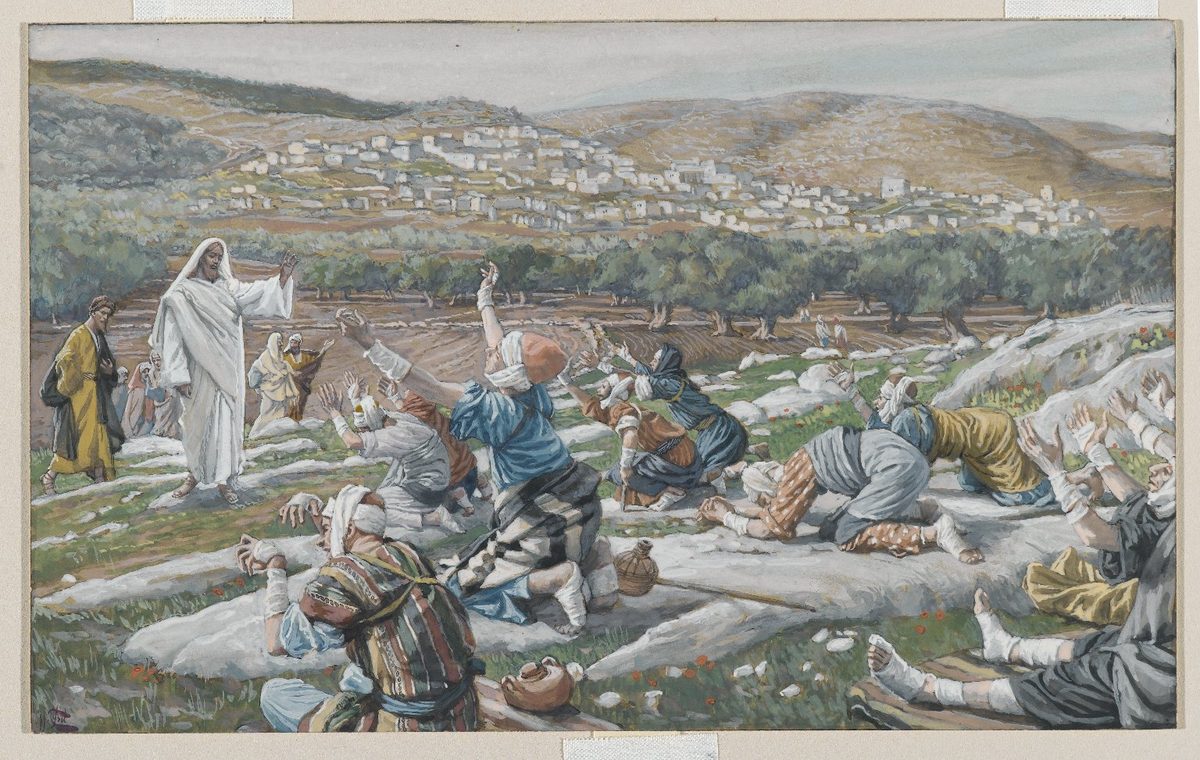
The diagnosed man tears his own clothes, lets his hair hang loose, covers his upper lip, and calls out his own condition to anyone who might come near. The torn clothes and loosened hair are, elsewhere in the Torah, mourning gestures — this law asks a living person to perform the outward signs of grief for himself. Jewish tradition reads the doubled cry, ‘tamei, tamei’, as doing two things at once: warning strangers away, and — per one old reading (b. Mo’ed Qatan 5a) — inviting anyone who hears it to pray for him. The custom outlived the ancient Near East by a long way: medieval European lepers carried a bell or clapper and were required to announce themselves in almost exactly this fashion, a direct if medically confused inheritance of this one verse.
⚠ A later, purely interpretive Jewish tradition ties this affliction to lashon hara, slander — reading the Hebrew for ‘one with the affliction’, metzora, as if it echoed motzi shem ra, ‘one who puts out a bad name.’ The pairing is a rabbinic wordplay (b. Arakhin 15b), not a claim this chapter itself makes — nothing in Leviticus 13 states or implies the disease is caused by, or a punishment for, speech. It is worth naming because Numbers 12, now on these pages, the very next appearance of this affliction in the Torah’s own narrative order, strikes Miriam with it directly after she speaks against Moses — almost certainly why the later reading exists at all, a moral built on top of one story and then generalized to the whole law.
And this is the isolation two Gospels report Jesus crossing on purpose. ‘A leper came to him… and Jesus, moved with anger, stretched out his hand and touched him’ (Mark 1:40-41, already on these pages) — the touch this very law makes contagious, given anyway, before the word of healing is even spoken. Matthew 8:2-4 (already on these pages) tells the same scene and then closes it by sending the healed man back to ‘show yourself to the priest’: not exemption from this law, but its ordinary machinery, running exactly as fifty-nine verses of it are written to run.
The clinching evidence: the identical word, growing on wool
The chapter’s last thirteen verses run the whole examine-confine-reexamine procedure a third time — on a garment, on leather, on woven cloth — using the SAME Hebrew phrase, nega tzaraat, that has named a human skin condition for fifty-eight verses. ⚠ This is the strongest evidence inside the text itself against the traditional rendering: no bacterial skin infection, Hansen’s disease included, can grow in a wool coat. Whatever tzaraat names, it names a category broad enough to include a person, a hide, and a length of woven linen — something closer to a spreading, greenish-or-reddish corruption than to any one clinical disease.
Even translators who keep ‘leprosy’ for the human case tend to give this section away. NIV, which already reads ‘a defiling skin disease’ at v2, calls this exact phrase ‘defiling MOULD’ once it reaches fabric — a tacit admission that the same Hebrew noun cannot honestly be forced into one English disease-name across both halves of its own chapter. NVI does the identical thing in Spanish, ‘moho’ here against ‘infección’ at v2. KJV and RV60, by contrast, keep ‘leprosy’/‘lepra’ in a garment for consistency’s sake — which only sharpens the point, since a reader who takes that literally is being told a Hebrew word can infect cloth.
The vocabulary tightens for the worst case: a spreading, unretreating affliction is ‘a MALIGNANT scaly disease’ (vv51–52), burned outright; a stubborn mark that survives one washing and confinement is called pechetet, ‘an erosion’ (v55), from a root meaning a pit or hollow — the fabric itself is being eaten away, which a genuine textile mould does and a human skin disease, by definition, cannot. The chapter that opened on a person’s skin closes, fifty-nine verses later, on the same procedure run on the fibers of a coat — and the seam between the two is exactly where the case against ‘leprosy’ is strongest.
Notes on this translation
Decisions. Hebrew and English Leviticus 13 both run 1–59 — verified against the Masoretic text rather than assumed, with no versification shift (unlike the Exodus 21/22 boundary this project has hit before). Six Masoretic paragraph breaks divide it: closed breaks after vv23, 37, 39 and 46, open breaks after vv8, 17, and a final open break closing the whole chapter at v59. The traditional ‘leprosy’ is retired throughout for ‘a scaly disease’ (tzaraat) — the flagship departure of this chapter, argued at length in the note on vv1–8 and clinched by the garment law at the close. Nega, the general word for whatever the priest is examining before a verdict, is kept distinct as ‘the affliction’. Netek (vv29–37) reads ‘a scale’ rather than the King James’s dead ‘scall’. Bohaq (v39), a true hapax legomenon, is printed untranslated. Shti and erev (vv48–59) read ‘warp’ and ‘weft’ — the modern weaving term, in place of the King James’s now-obsolete ‘woof’.
Echoes paid. The joint address to Moses AND Aaron, last seen opening Leviticus 11 (already on these pages), recurs here for the same reason — the priesthood executes this law in person; the tame/tahor system of approach rather than morality, established across Leviticus 11–12, applied now to a bodily affliction instead of an animal or a birth; negaim gedolim, the ‘great blows’ that struck Pharaoh’s household at Genesis 12:17 (already on these pages), the same noun this chapter narrows to a single person’s skin; and shechin, Egypt’s own sixth plague at Exodus 9:9 (already on these pages), reappearing here as an ordinary, non-supernatural sore the priest must tell apart from a fresh disease.
Echoes planted. The healed man’s own offering and full purification ritual are paid off at Leviticus 14, now on these pages, including that chapter’s stranger extension of the identical law to a house’s own walls; Miriam’s own encounter with this affliction, and the later rabbinic tradition tying it to slander, now stand at Numbers 12, on these pages.
⚠ A note on order: Leviticus stands complete on these pages, chapters 1–27.
_-_James_Tissot_-_overall.jpg)