Four Hundred Million for a Model Nobody Has Seen
SEPTEMBER 21, 2026
A Beijing company called Naive AI, founded in February 2026, has raised roughly $400 million across three rounds — about $100 million, then $180 million, then $120 million — and was most recently valued at $1.42 billion. It employs fewer than a hundred people. As of the reporting, it has not released a model; its first is said to be due about now. The investors on the cap table are Tencent, IDG Capital, MPCi and HSG, the firm formerly known as Sequoia Capital China.
Seven months, four of the largest names in Chinese technology capital, a unicorn valuation, and nothing shipped. Also, one presumes deliberately, a company named Naive — which is either a very good joke about how models get built or an accident of translation, and which nobody has explained on the record. The question worth asking isn't whether that's a lot of money for a company with no product. It's why Tencent, which operates its own frontier model, paid to own a slice of someone else's.
Who Dai Jifeng Is
Start with the asset actually being bought, because it isn't software.
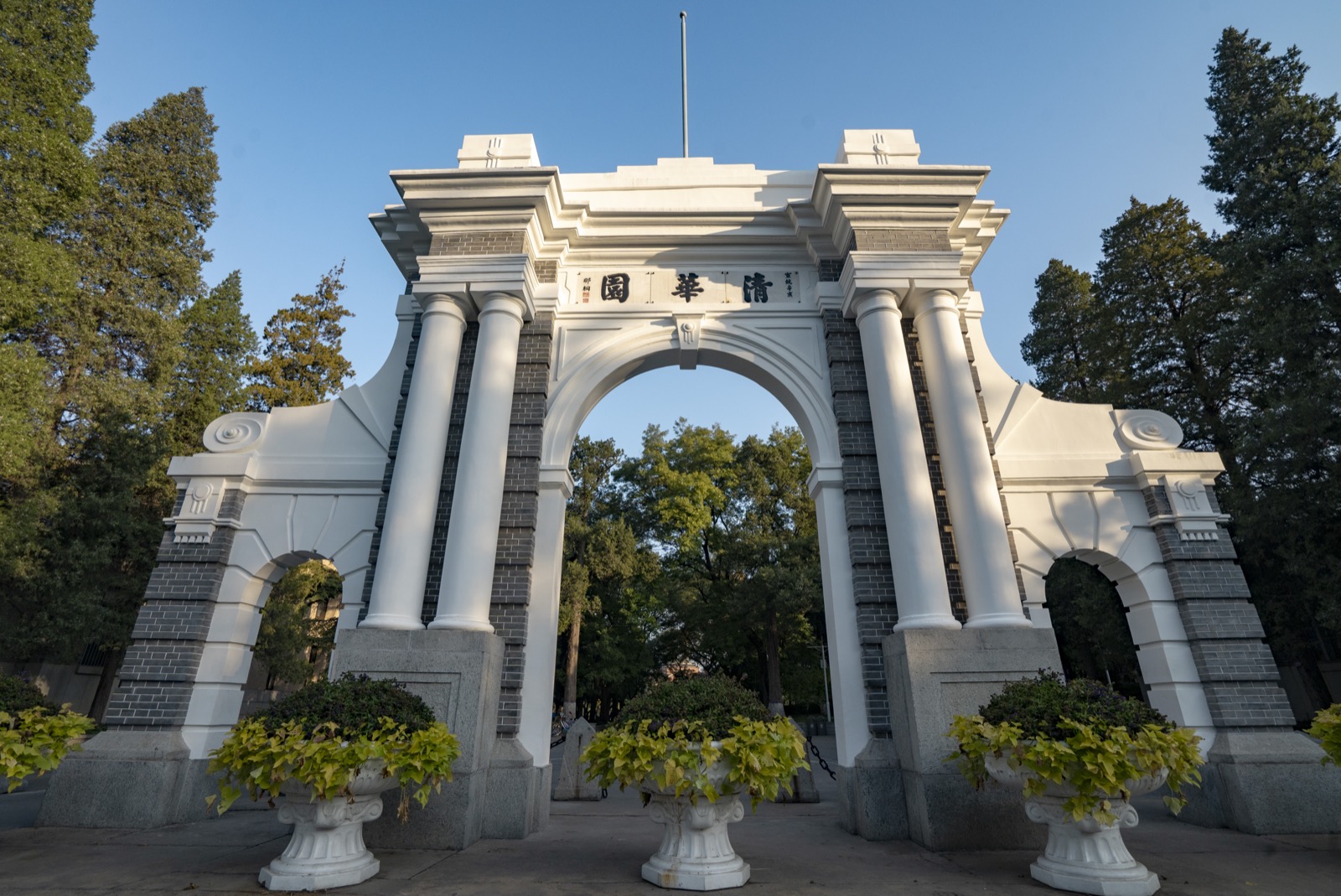
Dai Jifeng is an associate professor in Tsinghua University's Department of Electronic Engineering, where he has been since July 2022. Before that he spent 2014 to 2019 as a principal researcher and research manager in the vision group at Microsoft Research Asia, and 2019 to 2022 as executive research director at SenseTime. His name is on work that a great many people in computer vision have built on: Deformable Convolutional Networks, presented at ICCV in 2017, which let a convolutional kernel learn to move its own sampling points rather than sitting on a fixed grid; Deformable DETR, which made transformer-based object detection converge in a fraction of the training time; and later the InternImage and InternVL lines of large vision and vision-language models.
That is a specific kind of pedigree. It is not "ran a big team at a big company." It is "published the thing that other people's architectures are now made of," twice, plus a decade of running research groups at two of the most productive AI labs in Asia. When a professor with that record leaves to start a company and brings part of his team, the thing on offer is not a product roadmap. It is a dozen or so people who have shipped state-of-the-art results before, available exactly once.
What Naive AI Is Actually Building
The second thing being bought is a strategy, and it is a deliberately contrarian one.
Naive AI is not pretraining a foundation model from scratch. By the reporting, it takes an existing Chinese open-weight model that has already been pretrained, modifies its structure, and then does the downstream work — mid-training, post-training, reinforcement learning — to lift performance. Its first release is to be open-weight itself, free to download and adapt, in the manner of DeepSeek and Moonshot. Separately, the team is said to be researching recursive self-improvement, where a system is used to improve its own training.
Skipping pretraining sounds like skipping the hard part. It is closer to the opposite. Pretraining is the expensive part — the part that consumes a nine-figure compute budget and, for a Chinese lab under US export controls on advanced accelerators and the high-bandwidth memory that feeds them, the part that is hardest to buy at any price. Meanwhile the supply of strong open-weight base models has become abundant and free: DeepSeek, Qwen, Kimi and GLM have all put serious models into the open. If the base is a commodity and the compute to make one is rationed, the scarce skill moves downstream, to the people who are best at what happens after.
The bet is not unique to China. Thinking Machines Lab built on a DeepSeek base; Cursor built its coding model on a Z.ai base. What's notable is a well-funded lab saying out loud, at founding, that pretraining is not where it intends to compete.
Pre-, mid-, post-. Roughly: pretraining is the enormous first pass over a very large text corpus that gives a model its general competence — the multi-hundred-million-dollar step. Mid-training is a further, more targeted pass on curated or synthetic data to deepen particular capabilities, such as reasoning or code, before the model is shaped for use. Post-training is the shaping: supervised fine-tuning on demonstrations, then reinforcement learning against feedback or verifiable rewards, which is where most of the difference between a raw base model and something you would actually deploy now comes from. The industry's centre of gravity has been drifting steadily from the first to the last two, which is precisely the drift Naive AI's business plan is standing on.
The Four Names on the Cap Table
Tencent is the one that makes the question interesting: it runs its own frontier model family, Hunyuan, and has built its own AI silicon. It is also, separately, one of the most active investors in other people's Chinese AI labs — it has put money into Zhipu AI, MiniMax, Moonshot AI and Baichuan, holding reported minority stakes of a couple of percent in the first two.
HSG is Sequoia Capital China, which split from the American firm in a 2023 restructuring that carved Sequoia into three independent houses and became fully separate in 2024, rebranding as HongShan in Chinese and HSG in English, with something on the order of $56 billion under management. Its AI book includes Moonshot and MiniMax. IDG Capital is one of the oldest venture firms operating in China, a generalist with three decades of technology positions. MPCi is the firm formerly known as Matrix Partners China, renamed after separating from its American namesake — another long-running China technology investor.
Notice that three of the four already hold positions in the Chinese labs everyone has heard of. So this is not a case of outsiders discovering AI. It is incumbents adding a name to a portfolio they already own several of.
Why Pay to Stand Outside Your Own Building
The instinct that a corporate investor with its own AI lab has no reason to fund an external one assumes the internal lab is the bet. It isn't. It's a bet — one architecture, one research culture, one set of institutional habits, funded on one budget cycle, staffed by people who already work there. There are at least five reasons to buy exposure outside it, and they stack.
An internal lab can only be wrong in one direction. Hunyuan is a product requirement: Tencent needs models to run inside WeChat, its cloud and its games. It is not a claim that Tencent's researchers will find the best method. If the winning technique over the next three years is something Tencent's own organisation is not structured to pursue — and post-training-centric development on someone else's open base is structurally awkward for a company whose pride is invested in its own base model — then a stake in a lab that is structured for it is cheap insurance.
The bet here is specifically orthogonal. That is the sharpest form of the argument. Tencent pretrains. Naive AI has publicly declined to. Backing a company whose entire thesis is that your own most expensive activity is becoming a commodity is not a conflict; it is a hedge against your own capital allocation, bought for a fraction of what that allocation costs.
The money comes back through the meter. Tencent sells cloud. A portfolio of well-funded AI startups is a portfolio of customers who will spend their raise on compute, some of it yours. This is the oldest reason a platform company invests in its ecosystem, and it does not require any single portfolio company to win.
The financial returns stopped being theoretical. Chinese AI labs have started reaching public markets, and the early marks have been extraordinary — Zhipu and MiniMax both listed in Hong Kong, with reported post-listing gains that would make a 2 percent stake a serious line item. When your last several AI positions have printed like that, the internal debate about whether to take another one gets short.
And relative to the alternatives, $1.42 billion is small. DeepSeek's first outside raise reportedly closed in May 2026 at a valuation around $52 billion, with later talks reported near $70 billion. Against that, Naive AI is a call option on a credentialed team at roughly two percent of the price. Rhodium Group's own work on the sector makes the pricing logic explicit and uncomfortable: Chinese model companies generate around a tenth of the revenue of OpenAI and Anthropic while trading at far higher multiples of it. Nobody is underwriting these at these prices on cash flow. They are being underwritten on the possibility that one of them turns out to be the important one — which is exactly the kind of bet you make many of, in small sizes, rather than one of, in a large size.
Put all five together and the pattern isn't strange at all. It's a portfolio. The odd-looking part — a company with its own lab funding a rival — is only odd if you think the lab and the investment are answering the same question. They aren't. One is "what do we ship next quarter." The other is "what if we're wrong."
The Part That Isn't Tidy
One thing the investors underwrote alongside the pedigree: an unresolved dispute.
Before founding Naive AI, Dai was technical adviser to MiroMind, an AGI startup associated with the billionaire Shanda founder Chen Tianqiao, from around August 2025. He stepped down on 18 January 2026 and left with some of the team. On 23 April 2026, MiroMind issued a notice stating that its core technology and intellectual property remained entirely its own and reserving the right to take legal action. Dai has told the Washington Post that MiroMind tried to force him to relocate overseas, which is what prompted his departure; Chen has denied that account; Dai declined to comment to Bloomberg. No public settlement has been reported, and as far as I can find, no litigation has been filed either.
That is a real overhang on a company whose principal asset is a research team and the methods in its heads. It is also, evidently, not one that was disqualifying to four sophisticated investors — at least two of whom priced a round after the notice was published. Reasonable people can read that as diligence concluding the claim is weak, or as competition for the deal outrunning the diligence. From the outside, both explanations fit the facts equally well.
What Would Settle It
- The first model. Everything above is a thesis until an open-weight release can be benchmarked by strangers. A post-training-first lab either delivers a measurable lift over the base model it started from, or it doesn't, and the open-weight format means the answer will be public within days of release.
- Which base it started from. The specific choice is a statement about whose ecosystem the team thinks is winning, and it will be inspectable.
- Whether the MiroMind claim ever becomes a filing. A notice reserving rights and a complaint are very different objects.
Where I Could Be Wrong
- The round details come from trade and business press, not filings. The three tranches ($100M / $180M / $120M), the $1.42 billion valuation and the earlier reported $800 million post-money in April all trace back to reporting on private rounds. Chinese private financings are not publicly documented the way a US filing is, and I have not seen a primary document for any of these numbers.
- I could not confirm the per-investor split. Coverage names Tencent, IDG Capital, MPCi and HSG collectively across three rounds; which firm led which round, at what size, and whether all four participated in all three, I could not establish. My argument about Tencent's motives is therefore about a class of investor, not about a documented allocation.
- "Why they invested" is inference throughout. None of the four has published a rationale for this specific position. The five reasons above are drawn from those firms' observable behaviour in adjacent deals and the general economics of corporate venture — not from anything an investor said about Naive AI.
- The Hong Kong listing gains are secondhand. I am relying on reporting of Zhipu's and MiniMax's post-IPO performance and Tencent's reported stake percentages rather than on exchange filings, and share prices move — whatever those marks were when reported, they are not what they are now.
- The technical description is as reported, not as documented. "Modifies the structure of a pretrained open-weight model, then mid-trains and post-trains it" is the press account; the company has published no technical report I can read, and the phrase could describe anything from a light fine-tuning pipeline to a genuine architectural intervention. Until the model is out, so is the answer.
- I hold no position in Tencent, any of these funds, or any Chinese AI company. My own book is Bitcoin through an ETF and Strategy Inc. A Beijing lab's funding round has no bearing on either, and I am writing this because the investor logic is interesting, not because it is actionable. None of this is investment advice.
Sources
- The Information. A Tsinghua Professor's Stealth LLM Startup Hits $1.4 Billion Valuation. September 2026. theinformation.com
- Implicator.ai. Naive AI Hits $1.4 Billion Valuation After Raising $400M. September 2026. implicator.ai
- Crypto Briefing. Tencent backs Naive AI, valuing the Chinese startup at $1.42 billion after just seven months. September 2026. cryptobriefing.com
- Digital Today. China AI startup Naive AI bets on mid and post-training to compete in LLMs. September 2026. digitaltoday.co.kr
- Jifeng Dai. Personal academic page (positions, publications). jifengdai.org
- Dai, Qi, Xiong, Li, Zhang, Hu & Wei. Deformable Convolutional Networks. ICCV 2017, arXiv:1703.06211. arxiv.org
- Wang et al. InternImage: Exploring Large-Scale Vision Foundation Models with Deformable Convolutions. arXiv:2211.05778. arxiv.org
- TechCrunch. Sequoia splits China and India arms from US mothership to avoid 'portfolio conflict' and 'market confusion'. 6 June 2023. techcrunch.com
- HSG. About Us. hsgcap.com
- EqualOcean. Tencent Intensifies AI Investment Strategy. 2025. equalocean.com
- Digital Today. Tencent shifts bets to China's AI leaders from DeepSeek to AI chips. digitaltoday.co.kr
- Rhodium Group. Silent Saboteurs: Loaded Assumptions in US AI Policy. 2025. rhg.com
- Wikipedia. DeepSeek (funding history and reported valuations). en.wikipedia.org