Psalm 27 — The Mister Translation
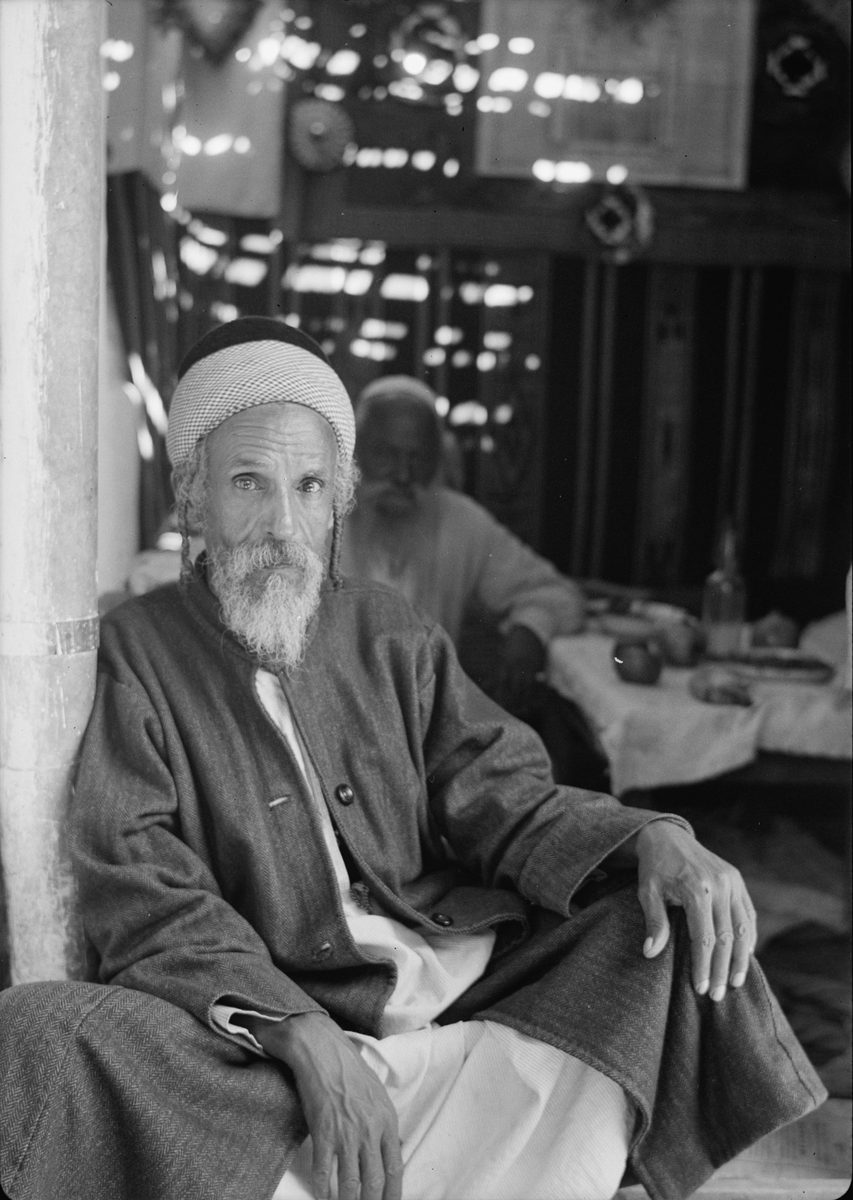
⚠ This is not a scene from Psalm 27 — the psalm never mentions the festival, only borrows its word. It is a 1939 photograph of an actual sukkah, a booth built for Sukkot, the autumn Feast of Booths (Leviticus 23:42-43), taken by the American Colony photographers in Jerusalem. The loosely woven roof, letting light and weather through by design, is the whole point of the structure — a sukkah is deliberately NOT weatherproof, which is exactly what makes v5's image work: ‘he will hide me in his sukkah in the day of trouble’ is not a claim that the shelter is strong. It is the flimsiest roof in the Hebrew vocabulary of shelter, made adequate only because of who is keeping watch under it.

Translator’s Notes
Light, salvation, and a name
“My light” (ori) is a striking, almost unique way to open a psalm — God is called a shield, a rock, a fortress dozens of times in the Psalter, but directly “my light” only here. “My salvation” is yishi, built on the verb yasha, TO SAVE — the same root behind the name this site's most recent chapter is named for: Joshua (Yehoshua, “Jehovah saves”), and behind Jesus (Yeshua), the shortened form of the same name six centuries later. The psalmist isn't just claiming God rescues him; he is using, as a common noun, the very word a king centuries later will be given as a proper name.
KJV, ASV, NIV and ESV all agree almost word for word here — “The LORD is my light and my salvation” — a rare case on this shelf where four centuries of English translation left the line untouched.
To inspect his temple
“Inspect” renders le-vaqer, and the choice is deliberate. KJV and ASV read “to visit early in His temple” (reading the verb as related to boker, morning); ESV has “to inquire in his temple.” But this is the exact verb Leviticus 27:33 (already on these pages) uses of a priest checking a sacrificial animal for blemish — “he shall not inspect whether it is good or bad” — and Ezekiel 34:11-12 uses of a shepherd going over his scattered flock, head by head, on a dark day. The psalmist is not asking to browse the temple. He is asking to be gone over the way a priest goes over an offering, or a shepherd counts his sheep.
RV60: “inquirir en su templo”; NVI paraphrases further, “buscar orientación en su Templo” (seek guidance in his Temple) — neither keeps the sacrificial-inspection sense visible.
Booth, tent, rock
Three shelters in one verse, and they escalate: a sukkah, a temporary woven booth — the same word behind Sukkot, the autumn Feast of Booths, when Israel builds flimsy shelters on purpose to remember the wilderness; then an ohel, a tent, sturdier but still portable; then a tzur, a rock — the one shelter that cannot be struck, folded, or blown down. The psalm moves from the most fragile hiding place a person can build to the one thing in the ancient Near East that stood for permanence itself.
The same shout that felled Jericho
“Sacrifices with a shout” renders zivchei teru’ah — teru’ah being the exact noun this site's own dictionary already glosses as “the war-cry of an army (Joshua 6:5, 20, at the walls of Jericho)”: the very shout that brought the wall down flat two chapters ago on this shelf, here turned toward worship instead of a city. Most of this shelf loses the connection: KJV and ASV both read “sacrifices of joy,” dropping the noise entirely; NIV and ESV keep “shouts” but soften it to “shouts of joy.” RV60 has “sacrificios de júbilo”; NVI, “sacrificios de alabanza” (sacrifices of praise). This translation keeps the bare word so the echo stays audible: the same noise that tears a wall down is, three chapters later in the reading order, offered up as praise.
A sentence that changes speakers mid-breath
This is one of the most compressed sentences in the Psalter. The Hebrew reads, word for word, “to-you said my-heart, seek my-face” — no verb tells the reader who is being quoted, or when the speaker changed. KJV and ASV both supply an opening clause the Hebrew doesn't have: “When thou saidst, Seek ye my face” — making God the one who first spoke the command. ESV does something similar: “You have said, ‘Seek my face.’” NIV instead keeps the heart as the only speaker throughout: “My heart says of you, ‘Seek his face!’” This translation follows that second path — nothing in the verse itself says God spoke first, only that the psalmist's own heart did.
Gathered in
“Will gather me in” is ya'aspeni, from asaph, TO GATHER — the same root behind the Feast of Ingathering (Exodus 23:16, the old name for the harvest festival) and behind Asaph, the Levite whose name heads twelve psalms of its own. Set against a father and mother who have let go, the verb pictures something closer to adoption than rescue: not merely found, but gathered up and taken in, the way a harvest is gathered before the weather turns.
The sentence that never finishes
The Hebrew breaks off. Lule (“unless…”/“if not…”) opens a conditional clause, and the “then” half — what would have happened if the psalmist hadn't believed — is simply never supplied. It is one of the Hebrew Bible's clearest examples of a sentence deliberately left in the air. KJV and ASV both preserve the broken shape, supplying only “I had fainted, unless…” to hold the grammar together; NIV resolves it instead into a flat positive statement, “I remain confident of this: I will see the goodness of the LORD.” RV60 keeps the break (“Hubiera yo desmayado, si no creyese…”); NVI resolves it like the NIV. This translation keeps the dash open, the way the sentence itself is left.
Notes on this translation
Decisions. Teru’ah at v6 is rendered the bare shout rather than softened to “joy” or “shouts of joy,” to keep audible the exact word this site's Joshua 6 uses for the noise that brought Jericho's wall down — the same shout, turned here toward the altar instead of a city. Le-vaqer at v4 is rendered inspect rather than the more familiar “visit early” or “meditate,” keeping visible the verb's other life in Leviticus (examining a sacrifice) and Ezekiel (a shepherd going over his flock).
⚠ A note on order: this is the fourth Davidic psalm on these pages (after 23, 51 and 91) and the third overall to carry no numbering divergence from the Hebrew — unlike Psalm 51, where the superscription itself is verse 1 and every later line runs two ahead, Psalm 27's heading is folded into v1 in both traditions, so no verse here needed the English/Spanish-numbering marker used elsewhere on this shelf.