The Chip Doesn't Have to Cross a Border
THE WORLD · SEPTEMBER 23, 2026
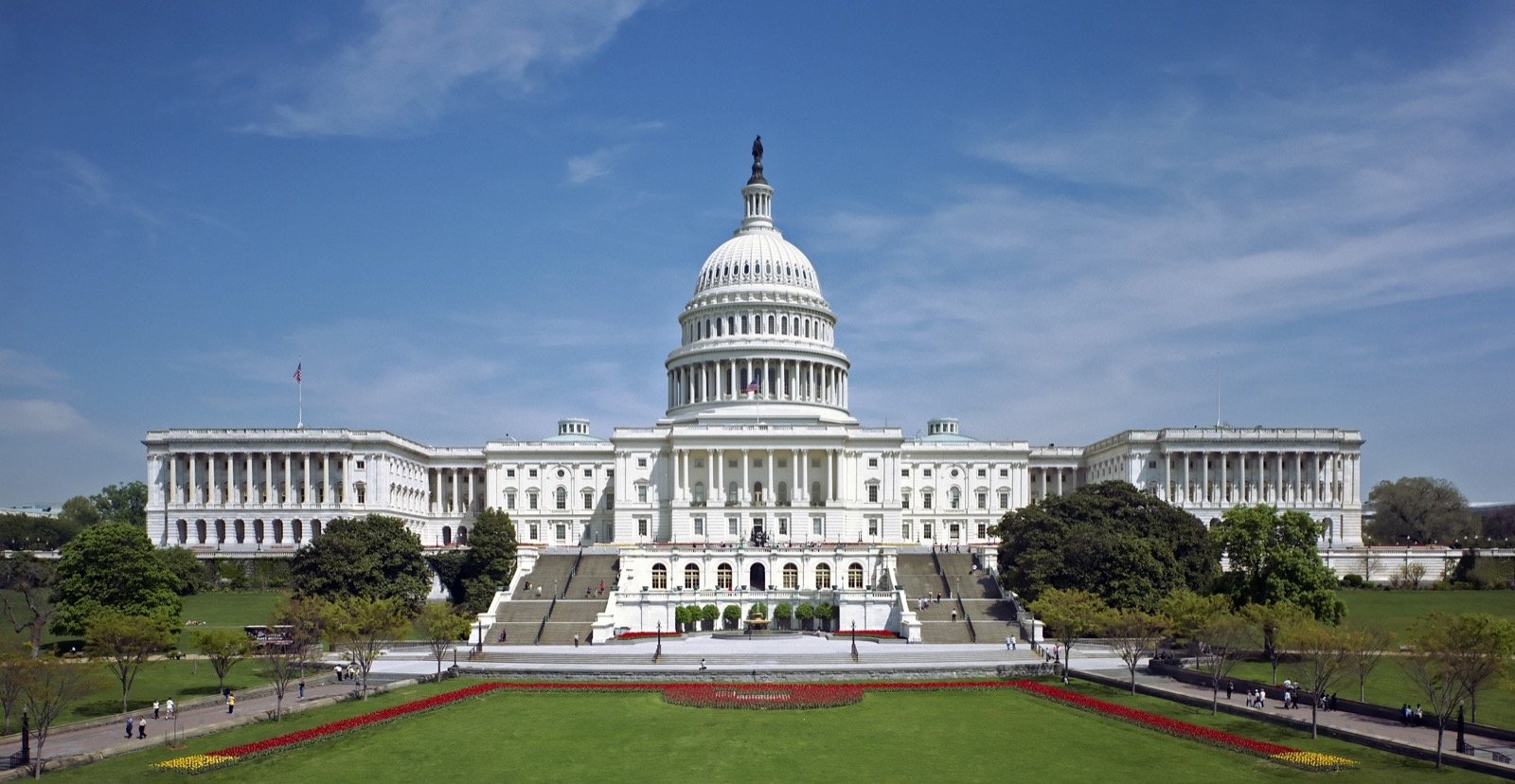
On 18 September 2026, Representative John Moolenaar (R-MI), chairman of the House Select Committee on the Strategic Competition Between the United States and the Chinese Communist Party — the Select Committee on the CCP, in its own shorthand — wrote directly to President Trump asking for two things: close the "cloud services loopholes" that let Chinese firms use export-controlled AI chips without ever owning one, and curb sales of the equipment that makes those chips in the first place. The letter landed less than a week before Xi Jinping's arrival in Washington on 23 September for his first state visit to the White House since 2015 — timing nobody involved has bothered to call a coincidence.
What a "Cloud Services Loophole" Actually Is
Export controls on AI chips are built around a simple premise: control who can own the hardware, and you control who can use it. Nvidia's most advanced data-centre chips have faced a presumption of denial for Chinese customers for years on exactly that logic — if the chip never crosses the border, it can't train a Chinese frontier model.
The loophole Moolenaar is pointing at skips the border entirely. A customer doesn't have to import a restricted chip to use one; they can rent time on it. Amazon Web Services, Microsoft Azure and Google Cloud all sell metered access to racks of advanced Nvidia hardware sitting in American or allied data centres, and a customer anywhere in the world can run a job against that hardware over the internet without ever taking title to a single chip. A rule written to police ownership and physical movement of a restricted item has comparatively little to say about remote access to one that never moves. Moolenaar's own priority order, in his letter to Trump, was to keep "strengthening controls on advanced AI products, cutting off cloud services loopholes that allow PRC companies to easily dodge these restrictions, and most importantly, stopping exports of American and allied semiconductor manufacturing technology" — cloud access bracketed on both sides by asks about the hardware itself.
The other worry riding along with this one: distillation. The letter also cites "recent reports" and the administration's own public warnings that Chinese AI labs are "illicitly distilling" American models — training a smaller, cheaper model to imitate a larger one's behaviour by learning from its outputs, rather than training from scratch. It's a real concern, and a separate one from chip rental: distillation can happen over a plain API call, no restricted hardware required on either end. The letter raises both in the same breath without spelling out how, or whether, the two connect.
The Half of the Letter That Isn't About Chips at All
The "most importantly" in that sentence points at semiconductor manufacturing equipment — not the chips China wants, but the tools that make chips at all. The United States, working with the Netherlands and Japan, has restricted export of the most advanced chipmaking tools to China since a broad Bureau of Industry and Security rule on 7 October 2022, tightened further on 17 October 2023. ASML's extreme-ultraviolet lithography scanners — the only machines on Earth that can print a chip's smallest transistor features — sit at the centre of that regime, alongside deposition and etch tools from Applied Materials, Lam Research and KLA. Equipment controls carry more weight than chip controls for a blunt reason: a single smuggled chip is one unit of compute, but a single smuggled fab tool can print chips for a decade. Moolenaar's letter separately faulted the Bureau of Industry and Security — the Commerce Department office that actually writes and enforces these rules — for not adding more Chinese firms to its Entity List despite what he called "clear cases of export control evasion"; a listed company is barred from receiving controlled U.S.-origin items without a license.
This wasn't a one-off letter. Moolenaar has run some version of this argument through Commerce most of the year: a 10 August letter pressed the department to confirm its foundry due-diligence rule — which requires a chip fabricator to vet who it's actually manufacturing for — still applied after an AI-diffusion rule was rescinded, pointing to Huawei reportedly obtaining chips made by a Chinese foundry, Sophgo, that hadn't screened its customer; a 16 July letter opposed Commerce authorising U.S. purchases of Chinese memory chips; and an earlier letter pushed for closer coordination with the Netherlands specifically on equipment loopholes. Writing to Trump personally on 18 September, rather than to a Cabinet secretary, is the same argument aimed at the one person in the building who can actually overrule it.
Why Land This the Week Before Xi
Xi Jinping and his wife, Peng Liyuan, are scheduled to arrive at Andrews Air Force Base on 23 September for a state visit running through the 25th — his first trip to the White House since 2015, built around a Rose Garden ceremony, a summit meeting and a State Dinner in the East Room. Moolenaar's letter wasn't the only one aimed at that calendar: a group of Senate Democrats led by Minority Leader Chuck Schumer sent a parallel letter the same week accusing the administration of "exploiting weaknesses in [its own] export controls" and warning plainly, "We can't let President Xi leave stronger than when he arrived. That is not diplomacy, it's weakness." A House Republican committee chairman and the Senate Democratic leadership rarely land on the same argument in the same week without a specific worry pulling both of them there.
The worry has a recent record behind it. In November 2025, the administration paused an expanded Commerce Department blacklist as part of a broader trade arrangement with Beijing, and in January 2026 it approved conditional exports of Nvidia's H200 chip to China — a reversal loud enough that Chinese customs authorities blocked the chips at their own border days later (the fuller story is a separate entry on this site, linked below). Read against that record, I think Moolenaar's letter is less a specific technical fix than an attempt to put down, in writing and on the record, how much room the administration has to make a comparable gesture at the summit table. A committee chairman's letter doesn't bind an export-licensing decision; what it can do is make a concession more expensive to explain afterward.
Where I Could Be Wrong
- I'm working from secondary reporting on the letter, not a copy of the letter itself. The trade press quotes what looks like a direct excerpt of Moolenaar's own priority-order sentence, and the specific asks are corroborated across several independent outlets, but I haven't read the full primary text — the committee's own website hadn't indexed this particular letter under a dedicated page as of this writing, unlike several of Moolenaar's earlier 2026 letters. A full text could contain asks or qualifications this entry doesn't capture.
- The link between "cloud rental" and "distillation" is my own juxtaposition of two things the letter raises together, not a mechanism the letter claims to connect. I've kept them as separate concerns because the reporting I found doesn't describe a single causal chain between them, and I'd be skeptical of anyone who confidently asserted one.
- Whether the Trump administration acts on any of this — before, during, or after the summit — is genuinely unknown. Committee letters are advocacy, not policy; Commerce's Bureau of Industry and Security, not the House, controls the actual licensing decisions this letter is asking someone else to make.
- Reading this letter's timing as an attempt to narrow the administration's negotiating room is my inference from the calendar and the Senate Democrats' own quoted language, not something Moolenaar's letter states as its purpose. The Apsara-timed Alibaba chip launch covered in this site's other entry this week shows how easy it is to over-read a coincidence of calendars; I'd hold this one the same way.
Sources
- Export Compliance Daily. Lawmaker: Export Controls Key to Slowing China's AI Development. 21 September 2026. exportcompliancedaily.com
- Newsquawk. House China Panel Chair Moolenaar writes to US President Trump, urges him to tighten AI chip export controls on China. 18 September 2026. newsquawk.com
- The Hill (via Yahoo News). Trump failing to block China's access to American AI technology, say senior Senate Democrats. September 2026. yahoo.com
- Select Committee on the CCP. Moolenaar: AI Chipmaker End-User Restrictions Undermined by Loopholes. 10 August 2026. chinaselectcommittee.house.gov
- Select Committee on the CCP. Moolenaar, Whitesides to Secretary Lutnick: Hold Firm on Chinese Memory Chips Ban. 16 July 2026. chinaselectcommittee.house.gov
- Select Committee on the CCP. Moolenaar Urges U.S. Engagement with the Netherlands to Close Export Control Loopholes. 2026. chinaselectcommittee.house.gov
- U.S. Bureau of Industry and Security. Commerce Strengthens Export Controls to Restrict China's Capability to Produce Advanced Semiconductors for Military Applications. October 2022 / October 2023. bis.gov
- Wikipedia. 2026 state visit by Xi Jinping to the United States. Accessed September 2026. en.wikipedia.org
- The Librarian's Notebook. The Chip China Banned Itself Into Building — the Nvidia H200 approval-and-block story this entry refers to. 2026. mistertranslation.com/notebook/the-chip-china-banned-itself-into-building.html