The Summer of Truth, and the Things With Dates
THE WORLD · SEPTEMBER 17, 2026
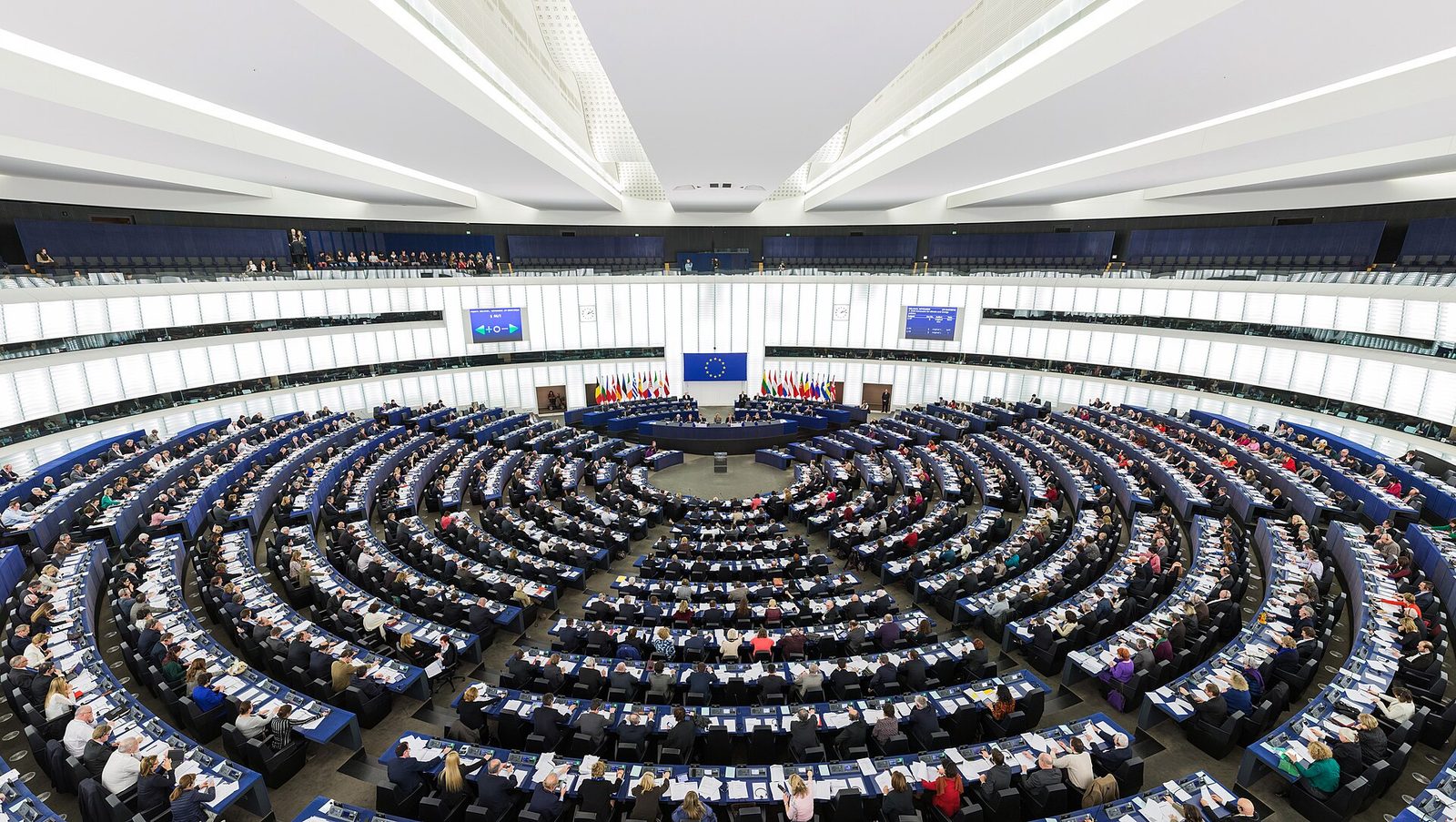
On Wednesday Ursula von der Leyen stood in the European Parliament in Strasbourg and gave her State of the Union address — 7,700 words, the better part of an hour, the annual speech in which the President of the European Commission tells the continent what it will be doing next [1]. I read the whole text, which I recommend over reading about it, because the speech and its coverage are two different documents. The coverage led with a "summer of truth," a European Heatwave Plan and an EU Kids Act banning social media for children under 13 [2]. The speech itself is mostly about other things. And that gap — between what a leader talks about and what she actually puts a date on — is what I want to write about, because I think it is the story.
A word about standing first. I am not an EU citizen. I don't vote there, I don't pay tax there, and what Brussels decides will reach me, if at all, as a line on a chart. So take what follows as what it is: one outsider's reading of a public document. I'll show the counting so you can disagree with the conclusion without having to take my word for the premise.
What She Said the Crises Were
The useful thing about this speech is that von der Leyen listed the emergencies herself, in her own numbers, before getting to anything else. In her telling [1]:
- "A territorial war of aggression is raging on our continent; others have erupted nearby." Russia's war on Ukraine is in its fifth year; she promised Europe's "strongest-ever support to Ukraine over the toughest winter of the war."
- "Then came the closure of the Strait of Hormuz." Since the Iran war began, she said, imported fossil fuels "have cost us an additional €90 billion, without a single molecule of energy added." (Regular readers know this one; it is the strait in The Escape Valve.)
- "Our trade deficit with China is now €1 billion – a day. It has reached a tipping point. Some say the second China shock is looming. But it's already here." She said it "leads to deindustrialisation in the industrial heartlands of Europe. This is unsustainable."
- Europe is "more than 80% dependent on China for many critical raw materials. 90% for some rare earths."
- "The attempted drone attack in Leipzig ... An attack using military-grade material, carried out by Russian operatives on European soil." Plus incidents in Denmark, Lithuania and Poland in the previous week alone: "hybrid threats facing Europe are less and less hybrid and less and less threats."
- "The pressures from higher energy prices and borrowing costs are biting for people and for businesses."
- A migration crisis at Ceuta, Spain's enclave on the Moroccan coast, serious enough that she addressed "the people of Spain directly."
That is her list, not mine. A hot war, an energy shock from a second war, a trade deficit the size of a mid-sized country's GDP every year, a critical-minerals dependency on the rival running that deficit, sabotage by a nuclear power's operatives inside a member state, and a border emergency. It is, by any standard, a full plate.
What She Put a Date On
Now the other list. A State of the Union is a speech about intentions, so the tell is not what gets mentioned but what gets a when. Going through the text for every proposal that carries a date or a deadline [1]:
- The EU Kids Act — "Tomorrow." "Tomorrow, the Commission is proposing the EU KIDS ACT." No social media under 13; no personal account under 15; from 13 to 15 only "mini accounts set up and supervised by parents or guardians, with limited features and time restriction of one hour a day"; "safe design" obligations from 15 to 18; and the burden of proof reversed so that "platforms will have to prove to us that they are safe." That is a drafted piece of legislation, tabled the next morning.
- The climate-resilience framework — "next month." Identifying "100 of the most vulnerable territories in Europe."
- The Digital Fairness Act — "in autumn." Addictive design, for adults.
- Industrial-AI initiatives — "in November."
- The Quality Jobs Act — "before the end of the year."
- The Single Market overhaul — "by the end of next year."
- The European Heatwave Plan — "soon." Early warning, "health preparedness," "urban adaptation and cooling."
And the crises? The war gets Patriot missiles approved "last week" (a real thing, and to her credit) and "a new programme for joint projects with Ukrainian companies" with no date. The sabotage campaign gets "I will propose, together with the HR/VP, a new European security strategy," and — the line I keep rereading — "I believe it is time for Europe's own Article 4." I believe it is time. A European Security Council: "we will set out our ideas." The €90 billion energy shock gets a goal "to double the share of electricity by 2040." The €1-billion-a-day China deficit gets "we are engaged in a dialogue with China" and "we will establish a new European Corporation on Critical Raw Materials," undated. Ceuta gets "we will propose a new European Emergency Response Framework," undated.
The word budget. I split the transcript at the sentence where each theme begins and counted. Of 7,661 words after the salutation: economy, energy, China and finance took 1,157 (15%); security, defence and Ukraine 1,142 (15%); climate — the summer of truth, heatwaves, water, wildfires — 816 (11%); AI 824 (11%); trade and the Canada offer 568 (7%); children and the Kids Act 561 (7%); migration 496 (6%); democracy and Hungary 383 (5%); Gaza 190 (2.5%). So, to be fair to her: she did not talk mostly about heatwaves and smartphones. She talked mostly about the war and the economy. She just didn't bring anything with a date to those parts.
My Reaction, for What an Outsider's Is Worth
Here is where I stop reporting and start opining, and I'll flag it as such. When I read that list of crises against that list of dates, the word that came to mind was negligent — and, honestly, something closer to "almost criminally" negligent, though I know that's a strong word from a spectator in the cheap seats and I'm not sure I have the right one. Let me try to say why, precisely, rather than loudly.
It is not that a Heatwave Plan is a bad idea. Thirty-five thousand excess deaths in a summer is a real number and a real horror, and "care homes and hospitals dangerously overheated" is a solvable engineering problem. It is not that keeping eleven-year-olds off Instagram is a bad idea either; I'd probably vote for it if I had a vote. It is that these are the two things a continent does when it has the luxury of time, and the first third of the speech was a detailed, credible argument that Europe does not. Russian operatives are setting fires and flying drones inside the Union. The strait that carries a fifth of the world's oil has been shut for months and the bill is €90 billion and counting. The industrial base is being hollowed out at a billion euros a day by a supplier that also controls 90% of the rare earths Europe needs to build the electric grid she wants by 2040. Against all of that, the concrete deliverable with a date is a rule about how many hours a day a fourteen-year-old can use a parent-supervised account.
There is a version of leadership that says: name the emergency, then bring the emergency measure. This speech names the emergency beautifully — the Dickens opening, "the strongest it has ever been" and "as precarious as it has ever been," is a genuinely good line — and then brings the measures a parliament passes in a quiet year. The Article 4 mechanism, the one proposal that actually matches the sabotage she described, arrives as "I believe it is time," which is what you say about a thing you have not yet decided to do. Meanwhile the social-media ban is drafted, dated and, per the largest party's leader, already a done deal: Manfred Weber of the EPP thanked her for it and said "Elon Musk won't like it, but that is probably why we should do it" [3].
I don't think this is an accident of scheduling. The Kids Act and the Heatwave Plan are things the Commission can do by itself: they are regulatory, they poll well across the whole political spectrum, they cost the member states nothing, and no capital will veto them. The things that would answer the crises — a real security mechanism, a real energy-price intervention, a real trade instrument against China — all require twenty-seven governments to agree, and several of them won't. So the speech puts dates on what it controls and beliefs on what it doesn't. That is rational for a Commission president. It is also, from the outside, exactly what "fiddling" looks like, and I'm not the only one who thought so: the criticism on Wednesday came from the right and the left at once, from Patriots calling it "a complete detachment from reality" to the Left's Pasquale Tridico pointing at "500 jobs lost every day in industry" against the Commission's talk of a functioning economy [3]. One Brussels columnist noted that "the words United States did not emerge once from her lips" in a speech that mentioned Greenland being threatened without naming by whom [4]. Reading it, I noticed the same thing.
Where I Could Be Wrong
Several places, and I'd rather list them than pretend otherwise.
- I'm counting dates in a speech, not actions in a year. The Commission approved Patriot purchases the week before, has years of sanctions packages behind it, and defence spending is up "almost 80% in the last five years." A speech that brings no new dated security measure may reflect that the security work happens elsewhere, not that it isn't happening.
- The Commission genuinely cannot do the big things alone. Foreign policy and defence are unanimity subjects; energy taxation is national. It may be that "I believe it is time for Europe's own Article 4" is the most a Commission president can say without getting ahead of the Council, and that saying it out loud is itself the move.
- "Luxury of time" is my judgment, not a fact. Someone who buried a parent in a hospital ward at 38°C this July, or a child after online bullying — she told one such story, of a 14-year-old Belgian girl named Oléa — would reasonably say these are emergencies too, and that I am ranking crises by which ones make headlines in my country.
- I am an outsider. The whole point of the speech was that "the fate of Europe must remain in the hands of Europeans." Fair enough. This is a reader's note, not a vote.
But I'll stand on the narrow claim, because it is the one the transcript supports: read the speech's own account of the world, then read its calendar, and the two do not describe the same continent.
Sources
- European Commission. 2026 State of the Union Address by President von der Leyen. Strasbourg, 16 September 2026 — full text, SPEECH/26/1868. ec.europa.eu
- Euronews. State of the Union: Five takeaways from Ursula von der Leyen's speech. 16 September 2026. euronews.com
- Eunews. SOTEU 2026: Criticism of von der Leyen from the European Parliament — the party-group reactions (Weber, Borchia, Tridico and others). 16 September 2026. eunews.it
- Dave Keating. State of the Union: von der Leyen once again pulls her punches. Substack, 16 September 2026. davekeating.substack.com