Does Red Light Therapy Work, and Why Does the Price Range From $60 to $1,200?
SEPTEMBER 22, 2026
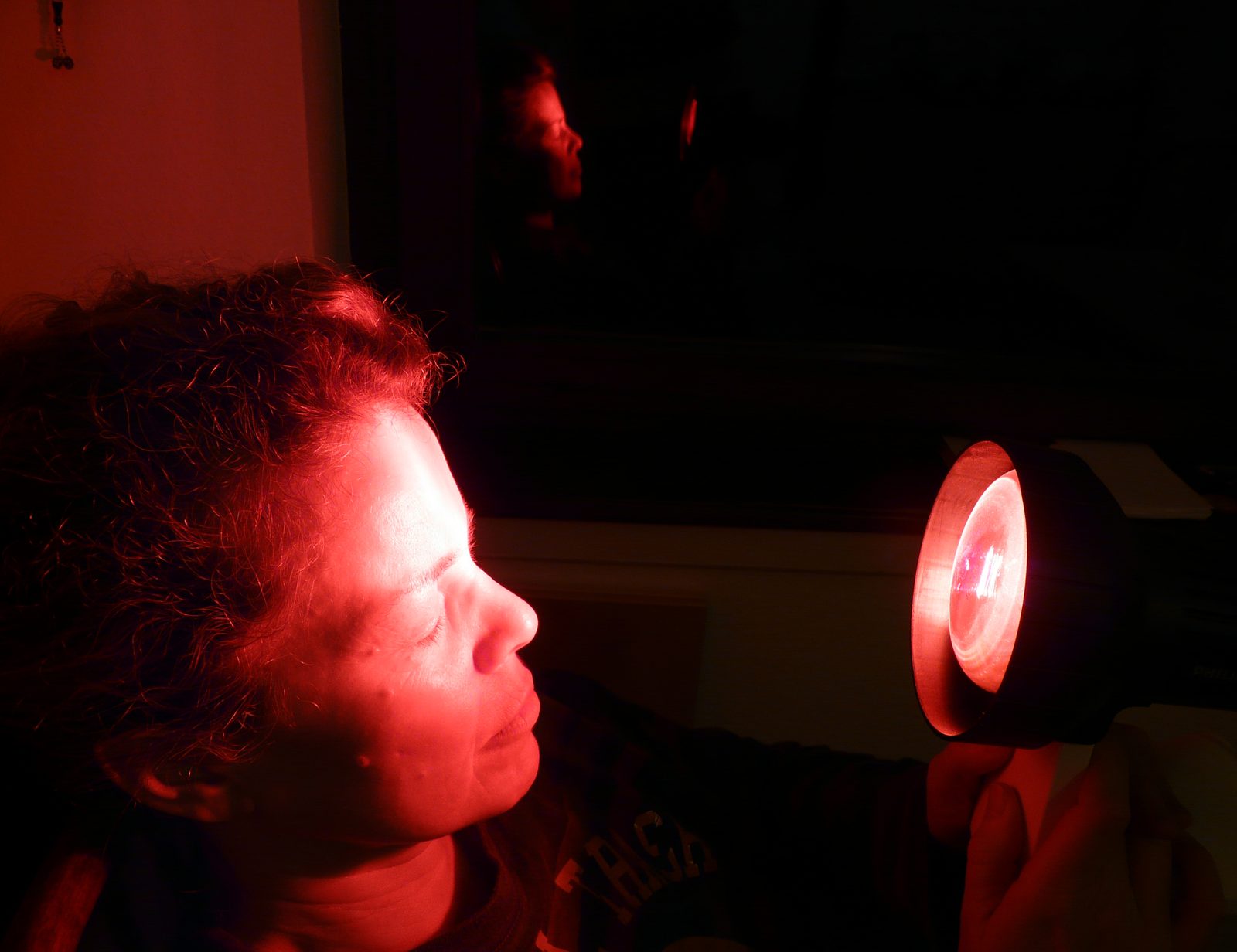
Red light therapy panels — flat arrays of LEDs that bathe skin in red light (roughly 630–660 nm) and near-infrared light (roughly 810–850 nm), marketed under the more technical name "photobiomodulation" — are sold anywhere from about $50 for a small handheld unit to well over $1,200 for a full-body panel, all promising some version of the same list: better skin, less pain, faster muscle recovery, more hair. The honest short version of everything below: the clinical evidence is genuinely strong for exactly one use case most consumers will never need, real but modest for a couple of things people actually buy these for, and weak or actively backwards for most of what gets marketed on the box. And the price gap between a $60 panel and a $1,200 one has surprisingly little to do with how much usable light reaches your skin — independent measurement has found premium panels overstating their own output by roughly the same margin cheap ones do.
What's Actually Happening, and How Contested the Mechanism Still Is
The standard explanation: red and near-infrared photons get absorbed by cytochrome c oxidase, an enzyme complex in the mitochondria's inner membrane, where they knock loose a bound molecule of nitric oxide that's been slowing down electron transport. With that released, the cell's energy production speeds up, and a brief pulse of reactive oxygen species and calcium acts as a signal that triggers various repair processes downstream. The specific wavelength bands are chosen because they sit in a genuine physical gap: hemoglobin absorbs strongly below about 600 nm, water absorbs strongly above about 1,100 nm, and the space between is the "optical window" where light penetrates tissue furthest — though even at the best wavelengths that's measured in millimeters, not inches, and depends heavily on skin tone, since darker skin absorbs more of the light before it reaches anything.
What's rarely mentioned in marketing is that this mechanism is disputed inside the field, not just by outside critics. A 2020 review asking what actually underlies photobiomodulation concluded that "no reliable demonstration of any PBM-related light-induced mechanistic effect on cytochrome c oxidase has been reported," and that the relevant studies have proven "nonreproducible, of questionable relevance, or involve wavelengths unlikely to be operative in vivo." One lab ran about as direct a test as exists: they engineered cells to lack any assembled cytochrome c oxidase at all and shone 660 nm light on them anyway — the cells proliferated the way photobiomodulation theory predicts regardless, which is a real falsification of the textbook mechanism, not a footnote to it. Even the FDA's own draft guidance on these devices, unfinalized more than three years after it was first issued, states plainly that "the mechanism of actions for PBM for different clinical indications is not fully understood." None of that means the effect isn't real — a treatment can work before anyone fully explains why — but it's worth knowing that the tidy "mitochondria absorb light, cell gets more energy" story on every product page is the field's leading hypothesis, not settled biology.
What the Evidence Shows, Use Case by Use Case
The strongest evidence in the entire field has nothing to do with a home panel. Photobiomodulation has exactly one formal clinical-practice-guideline recommendation, for preventing the painful mouth sores (oral mucositis) that come with certain cancer treatments. Meta-analyses covering up to 30 randomized trials and nearly 1,750 patients found it roughly halved the rate of severe mucositis and substantially reduced pain. This is clinician-delivered, applied directly inside the mouth under a specific protocol — it says essentially nothing about a panel bought online, but it's the reason this technology has any clinical credibility at all.
Hair loss is the best-evidenced thing an actual consumer buys one of these for. Meta-analyses — one covering 38 studies and just over 3,000 patients with androgenetic alopecia — found consistent, moderate-to-large improvements in hair density, and the FDA has cleared 112 different devices for this specific use since the HairMax LaserComb in 2007. Whether it adds anything on top of standard treatments like minoxidil is genuinely unsettled: two 2025 meta-analyses looked at exactly that question and reached opposite conclusions.
Wound healing looks real but its own reviews rate the certainty "very low." A 2026 meta-analysis of 56 trials and nearly 4,920 patients found meaningful improvements in surgical-wound healing speed and pain; a separate review found roughly a 31% greater reduction in diabetic foot ulcer area. A 2025 American Academy of Dermatology consensus panel put wound healing, alongside peripheral neuropathy and hair loss, on its short list of uses it considers photobiomodulation "an effective treatment option" for.
Notice what's missing from that list: skin rejuvenation — the wrinkle-and-collagen claim that dominates panel marketing. The most rigorous graded review of LED dermatology trials, 31 RCTs scored the way medical evidence normally is, gave acne and acute wound healing a "B" and put "other skin conditions" in the C-or-D bucket. The most-cited wrinkle studies are real and reasonably well-designed, but one of the two largest compared treated patients only to an untreated control group rather than a sham-light one — a real gap for an outcome as subjective as whether wrinkles look better. A 2021 review of the field put it directly: "methodologic flaws, small patient cohorts, and industry funding mean there is ample scope to improve the quality of evidence," and the technology's "commercial success has outpaced empirical approaches."
Joint and muscle pain is genuinely contested, and the disagreement tracks dose. A widely cited 2009 Lancet meta-analysis found a real effect on chronic neck pain. For knee osteoarthritis, two meta-analyses reviewing overlapping evidence reached opposite headline conclusions — one saying the evidence doesn't support effectiveness, the other finding a real benefit, but only within a specific published dose range; outside it, the signal disappeared. Two Cochrane reviews, on carpal tunnel syndrome and lower back pain, found the evidence too thin to draw any conclusion.
Muscle recovery shows the same split: real on average, null in the trials built to test it hardest. Several 2025 meta-analyses found short-window reductions in delayed-onset soreness. But the best-designed individual dose-response trials — randomized, placebo-controlled, testing multiple doses head-to-head in trained athletes — found nothing; one crossover trial of runners concluded flatly that it "is not recommended for improving endurance performance" at any of the three doses tested.
Mood and seasonal affective disorder is where the marketing gets the science backwards. SAD is treated with bright white light aimed at the eyes to reset circadian rhythm — a different mechanism, dose, and delivery route entirely from a red-light body panel. The tell: in the actual light-therapy-for-depression trial literature, dim red light isn't being tested as a treatment — it's the standard placebo control arm that bright-light studies compare themselves against. The one network meta-analysis that directly tested red light as an active SAD treatment ranked it last among visible wavelengths, behind white, green, and blue.
And the single best-powered trial in the field's history found nothing at all. A 2025 Cochrane review pooled four multicenter, sham-controlled trials of near-infrared light for acute stroke — 1,420 patients, the largest properly controlled photobiomodulation dataset that exists — and rated the result "high-certainty evidence" of no meaningful difference in outcomes. When this technology was tested at the scale and rigor an actual drug trial gets, the result was a clean null.
More light isn't the goal — the field's own founding principle says so. Photobiomodulation researchers have documented a "biphasic dose-response" since at least 2009: too little light does nothing, a middle range helps, and past that point more light doesn't plateau — it gets measurably worse, back down through no effect and into actual harm. The cleanest demonstration is a mouse study using identical treatment parameters throughout: three daily near-infrared sessions after a brain injury helped; fourteen daily sessions at the exact same dose left the mice worse off than untreated animals two weeks later, with markers of active brain inflammation. This curve is well established in cells and animals; it hasn't been cleanly reproduced in careful human dose-response trials, several of which found no difference at all between low, medium, and high doses. The honest claim is narrower than "more will hurt you" — it's that the field's own leading researchers built their theory around the idea that a stronger panel or a longer session isn't automatically better, and the animal data backs that up directly.
Is It Safe to Have Around?
For skin, the evidence is reassuring: the most common side effect across the literature is mild, temporary redness, and a 2025 dermatology consensus panel states that red-light photobiomodulation "does not induce DNA damage." The handful of studies reporting tissue damage used exposure levels far outside any consumer device's range — a 2026 re-audit of the five papers most often cited as evidence of harm found four delivered doses that produced surface temperatures of 55–71°C and irradiance roughly 25 times higher than any therapeutic protocol.
Eyes are the one place a real, standards-documented concern exists — and it runs backwards from what the marketing worries about. Visible red light triggers your eye's natural aversion reflex: you blink, your pupil constricts, you look away. Near-infrared light is invisible and triggers none of that. The governing international exposure standard for LED sources says so explicitly — "the lack of visible stimulus results in loss of the aversion response" — and writes a separate, stricter limit for infrared exposure that assumes the pupil stays fully open the entire time, because nothing tells the eye to protect itself. In practice this risk has mostly shown up with actual lasers rather than diffuse LED panels: a 2023 case report of retinal damage in a 12-year-old involved a collimated laser myopia device, and when researchers tested that class of device against a diffuse LED-based one under the same safety standard, the laser devices reached the hazard threshold in as little as 1.4 seconds while the diffuse LED device took roughly 6.3 hours. No published case of eye injury from a consumer red-light panel turned up in two independent literature searches — but the underlying asymmetry, visible channel protected and infrared channel not, is documented, not speculative.
The "low EMF" and "dirty electricity" marketing some premium brands lean on hardest is not supported by the science. The field strengths these panels produce are nowhere near the levels international radiation-safety bodies have found any credible evidence of harm at — the general-public exposure guideline sits roughly 500 times above the threshold used in the one epidemiological finding that got extremely-low-frequency magnetic fields classified as a "possible" carcinogen, and that finding was based on years of averaged residential exposure, not ten minutes beside a lamp. Multiple blinded provocation studies — the standard test for whether people who report electromagnetic sensitivity can actually detect a field — found they couldn't, at rates no better than chance; researchers describe the pattern as a nocebo effect, not a physical one. "Dirty electricity" specifically traces back to a small handful of researchers, one of whom sells both the meter used to measure it and the filters marketed to fix it; an independent review called the underlying evidence too methodologically flawed to support a causal link, and a systematic review of that literature concluded the safety threshold circulating in the marketing "does not stand up to scientific scrutiny." No independently published measurement of the actual field strength any red-light panel emits exists — every number in circulation traces back to the manufacturers themselves.
What "FDA Registered" Actually Means
Nearly every large consumer red-light panel is sold under one of two regulatory paths, and neither means the FDA reviewed whether it works. The first is the "general wellness" policy: a device meant to encourage a healthy lifestyle, unrelated to diagnosing or treating a specific disease, gets no premarket review at all. The second is more surprising: many full-body panels are registered under a product code the FDA itself defines as an "infrared lamp… intended for medical purposes that emits energy at infrared frequencies… to provide topical heating" — Class II, but explicitly exempt from clearance. Sit with that for a second: the regulatory box a modern photobiomodulation panel gets filed under is legally defined as a heat lamp, the same older technology pictured at the top of this page, which panel marketing is built on being fundamentally different from.
A small number of devices have earned genuine FDA clearance for a specific, narrow claim — the dpl IIa Panel for wrinkles and mild acne, the HairMax LaserComb and similar devices for hair regrowth, several lasers for temporary musculoskeletal pain relief. Clearance means the FDA agreed a device is substantially equivalent to something already legally sold for that one purpose — it is not a finding that the device works, and it isn't "approval," a word the FDA doesn't use for these devices at all. Registering a company's facility and listing its products, the step nearly every brand can point to, requires no review whatsoever; the FDA's own guidance states that a registration listing "does not denote approval, clearance, or authorization," and the agency has said plainly it doesn't issue registration certificates of any kind. The American Academy of Dermatology's own consumer page is blunter: those terms "sound impressive" but "have no meaning when used to describe a medical device."
Enforcement hasn't been theoretical. In 2020 the FTC won a $22 million judgment against a light-therapy device maker for falsely claiming FDA approval and "clinically proven" pain relief. More recent FDA warning letters have gone to a company marketing a red-light wrap to "reverse penile atrophy" and boost testosterone, and to another claiming its device "actually heals living tissue" and cures chronic inflammatory conditions.
So Why Does a Panel Cost $60 in One Listing and $1,200 in Another?
The uncomfortable finding is that the price gap tracks almost nothing about how much usable light actually reaches your skin. The industry has a well-documented habit — across price tiers — of measuring output with cheap solar-radiation meters calibrated for sunlight's broad spectrum, which read dramatically high on the narrow bands LEDs actually produce; one manufacturer's own bench tests found this method overstates near-infrared readings by 73–88% versus proper lab measurement. This isn't a budget-brand problem specifically: an independent reviewer using a real spectrometer measured a $1,399 panel advertised at "165 mW/cm² at 6 inches" and got 82; a $1,499 panel advertised at "over 100 mW/cm²" measured 72 at its peak and 59 on average across its surface. One manufacturer now publishes its own accredited third-party lab results next to its marketing figures — a panel marketed at "over 160 mW/cm²" measured 53.5 in that same company's lab report.
The "total wattage" figure that dominates budget listings — a "300W" panel, a "500W" panel — is a different kind of misdirection: it's usually the number of LEDs multiplied by their individually rated power draw, which says nothing about how much light reaches skin at a usable distance. It's the marketing equivalent of judging a shower by how many gallons its water heater holds rather than the pressure at the nozzle.
Claimed vs. independently measured, at 6 inches:
- A $1,399 panel claims 165 mW/cm² — independently measured at 82
- A $1,499 panel claims "over 100 mW/cm²" — independently measured at 72 peak, 59 average
- A $1,299 panel claims "over 160 mW/cm²" — its own published accredited lab result: 53.5
The overstatement ratio — roughly two-to-one, give or take — is close to identical across all three despite a $200 spread in price. Mentally halving whatever irradiance number a listing advertises, regardless of what it costs, is a more reliable starting point than trusting the printed figure.
What the extra money does reliably buy is size. A small $200 panel might cover a foot of torso; a $1,400 panel three feet long covers most of a back or chest in one session instead of four repositioned ones — genuine value for someone treating a large area regularly, and mostly beside the point for a handheld pointed at one knee. For two brands specifically, it also buys real transparency: independent, accredited lab testing published next to the marketing figures, which is meaningfully different from the majority of brands that publish nothing at all — though that transparency doesn't track price either, since some of the priciest panels on the market publish no third-party data whatsoever. Warranty length is a real if modest differentiator (three years is common on higher-end panels versus one year or less on cheap ones), and "low EMF" engineering is a legitimate concern mainly for devices strapped or held directly against skin — largely beside the point for a panel used at arm's length, where field strength has already fallen off by the inverse-square law regardless of what the internal driver costs.
What the evidence shows. Photobiomodulation has one use with genuine clinical-guideline-level support — preventing oral mucositis during cancer treatment — that has nothing to do with a home panel. Among things people actually buy panels for, hair regrowth has the most consistent positive evidence (112 FDA-cleared devices, meta-analyses across thousands of patients); wound healing and some musculoskeletal pain show real but low-certainty benefit concentrated at specific doses; and skin rejuvenation, general muscle recovery, and mood/SAD claims range from weak to directly contradicted by the field's own placebo-arm data. The single largest, best-controlled trial in the field's history — 1,420 stroke patients — found no effect at all. Nearly every consumer panel is sold with no premarket review, under regulatory categories that require no proof anything works, and independent measurement has found panels across the entire price range overstating their light output by a similar margin. None of this means the technology is fake; it means the marketing has consistently run well ahead of what a careful reading of the evidence supports.
What I'd do. One person's read of the evidence and the market, not medical advice and not a claim about anyone else's skin, joints, or hairline. Given how contested most of the marketed benefits actually are, and how cleanly the single largest, best-controlled trial in the field came back null, I wouldn't spend $1,200 chasing a benefit the evidence mostly doesn't support at that scale. For something with real evidence behind it — hair, a stubborn wound, a specific joint at something close to the dose the knee-OA research actually used — I'd start cheap and small rather than assume a bigger number on the box means a better result, since independent testing found the bigger number is often the same kind of fiction as the smaller one.
Concretely, and with the disclosure this site makes wherever it applies — these are Amazon affiliate links, and if you buy through one I get a small commission at no extra cost to you* — here's the actual range. A small handheld-style panel like the Allisable 45W panel runs about $50 and is a reasonable way to find out whether you notice anything before spending more — though its own product title leaning on "FDA Registered" is a live example of the registration-versus-clearance distinction above, since that phrase describes a paid database entry, not a review of whether the thing works. A step up, the Hooga HG500, around $359, is a full-size panel from a brand with a reasonable track record and a normal three-year warranty. And that same company's Hooga ULTRA1500, around $1,399, is the size upgrade — more than three times the panel area of the HG500 — which is the one place in this whole category where the extra money buys something physically real, even though its own advertised output measured at roughly half its claimed figure in independent testing, same as everything else at this price.
* Every Amazon link in this entry is an affiliate link. If you buy something through one, I earn a small commission at no extra cost to you — the standard arrangement this site discloses wherever a paid link appears.
Where I Could Be Wrong
- Most of the strongest evidence comes from clinician-applied devices, not consumer panels. A finding from a laser used under a specific medical protocol doesn't automatically transfer to a panel bought online and used without one.
- The biphasic dose-response is much better established in cells and animals than in careful human trials. Several human dose-comparison studies found no difference between low, medium, and high doses at all — the clean "too much makes it worse" curve is a real finding, just not yet a reliably human one.
- The irradiance-measurement figures cited here are a small, non-random sample. Independent spectrometer testing of these panels comes from essentially one dedicated reviewer plus a handful of manufacturer-published lab reports — there's no Consumer Reports- or Wirecutter-scale testing program for this category, which is itself worth knowing.
- No documented case of eye injury from a consumer LED panel exists — the eye-safety concern here is a real, standards-documented theoretical asymmetry, not a demonstrated pattern of harm from these specific devices.
- Several of the most-cited photobiomodulation researchers disclose financial ties to companies selling these devices, including advisory and consulting roles with major consumer brands — a real conflict worth knowing, though not on its own a reason to dismiss the mechanistic research.
- Prices and availability for the linked products can change. The product listings and specifications are real and current as of publication; I did not independently verify pricing at the exact moment you're reading this.
Sources
- Quirk BJ, Whelan HT. What Lies at the Heart of Photobiomodulation: Light, Cytochrome C Oxidase, and Nitric Oxide. Photobiomodul Photomed Laser Surg, 2020. doi:10.1089/photob.2020.4905
- Lima PLV, et al. Photobiomodulation enhancement of cell proliferation at 660 nm does not require cytochrome c oxidase. J Photochem Photobiol B, 2019. doi:10.1016/j.jphotobiol.2019.03.015
- Zadik Y, et al. (MASCC/ISOO Mucositis Study Group). Systematic review of photobiomodulation for oral mucositis in cancer patients and clinical practice guidelines. Support Care Cancer, 2019. doi:10.1007/s00520-019-04890-2
- Jagdeo J, et al. Light-emitting diodes in dermatology: A systematic review of randomized controlled trials. Lasers Surg Med, 2018. doi:10.1002/lsm.22791
- Liu J, Gopal V, Ellis B, Ray I, Pappu S, Jan Y. Effects of Near Infrared Light on Surgical Wound Healing: A Systematic Review and Meta-Analysis. Int Wound J, 2026. doi:10.1111/iwj.70841
- Maghfour J, et al. Evidence-based consensus on the clinical application of photobiomodulation. J Am Acad Dermatol, 2025. doi:10.1016/j.jaad.2025.04.031
- Adil A, Godwin M. The effectiveness of treatments for androgenetic alopecia: A systematic review and meta-analysis. J Am Acad Dermatol, 2017. doi:10.1016/j.jaad.2017.02.054
- Chow RT, Johnson MI, Lopes-Martins RA, Bjordal JM. Efficacy of low-level laser therapy in the management of neck pain. Lancet, 2009. doi:10.1016/S0140-6736(09)61522-1
- Stausholm MB, et al. Efficacy of low-level laser therapy on pain and disability in knee osteoarthritis. BMJ Open, 2019. doi:10.1136/bmjopen-2019-031142
- do Nascimento AP, et al. Acute dose-response effect of photobiomodulation therapy on 5-km running performance. Lasers Med Sci, 2024. doi:10.1007/s10103-024-04099-8
- Menegaz de Almeida A, et al. Bright Light Therapy for Nonseasonal Depressive Disorders: A Systematic Review and Meta-Analysis. JAMA Psychiatry, 2025. doi:10.1001/jamapsychiatry.2024.2871
- Wan Y, et al. Effectiveness of visible light for seasonal affective disorder: A systematic review and network meta-analysis. Medicine (Baltimore), 2025. doi:10.1097/MD.0000000000043107
- He H, et al. Transcranial laser therapy for acute ischaemic stroke. Cochrane Database Syst Rev, 2025. doi:10.1002/14651858.CD012426.pub2
- Huang YY, Chen ACH, Carroll JD, Hamblin MR. Biphasic Dose Response in Low Level Light Therapy. Dose-Response, 2009. doi:10.2203/dose-response.09-027.Hamblin
- Xuan W, Agrawal T, Huang L, Gupta GK, Hamblin MR. Repeated transcranial low-level laser therapy for traumatic brain injury in mice: biphasic dose response. J Biophotonics, 2016. doi:10.1002/jbio.201500336
- ICNIRP. Guidelines on Limits of Exposure to Incoherent Visible and Infrared Radiation. Health Phys, 2013. doi:10.1097/HP.0b013e318289a611
- Ostrin LA, Schill AW. Safety Evaluation of 4 Red Light Therapy Devices for Myopia. JAMA Ophthalmol, 2026. doi:10.1001/jamaophthalmol.2025.5660
- Cronshaw M, et al. A Dosimetric Reappraisal of the Photobiomodulation Literature Assessing Animal Safety and Phototoxicity Evidence: Phantom Dangers. Biomedicines, 2026. doi:10.3390/biomedicines14081859
- Rubin GJ, Nieto-Hernandez R, Wessely S. Idiopathic environmental intolerance attributed to electromagnetic fields: an updated systematic review of provocation studies. Bioelectromagnetics, 2011. doi:10.1002/bem.20536
- de Vocht F, Olsen RG. Systematic Review of the Exposure Assessment and Epidemiology of High-Frequency Voltage Transients ("dirty electricity"). Front Public Health, 2016. doi:10.3389/fpubh.2016.00052
- U.S. Food and Drug Administration. General Wellness: Policy for Low Risk Devices — Guidance for Industry and FDA Staff. fda.gov
- U.S. Food and Drug Administration. Photobiomodulation (PBM) Devices — Premarket Notification [510(k)] Submissions: Draft Guidance. Docket FDA-2022-D-3116, issued January 2023. fda.gov
- American Academy of Dermatology. Is red light therapy right for your skin? aad.org
- U.S. Federal Trade Commission. FTC Puts an End to Deceptive Advertising of Light Therapy Device. Press release, June 25, 2020. ftc.gov
- Jarry J. The Hype Around Photobiomodulation. McGill Office for Science and Society, January 20, 2023. mcgill.ca
- GembaRed. What Is the Real Intensity of My LED Panel? The Dark Deception of Red Light Therapy Intensity. gembared.com
- Mito Red Light. Independent Test Data. ISO/IEC 17025-accredited lab results published against the brand's own marketing figures. mitoredlight.com
- Fergus A. Joovv Solo 3 Review. Light Therapy Insiders, April 7, 2024 (independent spectrometer measurement). lighttherapyinsiders.com
This is one reader's reading of the research, not medical advice. If something here touches on your own health, take it to a clinician who knows you — and read how these entries are put together.