Does Light at Night Hurt Your Heart?
SEPTEMBER 22, 2026
A study of 11,071 UK Biobank participants, published online September 9, 2026 in the European Heart Journal by Jin Dai, Wen Dai, Yoriko Heianza and Lu Qi of Tulane University, found that people whose bedrooms registered more than roughly 3 lux of light at night went on to show a thicker, stiffer-contracting heart on cardiac MRI three years later — and, in a larger companion sample followed eight to ten years, a 29% higher rate of heart failure, a 33% higher rate of stroke, and higher rates of atrial fibrillation, heart attack and cardiovascular death, compared with people whose nights stayed genuinely dark. Three lux is not a typo for a brighter number: it is extraordinarily dim, well below the light thrown by most nightlights, and the fact that a threshold that low produced a measurable effect is the actual headline here, more than any single percentage.
What 3 Lux Actually Looks Like
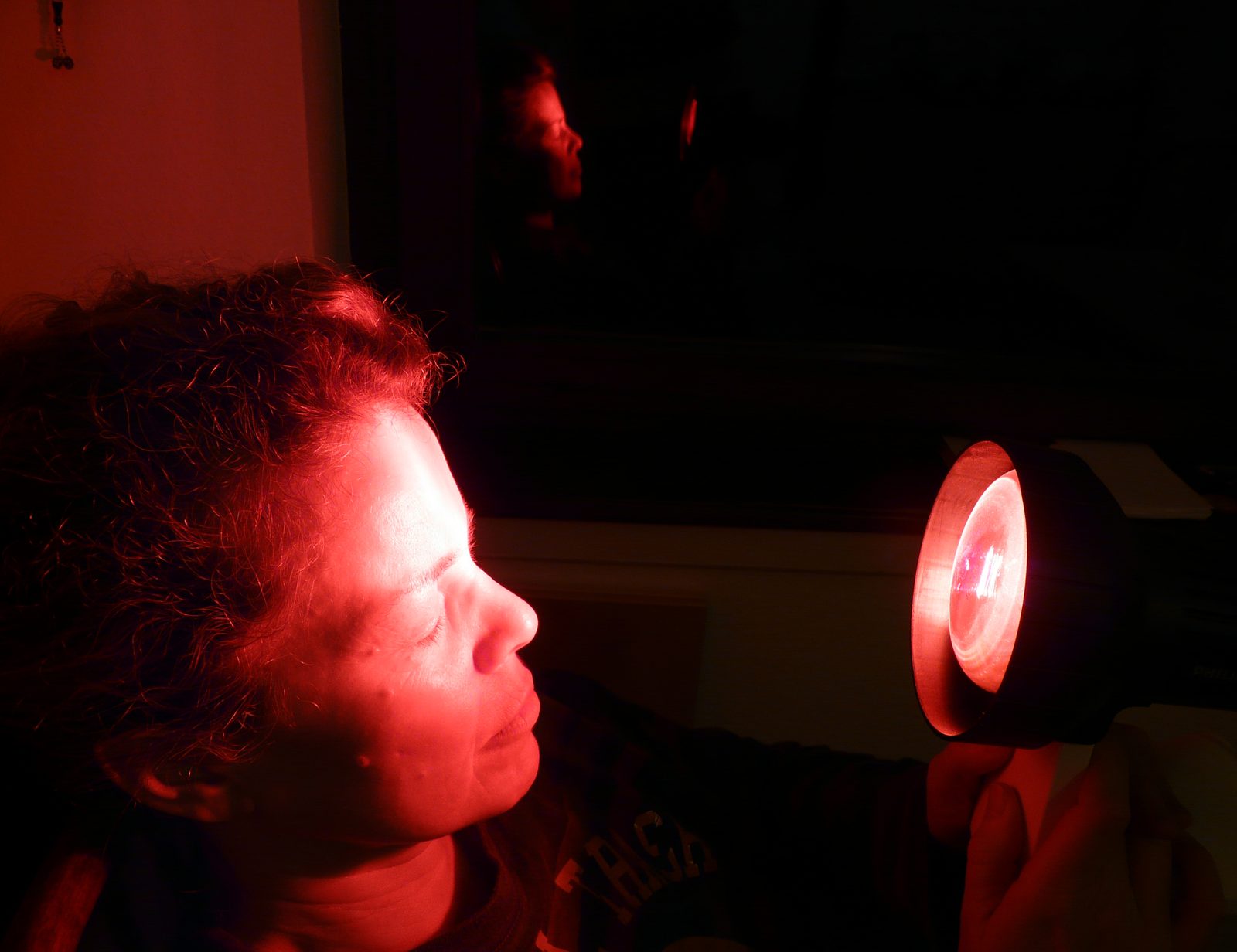
Lux measures how much light lands on a surface, and the study's own numbers only make sense next to a scale. Starlight and moonlight sit around 0.01 to 0.3 lux. Sleep researchers conventionally treat 10 lux or less as "dim light" in circadian experiments. A lit bedroom for reading runs 100 to 300 lux or more. The study's 3-lux threshold sits below even the conservative "dim" bar researchers normally use — closer to moonlight than to a nightlight. Dr. Kristen Knutson, a sleep medicine researcher at Northwestern not involved in the study, described it to NBC News as "a very dim room," adding that "your closed eyes, however, would be able to detect the light." That's the physically honest way to picture it: not bright enough to read by, dim enough that most people wouldn't think to call it "lit," and still enough to register through closed eyelids.
The exposure was measured with a wrist-worn accelerometer carrying a built-in light sensor, worn for seven days between 2013 and 2015, with cardiac imaging following roughly three years later in the same participants. Rather than using midnight-to-6am as "night" for everyone, the researchers defined each person's own night as their least-active five-hour stretch — a small but meaningful choice, since it adapts to each participant's actual sleep timing instead of assuming everyone sleeps on the same clock. About a quarter of the cohort had no nighttime light exposure above 3 lux at all during the week they were measured; that group became the reference point, with everyone else split into thirds by how much light they were exposed to.
What Showed Up on the Heart Scans
The imaging findings, from 11,071 participants with cardiac MRI, painted a consistent picture of a heart working harder against thicker walls and moving less efficiently: 2.4% greater left ventricular mass, 1.5% greater average wall thickness, and 1.9% lower myocardial contraction fraction (a measure of how efficiently the heart's pumping chamber converts its volume into blood ejected) in the highest-exposure group compared with the no-exposure group. The heart's actual squeeze was also weaker in a more direct sense: measures of how much the heart muscle itself deforms with each beat — strain, in cardiology terms — were reduced across three separate directions of motion, by roughly 2.7% to 2.9%. None of these numbers describe damage a person would feel; they describe the kind of early structural drift toward hypertrophy that shows up on imaging before it shows up as a symptom.
The right ventricle and left atrium moved the same direction — slightly larger chamber volumes, slightly lower left atrial pumping efficiency — and every one of these associations tracked continuously with more light exposure, not as a step change at some threshold. Statistically, none of it looked linear-then-flat or threshold-shaped; it looked like more light, more remodeling, all the way up.
The larger, separate sample of 73,286 participants, followed for eight to ten years rather than three, is where the clinical outcomes come from, and they moved in the same direction as the imaging: people in the highest nighttime-light group had a 29% higher rate of heart failure, a 15% higher rate of atrial fibrillation, a 24% higher rate of heart attack, a 33% higher rate of stroke, and a 26% higher rate of cardiovascular death, each compared with the no-exposure group. It's worth being precise that these outcome numbers come from a different, larger group of participants than the 11,071 who had cardiac imaging — the two halves of the study support each other, but neither one directly explains the other.
Daytime light didn't do any of this. The same study measured daytime light above 1,000 lux — roughly the brightness of full daylight — and found essentially nothing: one weak association with a single right-ventricle measure, and no link to any cardiovascular outcome at all. That asymmetry is itself informative. If bright light in general, or some unmeasured lifestyle factor correlated with light exposure broadly, were driving these results, daytime brightness should show some of the same pattern. It didn't, which is more consistent with a nighttime-specific, circadian-suppression story than with a generic "light-exposed people are different" one.
Why Darkness Might Matter to a Heart
The authors' own analysis found that shorter sleep duration explained a meaningful slice of the association — between 24% and 49%, depending on which heart measurement — but explicitly not all of it, which they state directly: a substantial share of the link runs through something other than simply losing sleep time. The rest of the proposed mechanism leans on circadian biology: light hitting the eye at night suppresses melatonin and can activate the sympathetic nervous system and the body's stress-hormone axis, both of which are already implicated in cardiovascular strain through elevated blood pressure, oxidative stress and inflammation. An invited editorial published alongside the study, from a cardiology group at the University Medical Center Mainz, goes further into the molecular chain researchers suspect — melatonin suppression and cortisol elevation feeding into blood-vessel dysfunction and disrupted clock-gene activity inside heart tissue itself — while stressing that the human evidence for that specific chain, as opposed to the epidemiological association, is still being assembled.
Where the Evidence Is Weak
Light was measured for one week and treated as representative of a person's ongoing habits, which the authors themselves flag as a real limitation — though one that would tend to weaken the finding rather than manufacture it, since a noisy one-week snapshot of a longer-term pattern should blur an association, not create one. The light sensor recorded brightness but not color, so the study can't isolate blue light specifically, despite blue wavelengths being the ones the circadian system responds to most. Cardiac imaging came roughly three years after light was measured, not before, so the study cannot fully rule out that some participants already had early heart changes at baseline that happened to correlate with how they slept — the authors ran a reverse-direction check and a complete-case analysis to probe this, and the finding held up, but reverse causation in an observational study is never fully closable from the outside. And UK Biobank's own well-documented pattern applies here too: participants are healthier, more often white (97.6% of the imaging cohort), and more likely to volunteer than the general population, which is a real constraint on how far these specific numbers generalize. Shift workers, who plausibly have the most irregular light exposure of anyone, were excluded from the analysis entirely.
What the evidence shows. In 11,071 UK Biobank participants, nighttime light exposure above roughly 3 lux — dimmer than most nightlights — was associated with a measurably thicker, less efficiently contracting heart on cardiac MRI performed about three years later, with the association scaling continuously with more light rather than kicking in at a hard cutoff. In a larger, separate sample followed 8–10 years, higher nighttime light exposure tracked with higher rates of heart failure, atrial fibrillation, heart attack, stroke and cardiovascular death. Roughly a quarter to half of the association statistically ran through shorter sleep duration; the rest is attributed to circadian and hormonal mechanisms not yet fully mapped in humans. Daytime brightness showed none of this pattern. This is observational evidence in a specific, unusually healthy and predominantly white cohort, and cannot on its own establish that dark rooms prevent heart disease — but it is a large, carefully designed study with a real dose-response signal and a built-in negative control that behaved exactly as the circadian-mechanism story would predict.
What I'd do. One person's read of one study, not medical advice and not a claim about anyone else's bedroom. The most useful thing this study gave me wasn't a rule, it was a sense of scale: 3 lux is dim enough that most people wouldn't describe their room as "lit" and would still be over the line the study drew. That makes the practical question less "is my lamp on" and more "is there any glow reaching my eyes at all while I'm actually asleep" — a phone charging screen-up, a cable-box or router LED, a glowing alarm clock, a hallway light under the door, streetlight through a gap in the curtain. A lamp that's fully switched off contributes nothing regardless of how bright it gets when it's on; a lamp left on some low "night" setting a few feet from a pillow is a much more plausible way to clear a 3-lux bar than most people would guess. If I wanted to actually know rather than guess, a cheap lux meter — or a phone light-meter app held at pillow height with the room otherwise as it is overnight — answers it directly rather than needing to estimate from a photo of the bulb.
Where I Could Be Wrong
- Observational, not causal. Nobody was randomly assigned a dark or lit bedroom. The authors' own sensitivity analyses (reverse-direction testing, complete-case restriction, inverse sampling weights for selection bias) are genuine attempts to rule out the obvious alternative explanations, and the association survived them — but survival of sensitivity analyses is evidence, not proof.
- The 3-lux figure is a research convention, not a hard biological line. It's described as tracking with the onset of melatonin suppression, but the circadian literature shows that threshold varies severalfold between individuals; treating 3 lux as a universal danger line would overstate what one population-level cutoff can tell you about any one person.
- UK Biobank skews healthy, older, and predominantly white. The authors state this limitation themselves. How this generalizes to a more diverse, younger, or less healthy population is genuinely unknown from this data.
- Shift workers were excluded — plausibly the group with the most irregular light exposure of all, and the one this finding might matter most for, is the one group this study says nothing about.
- The color of the light was never measured. Only brightness was recorded, despite blue wavelengths mattering most to the circadian system specifically — a real gap the authors acknowledge.
- I could not locate independent critical commentary beyond the accompanying editorial and one sleep researcher's contextual quote to a reporter. The paper is only weeks old; the absence of a rebuttal so far reflects timing, not a lack of scrutiny to come.
Sources
- Dai J, Dai W, Heianza Y, Qi L. Nighttime light exposure and cardiac structure and function. European Heart Journal, advance article, published online 9 September 2026. doi:10.1093/eurheartj/ehag563 · PMID 42715935
- Münzel T, Kuntic M, Daiber A. The dark night as a cardiovascular vital sign: personal light exposure, subclinical cardiac remodelling, and the urban exposome. European Heart Journal editorial, 9 September 2026. doi:10.1093/eurheartj/ehag650
- European Society of Cardiology. Too much light at night changes the shape and working of the heart. Press release. escardio.org
- Dai J, Dai W, Zong X, Kou M, Heianza Y, Manson JE, Qi L. Objectively Measured Individual-Level Daytime Versus Nighttime Light Exposure and Cardiovascular Disease Mortality in U.S. Adults. European Journal of Preventive Cardiology, 8 June 2026 — the same lab's prior finding, in a separate US cohort, in the same direction. PMID 42258634
- NBC News. Too much light exposure at night could be doing real damage to your heart, new research suggests. Includes independent commentary from Dr. Kristen Knutson, Northwestern University. nbcnews.com
- Walbeek TJ, Harrison EM, Gorman MR, Glickman GL. Naturalistic Intensities of Light at Night: A Review of the Potent Effects of Very Dim Light on Circadian Responses and Considerations for Translational Research. Frontiers in Neurology, 2021. doi:10.3389/fneur.2021.625334
- Phillips AJK, et al. High sensitivity and interindividual variability in the response of the human circadian system to evening light. PNAS, 2019 (on individual variability in melatonin-suppression thresholds). doi:10.1073/pnas.1901824116
This is one reader's reading of the research, not medical advice. If something here touches on your own health, take it to a clinician who knows you — and read how these entries are put together.