Does Stopping a GLP-1 Drug Raise Your Heart Risk?
SEPTEMBER 22, 2026
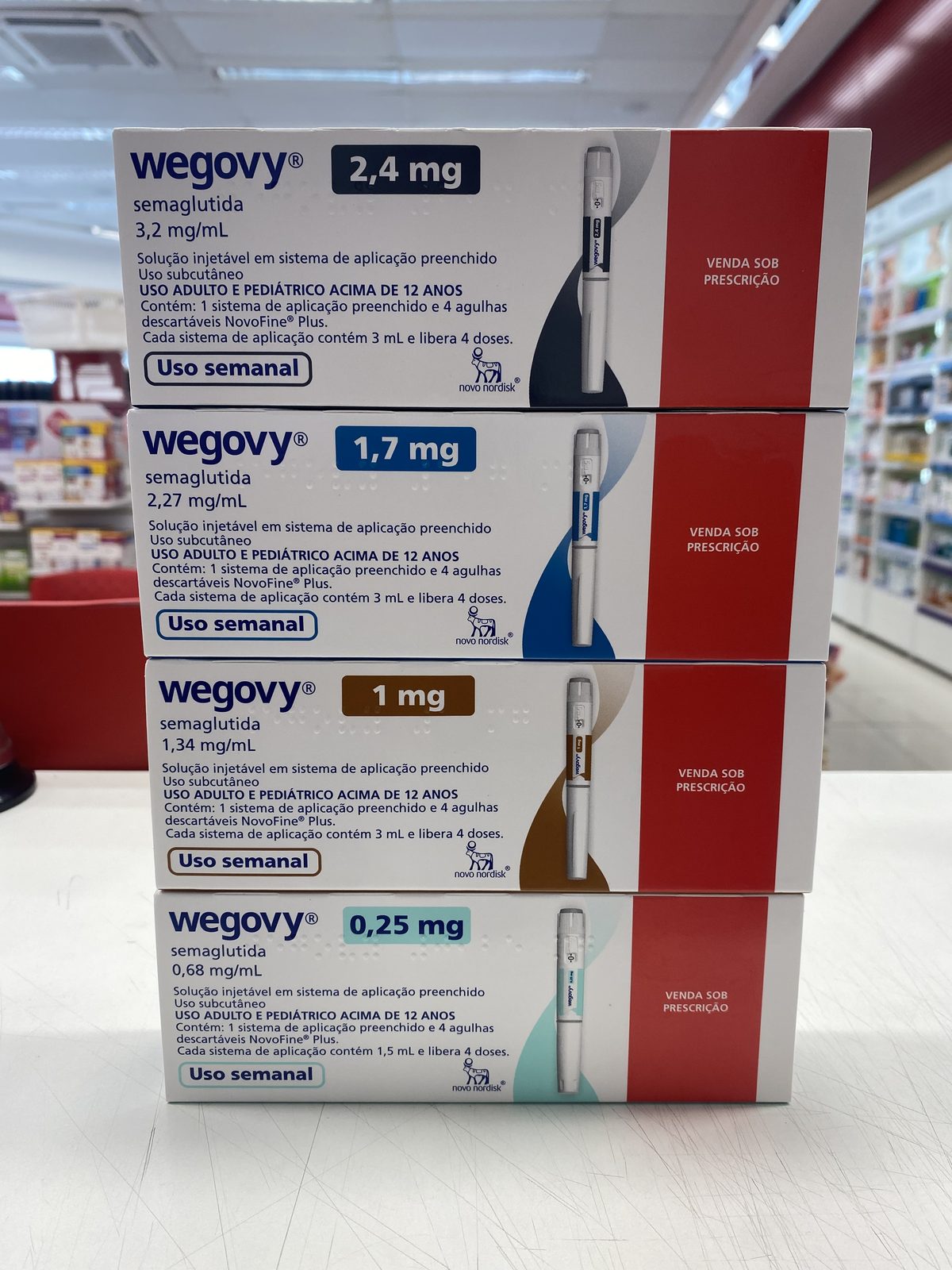
A target trial emulation of 333,687 U.S. military veterans with type 2 diabetes, published in BMJ Medicine by Yan Xie, Taeyoung Choi and Ziyad Al-Aly of Washington University School of Medicine in St. Louis and the VA St. Louis Health Care System, found that stopping a GLP-1 receptor agonist — the drug class that includes semaglutide (Ozempic, Wegovy), liraglutide (Victoza) and dulaglutide (Trulicity) — carried a risk of stroke, heart attack or death that climbed the longer a person stayed off it: 4% higher at six months without the drug, 14% higher at one year, and 22% higher at two years, each compared with staying on it continuously. Restarting the drug after a gap closed part of that gap but not all of it. The paper itself was published online March 18, 2026, and resurfaced in wire coverage this week — worth saying up front, because nothing about the study or its numbers is new even though the news cycle around it is.
What a "Target Trial Emulation" Actually Compared
Nobody randomized 333,687 veterans to stop or keep taking a GLP-1 — this is an observational study, built from VA Corporate Data Warehouse pharmacy, lab and vitals records plus Medicare claims, covering people newly started on the drug class between 2017 and 2023 and followed for up to three years. What makes it a "target trial emulation" rather than an ordinary retrospective look-back is the statistical machinery: marginal structural models with inverse-probability weighting, reassigning each person's treatment status every six months across sixteen prespecified strategies, built to approximate what a real randomized trial of stopping-versus-continuing would have shown if anyone could ethically run one.
The cohort split into 132,551 people who started a GLP-1 and 201,136 who started a sulfonylurea instead — an older class of diabetes pills (glipizide, glimepiride, glyburide) that lowers blood sugar by a completely different mechanism and carries none of the cardiovascular benefit GLP-1s have shown in prior trials. That comparator matters more than it sounds like it should, and I'll come back to it. The GLP-1 side was overwhelmingly injectable and overwhelmingly one drug: semaglutide made up 66.13% of use, liraglutide 18.48%, dulaglutide 13.41% — tirzepatide (Mounjaro, Zepbound), the newer dual-mechanism drug now heavily marketed for weight loss, accounted for just 0.03%. This is a semaglutide-and-liraglutide study wearing a GLP-1-class label; a claim that it says anything specific about tirzepatide would be reading numbers that aren't there.
The cohort was also 91.65% men, mean age 65.9 — a shape the current real-world GLP-1 population, increasingly younger women prescribed these drugs for weight management rather than diabetes, doesn't resemble. The authors say so themselves, in their own limitations section.
The Numbers, and the Reference Group That Changes the Reading
"Discontinuation" meant no prescription refill for 90 days past the end of the previous supply, split into people who never resumed and people who resumed after a gap ("interruption"). Comparing every discontinuation and interruption pattern against people who kept taking the drug without a break, the risk of the composite outcome — stroke, myocardial infarction, or death from any cause — rose with time off the drug:
- Discontinued, never resumed — 4% higher risk at six months off (incidence risk ratio 1.04, 95% CI 1.01–1.08), 14% higher at one year (1.14, 1.09–1.18), 22% higher at two years (1.22, 1.16–1.27).
- Interrupted, then resumed — the penalty was smaller but never zero: 12% higher after a one-year gap (1.12, 1.06–1.19), 16% higher after a two-year gap (1.16, 1.11–1.22), and even a roughly five-month gap (the cohort's own median interruption length) carried a measurable 6–8% higher risk.
Those figures are incidence risk ratios from the pooled logistic regression model, not hazard ratios from a Cox model — a technical distinction the authors made deliberately, to avoid assuming the two groups' risk stayed proportional over time, but one that matters if you go looking for this study's numbers elsewhere and see them called something else.
Now the reference-group swap. Everything above compares a person against their own continued use. Compared instead against the sulfonylurea group — people on an entirely different diabetes drug the whole time — continuous GLP-1 use tracked an 18% lower three-year risk (IRR 0.82, 0.78–0.85). People who interrupted and resumed still came out 12% lower (0.88, 0.84–0.92). But people who discontinued and never resumed landed at 0.96 (0.92–1.01) — a confidence interval that crosses 1, meaning their risk was no longer statistically distinguishable from someone who had simply been on a sulfonylurea, with no GLP-1 exposure at all, for the entire three years. The benefit didn't just fade. It reached zero.
The clearest single line in the paper, buried in a duration-stratified table: people who took a GLP-1 for a year to eighteen months and then stopped were, three years later, statistically indistinguishable from people who had never taken one. Real protection required something closer to two and a half to three years of continuous use before it showed up as durable in this analysis.
What "Not Fully Restored" Actually Means
The headline claim that resuming doesn't fully undo the damage rests on two consistent findings. First, the group that stopped and later resumed settled at a 12% cardiovascular-risk reduction against sulfonylureas, against an 18% reduction for people who never stopped at all — roughly two-thirds of the original benefit recovered, one-third gone even after restarting. Second, every interruption-and-resume scenario in the paper, regardless of how long the person had been on the drug before stopping, remained measurably worse than uninterrupted use, with the residual penalty scaling by how long the gap lasted. The study's own follow-up runs only three years, so it genuinely cannot say whether that gap eventually closes on longer resumption — describing the loss as "not restored," full stop, would be saying more than the data supports; "not restored within three years of follow-up" is what was actually shown.
Why People Stopped
Here is the study's most-quoted line and its most underreported asterisk: reasons for discontinuation were not measured. VA pharmacy refill records don't carry a "why did you stop" field, so anything written about cost, side effects, or supply shortages driving real-world discontinuation is background from other literature, cited in the discussion section — not something this analysis observed directly. What the authors do observe, and flag as a genuine strength rather than a gap: VA care includes comprehensive prescription coverage, which they argue reduces the odds that cost was the dominant reason people in this specific cohort stopped. And yet 26.36% of the GLP-1 group discontinued anyway — nearly two-thirds of those in the first year alone — in a population where cost pressure was largely already removed. If cost and supply shortages are pushing discontinuation as hard as they're widely assumed to in the uninsured general population, this VA cohort is arguably an undercount of the real-world problem, not an overcount.
The mechanism is admittedly a guess. The authors write plainly that "the mechanisms are not clear," and offer candidates rather than a confirmed pathway: preclinical evidence that GLP-1 drugs improve endothelial function and reduce oxidative stress and platelet aggregation, alongside the more obvious clinical route — weight loss, better glycemic control, lower blood pressure, better lipids, all of which are known to reverse at least partly once the drug stops, tracking with the well-documented weight regain that follows discontinuation. Their own mediation analysis leaves open how much of the cardiovascular signal runs through weight regain specifically versus blood sugar, inflammation, or something not yet identified. The phrase "metabolic whiplash," which shows up in press coverage of this study, is Al-Aly's own framing in interviews — it does not appear in the paper itself.
Where the Evidence Is Weak
This is an observational cohort, however sophisticated the modeling: nobody was randomized, and the authors' own conclusion is phrased as a hedge — the protection "might progressively erode and could ultimately reverse" — not a causal certainty. The population is 91.65% male veterans with a mean age of 65.9, which the authors themselves note may not generalize to the younger, more female population increasingly prescribed these drugs for weight loss rather than diabetes. Reasons for stopping weren't randomized and weren't measured, so residual confounding from whatever actually drove a person to quit — an emerging illness, a side effect, a life event — can't be ruled out no matter how many covariates the model adjusted for. The study covers essentially one route of administration (over 99% injectable) and effectively one drug (semaglutide, two-thirds of exposure); it says nothing specific about oral GLP-1s or about tirzepatide. And the sulfonylurea comparator, while a genuinely useful benchmark, carries its own debated cardiovascular profile and hypoglycemia risk — it is an active comparator, not a neutral placebo, and that framing choice shapes every "vs. sulfonylurea" number in this piece.
What the evidence shows. In a target trial emulation of 333,687 veterans with type 2 diabetes, cardiovascular risk (stroke, heart attack, or death) climbed the longer someone stayed off a GLP-1 drug after starting one — 4% higher at six months, 14% at one year, 22% at two years, versus continuous use. Compared against a different diabetes drug class entirely, continuous GLP-1 use tracked an 18% lower three-year risk, but people who discontinued and never resumed ended up statistically indistinguishable from people who'd never taken a GLP-1 at all — the benefit fully eroded within the study's follow-up. Resuming after a gap recovered about two-thirds of the benefit, not all of it, within three years of data. This is associational evidence from an overwhelmingly male, older veteran population on semaglutide and liraglutide specifically; it does not establish that stopping causes the excess risk, and it says little about tirzepatide, oral GLP-1s, or the younger population now most commonly prescribed these drugs.
What I'd do. One person's reading, about one person's own situation, not a recommendation to anyone else — and this site doesn't publish medication advice regardless. What strikes me most isn't the headline risk number; it's that the VA specifically chose this population because prescription cost was mostly taken off the table, and more than a quarter of people still stopped within the study window anyway. That's a strong hint that the much larger real-world discontinuation rates people cite for GLP-1s — driven by cost, insurance churn, supply shortages, side effects — are probably not primarily a "people don't want to keep taking it" story so much as an access story layered on top of whatever this study is measuring. If I were on one of these drugs and facing a gap for any reason, this is the kind of study I'd want my prescriber looking at directly, rather than a headline percentage — the actual shape of the finding (protection that takes years to build and partially reverses on any interruption) is a very different conversation to have with a doctor than "stopping is dangerous."
Where I Could Be Wrong
- This is an observational study with a causal-sounding headline. No one was randomized to stop. Whatever caused a person to discontinue — an emerging health problem, a side effect the model can't fully capture — remains a plausible alternative explanation for at least part of the association.
- The population is not the population most people picture. 91.65% men, mean age 65.9, on VA-covered semaglutide or liraglutide for diabetes. The fastest-growing real-world GLP-1 population — younger women prescribed these drugs for weight management — is barely represented here.
- The two reference groups measure different things, and conflating them is the easiest mistake to make. The 4%/14%/22% figures are relative to continuing the same drug; the 18%-lower and statistically-null figures are relative to a different drug class entirely. Much of the press coverage blends the two.
- Three years of follow-up can't answer whether the gap ever closes. The study shows the benefit isn't restored within three years of resuming — it cannot show whether it eventually would be, given more time.
- Reasons for stopping were not measured, so anything connecting this study to cost, supply shortages, or side effects specifically is inference from outside literature, not a finding of this paper.
- Both lead authors report uncompensated consulting for Pfizer, disclosed in the paper. Pfizer discontinued its own oral GLP-1 program in 2026; I don't see an obvious way this relationship would bias a VA-data study of an unrelated drug class, but it belongs in the open.
Sources
- Xie Y, Choi T, Al-Aly Z. Glucagon-like peptide 1 receptor agonist discontinuation and risks of major adverse cardiovascular events in adults with type 2 diabetes: target trial emulation. BMJ Medicine, 5(1):e002150, published online 18 March 2026. doi:10.1136/bmjmed-2025-002150 · PMC13007077
- Washington University School of Medicine in St. Louis. Stopping GLP-1 drugs can quickly erase cardiovascular benefits. Press release. medicine.washu.edu
- ScienceDaily. Skipping your GLP-1 shots may be riskier than you think. Re-run, September 20–21, 2026. sciencedaily.com
- Zhang D, et al. Cost sharing and adherence to glucagon-like peptide-1 receptor agonists. Diabetes Care, 48:1329–1336, 2025 (cited for the discontinuation-and-cost literature this paper references but does not itself measure). doi:10.2337/dc24-2746
- Jia G, Aroor AR, Sowers JR. Glucagon-like peptide 1 receptor agonists and cardiovascular disease: mechanisms. Diabetes, 65(6), 2016. doi:10.2337/dbi16-0014
- CNBC. Stopping GLP-1s raises cardiovascular risks, study finds. March 18, 2026. cnbc.com
This is one reader's reading of the research, not medical advice. If something here touches on your own health, take it to a clinician who knows you — and read how these entries are put together.