Fifty-Two Weeks, No Remainder
SCIENCE & TECHNOLOGY · SEPTEMBER 21, 2026
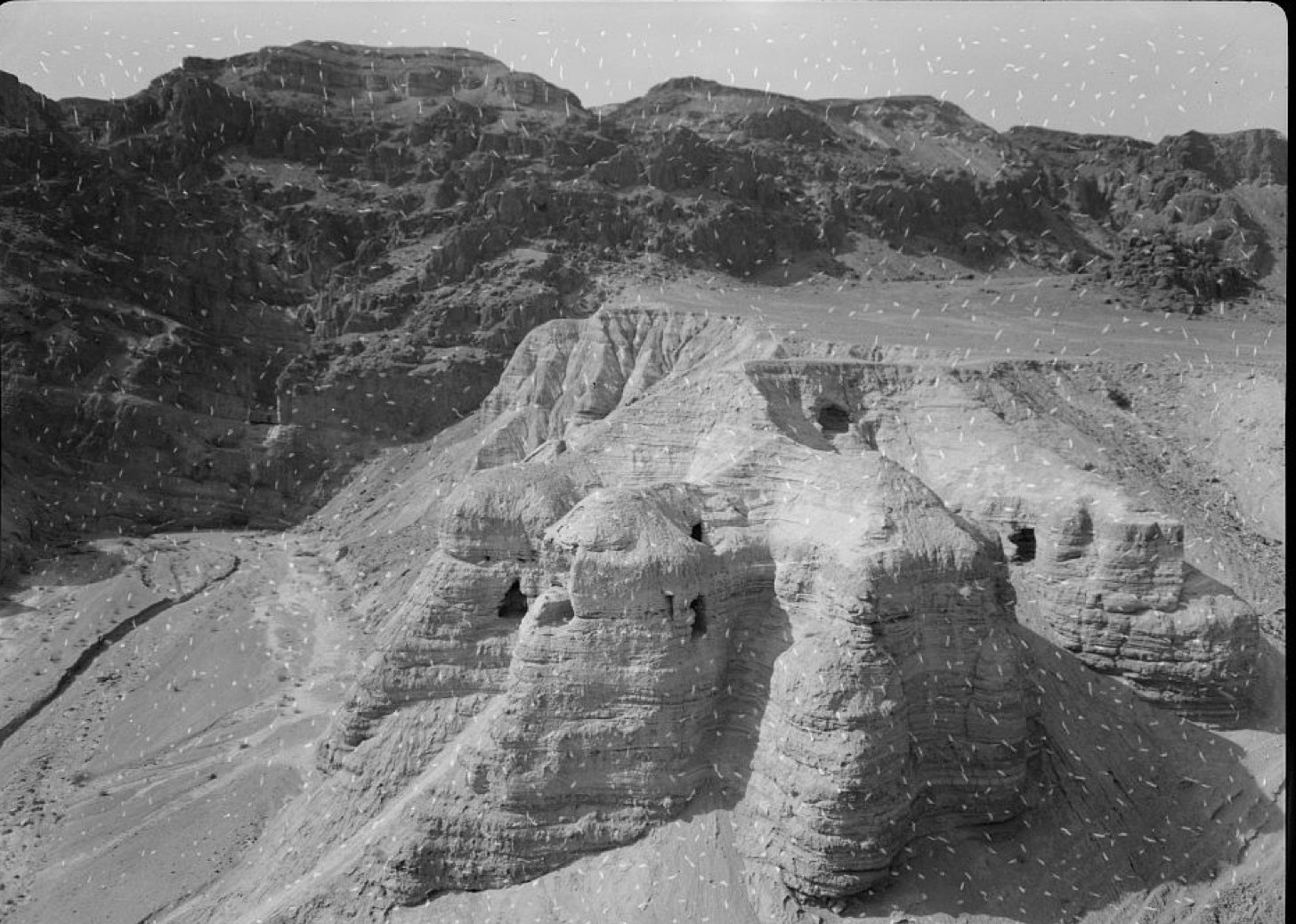
A study by Prof. Eshbal Ratzon of Tel Aviv University's Department of Jewish Philosophy and its Cohn Institute for the History and Philosophy of Science and Ideas, published in the Hebrew-language quarterly Tarbiz, takes a position on one of the longest-running arguments in Dead Sea Scrolls scholarship: did the community at Qumran actually live by its unusual 364-day calendar, or was the calendar an ideal on parchment that nobody ever tried to keep? Ratzon argues that they really did use it, in the sect's formative years in the second century BCE, that the calendar was close to the centre of the quarrel that split them from the Jerusalem establishment — and that they later stopped using it in practice, for two reasons, one arithmetic and one political.
The arithmetic reason is the one that makes the whole story legible, so start there. A year of 364 days is about a day and a quarter shorter than the year the sun actually keeps. That error does not announce itself. It accumulates.
What a 364-Day Calendar Buys You
364 = 52 × 7. That is the entire appeal, and it is a bigger deal than it looks.
In a calendar of exactly fifty-two weeks, every date in the year falls on the same day of the week, every year, permanently. Passover is always on the same weekday. The Feast of Weeks is always on the same weekday. Nothing ever drifts onto a Sabbath, and no festival ever has to be shuffled to avoid colliding with one. The structure underneath is just as tidy: four quarters of 91 days — thirteen weeks each — with each quarter made of two thirty-day months and one of thirty-one. The year always opens on a Wednesday, the fourth day, the day on which Genesis has God make the sun, moon and stars. For a community that read the created order as a piece of design, a calendar with no remainder was not a convenience. It was evidence.
The alternative in use at the Jerusalem Temple was a lunisolar calendar of roughly 354 days — twelve lunar months — kept in step with the seasons by the priesthood inserting an extra month when observation said one was needed. That system tracks the sky well. What it cannot do is hold a festival on a fixed weekday, and it puts the decision about when the year turns into the hands of the men running the Temple. For a sect that had concluded those men were illegitimate, that second feature was the offensive one.
The day and a quarter, compounded. The tropical year runs about 365.2422 days. A 364-day year is therefore short by roughly 1.2422 days annually — an error small enough to ignore for a season and impossible to ignore for a generation. After ten years the calendar has slipped about twelve and a half days. After twenty years it is nearly four weeks out, which means the spring festivals have walked backwards into winter. Ratzon's image for it is a clock that loses a minute a day: perfectly good for one morning, and after long enough, as she puts it, "such a clock no longer represents reality."
The Argument and What It Is Made Of
The first thing in the evidence column is simply how much of the library is about this. Something on the order of twenty scrolls from Qumran deal with calendars and astronomy — an extraordinary share of a collection that also has to hold biblical manuscripts, commentaries, hymns, community rules and legal texts. Whatever else the group was arguing about, they were arguing about time.
The manuscripts catalogued 4Q320 through 4Q330 are the mishmarot texts: rosters of the twenty-four priestly courses, the families named in 1 Chronicles 24, rotating through their weeks of Temple service. Because twenty-four courses and fifty-two weeks do not divide evenly, the roster only repeats after six years — so the mishmarot texts are, in effect, a six-year timetable, with festival dates and lunar phenomena woven into the grid. 4Q319, known as the Otot — "signs" — goes further out still, mapping a 294-year cycle of six jubilees. These are not devotional reflections on the passage of time. They are working schedules, of the sort you write because somebody has to know which week they are on.
The second strand is the Book of Jubilees, an apocryphal work well represented in the Qumran library, which attacks the lunar calendar directly and presents the 364-day scheme not as one option among several but as the calendar given to Moses at Sinai. A group that believed that, Ratzon's argument runs, had every reason to keep it — and a very strong reason to consider the Temple's timetable not merely different but wrong, which is the sort of disagreement that ends with people moving to the desert.
Why This Was an Open Question at All
Because the obvious objection is the arithmetic, and scholars have been making it for decades. Lawrence Schiffman, among others, doubted the calendar had ever been operated at all, on the reasonable grounds that a system guaranteed to be a month adrift within a working lifetime is a strange thing to live by. Uwe Glessmer proposed the opposite escape: that the community intercalated — added a week at intervals — to keep the thing honest, which would preserve both the fifty-two-week structure and a rough fit to the seasons. The scrolls themselves have not settled it; no surviving Qumran text plainly describes a correction mechanism, which is exactly the hole both explanations are built to fill.
Ratzon's answer is a third one, and its appeal is that it does not require the sect to have been either foolish or secretly pragmatic. They used it. It drifted. They noticed. And rather than repair it or defend it, they let it become something else.
Why They Stopped
The political half of the argument turns on Alexander Jannaeus, the Hasmonean king who reigned from 103 to 76 BCE and who backed legal positions closer to the sect's own than to those of their Pharisaic rivals. Relations warmed. And a group on better terms with the establishment has a way out of a problem a group in open schism does not: it can quietly keep the Temple's calendar for the purposes of actually knowing what day it is, while holding its own calendar as the true one — the calendar of the created order, and of the end of days, when things will be put back the way they were designed.
That, Ratzon argues, is how a working timetable becomes a religious ideal without anyone having to admit it was abandoned. In her summary, the calendar was "in fact used for a certain period of time, but then, losing its practical role… became a religious ideal" — which, she notes, "would explain both its centrality in the Qumran scrolls and its gradual disappearance from historical reality."
Why This Lands on a Translation Desk
I spend a good deal of time on this site working through the Hebrew Bible a chapter at a time, and calendar arguments of this kind are the sort of thing that changes how a verse reads without changing a word of it.
Take Genesis 1:14, where the luminaries are set in the expanse "for signs and for appointed times, and for days and years" — le-otot u-le-mo'adim. Read cold, that is a line about the sky keeping time. Read against this material, it is a contested text: the Qumran calendrical scroll 4Q319 is literally named for its first noun, Otot, and the whole argument between the sect and Jerusalem is an argument about who gets to say when the mo'adim — the appointed times, the festivals — fall, and on what authority. The same goes for 1 Chronicles 24's roster of twenty-four priestly courses, which reads as dry administrative detail until you find a community six generations later building six-year timetables on it. And the 364-day tradition is not confined to sectarian documents: it turns up in the Book of Jubilees and in the astronomical section of 1 Enoch, which means it was a live current in Second Temple Judaism and not merely one group's eccentricity.
The honest boundary is worth drawing clearly, though. None of this is the Hebrew Bible prescribing a 364-day calendar; the biblical texts are considerably vaguer about the mechanics than either side in this dispute wanted them to be, which is part of why the dispute was possible. What the scrolls give you is a picture of how those texts were being read, by real people, close enough to the period to matter — and that is a different and in some ways more useful thing than a ruling.
Where I Could Be Wrong
- Tarbiz publishes in Hebrew, and I am working from the university's own English summary of the study and the press coverage of it rather than from Ratzon's article itself. A summary carries conclusions well and arguments badly; the case as she actually makes it is certainly finer-grained than what I have reproduced here, and any nuance lost between her text and this page is lost at my end.
- "The Qumran sect" is doing heavy lifting as a phrase. The community is usually identified with the Essenes, but that identification is an inference, not a signature on a document, and the relationship between the people who lived at the site, the people who wrote the sectarian texts, and the people who deposited the scrolls in the caves is argued over in its own right.
- This is one intervention in a long-running debate, not a settlement of it. Schiffman's scepticism about practical use and Glessmer's intercalation proposal are positions with their own evidence, and specialists — Jonathan Ben-Dov, James VanderKam and others have spent careers in this material — may find the political half of the argument, which rests on inference about the sect's relations with Alexander Jannaeus, the weaker leg.
- My drift arithmetic is my own, computed from the tropical year against a flat 364, and it assumes no correction was ever applied. If Glessmer is right that the community intercalated, the drift figures in the aside are a description of a problem that was being managed rather than one that was accumulating unchecked.
- I am a reader here, not a Second Temple specialist. The connections I draw in the last section are the ones the material suggested to me while reading it; a scholar of the period would likely weight them differently, and might regard the Genesis 1:14 link as more obvious than it is illuminating.
Sources
- Tel Aviv University. Did the Qumran Sect Really Use Its 364-Day Calendar? 2026 — the university's own summary of Prof. Eshbal Ratzon's study in Tarbiz: A Quarterly for Jewish Studies. english.tau.ac.il
- ScienceDaily. Scientists may have solved a 2,000-year-old Dead Sea Scrolls mystery. 19 September 2026 — source of the "clock that loses one minute every day" formulation. sciencedaily.com
- The Jerusalem Post. One of the Dead Sea Scrolls' greatest mysteries may have finally been solved by Israeli researcher. 2026. jpost.com
- Wikipedia. Qumran calendrical texts. Accessed September 2026 — the 4Q320–4Q330 mishmarot, 4Q319 Otot, the quarter structure and the Wednesday new year, and the Schiffman and Glessmer positions. en.wikipedia.org
- The Israel Antiquities Authority, Leon Levy Dead Sea Scrolls Digital Library. 4Q Calendrical Document / Mishmarot A (4Q320). deadseascrolls.org.il