Nobody Wanted to Go First
THE WORLD · SEPTEMBER 21, 2026
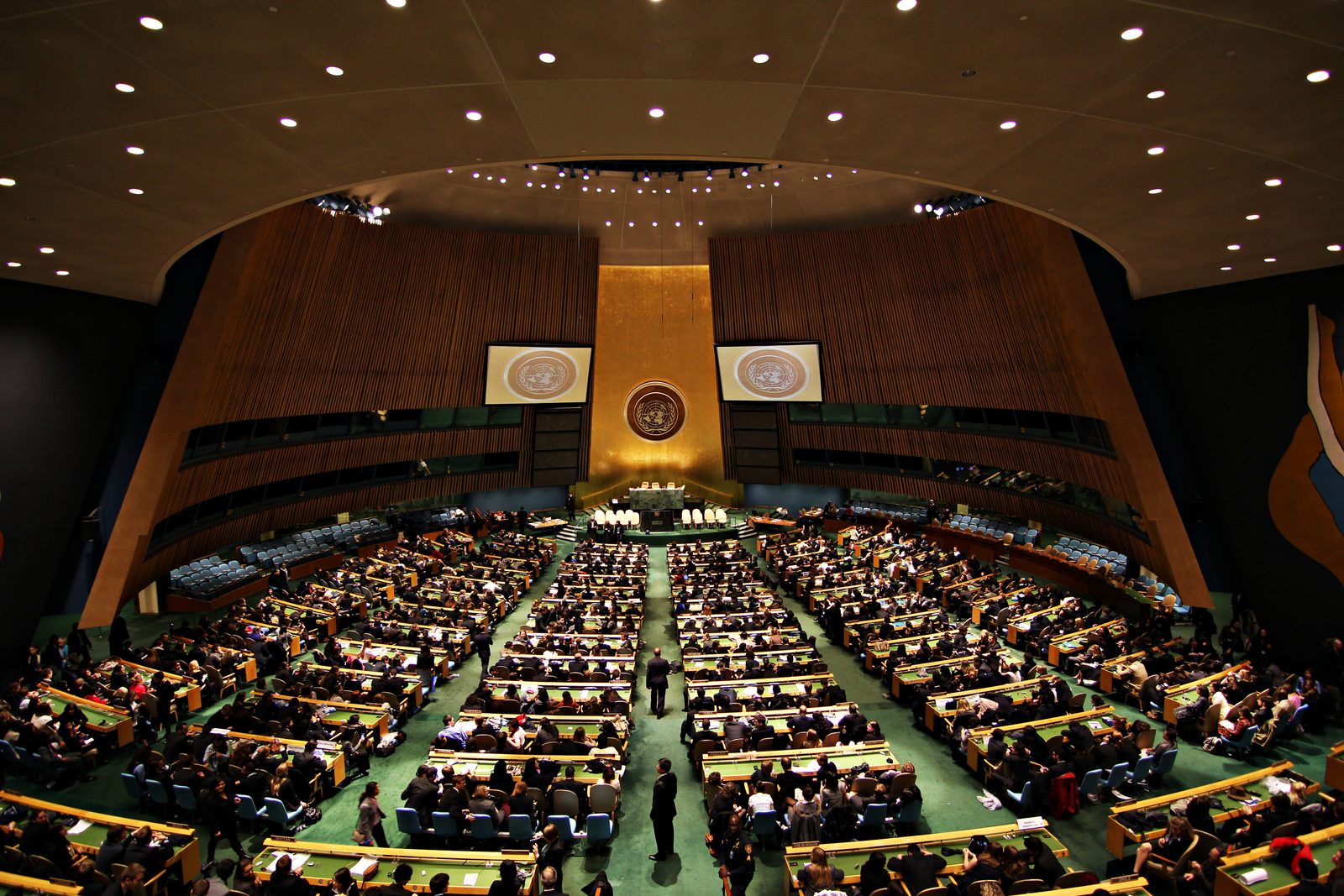
The United Nations' 81st General Assembly opens its general debate on September 22 in New York, and Brazil's president, Luiz Inácio Lula da Silva, will speak first. Donald Trump, as the host nation's president, speaks second. Secretary-General António Guterres opens the session with remarks Tuesday morning, and then it's Lula's turn — his tenth time doing this, across two presidencies eighteen years apart. The reason he gets to go first, ahead of every other head of state or government in the hall, is usually summed up in one sentence: Brazil has opened the debate by tradition since 1955. That's the true version. It's also the tidied-up one.
Why Brazil Goes First
The explanation UN staff actually give is more human than "tradition." Desmond Parker, who served as the UN's Chief of Protocol after his appointment in 2010, put it this way in an interview: "In very early times, when no one wanted to speak first, Brazil always…offered to speak first. And so they have earned the right to speak first at the General Assembly." In the Assembly's first few years, opening a two-week parade of national speeches was not a coveted slot — it meant setting the tone with no other statement yet on the record to react to, first up in a hall still working out what this new institution was even for. Brazil kept volunteering. The UN's own General Debate FAQ now states the arrangement as settled fact: Brazil "is always the first Member State to speak in the general debate (regardless of the level of representation) since the 10th session of the General Assembly, in 1955."
Who decides the other 190-odd speakers. After Brazil and the host nation, the rest of the order isn't drawn by lot. The UN sets it by a mix of the level of representation a country sends (a head of state generally speaks before a foreign minister), each country's own stated preference, and rough geographic balance across the roughly two-week debate — partly so that, as one explainer on the process puts it, the schedule can avoid "awkward clashes," like both Koreas addressing the hall on the same day.
The Six Years the Standard Story Skips
"Since 1955" is accurate for what has held without a break — but Brazil's first turn at the podium actually came six years earlier, at the fourth session in 1949, and the slot didn't stay put. The UN Dag Hammarskjöld Library's own session-by-session log of first and second speakers shows the honor changing hands repeatedly before it locked in:
- 1946–1948 (sessions 1–3): Mexico opens twice, the Philippines once.
- 1949–1951 (sessions 4–6): Brazil opens for the first time, and does it three years running.
- 1952–1954 (sessions 7–9): the slot moves again — Cuba, then the United States itself, then Canada.
- 1955 onward (session 10 and every one since, with two exceptions): Brazil, every year.
So the real shape of the story isn't a straight line from 1946 to now with Brazil at the front of it — it's four different arrangements in the Assembly's first nine years before the fifth one, starting in 1955, simply never got replaced. Even after that, the record isn't perfectly clean: the United States spoke first instead of Brazil at the 38th and 39th sessions, in 1983 and 1984, and in 2016 and 2018 a late-arriving U.S. president meant Chad and Ecuador, respectively, filled the number-two slot that day instead. Brazil's own turn at number one wasn't affected either time.
This Year's Version
Lula flew to New York on September 20 for Tuesday's speech, and Brazilian reporting on the trip put the historical marker plainly: this is his tenth opening address, six of them from his first presidency (2003–2004 and 2006–2009) and three from his current term (2023–2025), with 2026 making ten. According to Brazil's presidential office, the Planalto, this year's speech is built around multilateralism, respect for international humanitarian law, non-interference in other countries' internal affairs, and reform of the UN itself — including the Security Council, whose paralysis over the past several conflicts has become one of the more common complaints from the podium Brazil has occupied first for seventy-one years running.
Where I Could Be Wrong
The Desmond Parker quote reaches me secondhand, through outlets (Quartz among the most-cited) that trace it to a 2010 NPR interview I could not pull up directly to check the surrounding context or confirm no words were trimmed. It's also protocol-office oral history rather than a minuted 1949 or 1955 Assembly decision — I found no UN document from either year that states, in so many words, "no one else wanted to go first." The session-by-session table coding the 1946–1954 scramble comes from the Dag Hammarskjöld Library's own research guide, which I'm treating as authoritative for who-spoke-when but which likewise doesn't explain why the slot moved each of those years, only that it did.
Sources
- UN Dag Hammarskjöld Library. General Debate — UN General Assembly Documentation (research guide, incl. first/second speaker table by session and noted exceptions). https://research.un.org/en/docs/ga/generaldebate
- United Nations. Frequently Asked Questions | General Debate. https://gadebate.un.org/en/faq
- Quartz. Why Brazil speaks first, and all your other questions on the UN General Assembly. September 2017. https://qz.com/1080598/why-brazil-speaks-first-and-all-your-other-questions-on-the-un-general-assembly
- The National. How is the order of speakers at the UN General Assembly decided? https://www.thenationalnews.com/world/the-americas/how-is-the-order-of-speakers-at-the-un-general-assembly-decided-1.772638
- United Nations. Secretary-General Appoints Desmond Parker of Trinidad and Tobago Chief of Protocol. Press release, 2010. https://press.un.org/en/2010/sga1239.doc.htm
- Vermelho. Lula abre a Assembleia Geral da ONU, em Nova York, pela 10ª vez. 20 September 2026. https://vermelho.org.br/2026/09/20/lula-abre-a-assembleia-geral-da-onu-em-nova-york-pela-10a-vez/
- NPR (via KPBS). What to know as world leaders converge at the United Nations this week. 21 September 2026. https://www.kpbs.org/news/international/2026/09/21/what-to-know-as-world-leaders-converge-at-the-united-nations-this-week
- Wikipedia. Brazil and the United Nations. https://en.wikipedia.org/wiki/Brazil_and_the_United_Nations
- Image: Basil D Soufi, United Nations General Assembly Hall (3), 2011, via Wikimedia Commons, CC BY-SA 3.0.