Twice the Mass of Jupiter, and a Problem for How Stars Form
SCIENCE & TECHNOLOGY · SEPTEMBER 19, 2026
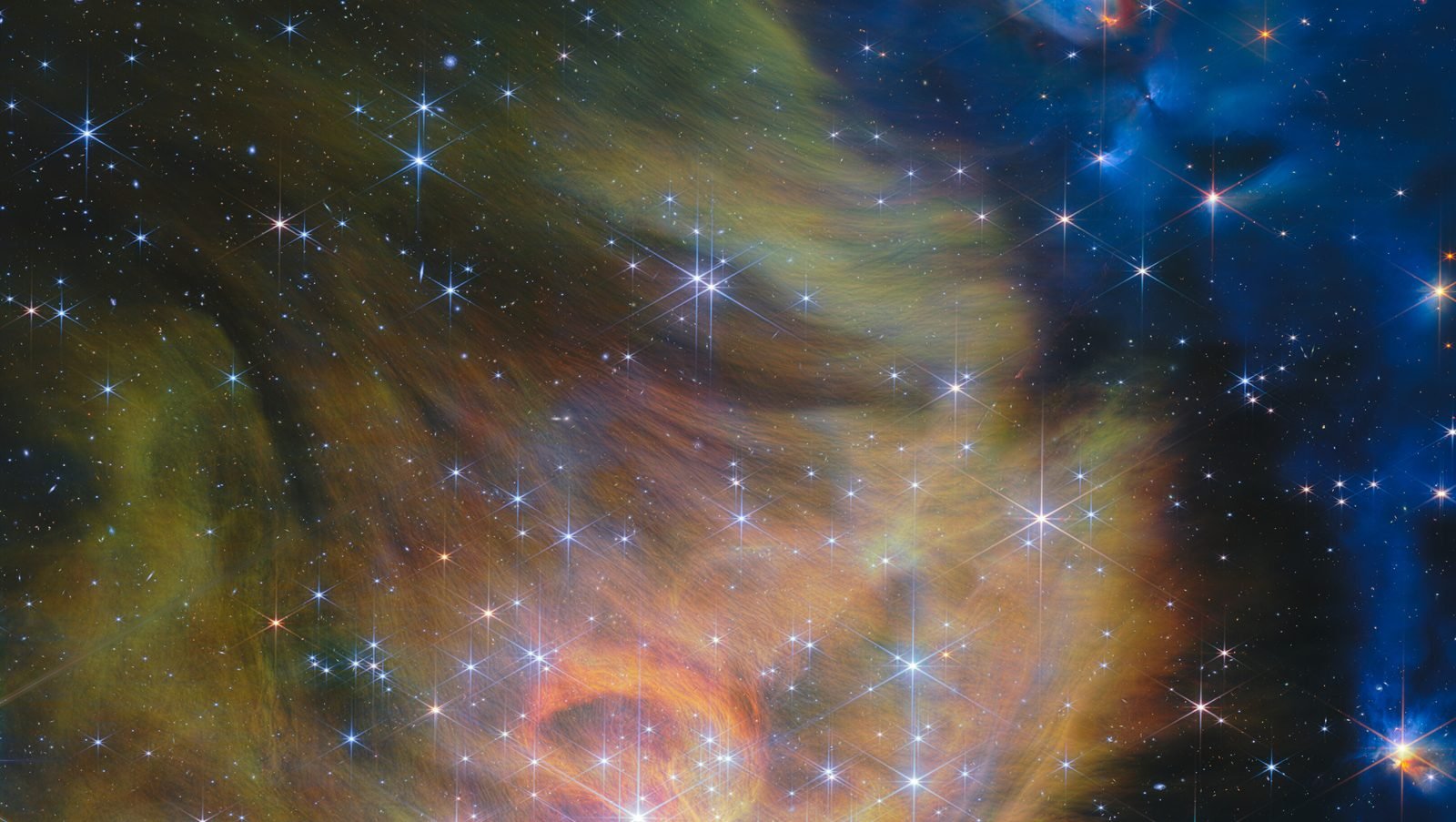
On September 15, the European Space Agency and NASA released the largest public image yet taken by the James Webb Space Telescope: a wide panorama of IC 348, a star-forming region about 1,000 light-years away in the constellation Perseus. It's a genuinely striking picture — hundreds of stars still wrapped in the gas and dust they're forming out of — but the actual news is in what Webb found hiding in it: brown dwarfs weighing as little as about twice the mass of Jupiter, the smallest ever confirmed, and smaller than the leading theory of star formation says a brown dwarf ought to be able to be.
What a Brown Dwarf Actually Is
A brown dwarf is a failed star — an object that formed the way stars do, by a cloud of gas collapsing under its own gravity, but that never gathered enough mass to ignite the hydrogen fusion that makes something shine like a star does. The rough dividing line astronomers use is about 13 times the mass of Jupiter: below that, an object can't even fuse deuterium (a heavier form of hydrogen), and by convention it gets called a planet instead of a brown dwarf. Above roughly 80 Jupiter masses — about 8% of the Sun's mass — there's enough gravity to fuse ordinary hydrogen, and you have an actual star. Brown dwarfs are supposed to live in the gap between those two numbers. The objects Webb found in IC 348 don't.
Below the Line Theory Draws
Using the infrared camera NIRCam in 2024 and following up with the NIRSpec spectrograph in 2025, astronomers led by Kevin Luhman and Catarina Alves de Oliveira surveyed IC 348 and found brown dwarfs down to roughly twice Jupiter's mass — about 0.19% of the Sun's mass — beating the previous lowest confirmed mass of 3 to 4 Jupiter masses and landing meaningfully below the 13-Jupiter-mass line that's supposed to separate "failed star" from "planet." These objects still formed the star-forming way — condensing out of a collapsing cloud, the way a star does, not accreting slowly inside a disk around another star, the way a planet does — which is exactly the puzzle. The standard model of star formation sets a floor on how small a fragment of collapsing gas can be and still successfully form something. Objects this light, formed this way, sit below where that floor is generally thought to be. Either the floor is lower than the models say, or something about how these particular objects came together works differently than assumed.
A planet-mass object with its own planets, maybe. One of the very lightest objects Webb found shows signs of a surrounding disk of gas and dust — the same kind of structure that, around a young star, is where planets are built. If that reading holds up, it means an object that is itself only a couple of Jupiter masses could be in the process of forming still-smaller planets of its own: a planetary system built around something that, by the usual mass definition, is barely more than a planet itself.
Where I Could Be Wrong
This is a single survey of one nearby cluster, not a settled reclassification of what a brown dwarf is — Webb's own release frames it as a challenge to existing models, not a replacement for them, and the mass estimates for objects this faint and this cool carry real uncertainty even with a spectrograph confirming them. The disk detection around the lightest object is described as a sign, not a confirmed planet-forming system; it will need follow-up observation before anyone can say what, if anything, ends up there. I'm relying on the published press materials rather than the underlying paper's full statistical treatment, which is the more rigorous version of this claim.
Sources
- ESA/Webb. Webb reveals stunning panorama of star formation. 15 September 2026. esawebb.org
- Luhman, K. L., Alves de Oliveira, C., et al. The Astrophysical Journal Letters. 2026. iopscience.iop.org
- Phys.org. Webb reveals dynamic panorama of star formation, including smallest known brown dwarfs. 2026. phys.org
- Tech Explorist. Webb discovers brown dwarfs just twice the mass of Jupiter. 2026. techexplorist.com