Folate vs. Folic Acid: What's the Difference, and What Does the Evidence Say About Autism?
SEPTEMBER 23, 2026
Is folate the same thing as folic acid? Not quite — one is the vitamin your body actually uses, the other is a lab-made stand-in your liver processes unusually badly, and the difference between the two turns out to sit right in the middle of one of the more interesting live threads in autism research. None of it is settled. But the confusion the question comes from is real, it's decades old, and it's worth untangling properly before getting anywhere near the autism part.
Folate Is the Vitamin. Folic Acid Is the Understudy.
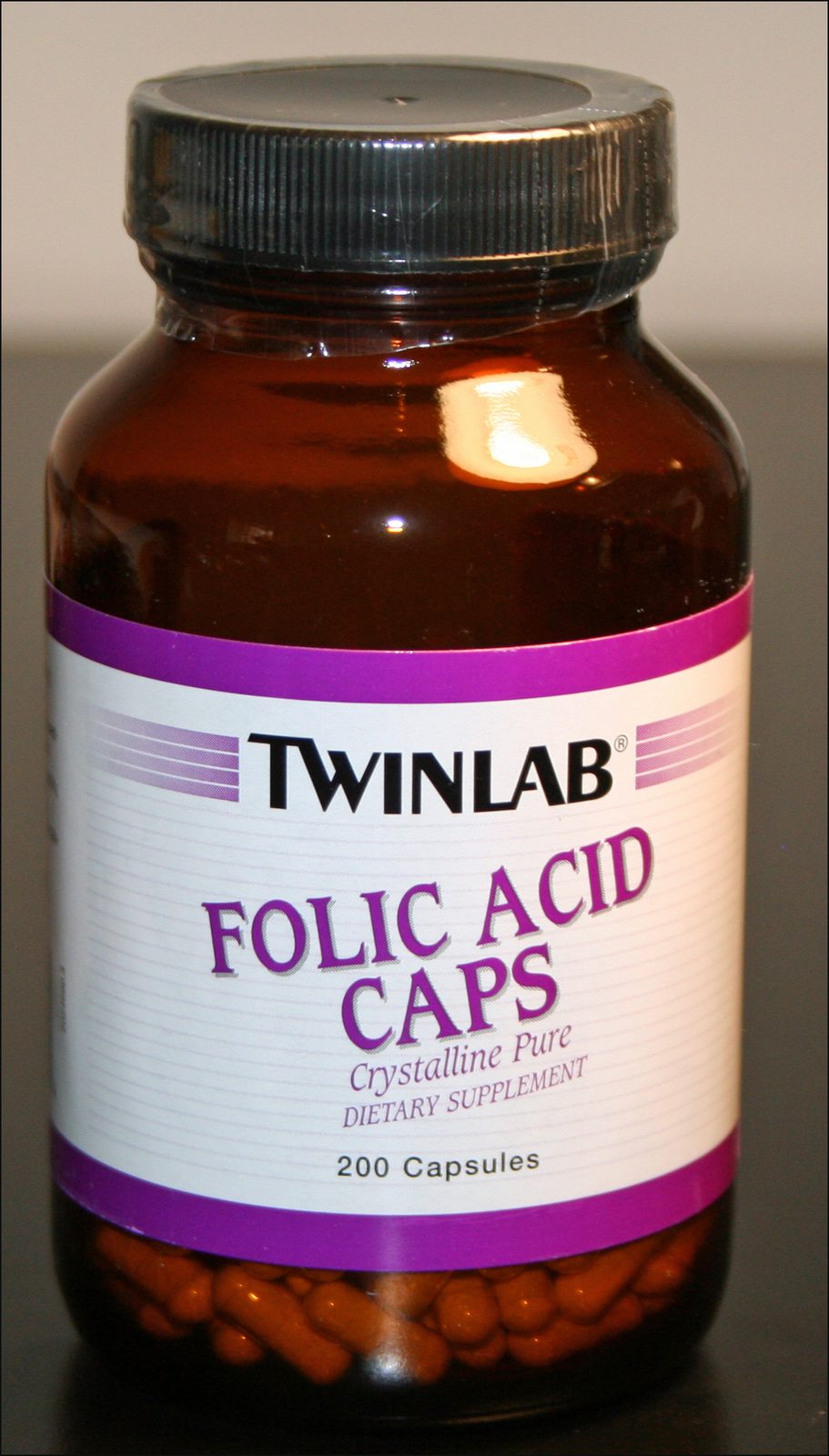
"Folate" is the umbrella name for vitamin B9 in all its natural forms — the stuff already floating around in spinach, lentils, liver and orange juice, doing its job in DNA synthesis and the one-carbon metabolism pathway that, among other things, builds the neural tube in a three-week-old embryo. "Folic acid" is a specific, fully man-made molecule: more heat-stable and shelf-stable than natural folate, which is why it's the form used in fortified flour and in the vast majority of supplement bottles, including the one photographed above. According to the Harvard T.H. Chan School of Public Health's Nutrition Source, folic acid is also better absorbed than food folate — about 85% versus roughly 50% — which sounds like an argument for the synthetic version being strictly superior.
It isn't quite, because absorption and usability aren't the same thing. Natural dietary folate arrives already in a form the body can put to work fairly directly. Folic acid has to be run through an enzyme called dihydrofolate reductase (DHFR) before it enters the same pathway — and in a 2009 study in the Proceedings of the National Academy of Sciences, Steven Bailey and June Ayling measured that conversion directly in human liver tissue and found it strikingly slow: on average, less than 2% as fast as the same reaction in rat liver, with nearly a five-fold difference in speed between individual human samples. That's not an MTHFR story, and it's not a rare-mutation story — it's a fairly universal quirk of human liver chemistry that predates any of the genetics people now argue about. When DHFR can't keep up, some of the folic acid a person swallows or eats circulates in the blood unchanged, as what researchers call unmetabolized folic acid (UMFA) — a real, measurable, and genuinely debated phenomenon, though its downstream health consequences are still an open research question rather than an established harm.
Why Folic Acid Ended Up in Bread in the First Place
This isn't an accident of food-industry convenience — it's one of American public health's clearer wins. Low maternal folate in early pregnancy, often before a person even knows they're pregnant, is a well-established cause of neural tube defects: spina bifida and anencephaly. In 1992 the U.S. Public Health Service recommended 400 micrograms of folic acid daily for anyone who could become pregnant, and when that voluntary approach under-reached the people who needed it most, the FDA mandated in 1996 — effective January 1998 — that all enriched cereal grain products (bread, pasta, rice, most breakfast cereal) be fortified with folic acid, at a level designed to add roughly 100 micrograms a day to the average American's intake. Per CDC surveillance, neural tube defects fell 23% between 1996 and 2001 (spina bifida down 24%, anencephaly down 21%), and the affected-pregnancy count dropped from roughly 4,000 a year to roughly 3,000. Harvard's more recent aggregate figure puts the total decline since fortification began at around 28%. The current RDA is 400 micrograms of dietary folate equivalents a day for adults, rising to 600 during pregnancy and 500 while breastfeeding — with a separate upper limit of 1,000 micrograms a day specifically for folic acid from fortified food and supplements (natural food folate carries no such limit), because too much can mask the anemia that's an early warning sign of vitamin B12 deficiency, letting the neurological damage B12 deficiency causes progress silently underneath a normal-looking blood count.
MTHFR, and Where the Popular Story Runs Ahead of the Data
Buried in that same one-carbon pathway is an enzyme called MTHFR (methylenetetrahydrofolate reductase), which converts folate into 5-methyltetrahydrofolate — the form that actually circulates in blood and gets used by cells. Two common variants, C677T and A1298C, reduce how efficiently that enzyme runs; depending on ancestry, roughly 5% to 20% of people are homozygous for C677T alone, making it one of the more common functional gene variants in human genetics rather than a rare curiosity.
That ordinariness is exactly what got lost in translation on the way to the wellness shelf. Naturopath Ben Lynch's 2018 book Dirty Genes popularized the idea that people with a "dirty" MTHFR gene should specifically avoid folic acid-fortified foods, built around a self-assessment quiz. McGill University's Office for Science and Society reviewed that quiz and didn't love it: it flags symptoms like headaches and depression as evidence of a "dirty" gene needing attention, which the reviewer called — not unfairly — the pseudoscience playbook of building a simple boogeyman out of things practically everyone experiences sometimes. Mainstream clinical genetics has landed somewhere considerably more boring: the American College of Medical Genetics and Genomics concluded in 2013 that MTHFR polymorphism testing has no established clinical utility (a position echoed by the American College of Obstetricians and Gynecologists, the College of American Pathologists, and others), and the current consensus is that an MTHFR variant alone — absent an actually elevated homocysteine level — isn't a demonstrated disease risk factor.
The irony is that one of the largest studies on folic acid and autism found the opposite of what "avoid folic acid if your MTHFR is dirty" would predict. In the CHARGE case-control study (429 children with autism, 130 with developmental delay, 278 typically developing, published in the American Journal of Clinical Nutrition in 2012), mothers who took at least 600 micrograms of folic acid daily during the first month of pregnancy had lower odds of having a child later diagnosed with autism than mothers who took less (adjusted OR 0.62, 95% CI 0.42–0.92) — and that protective association was strongest, not weakest, among mothers and children carrying the MTHFR 677 variant. One observational study's subgroup finding isn't proof of anything on its own, but it's a genuinely awkward fact for the "the folic acid is the problem for people like you" framing to sit next to.
Does Folate Actually Affect Autism Risk?
Set the MTHFR subplot aside and the honest answer is: probably something, in a way that looks more like a sweet spot than a straight line. Beyond CHARGE's finding above, a very different study — the Boston Birth Cohort, run out of Johns Hopkins and Boston Medical Center, following 1,257 mother-child pairs and published in Paediatric and Perinatal Epidemiology in 2018 — measured maternal blood folate and B12 directly at delivery rather than relying on self-reported supplement use, and found a U-shaped pattern: moderate multivitamin use (three to five times a week) was associated with lower autism risk than either infrequent use or daily-or-more use. On its own terms, very high maternal plasma folate at delivery (at or above 60.3 nmol/L) was associated with roughly 2.5 times the risk of autism in the child, and separately, very high vitamin B12 carried a similar roughly 2.5-fold association — with the paper's authors describing the combination of both markedly elevated together as the highest-risk group of all, though that specific overlap group was small.
Both of these are observational studies, which means neither can rule out confounding — mothers who supplement heavily might differ from mothers who don't in a dozen other ways that also matter for a child's development, and a blood draw at delivery is a single snapshot of nine months of changing biology. Taken together, though, they point the same general direction: this doesn't look like a story where more folate is simply better, and it doesn't look like a story where folic acid itself is simply a hazard. It looks like a story about a range.
A Different Thread Entirely: Folate That Can't Reach the Brain
The part of this that's actually new — and almost certainly the "folate reaching the brain" framing behind whatever crossed your feed this week — isn't about how much folate a pregnant person takes. It's about a subset of children (and, per the newest research, some of their mothers) whose immune system makes antibodies against the folate receptor that ferries folate across the blood-brain barrier. Belgian neurologist Vincent Ramaekers and colleagues first described this in 2007 in Neuropediatrics, in 25 children with low-functioning autism and neurological symptoms: folate receptor autoantibodies (FRAA) that block or bind the transporter, producing a genuine cerebral folate deficiency inside the brain even when blood folate looks entirely normal — a mismatch that ordinary bloodwork can't see.
A 2021 systematic review and meta-analysis by Daniel Rossignol and Richard Frye, published in the Journal of Personalized Medicine, pooled the studies that followed: across the pooled data, children with autism were about 19 times more likely to test positive for FRAA than typically developing children, cerebral folate deficiency showed up in roughly 38% of the autism samples studied, and about 83% of those cases traced to the autoantibodies specifically. The same review pooled treatment data on leucovorin — also called folinic acid, a reduced, already-active form of folate that doesn't need the same DHFR step folic acid does, and so can reach the brain by a different route — and found meaningful improvement in overall symptoms in about two-thirds of treated children, with adverse effects generally mild (aggression in roughly 9.5%, insomnia in roughly 8.5%). A 2016 randomized, double-blind, placebo-controlled trial by Frye and colleagues in Molecular Psychiatry tested high-dose folinic acid specifically for verbal communication in children with autism and language impairment, and found significantly greater improvement than placebo — concentrated especially, as the FRAA hypothesis would predict, in the children who tested positive for the autoantibody.
What's Actually New in 2026
This is a fast-moving corner of the literature, and three things published this year are worth naming plainly, with their sample sizes attached, because the sample sizes are the whole story. A broad review in Frontiers in Nutrition (August 2026) synthesized the case that reduced folate forms like leucovorin may outperform standard folic acid specifically for FRAA-positive children and pregnancies — a reasonable read of where the evidence currently points, but a review, not new data. A pilot case-control study out of Umeå University in Sweden, published in Frontiers in Psychiatry, compared 10 mothers of children later diagnosed with autism against 10 mothers of typically developing children and found no difference in FRAA prevalence between the two groups (2 of 10 in each, p = 1.0) — but did find markedly higher early-pregnancy serum folate in the autism-case mothers (median 33.29 vs. 12.20 nmol/L, p < 0.001), a finding the authors themselves flag as running on roughly 30% statistical power from a sample this small.
And then there's the one that's almost certainly the actual source of "folate reaching the brain and autistic children": a single-center pilot randomized trial, published this year in Reproductive, Female and Child Health, that screened 210 women planning a pregnancy for FRAA, found 36 (17.1%) positive, and randomized 29 of them to either calcium folinate or standard folic acid supplementation through pregnancy. Among the children evaluable at 24 to 30 months, autism was diagnosed in 1 of 10 (10%) in the folinic acid group versus 5 of 8 (62.5%) in the folic acid group. That is a dramatic number, and it deserves to be read as exactly what it is: a genuinely striking early signal, from a single center, in a screened high-risk subgroup that represents a minority of pregnancies, with fewer than twenty children evaluated in total. Numbers that size move around enormously with one or two cases either way, and nothing at this scale should be read as settled evidence about what any pregnant person should take.
Where the Evidence Is Weak
Worth being honest about, in order of how much it should temper any of the above. First, the FRAA/cerebral folate deficiency research program has been driven substantially by one overlapping cluster of investigators (Ramaekers, Quadros, Frye, Rossignol) across two decades — a legitimate research line, but one where independent replication by unconnected labs still matters and remains thinner than the volume of papers might suggest. Second, both 2026 studies above are pilots in the literal sense: too small to generalize, not yet replicated, and — in the Umeå case — explicitly underpowered by the authors' own admission. Third, CHARGE and the Boston Birth Cohort are both observational; neither can fully separate the effect of folate itself from the broader package of prenatal care and health behavior that tends to travel with it. Fourth, MTHFR testing to guide any of this has no support from the bodies that actually set clinical genetics practice — recommending genotyping to decide about folic acid intake gets ahead of what mainstream medicine currently endorses. And fifth, this is a research area with an obvious appetite for positive findings on all sides — from a wellness industry selling MTHFR panels and methylfolate supplements, and from parents and researchers hoping a treatable subtype exists within autism — which is exactly the condition under which small, striking pilot results deserve extra scrutiny, not less.
What the evidence says. Folate (natural, food-based) and folic acid (synthetic, used in fortification and most supplements) are related but not interchangeable — folic acid depends on a liver enzyme, DHFR, that works unusually slowly and variably in humans generally, independent of MTHFR status. Adequate folate status before and during early pregnancy prevents neural tube defects; U.S. mandatory fortification, in effect since January 1998, is credited with roughly a 23–28% reduction in those defects. Whether folate status affects autism risk specifically is genuinely unresolved but actively researched on two separate fronts: population-level studies (CHARGE, the Boston Birth Cohort) suggest a "sweet spot" pattern where moderate periconceptional folic acid may be modestly protective while both very low and very high maternal folate/B12 biomarkers track with somewhat higher risk; and a biologically distinct subgroup — children and some mothers carrying folate receptor autoantibodies that block folate transport into the brain, found in a large share of tested autism samples — has shown real, if preliminary, benefit from folinic acid (a different, already-active folate form) in small trials, including a striking but very small 2026 pilot comparing it head-to-head against folic acid in FRAA-positive pregnancies. MTHFR gene variants are common (roughly 5–20% of people homozygous for one variant) and real, but have no established clinical testing utility per major genetics and OB/GYN bodies, and the popular "avoid folic acid if your MTHFR is dirty" narrative isn't supported by the largest relevant study on autism, which found the opposite pattern.
What I'd do. One reader's take, not medical advice. The gap that stands out to me is between how confidently the MTHFR/folic-acid-avoidance story gets told online and how thin its actual clinical backing is — a near-universal liver quirk (the DHFR bottleneck) got rebranded as a personal genetic flaw, sold back as a quiz, while the one big autism study that actually tested the "dirty MTHFR" hypothesis found folic acid helping that exact group the most. The FRAA/folinic-acid research is the opposite kind of thing: genuinely promising, genuinely mechanistic, and genuinely too small right now to act on — the 2026 pilot's numbers are exactly the size of numbers that either become a real finding or quietly don't survive the next, bigger trial, and there's no way to know which from here. If a real pregnancy or a real child's care is on the other end of this question, the standard prenatal folic acid recommendation remains the well-evidenced default, and a specific question about MTHFR testing or a folinic acid trial belongs in front of that person's own doctor — not settled by how compelling a single pilot's percentages look in a paragraph like this one.
Where I Could Be Wrong
- The Boston Birth Cohort's combined-extreme finding is a small subgroup within a single cohort. I've reported the individually-confirmed ~2.5-fold figures for very high folate and very high B12 separately; the paper describes the joint-extreme group as carrying the highest risk of all, but that overlap group was small enough that its exact confidence interval deserves a closer read than I could give it here.
- The FRAA/cerebral folate deficiency evidence base has real independent-replication thinness. A tight, overlapping group of investigators has produced most of the foundational work; that's common in a genuinely new research area, but it's a different kind of uncertainty than sample size alone.
- Small pilot trials in a hot research area have a structurally high false-positive rate. The 2026 Giorlandino pilot's 10% vs. 62.5% gap is dramatic in large part because the denominators are under 20 total — a larger confirmatory trial could shrink that gap substantially or fail to replicate it at all.
- The CHARGE MTHFR-interaction result is one study's subgroup analysis, not an independently replicated finding at comparable scale — worth naming as a genuine counterpoint to the popular MTHFR narrative, not as a settled fact of its own.
- I worked from abstracts, press materials, and secondary write-ups for several papers I couldn't pull full text for (journal paywalls, bot-detection walls). The core numbers here trace to PubMed abstracts and the papers' own author-institution press releases, but a full read of the methods sections could surface caveats I haven't captured.
- This is a fast-moving literature. Given how much changed even between the 2021 meta-analysis and the 2026 pilots, a review written a year from now could look meaningfully different from this one.
Sources
- Bailey SW, Ayling JE. The extremely slow and variable activity of dihydrofolate reductase in human liver and its implications for high folic acid intake. Proceedings of the National Academy of Sciences, 106(36):15424-15429, 2009. doi:10.1073/pnas.0902072106
- Harvard T.H. Chan School of Public Health. Folic Acid. The Nutrition Source. hsph.harvard.edu
- CDC. CDC Grand Rounds: Additional Opportunities to Prevent Neural Tube Defects with Folic Acid Fortification. MMWR, 59(31):980-984, 2010. cdc.gov
- Genetics in Medicine (American College of Medical Genetics and Genomics). ACMG Practice Guideline: lack of evidence for MTHFR polymorphism testing. 15(2):153-156, 2013. doi:10.1038/gim.2012.165
- de Andrade Alves E, et al. MTHFR genetic testing: is there a clinical utility? Revista da Associação Médica Brasileira. PMC11288266
- McGill University Office for Science and Society. The Genetic Astrology of Naturopath Ben Lynch. mcgill.ca
- Schmidt RJ, Tancredi DJ, Ozonoff S, Hansen RL, Hartiala J, Allayee H, Schmidt LC, Tassone F, Hertz-Picciotto I. Maternal periconceptional folic acid intake and risk of autism spectrum disorders and developmental delay in the CHARGE case-control study. American Journal of Clinical Nutrition, 96(1):80-89, 2012. PMID 22648721
- Raghavan R, Riley AW, Volk H, et al. Maternal Multivitamin Intake, Plasma Folate and Vitamin B12 Levels and Autism Spectrum Disorder Risk in Offspring. Paediatric and Perinatal Epidemiology, 32(1):100-111, 2018. PMID 28984369
- Ramaekers VT, Blau N, Sequeira JM, Nassogne MC, Quadros EV. Folate receptor autoimmunity and cerebral folate deficiency in low-functioning autism with neurological deficits. Neuropediatrics, 38(6):276-281, 2007. doi:10.1055/s-2008-1065354
- Rossignol DA, Frye RE. Cerebral Folate Deficiency, Folate Receptor Alpha Autoantibodies and Leucovorin (Folinic Acid) Treatment in Autism Spectrum Disorders: A Systematic Review and Meta-Analysis. Journal of Personalized Medicine, 11(11):1141, 2021. doi:10.3390/jpm11111141
- Frye RE, Slattery J, Delhey L, et al. Folinic acid improves verbal communication in children with autism and language impairment: a randomized double-blind placebo-controlled trial. Molecular Psychiatry, 23:247-256, 2018 (published online 2016). doi:10.1038/mp.2016.168
- Hoxha B, Hoxha M, Domi E, Gervasoni J, Persichilli S, Malaj V, Zappacosta B. Folic Acid and Autism: A Systematic Review of the Current State of Knowledge. Cells, 10(8):1976, 2021. doi:10.3390/cells10081976
- Ayoub G. Folate in autism neurodevelopment. Frontiers in Nutrition, 13:1927637, 2026. doi:10.3389/fnut.2026.1927637
- Egorova O, Domellöf E, Silfverdal SA, et al. Maternal folate receptor alpha autoantibodies and folate levels during pregnancy in relation to autism spectrum disorder: a pilot case-control study. Frontiers in Psychiatry, 2026. doi:10.3389/fpsyt.2026.1914371
- Giorlandino C, et al. Folinic Acid Supplementation in Folate Receptor Alpha Autoantibodies-Positive Pregnancy: A Pilot Randomized Study on Neurodevelopmental Outcomes. Reproductive, Female and Child Health, 2026. doi:10.1002/rfc2.70053
This is one reader's reading of the research, not medical advice. If something here touches on your own health, take it to a clinician who knows you — and read how these entries are put together.