Why Do IBD Patients Relapse Even in Remission?
SEPTEMBER 23, 2026
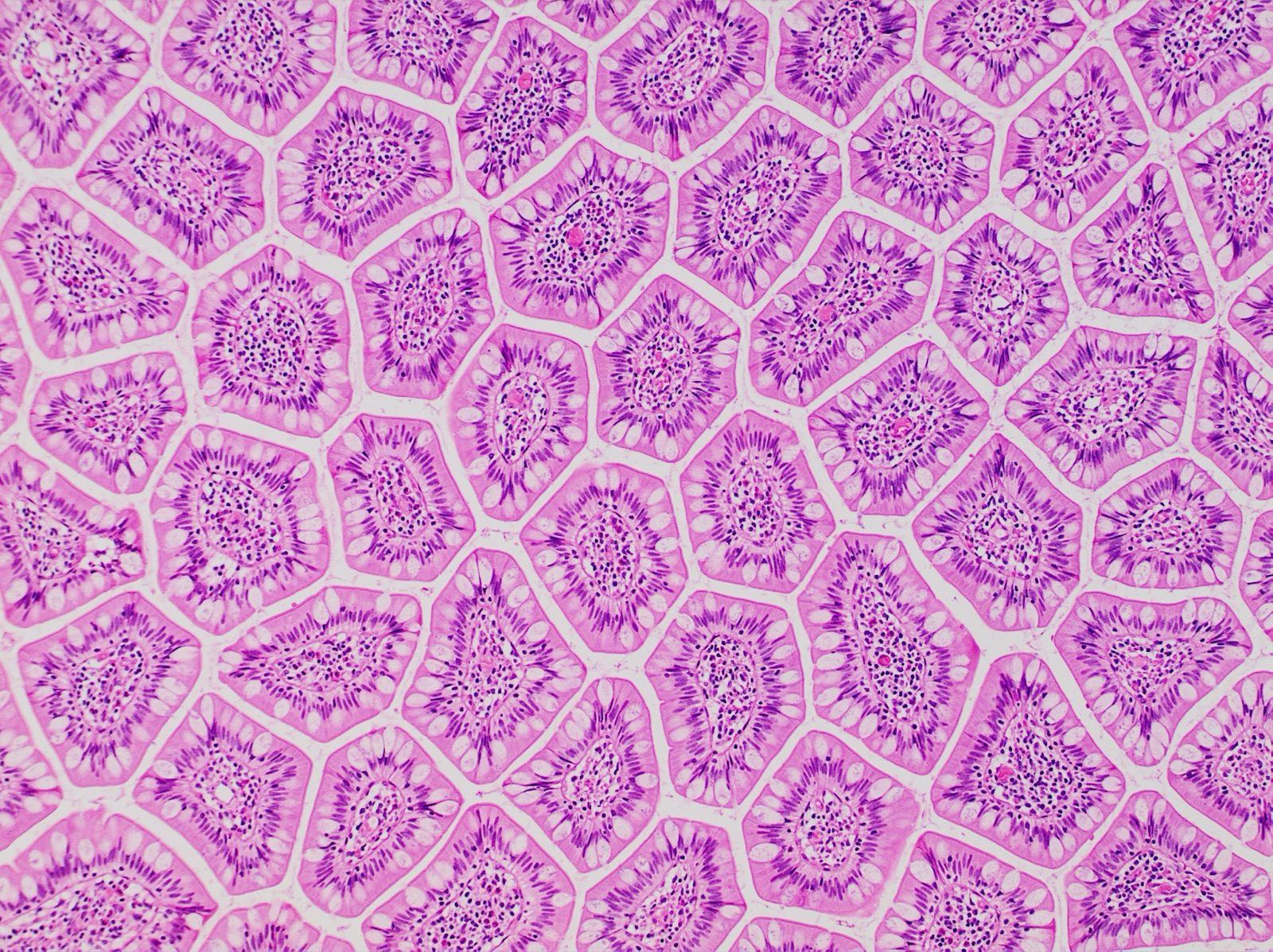
A team led by the Walter and Eliza Hall Institute of Medical Research (WEHI) in Melbourne, working with the Royal Melbourne Hospital and several other Australian institutions, collected roughly 900 gut biopsies from 80 people — a mix of inflammatory bowel disease (IBD) patients and people without IBD — and found that intestinal cells in IBD patients can stay primed for a specific, inflammatory kind of cell death even when a patient feels completely fine and their disease looks controlled on every standard measure. Among the patients tracked for more than two years afterward, the ones whose tissue showed a stronger version of this signal were more likely to have a relapse. The paper, "A necroptotic-to-apoptotic signaling axis underlies inflammatory bowel disease," was published online in Science in late August 2026.
What the Biopsies Actually Showed
IBD — Crohn's disease and ulcerative colitis are its two main forms — is usually managed toward "remission": symptoms quiet down, colonoscopy and blood markers look normal, and a patient is told the disease is under control. The problem the field has never fully explained is why so many of those patients relapse anyway, often without warning. This study's premise was that something is still going on underneath a clean-looking remission, and the way to find it was to look at the tissue itself rather than at symptoms or blood tests. Researchers analyzed the biopsies directly and also grew patient-derived organoids — small lab-grown "mini-intestines" built from a patient's own cells — so they could study the mechanism on real human epithelium rather than relying only on mouse models, which the team's Prof. Edwin Hawkins has said "often do not accurately mimic the human condition." What they found was a population of intestinal epithelial cells that stayed molecularly primed to die through a specific signaling cascade, detectable by spatial transcriptomics, that didn't fully switch off even in patients doing well on treatment.
The Two Kinds of Cell Death, in Plain Terms
Cells in the body die constantly and on purpose — that's normal — but not all planned cell death looks the same, and the difference matters here. Apoptosis is the "quiet" kind: a cell folds itself up in an orderly way, gets swallowed by a neighbor or immune cell, and the whole process happens without alerting the immune system. Necroptosis is the "loud" kind: the cell ruptures and spills its contents, which reads to the immune system as an injury and recruits inflammation. A healthy body uses necroptosis sparingly and apoptosis constantly.
The paper's preprint version, posted to bioRxiv in November 2024 ahead of the Science publication, describes the mechanism found in IBD tissue this way: early inflammation reprograms intestinal epithelial cells into an unusual, "macrophage-like" state — borrowing behavior from a type of immune cell — which then drives necroptotic signaling through a noncanonical route that skips RIPK1, the enzyme that normally has to switch necroptosis on first. That necroptotic signal then triggers two separate, more familiar kinds of apoptosis downstream: one, driven by an enzyme called iNOS, kills the absorptive cells that do the actual job of taking up nutrients; the other, driven by a well-studied cell-death protein called PUMA, kills intestinal stem cells — the cells whose job is to replace everything that dies. The authors' own summary calls this "excess epithelial cell death... that arises in patients in remission and on advanced therapy" and "occurs early in mucosal lesion development and persists despite current therapeutic approaches."
Is This Something Every Gut Does, or Something Specific to IBD?
"Gut cells dying" is not, on its own, the abnormal part — it's one of the most routine things a body does. A healthy intestinal lining is among the fastest-renewing tissues there is: the epithelial cells lining the gut are completely replaced roughly every four to five days, and an estimated ten billion epithelial cells are shed from a healthy human gut every single day, cleared away without a trace and without anyone ever noticing. All of that ordinary turnover runs on the quiet kind of cell death, apoptosis. As a 2010 review in the International Journal of Inflammation puts it, "apoptotic deletion of epithelial cells from the intact intestinal mucosa is not accompanied by detectable inflammatory response or loss of barrier function" — a healthy gut is running a cell-death program on a genuinely enormous scale, right now, and doing it so cleanly that it causes no inflammation at all.
What this study describes is not more of that same process. It's a different route layered on top of it: one that recruits inflammation instead of avoiding it, that reprograms the epithelial cells' own identity before it kills them, and that — through the PUMA-driven arm — goes after the intestinal stem cells that are supposed to be doing the replacing, not just the ordinary cells being replaced. That distinction is also why the study needed a comparison group at all: the 80 people sampled were a mix of IBD patients and people without IBD, because "primed" and "excess" are only meaningful relative to a measured baseline, not an assumed one. Where this piece has to stop short is the actual numbers for that comparison — none of the press coverage of the paper that's publicly available reports how the non-IBD biopsies scored on the same signaling measures, and the paper itself sits behind Science's paywall. So the honest answer is: yes, this tells us something about a normal gut, in that the study's own design required directly measuring one — but it does not tell us that healthy intestines are free of cell death signaling. They're full of it, all the time, just a quieter kind.
What the Relapse Tracking Showed
The part of the study most likely to matter clinically is the follow-up: among patients tracked for more than two years after their biopsy, those with stronger intestinal cell-death signaling were more likely to relapse during that window. None of the public coverage of the paper — including WEHI's own press materials — gives the actual hazard ratio, percentage, or the size of this specific follow-up group, so "more likely" here is the study's own characterization rather than a number this piece can hand you directly. Dr. Andre Samson, one of the paper's authors, framed the underlying finding this way in WEHI's release: "Even in patients with essentially no symptoms, there's still this persistent problem sitting there." Prof. James Murphy, WEHI's deputy director and a senior author, called it "one of the first dominoes to fall," and described the study's approach as deliberately inverted from how the field usually looks at IBD: "Most people have been focusing on the major clinical problem... We've gone to the other end of the spectrum" — meaning the quiet, symptom-free end, rather than an active flare.
Where the Evidence Is Weak
This is a mechanistic and observational finding, not a trial of anything — nobody's treatment was changed based on this signal, so the study can show that stronger cell-death signaling tracks with relapse, but it can't yet show that suppressing that signaling would prevent one. Eighty people, even sampled with 900 biopsies between them, is a modest cohort for a finding this specific, and the paper doesn't appear to have been independently replicated yet — it's only weeks old. The public reporting doesn't break results down by Crohn's disease versus ulcerative colitis, which behave differently enough clinically that a pooled result could be masking a difference between the two. And, again, the specific numbers comparing IBD tissue to the non-IBD control tissue in this same cohort aren't available anywhere I could find outside the paywalled paper — which matters most for exactly the question this piece opened with. The researchers themselves are notably restrained about what comes next: WEHI's own materials describe the findings as unlikely to produce a new diagnostic test or treatment immediately, positioning this as groundwork for better prognostic tools and treatment-matching rather than something a patient or doctor can act on today.
What the evidence shows. In roughly 900 gut biopsies from 80 people, WEHI-led researchers found a specific, inflammatory cell-death pathway — a shift from necroptosis into two downstream forms of apoptosis, via a noncanonical, RIPK1-independent route — that stays partly active in IBD patients' intestinal tissue even during symptom-free remission, and that a stronger version of this signal tracked with a higher chance of relapse over more than two years of follow-up. This is not evidence that cell death itself is abnormal in the gut; healthy intestinal lining renews itself through constant, "quiet" apoptosis and sheds an estimated ten billion cells a day without triggering inflammation. What's specific to IBD here is a different, louder pathway that persists despite treatment — not the underlying fact that gut cells die. The study measured a healthy comparison group to establish that difference, but the actual numbers from that comparison aren't in any public source available outside the paywalled paper, which limits how precisely this piece — or any secondhand account of the study — can answer exactly how far apart "primed" and "normal" tissue actually are.
What I'd take from this. One reader's reaction, not medical advice. The thing I found most clarifying wasn't the disease biology — it was being reminded that "my gut cells are dying" is true of literally everyone, all the time, and is not itself informative. The actual news here is narrower and more useful than that: a specific pathway, not present in the same way in a healthy gut, that seems to keep running quietly under a remission that looks clean by every test currently in use. If I had someone in my life managing IBD, this reads to me as a reason that "I feel fine" and "the disease is fully quiet" aren't necessarily the same statement — worth raising with a gastroenterologist as a general question about long-term monitoring, not as something to act on unilaterally, since none of this changes what remission means for treatment decisions today.
Where I Could Be Wrong
- Observational, not interventional. The study measured a correlation between a molecular signal and later relapse; it did not test whether changing that signal changes outcomes.
- The comparison-group numbers aren't public. The study's claim of "excess" or "primed" signaling in IBD tissue rests on a comparison to non-IBD biopsies collected in the same cohort, but I could not find the actual healthy-tissue figures in any source available outside Science's paywall — the central limitation of this piece, and the direct answer to the question it opened with.
- Eighty people is a modest cohort for a mechanistic finding this specific, even with roughly 900 biopsies sampled between them; independent replication in a larger or different population hasn't happened yet as far as I could find.
- No Crohn's-versus-colitis breakdown was reported in any public coverage, and the two conditions don't always behave the same way.
- The relapse-tracking numbers are unspecified. "More likely to relapse" is the study's own characterization; no hazard ratio, percentage, or exact follow-up cohort size appears in any public source I found.
- The paper is very new — published within the same month as this piece — so there has not yet been time for independent critical commentary or a failed-replication attempt to surface, if either is coming.
Sources
- Samson AL, et al. A necroptotic-to-apoptotic signaling axis underlies inflammatory bowel disease. Science, Vol. 393, Issue 6814, published online August 2026. doi:10.1126/science.aeh7112 · PMID 42658927
- Samson AL, et al. A necroptotic-to-apoptotic signaling axis underlies inflammatory bowel disease. Preprint, bioRxiv, posted 13 November 2024 (the openly readable version of the abstract above; the published Science article is paywalled). doi:10.1101/2024.11.13.623307
- WEHI, via EurekAlert!. Researchers identify early molecular warning signs of inflammatory bowel disease. Press release, August 2026. eurekalert.org
- ScienceDaily. Hidden gut defect that may explain why IBD keeps coming back. 18 September 2026. sciencedaily.com
- Medical Xpress. Even symptom-free IBD patients show gut cells primed for damage, study finds. August 2026. medicalxpress.com
- Hausmann M. How Bacteria-Induced Apoptosis of Intestinal Epithelial Cells Contributes to Mucosal Inflammation. International Journal of Inflammation, 2010 (source for normal-gut apoptosis not causing inflammation or barrier loss). doi:10.4061/2010/574568 · PMID 21188215
- Blander JM. Death in the intestinal epithelium — basic biology and implications for inflammatory bowel disease. FEBS Journal, 2016 (background review, for readers who want to go deeper on normal vs. pathological gut cell death). doi:10.1111/febs.13771
This is one reader's reading of the research, not medical advice. If something here touches on your own health, take it to a clinician who knows you — and read how these entries are put together.